Advertisement
Advertisement
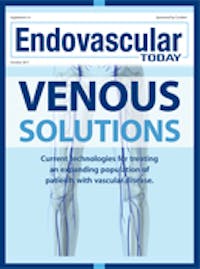
With an aging population and an increasing number of patients with vascular disease, there is a tremendous need for new and more advanced medical technologies for treating potentially serious conditions such as chronic venous insufficiency and deep vein thrombosis (DVT).
In this supplement to Endovascular Today, a diverse panel of physicians representing interventional medicine/ cardiology, emergency care, and vascular surgery will address the opportunities for medical device innovators to develop safe and effective technologies, as well as provide the clinical evidence to support their use, allowing physicians to make the most informed clinical decisions for their patients.
Included in the supplement, Anthony J. Comerota, MD, explains the role that venous hemodynamics play in the decision-making process when trying to decide which type of mechanical prophylaxis and leg or foot compression technologies to use.
Next, Luis R. Leon Jr, MD, RVT, FACS; John Paul Pacanowski, MD, FACS; and Nicos Labropoulos, PhD, DIC, RVT, share their insights into which methods physicians can employ in order to have the best chances of treating DVT in a single setting.
Heramb Singh, MD, discusses his experience in treating thrombosed dialysis fistulas and the tools and techniques he uses for optimal patient outcomes.
Finally, Jennifer Heller, MD, FACS, provides an overview of the current options for treating chronic venous insufficiency, as well as two case studies that show how she applies an algorithmic approach in order to make treatment decisions.
In my role as Chief Medical Officer for Covidien Vascular Therapies (Mansfield, MA), our team looks for ways to deliver a broad range of innovative, noninvasive, and endovascular devices for the treatment of vascular disease worldwide. Covidien currently offers clinically proven solutions for the prevention and treatment of DVT, chronic venous insufficiency, dialysis access, peripheral vascular disease, and neurovascular disease. We develop and support new technologies, products, and programs focused on improved patient outcomes and safer, more efficient health care practices throughout the continuum of care across the globe.
I hope that readers will benefit from this supplement and the principles covered by these experts, further validating the need for advanced endovascular treatments that will lead to improved patient outcomes.
Advertisement
Advertisement