Advertisement
Advertisement
August 2026
Aortic Repair: Greatest Current Needs and Opportunities
Addressing unmet needs, factors driving reintervention, gaps in decision-making, how to individualize treatment, and innovations with potential to transform complex aortic repair.
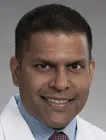
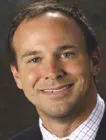
What do you see as the most significant unmet needs in complex aortic repair today? Which conditions remain most underserved?
Dr. Singh: In my opinion, the greatest unmet need remains the treatment of patients with complex thoracoabdominal and arch pathology who are either too high risk for open surgery or do not fit existing endovascular device designs. We have made tremendous progress with fenestrated and branched technology and have success with zone 0 branched grafts, but there are still many patients with challenging anatomy who have limited options.
I also think acute aortic syndromes remain underserved. Patients with complicated dissections, ruptures, and connective tissue disorders often require individualized treatment strategies that extend beyond currently available devices. Continued innovation is needed to expand treatment options while maintaining durability and safety.
Dr. Arko: For the arch, we need a durable, straightforward way to deploy more than one branch device, at least in the United States. I think we’re heading in that direction, but it remains a weakness. Current branch devices are still limited by French size—they’re a bit large, which makes them especially difficult to use in women in my experience.
We also need more data on type B aortic dissections, and I’m hopeful that will come soon. I suspect thoracic endovascular aortic repair will ultimately win out, but determining true outcome improvement will require 5- to 10-year follow-up, particularly for acute type B dissections.
For chronic type B dissections, we’re developing techniques to shut down false lumen filling. Retrograde or persistent filling of the false lumen, whether from visceral branches or distal fenestrations, remains a concern with no reliable solution yet.
I also think it’s a weakness that, 26 years into complex endovascular aneurysm repair (EVAR), we still don’t have a fenestrated graft on the market in the United States. We’re limited to investigational device exemptions or physician-modified endografts (PMEGs), which constrains the services we can offer patients.
Finally, I think the aortopathy population, patients with Marfan syndrome, Loeys-Dietz syndrome, and similar conditions is larger than we realize. Current devices aren’t well-suited for them. This younger population is probably still best served by open surgical repair, but the challenge is that few programs perform these well. How we train future generations of surgeons for this work remains an open question, perhaps a team-based model combining cardiac and vascular surgery is the answer. Ultimately, inadequate training for these cases can cost lives, and that steep learning curve shouldn’t have to be relearned every 5 to 10 years.
Which patient or anatomic factors remain the biggest drivers of reintervention, and can they be better addressed?
Dr. Arko: First, patients with short necks and multiple lumbar arteries are at risk for persistent type II and type Ia endoleak. This is especially true in younger patients, many of whom are reluctant to undergo another operation. As I’ve gotten older, though, I’ve found that a candid conversation often changes that calculus. Most of these patients will readily choose open repair once they understand it may mean fewer imaging studies and reinterventions down the road.
Second, in my practice, women tend to present with more complex proximal anatomy, short necks, and aneurysms extending through the entire visceral segment requiring branch or fenestrated repair. Yet, their vascular access often can’t accommodate the larger-bore devices needed to treat the visceral segment, which makes these repairs more complex. Women also tend to present later, at an older age, and in poorer overall health. I believe these patients should be identified and treated earlier, with the goal of limiting long-term complications.
Dr. Singh: The most common drivers of reintervention remain disease progression, inadequate seal zones, branch instability, and persistent false lumen perfusion in dissection patients. Many of these issues are not technical failures but rather reflect the underlying biology of aortic disease. Our group has looked at reintervention in complex aortic repair, and we believe it is a hallmark of good follow-up care. It would be nice to believe that we have a “one-and-done” endovascular treatment option, but we do not; reinterventions will occur, and that is the importance of continued surveillance. The goal is not necessarily to eliminate reinterventions but to anticipate them and manage patients proactively over time.
Also, there is growing evidence that we are intervening on too many type II endoleaks. We need to arrive at a consensus of when to intervene on type II endoleaks as the European guidelines and our guidelines have different thresholds.
For aneurysmal disease, why is aortic diameter alone insufficient for treatment decision-making?
Dr. Arko: Aneurysm morphology varies considerably. Aortic diameter is a reasonable general rule for most patients, and it works reasonably well, with low risk of rupture below 5 to 5.5 cm. But it’s not zero, which tells us that other factors are driving rupture risk. If we could identify which patients are at higher risk despite falling under the size threshold, we could intervene sooner. The goal is to identify the “vulnerable aneurysm,” much like how we look for vulnerable plaque in coronary disease. There are emerging preintervention technologies that could strengthen the aortic neck or slow aneurysm growth. These are exciting possibilities, but we’ll have to see how they pan out.
Dr. Singh: Aortic diameter remains an important metric, but it is only one piece of the puzzle. We routinely see patients who experience rupture below traditional size thresholds, while others remain stable despite larger diameters. We know females have a lower size threshold; perhaps using metrics such as the aortic size index (aortic diameter divided by the body surface area) would be a more accurate predictor in this population. Concepts such as finite element analysis have been often discussed, looking at specific wall stress and trying to identify aneurysms at higher risk for rupture. None of these other methods have yet gained significant traction; perhaps artificial intelligence (AI) could allow for a new standard that identifies the more virulent phenotypes of aneurysms versus benign, smaller aneurysms. Factors such as growth rate, family history, connective tissue disorders, aortic morphology, symptoms, and patient-specific risk factors must be incorporated into decision-making. As our understanding of aortic biology improves, treatment decisions will become more individualized rather than relying on a single measurement.
In what other ways can patient selection become more personalized and more effective in ensuring optimal outcomes?
Dr. Arko: You have to look at individual long-term survivability. We do a lot of genetic testing in our aortic clinic to help determine the right timing and type of repair for each patient. It’s important to weigh what other high-risk features may be present, so you can offer the best operation at the right time and sometimes that means no operation at all. For patients who are elderly, frail, and quite sick, rupture risk may not be high enough to justify intervention, and they may be best managed conservatively.
Dr. Singh: The future lies in integrating imaging, clinical factors, genetics, and predictive analytics into a comprehensive risk model. We are moving toward a more personalized approach where treatment recommendations are based on an individual’s risk of rupture, dissection, perioperative complications, and long-term durability. PMEGs are the most personalized graft a patient can have, but they do require skill and experience. Clinical trials of PMEGs are ongoing, and templates for PMEGs are being created. Additionally, off-the-shelf designed grafts are also becoming more available. Any opportunity to make a graft for a specific patient is better than trying to force a graft to fit.
What are the leading contributors to stroke risk during ascending and arch procedures? How can these be mitigated?
Dr. Singh: Stroke remains one of the most important complications in arch intervention. The primary contributors include aortic arch atherosclerosis, catheter and wire manipulation, embolization during device deployment, and interruption of cerebral perfusion. Reducing stroke risk requires meticulous technique, careful patient selection, cerebral protection strategies, and thoughtful device design. The arch is a challenge, but newer grafts and ongoing trials will identify solutions. Improvements in imaging, embolic protection technologies, and lower-profile delivery systems should continue to reduce neurologic complications over time.
Dr. Arko: I think the two highest-risk factors are (1) any amount of calcium or thrombus in the arch, which increases risk substantially; and (2) where a surgeon is on the learning curve, risk is higher earlier on. The more manipulations performed in the arch, the greater the stroke risk. Proper planning, careful patient selection, and aggressive medical management are essential. Everyone undergoing arch or ascending repair at our center goes on a high-dose statin and dual antiplatelet therapy. I also run activated clotting time higher during these cases—usually 300 to 350 seconds—which has meaningfully reduced stroke risk in my patients.
What do you see as the most needed skills or training opportunities in the near future?
Dr. Arko: Most people coming out of training today are well-versed on the endovascular side. My concern is that 10 to 15 years from now, if open case volume keeps declining, surgeons will need posttraining mentorship to build proficiency in the more complex open repairs, explants, infected aortas, and thoracoabdominal aneurysms.
Dr. Singh: The next generation of surgeons will be extremely skilled at endovascular repair because of the experience they receive in training and participating in trials. I do believe that surgeons in this space must be comfortable with open techniques. We do not want surgeons to limit themselves to one or the other, as our ability to adapt is what has kept vascular viable. One of the real advantages of training today is the opportunity to understand procedural planning and the use and interpretation of advanced imaging techniques. Radiation safety is an area of utmost importance, but some physicians are better than others in performing it. We must identify methods to make it easy and universal. As procedures become more complex, the risk of radiation exposure increases as well.
What trends or innovations are most likely to transform complex aortic repair over the next 5 to 10 years?
Dr. Singh: Off-the-shelf branched and fenestrated devices are already impacting our field for thoracoabdominal aortic aneurysm repair; as industry competition increases, I am sure this will only improve. The rates of spinal cord ischemia and stroke will decrease. With our current trainees participating in implanting these devices and staying involved with trials. I would expect to see a bigger shift with endovascular therapy taking over this field—much like EVAR did with abdominal aortic aneurysm. Again, I do believe that AI will help us identify who to treat, and personalized treatment options will thus increase.
Dr. Arko: I’m an arch guy, so right now my focus is on the ascending aorta and total arch. We’re seeing technologies that are genuinely feasible, and industry is pushing hard in this direction. I’m even seeing more Endo-Bentalls being performed. We don’t yet have long-term data on these patients, but I think the field is moving. It took a while to build momentum, but there’s now strong support from both cardiac and vascular surgery, as well as from industry. Most companies recognize that the arch is the next frontier, and I find that genuinely exciting! Early clinical trial results have been good overall.
Disclosures
Dr. Singh: None.
Dr. Arko: Consultant to Medtronic, Gore & Associates, Terumo, and Penumbra.
Advertisement
Advertisement