Advertisement
Advertisement
August 2026
Unmet Needs in Neurovascular Intervention
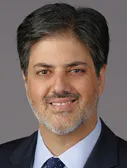
Guilherme Dabus, MD, FAHA, discusses the future of neurovascular intervention, from expanding treatment indications and improving patient access to emerging technologies and the next generation of specialists.
Interventional capabilities have emerged and improved across a wide variety of neurovascular conditions over the past decade-plus. How do you describe the sea change in this field since you came out of fellowship?
It is difficult to think of another field in medicine that has evolved as rapidly as neurointervention. When I completed my fellowship, many of the therapies we now consider standard of care either did not exist or were supported only by early feasibility data. Mechanical thrombectomy had not yet transformed stroke care. Flow diversion was in its infancy. Cerebral venous disease, chronic subdural hematoma embolization, and intracranial venous interventions were largely unexplored territories.
Today, we are no longer defined simply by the procedures we perform; we are defined by the diseases we manage. Neurointerventional surgery has matured into a comprehensive clinical specialty that spans emergency stroke care, aneurysm treatment, vascular malformation, spinal vascular disease, venous disorders, and, increasingly, conditions that affect quality of life (eg, pulsatile tinnitus [PT], idiopathic intracranial hypertension [IIH]). What excites me most is that this transformation has not been driven solely by technologic innovation. It has been driven by an unwavering commitment to improving patients’ lives. Every major advance in our specialty has ultimately translated into fewer disabilities, greater independence, and families receiving loved ones back who previously might never have recovered. That is the true legacy of the past decade.
How are modern neurovascular interventional fellowships evolving to meet the rapidly expanding capabilities of the modern specialty?
The expectations of today’s neurointerventional fellow are fundamentally different from those of previous generations. Technical mastery remains the foundation of our specialty, but technical skill alone is no longer enough. Tomorrow’s neurointerventionalists must become complete physicians who are experts in clinical neuroscience, advanced imaging, critical care, evidence-based medicine, multidisciplinary collaboration, health care systems, quality improvement, and leadership. Equally important, fellowship training must prepare physicians for a career of continuous adaptation. The technologies that our current fellows will use 10 years from now likely haven’t been invented yet. I also believe our educational mission extends beyond teaching procedures. We must cultivate intellectual curiosity, humility, professionalism, and ethical leadership. These qualities will ultimately define our specialty far more than any single device or technique.
What do you see as the single biggest unmet need in neurovascular intervention today? Is there progress or hope on the horizon toward meeting it?
Our greatest unmet need is not technologic. It is access! We now possess extraordinary therapies capable of dramatically changing the course of devastating neurologic diseases. Yet, thousands of patients still never receive those treatments because they cannot reach the appropriate expertise quickly enough. Closing this gap requires stronger regional systems of care, artificial intelligence (AI)–assisted triage, telemedicine, quality registries, and policies that prioritize equitable access. The future success of our specialty will be measured not only by what we can accomplish technically but also by how effectively we deliver those capabilities to every patient who needs them.
What do you predict for the near future of interventional capabilities for treating distal and medium vessel occlusions?
I believe distal and medium vessel occlusions represent an important frontier in stroke intervention. As devices become smaller and safer and ongoing trials define optimal patient selection, treatment will become increasingly personalized by integrating advanced imaging, clot biology, collateral physiology, and AI. The future of thrombectomy is not simply better devices but rather better decision-making! In my opinion, situations like distal and medium vessel occlusions require more case-by-case decision-making, which is difficult to prove in randomized controlled trials.
Which intracranial aneurysms remain out of reach for modern interventional capabilities, and how might these be addressed in the future?
I believe that with our current technology, we can successfully address the vast majority of intracranial aneurysms. However, large fusiform aneurysms, giant partially thrombosed aneurysms, blister aneurysms, and lesions involving perforator-rich segments remain among our greatest challenges. Future advances will emphasize vascular reconstruction through bioactive implants; surface-modified flow diverters; devices and technologies that promote/improve vessel wall reconstruction and remodeling; computational modeling; and therapies that promote endothelial healing rather than simple aneurysm exclusion.
How should practices adapt to take on additional procedural volume generated by newer applications in chronic headache, PT, and IIH?
The way I see it, every new disease process that we can treat is a new milestone that we need to adapt to. The most adaptable programs will be the most successful (clinically, scientifically, and financially). Successful programs will require multidisciplinary collaboration, standardized care pathways, robust outcomes research, and careful patient selection. Innovation should always be accompanied by scientific rigor.
How would you describe any shortfall in the number and distribution of trained specialists in stroke intervention in the United States?
The challenge is less workforce size and more workforce distribution. Many regions remain underserved despite expanding indications for thrombectomy, and every patient deserves access to expert neurovascular care regardless of geography. I think it is important to explore our workforce distribution challenges, as the issue of patient access will be difficult to solve within our current health care model. Our specialty requires expensive equipment, devices, infrastructure, resources, and case volume (for financial compensation and maintenance of skills) that are easier to find in larger cities and metropolitan areas. Therefore, trained specialists tend to concentrate in these areas.
What factors or initiatives will lead to the numbers of stroke-trained interventionalists increasing in the near future?
Growth should be intentional. Fellowship expansion, mentorship, physician wellness, leadership development, and sustainable practice models are all essential while maintaining rigorous standards of training.
How does the Society of NeuroInterventional Surgery currently view the performance of stroke interventions by non–neurointerventionally trained specialists?
Every patient deserves the highest standard of neurovascular care. Mechanical thrombectomy requires mastery of neurovascular disease, imaging, complication management, and longitudinal neurologic care. The focus should remain on competency, rigorous training, quality, and patient safety.
How soon do you envision remote interventional capabilities via advanced robotics being possible? And in wider use?
Robotics represents one of the most exciting frontiers in neurointervention. We already have the technical capability for remote robotic procedures, but there are concerns related to logistics and operations as well as health care policy and legal issues that need to be addressed before full implementation. However, I believe that within the next few years, remote procedures will likely be available for at least part of the population. Its greatest promise is democratizing expertise by extending world-class neurointerventional care to patients regardless of geography. Ultimately, the future of our specialty will be defined not only by smarter technology but also by broader access and better outcomes for every patient.
Advertisement
Advertisement