Early Career Insights
Advertisement
Advertisement
Early Career Insights Part 4
Vascular Interventional and Medicine Fellowships: Is Work-Life Balance Attainable?
How program directors across vascular medicine, interventional radiology, and vascular surgery are addressing burnout, moral injury, program culture, and sustainable careers in training.
With Geoffrey D. Barnes, MD, MSc; Luke R. Wilkins, MD; and Yana Etkin, MD
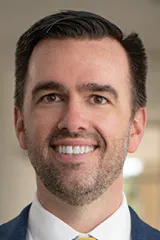

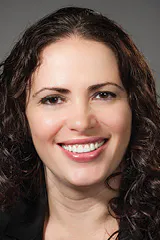
We know burnout is an issue both during vascular specialty training and later in practice. What can or should program directors do during those formative years to help trainees interrupt that trajectory? How have you prepared your trainees to enter a field with high rates of burnout?
Dr. Barnes: First, program directors need to help trainees cultivate a passion for caring for patients with vascular disease. Finding purpose in your work is an incredibly effective way to avoid burnout. Equally important is helping trainees develop the skills to manage the growing complexity and demands of being a vascular medicine physician. These include proficiency with new artificial intelligence tools that streamline administrative tasks, as well as interpersonal skills that foster interdisciplinary collaboration. Lastly, program directors must model healthy decision-making regarding work-life balance—demonstrating how to take time away from work to recharge; spend time with family, friends, and loved ones; and return to work with a sense of balance and purpose.
Dr. Wilkins: As program directors, I think our responsibility is less about trying to make trainees individually more “resilient” and more about helping them learn how to build a sustainable career. That means creating a training environment where people can ask for help, fatigue and workload are taken seriously, and trainees have some autonomy and control over their work. In my experience, burnout is often less about simply working hard and more about decreasing autonomy in the face of increasing clinical demands. We are often being asked to do more or change how we work, without understanding the reasoning for that or not receiving the tools, resources, or authority to make those changes successfully. Most physicians chose this career because they are comfortable with difficult work. What becomes demoralizing is working very hard while feeling that you have little ability to influence the system around you. Part of our job is therefore to help trainees recognize the importance of practice structure, staffing, leadership, mentorship, and having a meaningful voice in how care is delivered.
Dr. Etkin: Program directors cannot eliminate the intensity of vascular surgery, nor should we pretend that we can. Our responsibility is to ensure that the intensity has purpose, trainees have appropriate support, and preventable dysfunction is not confused with rigor.
I focus on several things, including:
- Creating psychological safety so residents and fellows can ask for help without fearing that they will be viewed as weak or incapable.
- Monitoring workload, fatigue, case distribution, and changes in behavior—not merely duty-hour compliance.
- Teaching the nontechnical skills that sustain a career: setting boundaries, managing complications, resolving conflict, asking for help, and recovering after adverse outcomes.
We also prepare trainees by being honest about the profession. Vascular surgery is meaningful and extraordinarily rewarding, but it includes emergencies, complications, demanding patients, and imperfect outcomes. Resilience should not mean silently tolerating a dysfunctional environment. It should mean developing the tools and support systems to navigate a demanding profession without losing one’s identity or sense of purpose.
How do you distinguish between the unavoidable demands of rigorous vascular training versus the aspects of the environment that unnecessarily contribute to burnout? What can you realistically change, and what factors are out of a trainee’s control?
Dr. Wilkins: I think it is important to acknowledge that some of the difficulty in residency training is inherent to the work and should not automatically be viewed as burnout. The more useful consideration is whether the environment is helping trainees grow through those challenges or simply adding friction without educational value. Program directors can realistically influence things like consistency of expectations, quality of supervision, communication, scheduling, and whether trainees feel heard when problems arise. Other pressures, including staffing shortages, institutional policies, and broader health system demands, may be largely outside a trainee’s control. Part of our role is helping residents recognize that distinction, become better equipped to navigate the unavoidable challenges of the profession, and understand when systems can and should be improved.
Dr. Etkin: The essential demands of vascular training include long and complex operations, emergency care, overnight call, responsibility for critically ill patients, and the emotional weight of complications. Those experiences cannot be entirely scheduled for convenience. They are part of becoming a safe, independent vascular surgeon.
However, many contributors to burnout are not educationally necessary:
- Inefficient workflows and excessive administrative work
- Chronic understaffing
- Unpredictable schedules when predictability is possible
- Unequal distribution of cases, call, or service obligations
- Humiliation, intimidation, discrimination, or retaliation
- Poor communication and constantly changing expectations
- Lack of supervision followed by criticism
- Being kept in the hospital without a meaningful educational or patient care role
- A culture in which exhaustion is treated as proof of commitment
Programs can change schedules, coverage systems, communication, team culture, administrative burden, and how residents are treated. We cannot eliminate emergencies, difficult outcomes, certification requirements, or the need to acquire sufficient operative experience. However, even when the demand cannot be removed, we can improve the support surrounding it.
Dr. Barnes: We aim to train highly competent vascular medicine specialists with both a broad base of clinical experience and the skills to manage patients, even when they haven’t encountered a patient’s specific vascular disorder. To achieve these goals, trainees need broad experience in both ambulatory and acute care settings and to learn from a broad, multidisciplinary faculty. To help combat burnout, we also empower our learners to self-direct their training based on their individual interests and self-assessed knowledge gaps. For instance, a trainee who is passionate about peripheral artery disease might choose to spend extra time in clinic with our vascular surgeons and our supervised exercise therapy team, while spending less time in the vasculitis and vascular neurology clinics. All trainees receive broad-based exposure to all aspects of vascular medicine, but we work to customize their training to their individual interests and career paths.
Where does moral injury fit into the broader conversation around burnout and trainee well-being? How can modern programs prepare fellows for the challenges of moral injury?
Dr. Etkin: Burnout and moral injury overlap, but they are not identical. Burnout is often described through exhaustion, detachment, and diminished professional efficacy. Moral injury occurs when physicians know what they believe is right for a patient but are unable to provide it, or they feel pressured to participate in care that conflicts with their professional values.
In vascular surgery, that may involve performing a technically possible intervention that is unlikely to benefit the patient, repeatedly treating advanced disease without addressing the social barriers driving it, providing nonbeneficial care at the end of life, or watching financial and operational pressures influence clinical decisions.
Programs should prepare trainees by teaching shared decision-making and goals-of-care conversations; normalizing discussions about futility and when not to intervene; incorporating ethics, palliative care, and multidisciplinary input early; debriefing difficult cases and deaths without reducing every discussion to technical performance; and giving trainees a safe mechanism to raise ethical concerns.
Dr. Wilkins: I think moral injury overlaps with burnout but is somewhat different. Burnout can come from workload, loss of autonomy, or chronic inefficiency. This contrasts with moral injury, which is more about being placed in situations where you feel unable to provide the care you believe is right because of constraints outside your control. In training, that may mean resource limitations, delays in care, conflicting priorities, or being asked to participate in decisions that do not align with your own sense of what is best for the patient. Programs cannot eliminate those situations, but we can help trainees name them, discuss them openly, and understand that these tensions are part of practicing in complex health systems. Just as importantly, we can teach trainees how to advocate effectively, when to escalate concerns, and how to preserve a sense of purpose even when the system is imperfect.
Dr. Barnes: It is critical for every physician and health care professional to uphold their values regarding dignified patient care and workplace norms. As program directors, it is imperative that we understand the difference between burnout caused by overwork and lack of recovery time as compared to moral injury caused by a violation of one’s values. Both are addressable but require distinct interventions. The most important tool for program directors is creating a psychologically safe space where learners can have open and honest conversations with program leadership.
As a fellowship/residency director, how much emphasis do you place on work-life balance in your program? How do you structure the training experience—from call schedules and clinical responsibilities to case volume and exposure—with this in mind? What specific aspects of your program have made the biggest difference for trainees?
Dr. Barnes: We place a strong emphasis on work-life balance for our vascular medicine fellows. We recognize that they often have just completed 3 years of a demanding internal medicine residency or 2 to 3 years of a challenging cardiovascular medicine fellowship. When they start the vascular medicine fellowship, we discuss the importance of maintaining work-life balance. This includes making time away from work with their family, friends, and loved ones, but it also means showing up and being committed to their patients and colleagues. We are fortunate that our noninvasive vascular medicine fellowship has minimal call requirements, primarily just for our acute pulmonary embolism program. We also try to minimize the number of weekends our fellows have to work each year. Fellows have told us that this structure has been one of the biggest joys of their training: the freedom to direct their own learning, read beyond their assigned clinical rotations, and engage meaningfully with their family, friends, and loved ones.
Dr. Wilkins: I place a meaningful emphasis on work-life balance, although I think of it less as trying to make training easy and more as making sure the demands are purposeful and sustainable. At University of Virginia, we have no full-weekend call, use a night-float system during diagnostic training, and try to create space for residents to support one another rather than feeling that every challenge has to be managed individually. We also openly discuss difficult cases and stressful situations, have access to support through the COACH (Committee on Achieving Competence Through Help) program, and during Resident Appreciation Week, the attendings take full control of the service and pager responsibilities. Just as importantly, I think faculty must model the behavior we want trainees to carry forward. We do this through supporting colleagues, asking for help when needed, maintaining perspective, and showing that it is possible to work very hard while still building a sustainable career.
Dr. Etkin: Surgical training is episodic. Some rotations and clinical situations will be extremely demanding. The goal is a sustainable experience over time, with adequate recovery, predictability, and a sense of control.
We consider:
- Fair and transparent call schedules
- Equitable distribution of operative opportunities and service obligations
- Adequate advanced practice provider, nursing, and administrative support
- Protected educational time
- Vacation that trainees can actually take
- Coverage for medical appointments, family emergencies, parental responsibilities, and major life events
- Regular individual meetings that address well-being and career development, not just case logs and milestones
Trainees can tolerate periods of intense work more effectively when they can plan their lives and trust that their time away from work will generally be respected. Equally important is program culture. A technically compliant schedule cannot compensate for an environment in which people feel disrespected, isolated, or afraid to speak.
For trainees evaluating a potential residency or fellowship program, what should they look for to gauge how much a program genuinely prioritizes work-life balance and well-being? Are there any particular green or red flags they should pay attention to?
Dr. Barnes: The advice I give to any prospective trainee is to talk to current and recent trainees in the program. They have the best insight into how well the program balances work and well-being. If a program isn’t willing to make current or recent graduates available for an applicant to meet with, that should be a red flag!
Dr. Etkin: Applicants should pay more attention to what current trainees experience than to what appears on a wellness slide. There are several green and red flags that applicants can look for when evaluating a program’s culture (see What to Look for in a Training Program sidebar).
WHAT TO LOOK FOR IN A TRAINING PROGRAM
Green Flags
- Trainees speak openly and comfortably in front of leadership.
- Residents and fellows appear to support rather than compete destructively with one another.
- Call and case assignments are perceived as fair.
- Graduates are well trained without seeming chronically depleted or cynical.
- Faculty know trainees personally and invest in their development.
- Trainees can give specific examples of changes made in response to feedback.
- People take vacation and obtain coverage for important personal events.
Red Flags
- “We suffered and therefore you should too.”
- Wellness is discussed only in terms of resilience, yoga, food, or social events.
- Trainees seem afraid to speak honestly.
- Attrition is blamed entirely on the individuals who left.
- Duty-hour compliance exists only on paper.
- Cases, call, or opportunities are distributed according to favoritism.
- The program cannot provide examples of responding to trainee feedback.
- Faculty repeatedly describe exhaustion as evidence of dedication.
Dr. Wilkins: I would pay less attention to what a program says about wellness and more attention to how the program actually functions. Green flags are residents who seem comfortable with one another and with faculty, reasonable call structures, clear expectations, appropriate autonomy, and evidence that concerns raised by trainees actually lead to change. I would also ask residents whether they feel supported when things go badly, because that often tells you more about the culture than any formal wellness initiative. Red flags would be chronic understaffing, unclear or shifting expectations, trainees who seem reluctant to speak openly, or a culture where excessive workload is treated as a badge of honor rather than something that should have educational value.
How can programs avoid the false premise of “wellness” initiatives that may make trainees feel supported in the short term (perks, activities, recognition) but don’t address the underlying causes of burnout, or even add to it with unrealistic or unhelpful requirements?
Dr. Barnes: In my opinion, creating a culture of trust, support, and dedication is critical to addressing wellness. Being a physician is a challenging profession, and we must honor the trust patients place in us to care for them. At the same time, we must honor our own well-being before we’re able to care for others. When a training program fosters a culture of trust and support among its members, it can prioritize both their dedication to caring for patients and their commitment to ensuring wellness for all members of the program.
Dr. Wilkins: I think programs need to be very careful not to confuse gestures of support with actually supporting trainees. If someone is exhausted, frustrated, or burned out because of workload, lack of autonomy, poor communication, or inadequate resources, giving them pizza, a coffee card, or another mandatory wellness activity is unlikely to help and can even feel dismissive. Those things are fine as expressions of appreciation, but they are not solutions. The more meaningful approach is to ask why people are struggling and then be willing to change what is actually changeable—things like schedules, expectations, supervision, communication, workflow, or access to resources. Trainees generally recognize pretty quickly whether a program is genuinely listening to them or simply trying to demonstrate that it cares.
Dr. Etkin: Wellness programs become counterproductive when they place responsibility for systemic dysfunction on the trainee. A mandatory evening seminar on resilience does not help someone whose primary problem is chronic understaffing or an unsafe call structure.
Meals, recognition, social events, and wellness activities can be valuable, but they are supplements—not substitutes—for appropriate staffing, respectful leadership, manageable workloads, schedule predictability, and psychological safety.
The most credible wellness initiative may be eliminating unnecessary work, improving coverage, correcting an inequitable schedule, or holding a faculty member accountable for unacceptable behavior.
What about the trainee who isn’t interested in balance and wants to prioritize their career above all? How do you reinforce the importance of long-term well-being without imposing your own definitions of balance on a trainee?
Dr. Wilkins: I do not think it is the program director’s job to define balance for a trainee. Some people genuinely want to prioritize their career very heavily, particularly early on, and there is nothing inherently unhealthy about that if the choice is intentional and the work remains meaningful to them. My role is to make sure they understand the long-term demands of that choice and have the self-awareness to recognize when ambition is becoming unsustainable or when they are sacrificing things they did not actually intend to sacrifice. I think the goal is less about telling trainees to work less and more about helping them build a career they can continue to find rewarding over decades. Balance can look very different from one person to another, and we should give trainees the space to define that for themselves.
Dr. Barnes: Most physicians are high achievers, having mastered the art of hard work to achieve many successes. Many trainees feel they must prioritize their careers to be seen as successful or to advance to the next stage. However, a career as a physician is long and challenging. Training program directors and other senior mentors have a responsibility to equip our learners with the skills they will need to be successful, both in medical care and in well-being. Just as we personalize our medical care for individual patients, it’s critical that we also personalize the advice and mentorship we provide to each trainee. While well-being and wellness are core attributes of any successful training program, how each individual trainee enacts them should be personalized to their own needs and goals.
Dr. Etkin: Ambition is not a pathology, and programs should support individuals who want additional opportunities. Some trainees genuinely want an especially intense period of operative, research, or academic development.
However, my responsibility is to distinguish an informed choice from pressure, fear, or an unhealthy belief that self-neglect is required for success. I do not need every trainee to share my definition of balance. I do need them to understand that sleep, health, relationships, and emotional recovery are not signs of insufficient dedication. They are part of maintaining judgment, empathy, and technical performance across a long career.
The goal is not to make vascular training easy. It is to make it rigorous, humane, educationally purposeful, and sustainable.
How do you personally define “work-life balance” in your own career? How may this have changed from your own training period?
Dr. Etkin: I think of work-life balance as personal and subjective. What seems to be balanced life to me might be chaotic and demanding to others. I do not define balance as equal time devoted to work and personal life every day. There have been periods in my career when work appropriately occupied most of my time. There have also been periods when family or personal responsibilities needed to take priority. Balance is the ability to adjust over the course of a career without feeling that one part of your identity must be permanently sacrificed.
I still believe that excellence requires sacrifice, but sacrifice should be purposeful, time-limited when possible, and not demanded simply to perpetuate tradition. I also now recognize that my behavior as a leader matters. Trainees notice whether we take vacation, seek help, acknowledge family commitments, and respond constructively to complications. We teach our values through what we model, not only through what we say.
Dr. Wilkins: I do not define work-life balance by working fewer hours. In fact, I probably work more hours now than I ever did during training. I remain very active in research and in leadership through the Society of Interventional Radiology, American College of Radiology, Association of Program Directors in Interventional Radiology, and Journal of Vascular and Interventional Radiology. What makes that feel balanced is that I genuinely enjoy the work and believe it is impactful. Whether I am caring for patients, mentoring residents, contributing to the specialty, or working on research, I feel like the effort benefits someone else. That has probably been the biggest change from training. I have learned that hard work is much easier to sustain when you have a sense of purpose and can see that other people derive real benefit from what you are doing.
Dr. Barnes: I am passionate about the patients I help care for and the work I do. But I’m equally passionate about fostering strong, healthy relationships with my family and friends. Finding time for both takes a lot of work, but it’s essential for my well-being. To achieve that balance, I often work evenings and weekends on research and society-related projects I’m dedicated to. I also prioritize time without e-mail or Zoom meetings so I can give my family and friends my undivided attention. Sometimes that even means taking an afternoon off work to enjoy time at a lake, going to the gym, or showing up for my daughter’s school concert. Since completing my training, I’ve had more control over my schedule, which allows me to choose when to prioritize time with family and friends and when to lean into my work projects.
Disclosures
Dr. Barnes: Receives grant funding from Boston Scientific; consultant to Pfizer, Bristol-Myers Squibb, Janssen, Bayer, Boston Scientific, Novartis, and Regeneron.
Dr. Wilkins: None.
Dr. Etkin: None.
Advertisement
Advertisement
Find more Early Career Insights
Read more career reflections and practical advice for residents, fellows, and early career physicians in the Early Career Insights hub.
Read More