Advertisement
Advertisement
October 2026
Expanding Carotid Artery Stenting to the Ambulatory Setting
Considerations for patient selection, procedural planning, and infrastructure and staffing to safely perform carotid artery stenting in an ambulatory setting.
By Devan Patel, MD; Pui Man Rosalind Lai, MD; and Elad I. Levy, MD, MBA
Stroke remains a leading cause of morbidity and mortality worldwide. In the United States, nearly 800,000 people have a stroke each year, with ischemic strokes accounting for > 85% of all stroke cases.1,2 Stroke accounts for 20% of all deaths from cardiovascular disease in the United States.1 For survivors, having a stroke is a life-altering event that can result in substantial disability. In addition to physical limitations, strokes can affect vision, cognition, communication and language, and even emotional health. Worldwide, stroke is the third-leading cause of disability in adults, with 75% of stroke survivors living with a disability and 20% of those patients requiring institutional care within the first 3 months after a stroke.3 This high rate of disability has significant financial implications, with stroke care costs in the United States exceeding $56 billion annually.4 This estimate includes the direct costs of acute inpatient care as well as indirect costs from disability and loss of employment.
STROKE PREVENTION
Among stroke survivors, 25% of patients who have a first-time stroke will experience a second stroke within 5 years.5 Thus, primary and secondary stroke prevention is critical to addressing the stroke burden. For ischemic strokes, determining the etiology is paramount for risk factor modification. The TOAST (Trial of ORG 10172 in Acute Stroke Treatment) classification includes five subtypes of ischemic strokes, including (1) cardioembolism, (2) small vessel occlusion, (3) large artery atherosclerosis, (4) stroke of undetermined etiology, and (5) stroke of other determined etiology.
Up to 18% of ischemic strokes are caused by carotid artery atherosclerosis.6 With increasing awareness and advancements in imaging modalities, detection and treatment of carotid artery disease continue to evolve. Mainstays of treatment include medical management and carotid revascularization with either carotid artery stenting (CAS) or carotid endarterectomy (CEA). Medical management includes risk factor modification with blood pressure control, cholesterol and blood sugar monitoring, weight loss, tobacco cessation, and physical exercise.
Carotid Artery Revascularization for Stroke Prevention
In recent years, there has been a significant trend toward treating asymptomatic carotid artery stenosis for primary stroke prevention. CAS has emerged as an effective treatment option for asymptomatic, severe carotid artery stenosis. The CREST-2 trial demonstrated that CAS plus medical management had a greater impact on reducing stroke risk than medical management alone, while CEA conferred no additional benefit compared to medical management alone.7 Additionally, CAS has been proven safe, with a periprocedural adverse event rate of approximately 1.3% in the CREST-2 trial.7
TRENDS IN CAS
In the United States, an estimated 100,000 carotid revascularization procedures are performed annually, with the rate of CAS on the rise.8 Given the aforementioned results of the CREST-2 trial combined with an aging United States population with a high prevalence of stroke risk factors, there is no question that the demand for CAS procedures will continue to increase in the coming years.
To optimize patient outcomes, these procedures are increasingly being performed at high-volume centers by experienced neurointerventionalists. At our high-volume center, we use the latest endovascular technology to not only minimize procedural risks during CAS but also to push the boundaries in complex patients, including those with tortuous anatomy and challenging lesions. We apply several techniques, including balloon guide catheters for flow reversal, distal embolic protection systems, intravascular lithotripsy for heavily calcified lesions, and next-generation stents with integrated filters that have a smaller pore size, to both maximize safety and treat challenging carotid lesions.
EXPANDING NEUROENDOVASCULAR CARE TO THE AMBULATORY SETTING
Hospital bottlenecks continue to be a significant barrier to timely patient care and often result in an impermissible delay for many patients. With an aging United States population and expanding indications for neuroendovascular procedures (including more aggressive ischemic stroke intervention and middle meningeal artery embolization for chronic subdural hematomas), there has been a noticeable increase in the volume of inpatient endovascular procedures. These specialized services are also primarily offered at tertiary care centers, which increases strain on these hospital systems. Staffing shortages and inefficient utilization of financial and human resources certainly contribute to these critical hospital bottlenecks. Unfortunately, the rate at which neuroendovascular procedures are increasing exceeds the rate at which hospital systems are addressing these bottlenecks. Thus, many hospitals will struggle to support the increasing volume of these procedures.
Ambulatory neurosurgery centers (ANSCs) are one solution to addressing these hospital bottlenecks, and these centers are increasingly being utilized by neurosurgeons. A recent nationwide survey among neurosurgeons indicated that the most commonly performed procedures were spine (microdiscectomies, hemilaminectomies, single-level anterior cervical discectomy and fusion), peripheral nerve decompression, and device-related procedures such as placement of spinal cord stimulators and baclofen pumps along with battery or pump changes.9 However, neuroendovascular procedures have historically been confined to the hospital setting and have thus been subject to the previously mentioned bottlenecks.
At University at Buffalo Neurosurgery, we leveraged our expertise in the endovascular neurosurgery arena to pioneer the ATLAS Surgery Center, the only ANSC with endovascular capabilities (Figure 1). Our unique facility allows for cost-effective, high-quality patient care that is timely, efficient, and safe. First, we demonstrated that diagnostic cerebral angiograms could be performed safely in the ambulatory setting. In our first series of 67 carefully selected patients, no complications were noted and patient satisfaction was unanimously high.10 In a subsequent study, we performed a comparative analysis on turnover times and procedural efficiency and found that, compared to the tertiary hospital setting in a matched patient cohort, procedures performed at the ANSC had shorter turnover times, earlier first-start times, and shorter total admission times.11
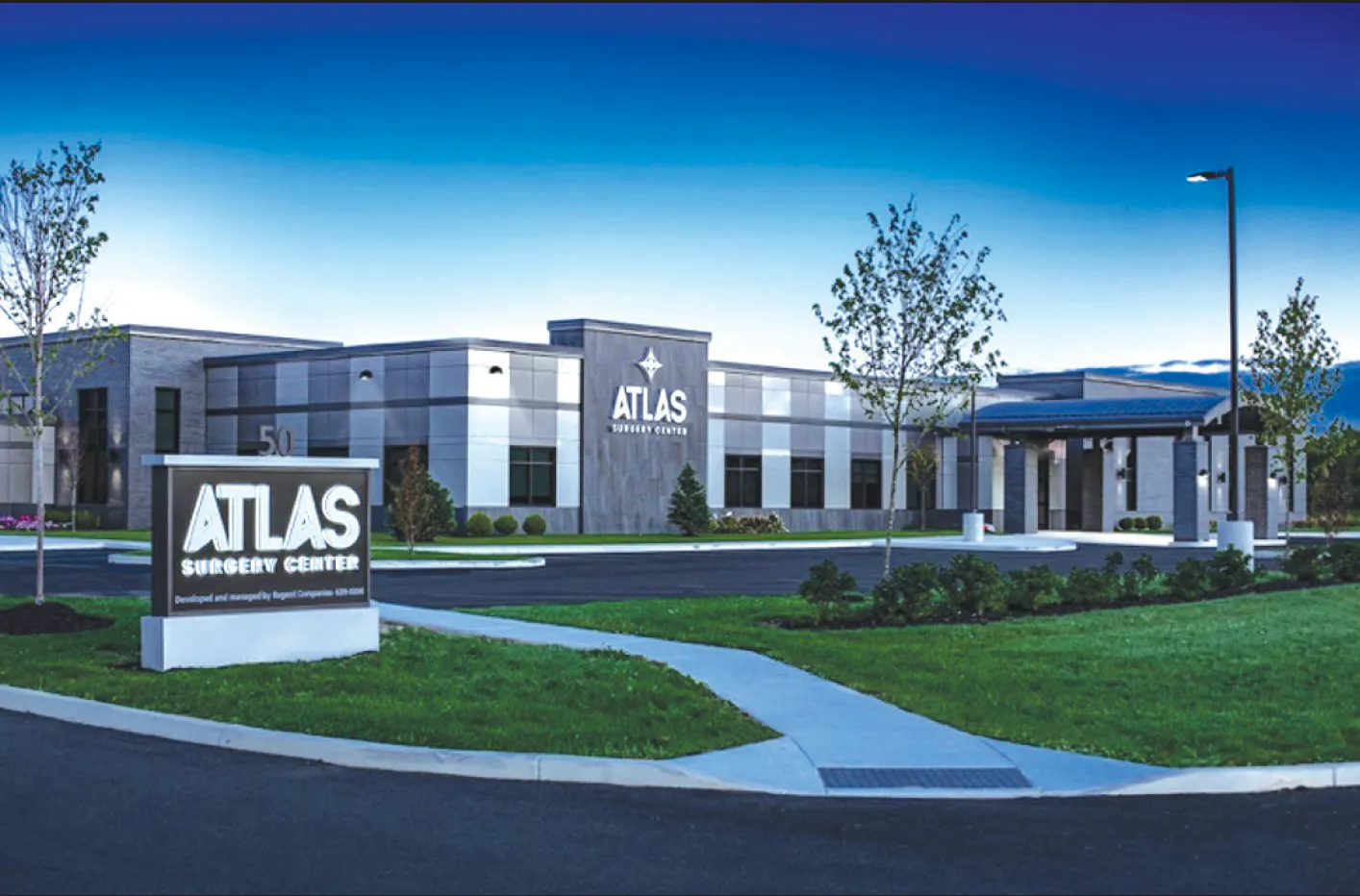
Figure 1. ATLAS ANSC.
In addition to diagnostic cerebral angiograms, we have continued to push the envelope by migrating interventions to the ambulatory setting, including flow diversion for intracranial aneurysms, venous sinus stenting, middle meningeal artery embolization for chronic subdural hematomas, and CAS.12
DETERMINING CANDIDACY FOR AMBULATORY CAS
Currently, CAS is typically performed as an inpatient procedure, with patients monitored in a hospital setting at least overnight. Many of these patients are stable for discharge after several hours of observation, and those who require longer inpatient monitoring (eg, access site complication, transient ischemic attack [TIA] or stroke, hemodynamic instability) typically are discharged early in the postprocedure period. To help address delays in patient care related to hospital bottlenecks, we believe CAS procedures can be performed safely and effectively in an ambulatory setting in well-selected patients. The importance of patient selection for ambulatory CAS cannot be overstated.
Indication for Treatment: Asymptomatic or Symptomatic?
First, one must consider whether the patient has asymptomatic or symptomatic carotid artery stenosis, as the rate of periprocedural adverse events is higher in symptomatic patients.13 Most patients who present to our tertiary hospital with a TIA or MRI-confirmed ischemic infarct and are found to have symptomatic carotid artery stenosis undergo revascularization during the same hospital admission. Thus, patients with asymptomatic carotid artery stenosis are typically the best candidates for treatment in an ambulatory setting.
Lesion Characteristics
Assessing for high-risk features is critical to pretreatment planning. Lesions with severe tortuosity, concentric calcifications, flow-limiting “string sign” stenosis with delay on perfusion imaging (increased risk for reperfusion hemorrhage following revascularization), or high-risk features on plaque morphology studies should be treated in a hospital setting due to increased periprocedural risk (Figure 2).14 When determining if a patient would be a suitable candidate for treatment in an ambulatory setting, a variety of imaging modalities can be employed to better understand the lesion, including Doppler ultrasonography, CTA, MRA, plaque morphology studies, or pretreatment diagnostic cerebral angiography.
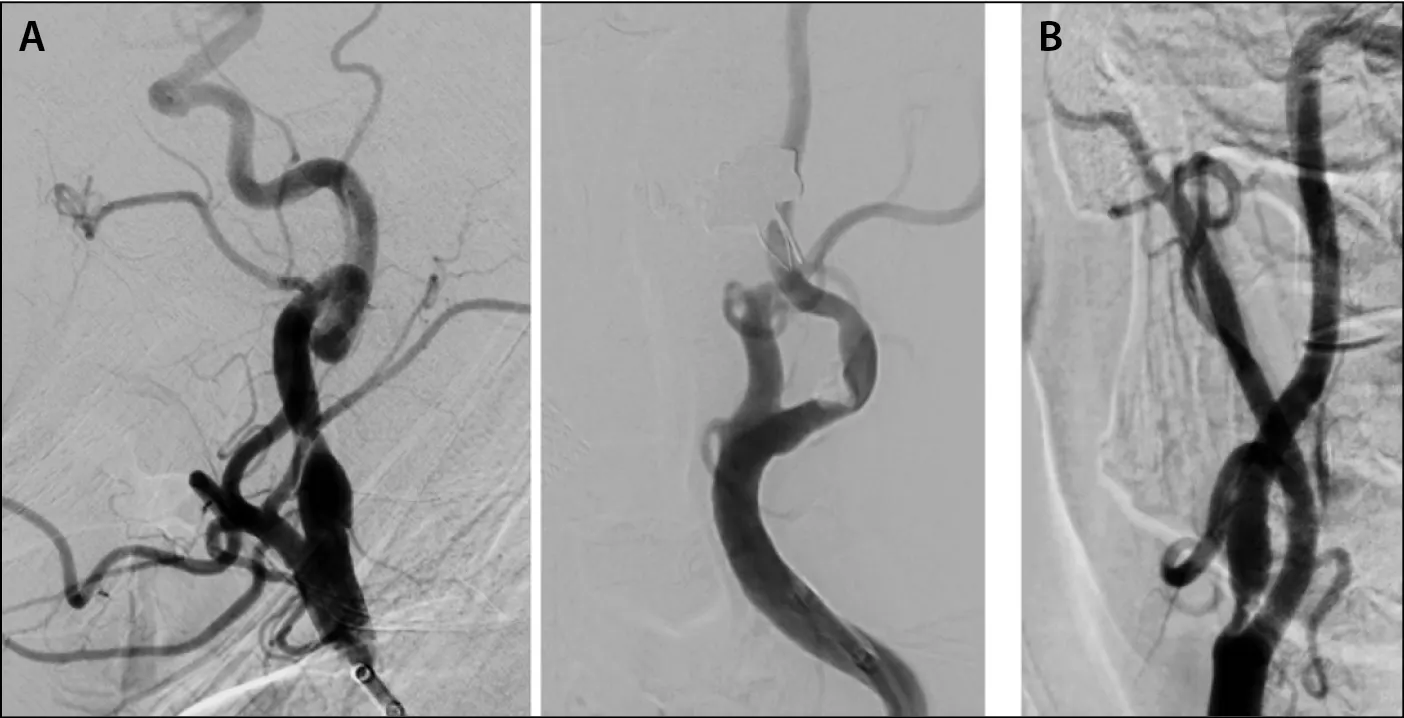
Figure 2. Representative digital subtraction angiography images of challenging carotid lesions with tortuosity and significant calcification that would be better treated in a hospital setting (A) and a less challenging carotid lesion that could be treated in an ASC (B).
Transfemoral Versus Transradial Access
In the ambulatory setting, CAS and other neuroendovascular procedures performed via a transradial approach are preferable to reduce the risk of access site complications that can occur with transfemoral approaches (eg, retroperitoneal hematomas, limb ischemia). However, the transradial approach requires an endovascular neurosurgeon who is adept at transradial interventions and has a comprehensive understanding of radial devices.
Patient Comorbidities
In addition to the periprocedural risks such as TIA or stroke, intracranial hemorrhage from reperfusion, and access site complications, other risks of CAS include hemodynamic instability (bradycardia or hypotension) and cardiac ischemia. Hemodynamic instability generally occurs either during the procedure or early in the postprocedural period and is often self-limiting.15 When evaluating a patient for CAS in an ambulatory setting, one should consider if the patient has significant preexisting cardiac conditions, baseline bradycardia, or significant hypotension.
KEYS TO BUILDING A SAFE AND SUCCESSFUL ANSC
Our ATLAS ANSC is designed such that the personnel and equipment match the capabilities of our tertiary hospital. Our facility is staffed with intensive care unit (ICU)–level nurses, physician assistants, in-house anesthesiologists, and an on-site endovascular neurosurgeon at all times while these procedures are being performed. These individuals are trained in efficiently triaging and managing neurologic emergencies with protocols in place for efficient transfer to our tertiary center when needed. The facility also has the ability to provide ICU-level care to stabilize patients in case of a medical emergency. Additionally, we utilize the latest biplane angiography technology, have MR capabilities for rapid triaging if the patient’s neurologic examination changes, and have access to the same devices and catheters as in our tertiary hospital.16 Finally, neurointerventions are all elective, scheduled, and intentionally performed early in the day to minimize scheduling disruptions and allow for ample time for postprocedural monitoring prior to discharge. Our team’s culture of being diligently prepared and detail-oriented in combination with our unwavering commitment to patient safety above all else gives us the confidence to keep pushing the envelope of what is possible in an ambulatory setting.
1. Tsao CW, Aday AW, Almarzooq ZI, et al. Heart disease and stroke statistics–2023 update: a report from the American Heart Association. Circulation. 2023;147:e93-e621. doi: 10.1161/CIR.0000000000001123
2. Saini V, Guada L, Yavagal DR. Global epidemiology of stroke and access to acute ischemic stroke interventions. Neurology. 2021;97(suppl 2):S6-S16. doi: 10.1212/WNL.0000000000012781
3. Bettger JP, Zhao X, Bushnell C, et al. The association between socioeconomic status and disability after stroke: findings from the Adherence eValuation After Ischemic stroke Longitudinal (AVAIL) registry. BMC Public Health. 2014;14:281. doi: 10.1186/1471-2458-14-281
4. Martin SS, Aday AW, Almarzooq ZI, et al. 2024 heart disease and stroke statistics: a report of US and global data from the American Heart Association. Circulation. 2024;149:e347-e913. doi: 10.1161/CIR.0000000000001209
5. Flach C, Muruet W, Wolfe CDA, et al. Risk and secondary prevention of stroke recurrence: a population-base cohort study. Stroke. 2020;51:2435-2444. doi: 10.1161/STROKEAHA.120.028992
6. Saba L, Libby P. Carotid artery stenosis–an impactful bias in ischemic stroke classification. JAMA Cardiol. 2026;11:11-13. doi: 10.1001/jamacardio.2025.4206
7. Brott TG, Howard G, Lal BK, et al. Medical management and revascularization for asymptomatic carotid stenosis. N Engl J Med. 2026;394:219-231. doi: 10.1056/NEJMoa2508800
8. Park J, St John E, Darling JD, Schermerhorn ML. Contemporary outcomes of carotid revascularization procedures. Semin Vasc Surg. 2026;39:41-51. doi: 10.1053/j.semvascsurg.2026.01.003
9. Hess RM, Lavadi RS, Agarwal N, et al. The role of ambulatory surgical centers in current neurosurgical practice. Surg Neurol Int. 2026;17:275. doi: 10.25259/SNI_15_2026
10. Scullen TA, Lian MX, Jaikumar V, et al. First reported series of cerebral angiography performed at an outpatient center: safety and satisfaction results. Neurosurgery. 2025;96:539-544. doi: 10.1227/neu.0000000000003119
11. Lai PMR, Jaikumar V, Leasher EL, et al. Turnover time in neuroangiography suites: comparison between cases performed at an ambulatory neurosurgery center versus a tertiary hospital. Stroke Vasc Interv Neurol. 2026;6:e002286. doi: 10.1161/SVIN.125.002286
12. Lai PMR, Snyder KV, Levy EI. First reported series of intracranial and carotid aneurysm embolization performed at an ambulatory neurosurgery center: preliminary experience. J Neurointerv Surg. 2025;18:750-754. doi: 10.1136/jnis-2025-023228
13. Ielasi A, Latib A, Godino C, et al. Clinical outcomes following protected carotid artery stenting in symptomatic and asymptomatic patients. J Endovasc Ther. 2010;17:298-307. doi: 10.1583/09-2997.1
14. Lim J, Jaikumar V, Xia TC, et al. Carotid revascularization protocol for symptomatic stenosis. Semin Neurol. 2026;46:358-366. doi: 10.1055/a-2848-3254
15. Cirbian J, Echaniz G, Gené A, et al. Incidence and timing of hypotension after transcervical carotid artery stenting: correlation with postoperative complications. Catheter Cardiovasc Interv. 2014;84:1013-1018. doi: 10.1002/ccd.25615
16. Patel D, Jaikumar V, Morioka TPT, et al. Implementation and clinical utility of ultra-low-field portable magnetic resonance imaging for postprocedural neurological evaluation in ambulatory neurosurgery: illustrative cases. J Neurosurg Case Lessons. 2026;12:CASE26245. doi: 10.3171/CASE26245
Advertisement
Advertisement