Advertisement
Advertisement
September 2026
Modern Medical Management for PAD: A Shifting Paradigm?
Developments in PAD management that signal a fundamental change from treating symptoms alone to modifying disease progression and improving outcomes with comprehensive, guideline-directed medical therapy.
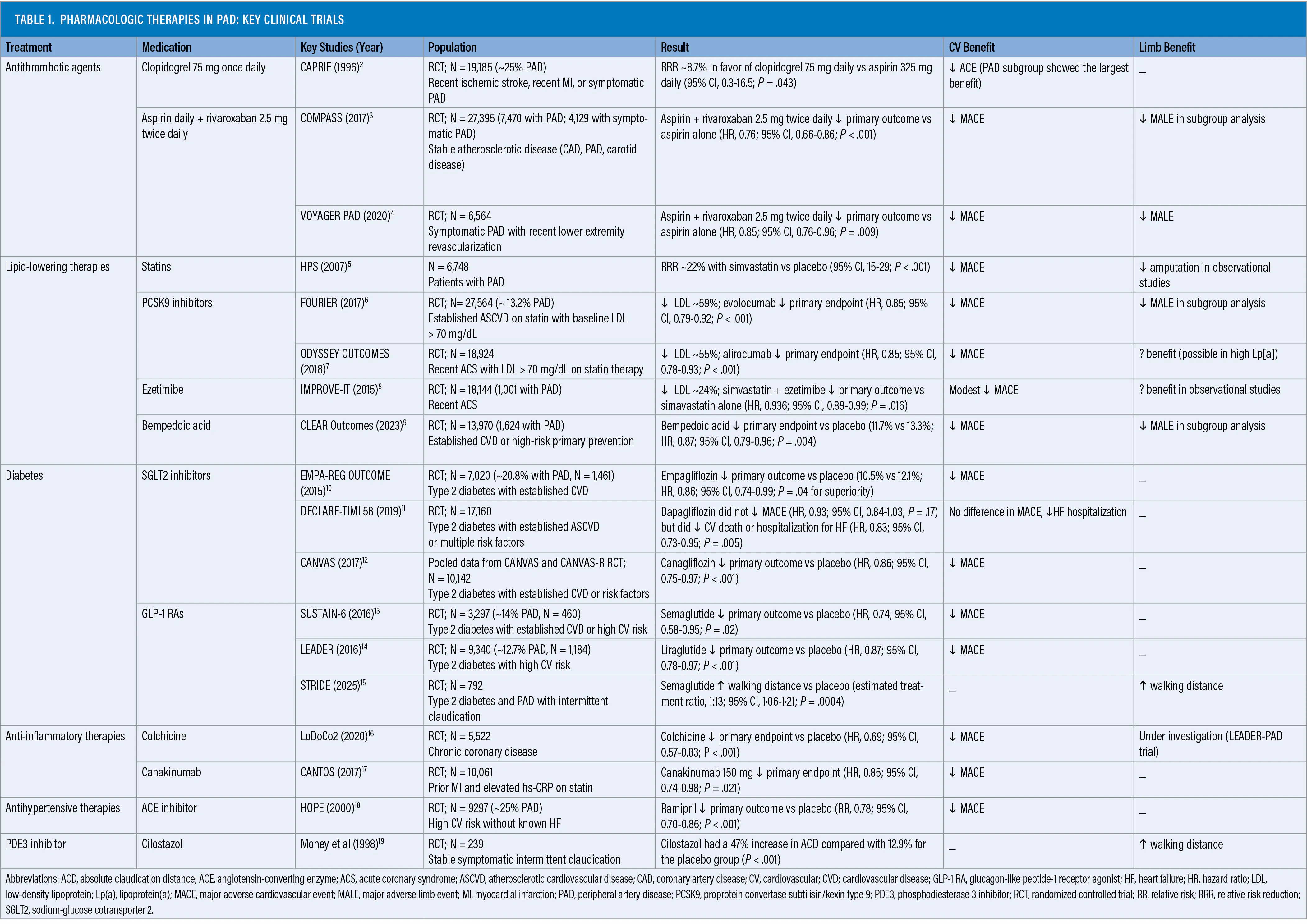
Peripheral artery disease (PAD) is an increasingly prevalent atherosclerotic disease affecting approximately 236 million people worldwide.1 PAD is associated with significant morbidity, including functional impairment, reduced quality of life (QOL), and elevated risk of major adverse cardiovascular events (MACE) and major adverse limb events (MALE).1 Over the past 2 decades, the management of PAD has evolved from a strategy centered on symptom management and revascularization to one that emphasizes comprehensive, guideline-directed medical therapy (GDMT) as the foundation of care (Figure 1). Contemporary management prioritizes aggressive risk factor modification and evidence-based pharmacotherapy (Table 1)2-19 to reduce MACE and MALE, prevent morbidity, and improve QOL.
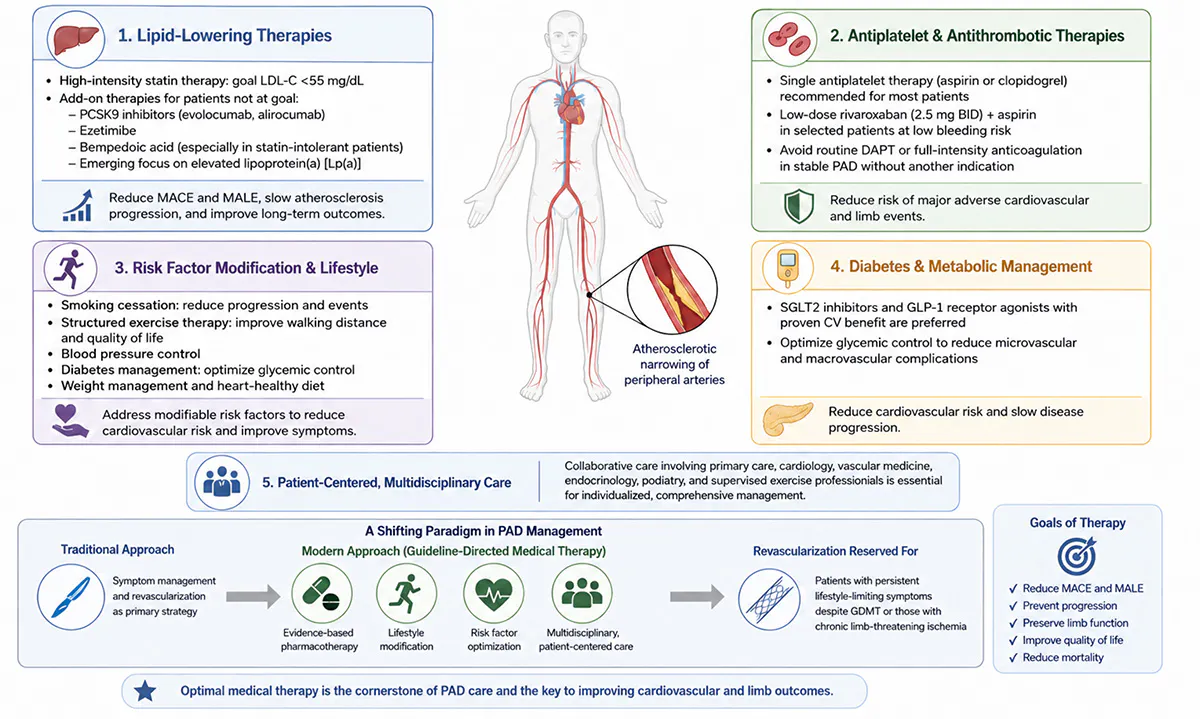
Figure 1. Modern medical management for PAD emphasizes comprehensive medical therapy, including intensive lipid-lowering, antithrombotic therapy, risk factor modification, exercise, and cardiometabolic treatment to reduce CV and limb events, improve function, and complement revascularization when needed. BID, twice daily; DAPT, dual antiplatelet therapy. Created with assistance from ChatGPT-5.6 Sol.
LIPID-LOWERING THERAPIES: MOVING BEYOND STATINS
Hyperlipidemia is a common risk factor for development of PAD. Lipid-lowering therapy with high-intensity statin is the foundation of treatment, with a recently updated goal of lowering low-density lipoprotein cholesterol (LDL-C) to < 55 mg/dL for patients with clinical atherosclerotic cardiovascular (CV) disease.20 This represents a departure from the previous LDL-C target of < 70 mg/dL, reflecting a shift toward more intensive lipid-lowering therapy to maximize risk reduction.1 Multiple studies have shown that statin therapy is associated with a reduction in limb events and CV mortality in patients with PAD.21 Despite this recommendation, statins are traditionally underprescribed in patients with PAD compared to other atherosclerotic diseases, including patients with coronary disease and/or cerebrovascular disease.22,23
In addition to statin therapy, newer proprotein convertase subtilisin/kexin type 9 (PCSK9) inhibitors have been shown to reduce MACE and MALE.1 In a subgroup analysis of the FOURIER trial, evolocumab significantly reduced MACE in patients with symptomatic PAD and adverse limb outcomes, with a consistent relationship between lower achieved LDL-C levels and further reduction of MALE.24 Similar benefits in reduction of MACE were seen for alirocumab in the ODYSSEY OUTCOMES trial.25 Thus, it is recommended to utilize PCSK9 inhibitors in patients with PAD who have not achieved target LDL-C.20
Other alternative lipid-lowering therapies including ezetimibe and bempedoic acid may be utilized to reduce atherosclerotic risk. In a subgroup analysis of the IMPROVE-IT trial, which evaluated simvastatin plus ezetimibe versus placebo in patients with acute coronary syndrome, ezetimibe was associated with reduction of MACE in patients with PAD.8,26 Although there are no randomized data to support the use of ezetimibe to prevent MALE in patients with PAD, observational studies suggest reduction of limb amputation.27 In the CLEAR Outcomes trial, bempedoic acid significantly reduced the risk of MACE compared with placebo among statin-intolerant patients with established or high-risk CV disease,9 and, in an analysis of patients with PAD, reduced MALE.28
Elevated lipoprotein(a) (Lp[a]) has emerged as an additional risk factor for development of atherosclerotic disease, with high Lp(a) levels demonstrating a two- to threefold increased risk of PAD.29 In ODYSSEY OUTCOMES, a reduction in PAD events with alirocumab was associated with baseline quartile of Lp(a).25 Although currently there are no targeted Lp(a)-lowering therapies available for prescription, multiple investigational therapeutic trials are currently underway to study their effect on MACE and MALE.30
ANTITHROMBOTIC AND ANTIPLATELET THERAPY: BREAKTHROUGHS IN DUAL-PATHWAY INHIBITION
In patients with symptomatic PAD, current guidelines recommend single antiplatelet therapy with either aspirin or clopidogrel for reduction of MACE.1 The CAPRIE trial demonstrated modest benefit of clopidogrel 75 mg daily compared to aspirin 325 mg daily in patients with recent ischemic stroke, recent myocardial infarction (MI), or symptomatic PAD.2 This benefit was most pronounced in the PAD subgroup, forming the basis for contemporary guideline recommendations that generally favor clopidogrel over aspirin as the preferred single antiplatelet agent in patients with symptomatic PAD.1 In patients with asymptomatic PAD, the role of antiplatelet therapy is less clear because the clinical trial assessing the question did not enroll a PAD population by typical diagnostic standards.31
More recent clinical trials have demonstrated the benefit of dual-pathway inhibition with use of antithrombotic agents such as low-dose rivaroxaban in addition to antiplatelet therapy with aspirin. In the landmark COMPASS trial, aspirin plus low-dose rivaroxaban 2.5 mg twice daily reduced MACE in patients with stable coronary artery disease and/or PAD compared to aspirin alone.3 Subgroup analysis demonstrated treatment with rivaroxaban and aspirin compared with aspirin alone also reduced MALE, including major amputation.32 This trial marked a pivotal advance in the medical management of PAD, as findings provided the first robust evidence that pharmacologic therapy could substantially reduce MALE, including acute limb ischemia and major vascular amputation in addition to CV events. Prior to COMPASS, pharmacologic therapies had primarily focused on CV risk reduction, with limited evidence supporting their ability to prevent limb events. These findings were further supported by the VOYAGER PAD trial in 2020, which demonstrated similar limb benefits of this regimen in patients with recent lower extremity revascularization.4 Together, COMPASS and VOYAGER PAD establish dual-pathway inhibition as a cornerstone of contemporary PAD management, shifting the therapeutic paradigm from symptom-directed treatment to comprehensive prevention of both CV and limb ischemic events.
DIABETES MANAGEMENT: MORE THAN GLYCEMIC CONTROL
Diabetes is a known risk factor for the development of PAD and adverse limb events, including amputation, by accelerating atherosclerosis and contributing to ulcer formation with poor wound healing and neuropathy.33,34 Although guidelines do not mention specific glycemic targets, it is recommended that glycemic control follows standard recommendations.1
Two classes of medications have emerged as primarily beneficial for the reduction of MACE in patients with PAD: sodium-glucose cotransporter-2 (SGLT2) inhibitors and glucagon-like peptide-1 receptor agonists (GLP-1 RAs).1 In the EMPA-REG OUTCOME trial, the SGLT2 inhibitor empagliflozin significantly reduced MACE.10 Although dapagliflozin did not demonstrate a significant reduction in MACE in DECLARE-TIMI 58, it was associated with lower rates of CV death and heart failure (HF) hospitalization.11 Canagliflozin reduced MACE in the CANVAS program; however, this benefit was accompanied by an increased risk of lower extremity amputation not seen with empagliflozin or dapagliflozin, prompting the FDA to issue a boxed warning.12 Although this finding was not reproduced in the subsequent CREDENCE trial, trial protocol held canagliflozin for patients at high risk for amputation and incorporated more intensive foot surveillance.35 The FDA removed the boxed warning in 2020, but canagliflozin continues to carry a precaution regarding amputation risk in susceptible patients. Subsequent meta-analyses did not demonstrate an increased risk of amputation with other SGLT2 inhibitors, supporting the preferential use of empagliflozin or dapagliflozin in patients with PAD when SGLT2 inhibitor therapy is indicated.36,37
GLP-1 AND THE CHANGING CARDIOMETABOLIC LANDSCAPE
In addition to SGLT2 inhibitors, GLP-1 RAs have transformed CV prevention by reducing atherosclerotic events and offering improvements in cardiometabolic risk factor management and functional status. Both the SUSTAIN-6 CV and LEADER outcome trials, which assessed semaglutide and liraglutide, respectively, included patients with known PAD and demonstrated significant reductions in MACE.13,14 Beyond CV risk reduction, GLP-1 RAs also confer limb-specific benefits. The STRIDE trial demonstrated significant improvement in walking distance with semaglutide compared to placebo in patients with type 2 diabetes and symptomatic PAD with intermittent claudication.15 These findings are particularly notable given that, aside from cilostazol, effective medical therapies targeting claudication symptoms have historically been scarce. With larger and longer-term studies, GLP-1 RAs have been shown to address both CV risk reduction and functional impairment, further expanding the role of medical therapy in contemporary PAD management.
Beyond their CV benefits, GLP-1 RAs are increasingly prescribed for the treatment of other metabolic disorders such as obesity, chronic kidney disease, obstructive sleep apnea, and metabolic dysfunction-associated steatohepatitis.17 Since its initial FDA approval in 2005, GLP-1 use has significantly increased. Studies have shown that approximately 1 in 8 people in the United States have reported current or past GLP-1 usage.38 Their rapid adoption extends their influence beyond individual patient care to the future of clinical investigation. As GLP-1 RAs become part of routine background therapy among trial participants, the landscape of PAD clinical trials will change. Future PAD trials will begin to evaluate novel therapies on top of GLP-1 RAs rather than in their absence, requiring careful interpretation of both CV and limb outcomes within an evolving standard of care. Furthermore, background therapy may lower baseline CV and metabolic risk and reduce trial event rates, ultimately requiring larger and longer studies or more targeted higher-risk cohorts while shifting expectations for incremental treatment effects.
ANTI-INFLAMMATORY THERAPIES: A POTENTIAL NEW TARGET?
Inflammation is increasingly recognized as a key contributor to the development and progression of atherosclerotic disease, including PAD.39 Prior observational studies have demonstrated a relationship between elevated inflammatory markers, including C-reactive protein (CRP) and interleukin-6 (IL-6), and the development of PAD.40-42 These findings have garnered interest in developing targeted anti-inflammatory therapies to reduce residual CV risk beyond conventional lipid-lowering therapies. In the CANTOS trial, canakinumab, an IL-1β inhibitor, significantly reduced the rate of CV events compared to placebo independent of lipid lowering in patients with prior MI and elevated high-sensitivity CRP.17 Similarly, the LoDoCo2 trial also demonstrated beneficial effects of low-dose colchicine in reduction of CV events in patients with stable chronic coronary disease.16 These findings establish inflammation as a potential therapeutic target in atherosclerotic disease. Although neither CANTOS nor LoDoCo2 specifically enrolled patients with PAD, their findings provide biological rationale for evaluating anti-inflammatory therapy in this high-risk population that experiences substantial residual risk despite contemporary GDMT. The ongoing LEADER-PAD trial is the first randomized controlled trial evaluating whether low-dose colchicine reduces MACE and MALE in patients with symptomatic PAD.43 If positive, anti-inflammatory therapy could represent another important advance in the evolution of PAD management by targeting residual inflammatory risk in addition to thrombosis, cardiometabolic risk, and dyslipidemia.
ADDRESSING CLAUDICATION IN THE MODERN ERA
Supervised exercise therapy (SET) is recommended for patients with chronic symptomatic PAD to improve functional status, walking distance, and QOL.1,44,45 Studies have demonstrated that SET in combination with endovascular revascularization provides more benefit than SET alone.46,47 While SET programs are considered optimal, utilization is poor.48 Community and home-based exercise programs are considered alternatives when SET is either not available or accessible.1,49 Recent advances in digital health, including wearable activity monitors, remote monitoring, and mobile applications, are an active area of investigation in PAD and may reshape the future of exercise therapy.50-52
Before GLP-1 RAs were shown to improve functional capacity, cilostazol, a phosphodiesterase-3 (PDE-3) inhibitor that induces arterial vasodilation, was the only medication recommended for the treatment of symptomatic PAD.53 Compared to placebo, cilostazol significantly increased maximal walking distance by around 40 m.53 This is broadly comparable to the effects of semaglutide in the STRIDE trial.15 However, cilostazol is contraindicated in patients with HF due to adverse outcomes with other PDE-3 inhibitors in this population.54 In contrast, GLP-1 RAs have proven benefits in reducing HF outcomes.55 This is particularly relevant given the high coprevalence of HF in patients with PAD.56 Both pharmacologic therapies demonstrate considerably modest gains when compared to SET, which can improve walking distance 150 to 300 m in some studies.57 Overall findings suggest that pharmacologic therapy should be used in conjunction with targeted exercise therapy for improvement of symptoms and functional status. Future research may focus on integrating digital health technologies with pharmacologic therapies to optimize functional outcomes.
CONCLUSION
Management of PAD has evolved from a symptom-focused approach to one centered on comprehensive vascular risk reduction. Beyond established advances in lipid lowering and antithrombotic therapy, recent evidence demonstrating reductions in MALE with dual-pathway inhibition, improvement in functional outcomes with GLP-1 RAs, and growing interest in anti-inflammatory therapy have expanded the therapeutic landscape. Together, these developments signal a fundamental shift in PAD management from treating symptoms alone to modifying disease progression and improving both CV and limb outcomes. The results of the ongoing LEADER-PAD trial and longer-term studies evaluating the effects of GLP-1 RAs on limb outcomes will continue to shape the future direction of the field.
1. Gornik HL, Aronow HD, Goodney PP, et al. 2024 ACC/AHA/AACVPR/APMA/ABC/SCAI/SVM/SVN/SVS/SIR/VESS guideline for the management of lower extremity peripheral artery disease: a report of the American College of Cardiology/American Heart Association Joint Committee on Clinical Practice Guidelines. Circulation. 2024;149:e1313–e1410. doi: 10.1161/CIR.0000000000001251
2. CAPRIE Steering Committee. A randomised, blinded, trial of clopidogrel versus aspirin in patients at risk of ischaemic events (CAPRIE). Lancet. 1996;348:1329-1339. doi: 10.1016/s0140-6736(96)09457-3
3. Eikelboom JW, Connolly SJ, Bosch J, et al. Rivaroxaban with or without aspirin in stable cardiovascular disease. N Engl J Med. 2017;377:1319-1330. doi: 10.1056/NEJMoa1709118
4. Bonaca MP, Bauersachs RM, Anand SS, et al. Rivaroxaban in peripheral artery disease after revascularization. N Engl J Med. 2020;382:1994-2004. doi: 10.1056/NEJMoa2000052
5. Heart Protection Study Collaborative Group. Randomized trial of the effects of cholesterol-lowering with simvastatin on peripheral vascular and other major vascular outcomes in 20,536 people with peripheral arterial disease and other high-risk conditions. J Vasc Surg. 2007;45:645-654. doi: 10.1016/j.jvs.2006.12.054
6. Sabatine MS, Giugliano RP, Keech AC, et al; FOURIER Steering Committee and Investigators. Evolocumab and Clinical outcomes in patients with cardiovascular disease. N Engl J Med. 2017;3761713-1722. doi: 10.1056/NEJMoa1615664
7. Schwartz GG, Steg PG, Szarek M, et al. Alirocumab and cardiovascular outcomes after acute coronary syndrome. N Engl J Med. 2018;379:2097-2107. doi: 10.1056/NEJMoa1801174
8. Cannon CP, Blazing MA, Giugliano RP, et al. Ezetimibe added to statin therapy after acute coronary syndromes. N Engl J Med. 2015;372:2387-2397. doi: 10.1056/NEJMoa1410489
9. Nissen SE, Lincoff AM, Brennan D, et al. Bempedoic acid and cardiovascular outcomes in statin-intolerant patients. N Engl J Med. 2023;388:1353-1364. doi: 10.1056/NEJMoa2215024
10. Zinman B, Wanner C, Lachin JM, et al. Empagliflozin, cardiovascular outcomes, and mortality in type 2 diabetes. N Engl J Med. 2015;373:2117-2128. doi: 10.1056/NEJMoa1504720
11. Wiviott SD, Raz I, Bonaca MP, et al. Dapagliflozin and cardiovascular outcomes in type 2 diabetes. N Engl J Med. 2019;380:347-357. doi: 10.1056/NEJMoa1812389
12. Neal B, Perkovic V, Mahaffey KW, et al. Canagliflozin and cardiovascular and renal events in type 2 diabetes. N Engl J Med. 2017;377:644-657. doi: 10.1056/NEJMoa1611925
13. Marso SP, Bain SC, Consoli A, et al. Semaglutide and cardiovascular outcomes in patients with type 2 diabetes. N Engl J Med. 2016;375:1834-1844. doi: 10.1056/NEJMoa1607141
14. Marso SP, Daniels GH, Brown-Frandsen K, et al. Liraglutide and cardiovascular outcomes in type 2 diabetes. N Engl J Med. 2016;375:311-322. doi: 10.1056/NEJMoa1603827
15. Bonaca MP, Catarig AM, Houlind K, et al. Semaglutide and walking capacity in people with symptomatic peripheral artery disease and type 2 diabetes (STRIDE): a phase 3b, double-blind, randomised, placebo-controlled trial. Lancet. 2025;405:1580-1593. doi: 10.1016/S0140-6736(25)00509-4
16. Nidorf SM, Fiolet ATL, Mosterd A, et al. Colchicine in patients with chronic coronary disease. N Engl J Med. 2020;383:1838-1847. doi: 10.1056/NEJMoa2021372
17. Ridker PM, Everett BM, Thuren T, et al. Antiinflammatory therapy with canakinumab for atherosclerotic disease. N Engl J Med. 2017;377:1119-1131. doi: 10.1056/NEJMoa1707914
18. Heart Outcomes Prevention Evaluation Study Investigators; Yusuf S, Sleight P, Pogue J, et al. Effects of an angiotensin-converting-enzyme inhibitor, ramipril, on cardiovascular events in high-risk patients. N Engl J Med. 2000;342:145-153. doi: 10.1056/NEJM200001203420301
19. Money SR, Herd JA, Isaacsohn JL, et al. Effect of cilostazol on walking distances in patients with intermittent claudication caused by peripheral vascular disease. J Vasc Surg. 1998;27:267-274. doi: 10.1016/s0741-5214(98)70357-x
20. Blumenthal RS, Morris PB, Gaudino M, et al. 2026 ACC/AHA/AACVPR/ABC/ACPM/ADA/AGS/APhA/ASPC/NLA/PCNA guideline on the management of dyslipidemia: a report of the American College of Cardiology/American Heart Association Joint Committee on Clinical Practice Guidelines. Circulation. 2026;153:e1154-e1276. doi: 10.1161/CIR.0000000000001423
21. Pastori D, Farcomeni A, Milanese A, et al. Statins and major adverse limb events in patients with peripheral artery disease: a systematic review and meta-analysis. Thromb Haemost. 2020;120:866-875. doi: 10.1055/s-0040-1709711
22. Arya S, Khakharia A, Binney ZO, et al. Association of statin dose with amputation and survival in patients with peripheral artery disease. Circulation. 2018;137:1435-1446. doi: 10.1161/CIRCULATIONAHA.117.032361
23. Colantonio LD, Hubbard D, Monda KL, et al. Atherosclerotic risk and statin use among patients with peripheral artery disease. J Am Coll Cardiol. 2020;76:251-264. doi: 10.1016/j.jacc.2020.05.048
24. Bonaca MP, Nault P, Giugliano RP, et al. Low-density lipoprotein cholesterol lowering with evolocumab and outcomes in patients with peripheral artery disease: insights from the FOURIER trial (Further Cardiovascular Outcomes Research With PCSK9 Inhibition in Subjects With Elevated Risk). Circulation. 2018;137:338-350. doi: 10.1161/CIRCULATIONAHA.117.032235
25. Schwartz GG, Steg PG, Szarek M, et al. Peripheral artery disease and venous thromboembolic events after acute coronary syndrome: role of lipoprotein(a) and modification by alirocumab: prespecified analysis of the ODYSSEY OUTCOMES randomized clinical trial. Circulation. 2020;141:1608-1617. doi: 10.1161/CIRCULATIONAHA.120.046524
26. Bonaca MP, Gutierrez JA, Cannon C, et al. Polyvascular disease, type 2 diabetes, and long-term vascular risk: a secondary analysis of the IMPROVE-IT trial. Lancet Diabetes Endocrinol. 2018;6:934-943. doi: 10.1016/S2213-8587(18)30290-0
27. Iwasaki Y, Shimada T, Kishimori T, et al. Clinical outcomes of ezetimibe plus statins in patients with lower extremity artery disease. JACC Adv. 2025;4:102074. doi: 10.1016/j.jacadv.2025.102074
28. Bonaca M, Canonico ME, Sasiela W, et al. Abstract 4139186: Bempedoic acid and limb outcomes in statin-intolerant patients with peripheral artery disease. Circulation. 2024;150(suppl 1):A4139186-A4139186. https://doi.org/10.1161/circ.150.suppl_1.4139186
29. Thomas PE, Vedel-Krogh S, Nielsen SF, et al. Lipoprotein(a) and risks of peripheral artery disease, abdominal aortic aneurysm, and major adverse limb events. J Am Coll Cardiol. 2023;82:2265-2276. doi: 10.1016/j.jacc.2023.10.009
30. De Los Reyes C, Rikhi RR, Doherty S, et al. Current clinical trials for treating elevated lipoprotein(a). Curr Cardiovasc Risk Rep. 2025;19:7. doi: 10.1007/s12170-025-00759-8
31. Fowkes FG, Price JF, Stewart MCW, et al. Aspirin for prevention of cardiovascular events in a general population screened for a low ankle brachial index: a randomized controlled trial. JAMA. 2010;303:841-848. doi: 10.1001/jama.2010.221
32. Kaplovitch E, Eikelboom JW, Dyal L, et al. Rivaroxaban and aspirin in patients with symptomatic lower extremity peripheral artery disease: a subanalysis of the COMPASS randomized clinical trial. JAMA Cardiol. 2021;6:21-29. doi: 10.1001/jamacardio.2020.4390
33. Beckman JA, Duncan MS, Damrauer SM, et al. Microvascular disease, peripheral artery disease, and amputation. Circulation. 2019;140:449-458. doi: 10.1161/CIRCULATIONAHA.119.040672
34. Das SR, Bonaca MP, Creager MA, et al. Management of peripheral artery disease in adults with diabetes: 2025 ACC scientific statement: a report of the American College of Cardiology. J Am Coll Cardiol. Published online December 17, 2025. doi: 10.1016/j.jacc.2025.11.027
35. Perkovic V, Jardine MJ, Neal B, et al. Canagliflozin and renal outcomes in type 2 diabetes and nephropathy. N Engl J Med. 2019;380:2295-2306. doi: 10.1056/NEJMoa1811744
36. Heyward J, Mansour O, Olson L, et al. Association between sodium-glucose cotransporter 2 (SGLT2) inhibitors and lower extremity amputation: a systematic review and meta-analysis. PLoS One. 2020;15:e0234065. doi: 10.1371/journal.pone.0234065
37. Geng L, Sun B, Chen Y. A meta-analysis of randomized controlled studies examining the effects of sodium-glucose co-transporter-2 inhibitors on peripheral artery disease and risk of amputations. Diabetes Obes Metab. 2024;26:5376-5389. doi: 10.1111/dom.15901.
38. Bozick R, Donofry SD, Rancaño KM. New weight loss drugs: GLP-1 agonist use and side effects in the United
39. Brevetti G, Giugliano G, Brevetti L, Hiatt WR. Inflammation in peripheral artery disease. Circulation. 2010;122:1862-1875. doi: 10.1161/CIRCULATIONAHA.109.918417
40. Wildman RP, Muntner P, Chen J, et al. Relation of inflammation to peripheral arterial disease in the national health and nutrition examination survey, 1999-2002. Am J Cardiol. 2005;96:1579-1583. doi: 10.1016/j.amjcard.2005.07.067
41. Tzoulaki I, Murray GD, Lee AJ, et al. C-reactive protein, interleukin-6, and soluble adhesion molecules as predictors of progressive peripheral atherosclerosis in the general population: Edinburgh Artery Study. Circulation. 2005;112:976-983. doi: 10.1161/CIRCULATIONAHA.104.513085
42. Tzoulaki I, Murray GD, Lee AJ, et al. Inflammatory, haemostatic, and rheological markers for incident peripheral arterial disease: Edinburgh Artery Study. Eur Heart J. 2007;28:354-362. doi: 10.1093/eurheartj/ehl441
43. Jansen S, Chan N, de Borst GJ, et al. Low dose colchicine in patients with peripheral artery disease to address residual vascular risk (LEADER-PAD) trial: relevance and importance of a global initiative. Eur J Vasc Endovasc Surg. 2025;70:401-402. doi: 10.1016/j.ejvs.2025.05.004
44. Fakhry F, van de Luijtgaarden KM, Bax L, et al. Supervised walking therapy in patients with intermittent claudication. J Vasc Surg. 2012; 56:1132-1142. doi: 10.1016/j.jvs.2012.04.046
45. McDermott MM, Ades P, Guralnik JM, et al. Treadmill exercise and resistance training in patients with peripheral arterial disease with and without intermittent claudication: a randomized controlled trial. JAMA. 2009;301:165-174. doi: 10.1001/jama.2008.962
46. Pandey A, Banerjee S, Ngo C, et al. Comparative efficacy of endovascular revascularization versus supervised exercise training in patients with intermittent claudication: meta-analysis of randomized controlled trials. JACC Cardiovasc Interv. 2017;10:712-724. doi: 10.1016/j.jcin.2017.01.027
47. Fakhry F, Spronk S, van der Laan L, et al. Endovascular revascularization and supervised exercise for peripheral artery disease and intermittent claudication: a randomized clinical trial. JAMA. 2015;314:1936-1944. doi: 10.1001/jama.2015.14851
48. Treat-Jacobson D, McDermott MM, Beckman J, et al. Implementation of supervised exercise therapy for patients with symptomatic peripheral artery disease: a science advisory from the American Heart Association. Circulation. 2019;140:e700-e710. doi: 10.1161/CIR.0000000000000727
49. Treat-Jacobson D, McDermott MM, Bronas UG, et al. Optimal exercise programs for patients with peripheral artery disease: a scientific statement from the American Heart Association. Circulation. 2019;139:e10-e33. doi: 10.1161/CIR.0000000000000623
50. Sivagangan P, Mancuso E, Sanders I, et al. Systematic review of tracking-based technology for patients with claudication. Vasc Med. 2025;30:353-363. doi: 10.1177/1358863X251316198
51. Veiga C, Pedras S, Oliveira R, et al. A systematic review on smartphone use for activity monitoring during exercise therapy in intermittent claudication. J Vasc Surg. 2022;76:1734-1741. doi: 10.1016/j.jvs.2022.04.045
52. Normahani P, Kwasnicki R, Bicknell C, et al. Wearable sensor technology efficacy in peripheral vascular disease (wSTEP): a randomized controlled trial. Ann Surg. 2018;268:1113-1118. doi: 10.1097/SLA.0000000000002300
53. Beebe HG, Dawson DL, Cutler BS, et al. A new pharmacological treatment for intermittent claudication: results of a randomized, multicenter trial. Arch Intern Med. 1999;159:2041-2050. doi: 10.1001/archinte.159.17.2041
54. Page RL 2nd, O'Bryant CL, Cheng D, et al. Drugs that may cause or exacerbate heart failure: a scientific statement from the American Heart Association. Circulation. 2016;134:e32-69. doi: 10.1161/CIR.0000000000000426
55. Gonzales-Uribe A, Ruiz-Cortez R, Collantes-Silva N, et al. Impact of GLP-1 receptor agonists on cardiovascular outcomes in heart failure with preserved ejection fraction (HFpEF): systematic review and meta-analysis. Clin Res Cardiol. 2026;115:1543-1558. doi: 10.1007/s00392-025-02710-8
56. Samsky MD, Hellcamp A, Hiatt WR, et al. Association of heart failure with outcomes among patients with peripheral artery disease: insights from EUCLID. J Am Heart Assoc. 2021;10:e018684. doi: 10.1161/JAHA.120.018684
57. Schieber MN, Pipinos II, Johanning JM, et al. Supervised walking exercise therapy improves gait biomechanics in patients with peripheral artery disease. J Vasc Surg. 2020;71:575-583. doi: 10.1016/j.jvs.2019.05.044
Advertisement
Advertisement
