Advertisement
Advertisement
April 4, 2024
AngioDynamics’ AlphaVac F18⁸⁵ System Receives FDA Clearance for Treatment of PE
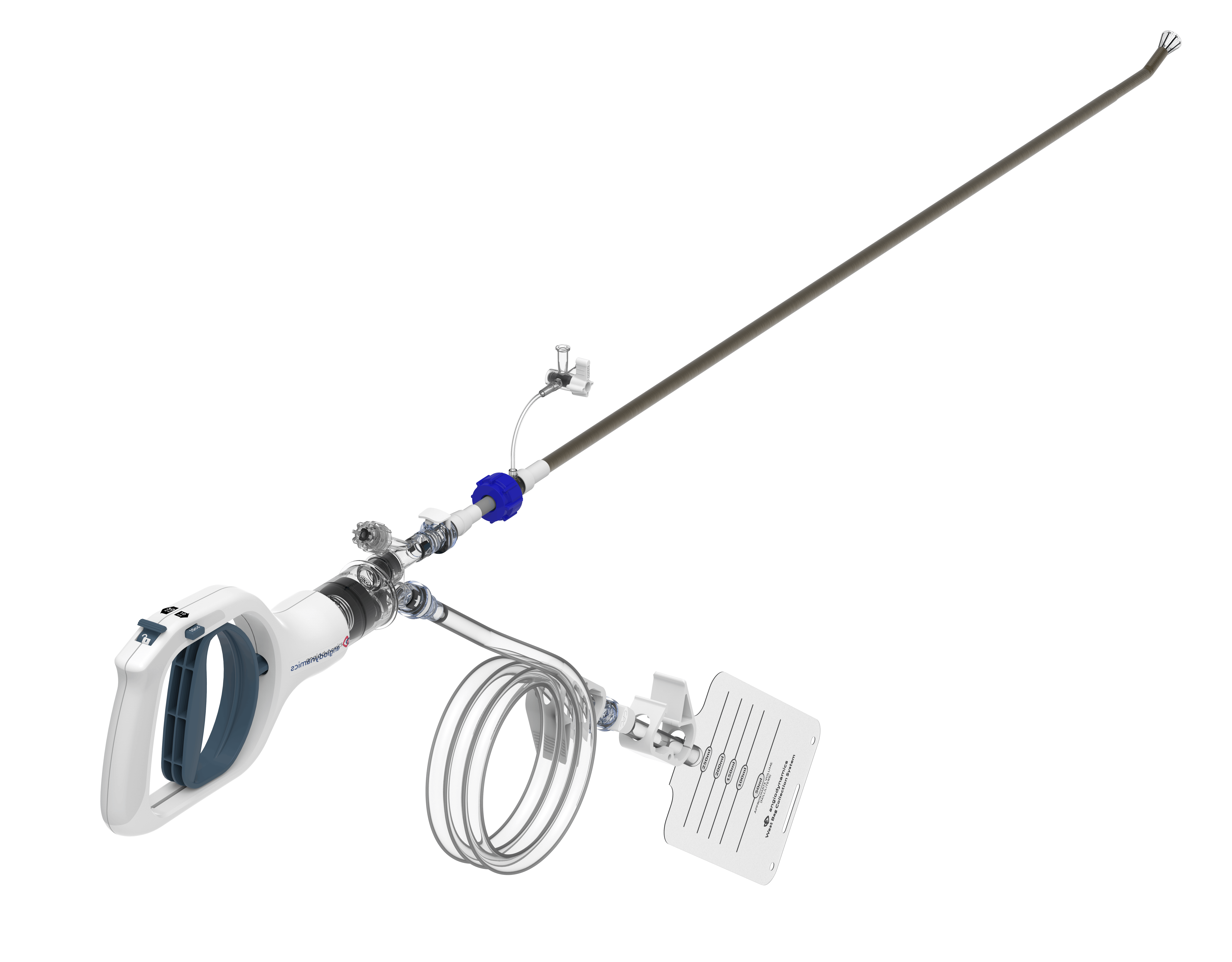 April 4, 2024—AngioDynamics, Inc. announced FDA 510(k) clearance for the AlphaVac F1885 system for the treatment of pulmonary embolism (PE).
According to the company, the expanded FDA indication broadens the applicability of the AlphaVac F1885 system in the nonsurgical removal of thrombi or emboli from the venous vasculature, reducing thrombus burden and improving right ventricular function in patients with PE.
The AlphaVac F1885 system includes an ergonomic handle, an 18-F cannula with an 85º angle, an obturator, and a waste bag assembly. The emergent first-line device is currently cleared for the removal of thromboemboli from the venous system and for the treatment of PE.
AngioDynamics stated that APEX-AV, the Acute Pulmonary Embolism Extraction Trial with the AlphaVac System, provided safety and efficacy data for a clearance specific to PE. The single-arm investigational device exemption study enrolled 122 patients with confirmed acute, intermediate-risk PE at 25 hospitals in the United States.
In December 2023, the company announced the completion of patient enrollment in the study.
The APEX-AV study was initiated in April 2022 in partnership with The Pulmonary Embolism Response Team (PERT) Consortium. The study’s coprincipal investigators are William Brent Keeling, MD, and Mona Ranade, MD.
“The addition of the AlphaVac system in the mechanical thrombectomy world is a critical step forward in the treatment of PE patients,” commented Dr. Keeling in the AngioDynamics press release. “The rapid patient enrollment and the excellent safety and efficacy outcomes from the APEX-AV study validate the need for such technologies to be part of the PE treatment algorithm.”
Dr. Ranade added, “The 510(k) clearance of the AlphaVac system represents an important milestone toward the treatment of PE. The data from the APEX-AV study showed a significant improvement in the RV function and a rapid resolution of clot burden in the pulmonary arteries.”
Dr. Keeling, who is the Immediate Past President of The PERT Consortium, is Associate Professor of Surgery, Department of Surgery, at the Emory University School of Medicine in Atlanta, Georgia. Dr. Ranade is Assistant Professor, Interventional Radiology, at the David Geffen School of Medicine at UCLA in Los Angeles, California.
Also in the press release, John M. Moriarty, MD, President-elect of The PERT Consortium, stated, “Catheter-based therapies are becoming a major tool in the PE space. With a handle that can limit blood loss and a true large bore cannula with a 33-F funnel, I expect the AlphaVac system to play a crucial role in the treatment of PE.” Dr. Moriarty is Professor, Interventional Radiology, at UCLA.
As summarized in the company’s press release, the primary efficacy endpoint of the APEX-AV study was the reduction in the right ventricle/left ventricle (RV/LV) ratio between baseline and 48 hours postprocedure. The primary safety endpoint was the rate of major adverse events (MAEs; including major bleeding, serious device-related clinical deterioration, pulmonary vascular injury, and cardiac injury) within the first 48 hours. Patients were followed for 30 days postindex procedure.
The APEX-AV study showed a mean decrease in the RV/LV ratio from baseline to 48 hours postprocedure of 0.45—which was significantly greater than the predefined performance goal of 0.12 (P < .001). The MAE rate of 4.1% was significantly lower than the predefined performance goal of 25% (P < .001). The study also showed a 35.5% mean reduction in clot burden from baseline to 48 hours postprocedure, reported AngioDynamics.
Advertisement
Advertisement
