Advertisement
Advertisement
April 29, 2026
BD Launches CentroVena One Insertion System
KEY TAKEAWAYS
- BD launches the CentroVena One insertion system.
- The all-in-one device consolidates the introducer needle, syringe, guidewire, and catheter into a single platform.
- The FDA-cleared CentroVena One device was accepted into the FDA Safer Technologies Program for Medical Devices.
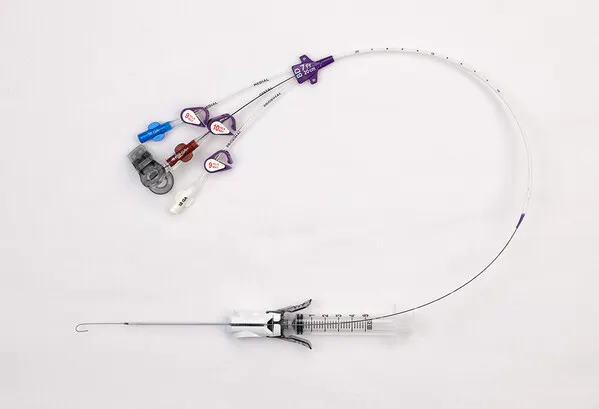 April 29, 2026—BD (Becton, Dickinson and Company) announced the commercial launch of the BD CentroVena One insertion system, which is an all-in-one central venous catheter (CVC) insertion device. The CentroVena One insertion system has received FDA 510(k) clearance and was accepted into the FDA Safer Technologies Program for Medical Devices, noted BD.
According to the company, the CentroVena One system is designed to simplify central line placement for clinicians and enhance patient safety by streamlining key steps and incorporating safety-focused design elements that support consistent, efficient care in high-pressure acute settings.
The insertion system is intended to address the challenges of complex traditional central line insertion by consolidating essential components—including the introducer needle, syringe, guidewire, and catheter—into a single platform.
UNC Health Blue Ridge in Morgantown, North Carolina, is among the first health systems to pilot the CentroVena One system in patient care as part of an initial clinical evaluation.
Anthony Frank, MD, who is Chief Medical Officer and Senior Vice President of Medical Affairs at UNC Health Blue Ridge, commented on the system in BD’s press release.
“Central line placement is one of the highest-pressure bedside procedures our teams perform—especially in fast-moving, high-acuity environments where unpredictability is inherent and skilled clinicians must bring precision to complexity in real time,” stated Dr. Frank. “What stands out in our early experience with CentroVena One is its intentional design around real-world clinical challenges—streamlining catheter placement while reducing opportunities for error, sterile field breaches, and overall workload. Innovations that better support frontline teams in this way align directly with our commitment to patient safety, high-quality care, and infection prevention.”
Advertisement
Advertisement
