Advertisement
Advertisement
December 1, 2022
Biotronik’s Passeo-18 Lux Paclitaxel DCB Evaluated at 1 Year in BIOPACT RCT
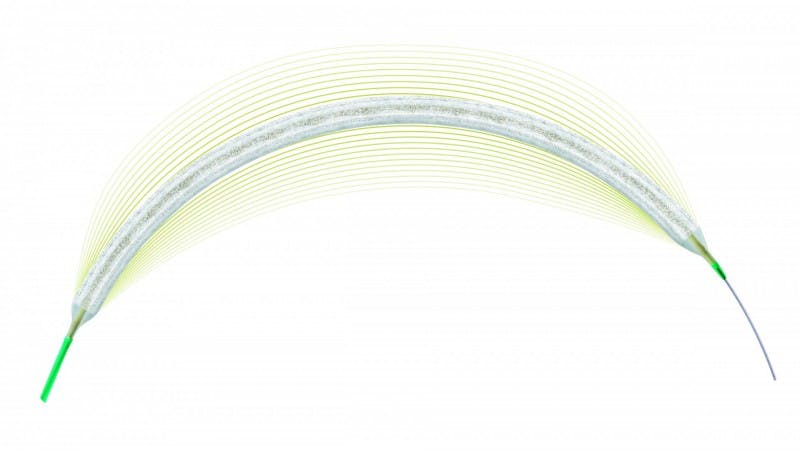 December 1, 2022—Biotronik recently announced the presentation of 1-year results from the investigator-initiated BIOPACT randomized controlled trial (RCT). The noninferiority trial evaluated the safety and efficacy of the company’s Passeo-18 Lux drug-coated balloon (DCB) catheter compared to the In.Pact Admiral DCB (Medtronic).
Biotronik reported that the data showed excellent results for both balloons through 12 months. The study will continue collecting follow-up data at 24, 36, 48, and 60 months that will be shared upon completion of each follow-up period.
The study’s principal investigator Koen Deloose, MD, presented the findings at the Paris Vascular Insights 2022 congress, which was held November 23-25 in Paris, France.
According to Biotronik, the prospective, multicenter, core-lab adjudicated, noninferiority trial was composed of 302 patients with Rutherford Class 2-4 disease who were enrolled in Austria, Belgium, France, and Switzerland. Patients were randomized 1:1 to either the Passeo-18 Lux DCB or In.Pact Admiral DCB for the treatment of stenotic, nonstented restenotic, or occlusive lesions in the femoropopliteal artery.
Baseline patient and lesion characteristics were comparable across both arms, with slightly higher moderate to severe calcification in the Passeo-18 Lux arm (79.6%) compared to the control arm (71.1%).
As summarized in Biotronik’s press release, the investigators found that the set noninferiority margin of 10% was met for both primary endpoints.
The primary efficacy endpoint was freedom from clinically driven target lesion revascularization at 12 months postprocedure, which was 97.16% for the Passeo-18 Lux DCB and 97.02% for the In.Pact Admiral DCB (P = .0002).
The primary safety endpoint was a composite of freedom from device- and procedure-related death through 30 days post index procedure as well as freedom from major target limb amputation and clinically driven target vessel revascularization through 12 months post index procedure. Primary safety was 95.75% for Passeo-18 Lux DCB and 96.27% for the control arm (P = .0008).
In May 2019, iD3 Medical, the trial’s clinical research organization (CRO), announced the start of the BIOPACT trial with the first patient enrolled by Roel Beelen, MD, at the OLV Hospital in Aalst, Belgium.
Completion of enrollment in the trial was announced by Biotronik in September 2021.
Dr. Deloose, who is Head of the Department of Vascular Surgery, AZ Sint Blasius Hospital in Dendermonde, Belgium, commented in the company’s press release, “The excellent safety and efficacy results seen in both arms of the BIOPACT RCT clearly demonstrate the utility of paclitaxel-coated balloons for treating femoropopliteal disease. These head-to-head data help us gain essential insights and ensure the best treatments are available for our patients. I would like to sincerely thank all of the investigators and the people of CRO iD3 Medical who contributed to the collection and analysis of these valuable data.”
Biotronik stated that the Passeo-18 Lux DCB has a paclitaxel dose of 3.0 µg/mm2 and uses a butyryl-tri-hexyl citrate excipient. The In.Pact Admiral DCB has a dose of 3.5 µg/mm2 and a urea excipient. The lower-profile Passeo-18 Lux DCB is on an 0.018-inch platform and is 4-F compatible for diameters of 2 to 4 mm and 5-F compatible for diameters of 5 to 7 mm. The In.Pact Admiral DCB is 5-F compatible only for its 4-mm diameter, and is 6- or 7-F compatible for its diameters of 5 to 7 mm.
The company announced the launch of Passeo-18 Lux DCB in Europe in January 2014 after receiving CE Mark approval. In the United States, the Passeo-18 Lux DCB is not available for sale or use, advised Biotronik.
Advertisement
Advertisement
