Advertisement
Advertisement
April 21, 2026
Data Presented From Pilot Trial of InVera Infusion Device for Chronic Venous Disease
KEY TAKEAWAYS
- InVera infusion device evaluated for the treatment of chronic venous disease in 10-patient pilot trial.
- 90% of patients demonstrated closure of GSV segments; statistically significant improvements shown across multiple measures.
- Lowell Kabnick, MD, presented the data at the Charing Cross Symposium.
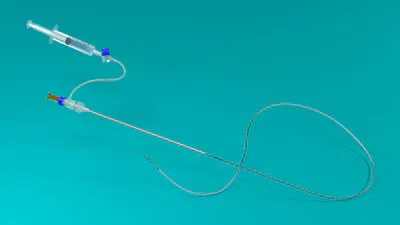 April 21, 2026—InVera Medical announced 12-month results from its pilot clinical study of the InVera infusion device for the treatment of chronic venous disease (CVD). The company stated that the data demonstrated statistically significant improvements in patient symptoms, high procedural efficacy, and an excellent safety profile.
Lowell Kabnick, MD, presented the data at the Charing Cross Symposium in London, United Kingdom. Dr. Kabnick, who serves as head of InVera’s Medical Advisory Board, is Past President of the American Venous Forum.
According to the company, the pilot study enrolled 10 patients with CVD (CEAP—clinical, etiology, anatomy, pathophysiology—classification C2-C4) requiring ablation of the great saphenous vein (GSV) because of abnormal reflux. The patients were followed for 1 year. The study used a strict protocol that prohibited adjunctive procedures or tributary vein management to minimize confounding factors, noted InVera.
As outlined in the company’s press release, the investigators reported the following at 12 months postprocedure:
- 90% of patients demonstrated closure of GSV segments, based on duplex ultrasound criteria assessment.
- The vein ultrasound response remained stable in these patients between 6-month and 12-month follow-up, indicating durable vein closure after the procedure.
- One patient experienced vein recanalization at 8 weeks.
- Patients showed statistically significant improvements across multiple measures.
- Patient-reported symptoms, measured with the HASTI (Heaviness, Achiness, Swelling, Throbbing, and Itching) questionnaire, improved by 74%, from a baseline mean of 7.0 to 1.8 at 12 months (P = .03).
- Clinical evaluation using the rVCSS (revised Venous Clinical Severity Score) improved by 38% from a baseline mean of 2.9 to 1.8 at 12 months (P = .03).
- There were no serious adverse events and no cases of deep vein thrombosis throughout the 12-month follow-up period.
- Because the InVera device is nonthermal, there were no instances of complications associated with thermal ablation procedures, such as skin burns, nerve damage, or other thermal-related injuries.
- Technical procedural success, involving preparation of the inner vein lining and subsequent sclerosant delivery to subendothelial layers with the InVera infusion device, was achieved in all cases.
The InVera infusion device gained FDA 510(k) clearance and CE Mark approval in the first quarter of 2026. The company is preparing to conduct a limited market release at select centers in the United States and Europe, stated the press release.
Advertisement
Advertisement
