Advertisement
Advertisement
February 4, 2021
EffPac and TINTIN Data Presented for iVascular’s Luminor DCB in Complex Femoropopliteal Lesions
 February 4, 2021–Clinical evidence of iVascular’s Luminor drug-coated balloon (DCB) in complex lesions with long-term follow-up data were presented at LINC 2021, the Leipzig Interventional Course held virtually on January 25-29. These outcomes show the device’s performance in the most common peripheral lesions.
Professor Ulf Teichgräber, MD, with Jena University in Jena, Germany, is Principal Investigator of the EffPac trial, which evaluated the iVascular device in femoropopliteal arteries. In his presentation at LINC, Prof. Teichgräber reported that at 3.5 years there was significant clinical and hemodynamic improvement with a rate of freedom from target lesion revascularization (TLR) of 90.1%. Additionally, there was no increased risk of death detected and all-cause mortality was similar to plain old balloon angioplasty. The findings support Luminor’s efficacy and safety at long-term follow-up.
Also at LINC, 2-year follow-up outcomes were presented from the TINTIN trial that investigated the performance of the Luminor device in complex and long femoropopliteal lesions.
According to the company, the outcomes corroborate the efficacy of Luminor. In lesions with a main length of 24.3 cm, the combined therapy of Luminor plus the iVolution self-expanding stent has obtained a primary patency of 90.5% at 1 year and freedom from TLR of 89.4% at 2 years. The trial’s primary investigator, Koen Deloose, MD, of AZ Sint Blasius in Dendermonde, Belgium, stated in the company’s press release, “The combination of vessel preparation, DCB, and self-expanding stent is the key to success in real-life lesion treatment.”
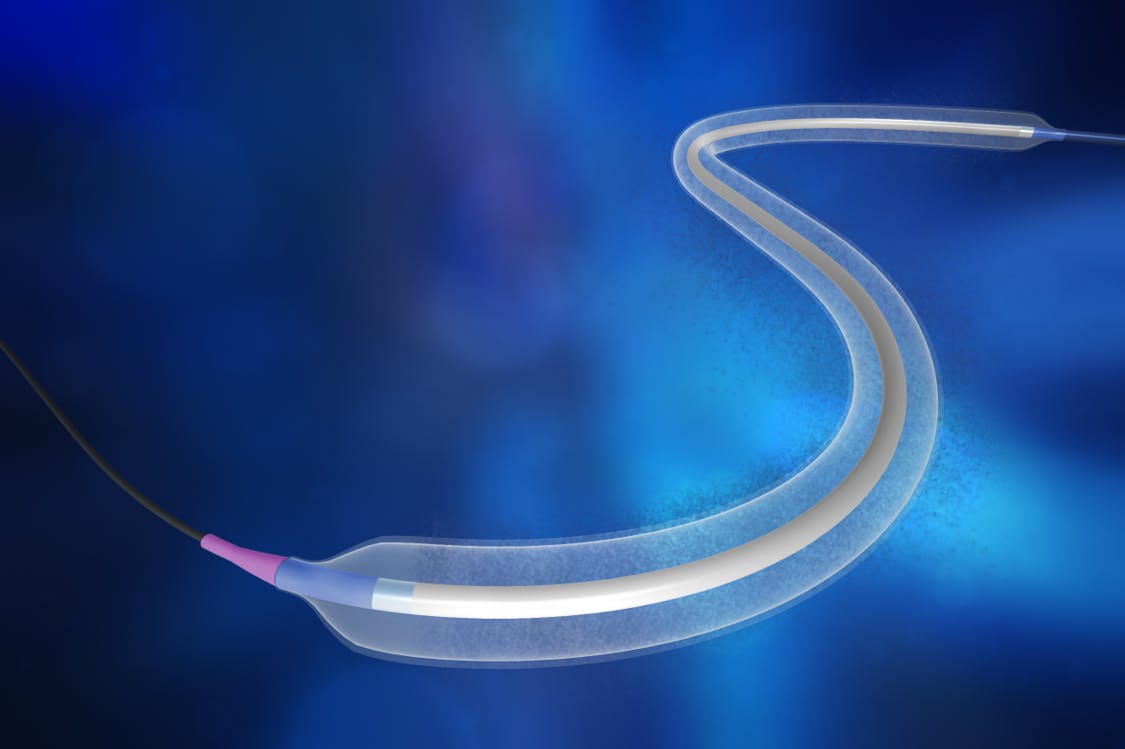
Luminor is a paclitaxel-coated balloon with platforms for 0.014-, 0.018-, and 0.035-inch guidewire compatibility. It has been specifically designed for dilatation of stenosis located in the iliac, femoral, iliofemoral, popliteal, infrapopliteal, and renal arteries, as well as for the treatment of obstructive lesions of arteriovenous fistulas, either original or artificial.
TransferTech, the iVascular coating nanotechnology used in the Luminor DCB, covers the balloon surface with multiple and independent nanodrop layers to provide a flexible coating that adapts to the balloon movement and ensures the release of paclitaxel in the target lesion, without particle loss in the blood flow, stated the company.
Advertisement
Advertisement
