Advertisement
Advertisement
February 16, 2022
Front Line Medical’s COBRA-OS Aortic Occlusion Device Available in United States and Canada
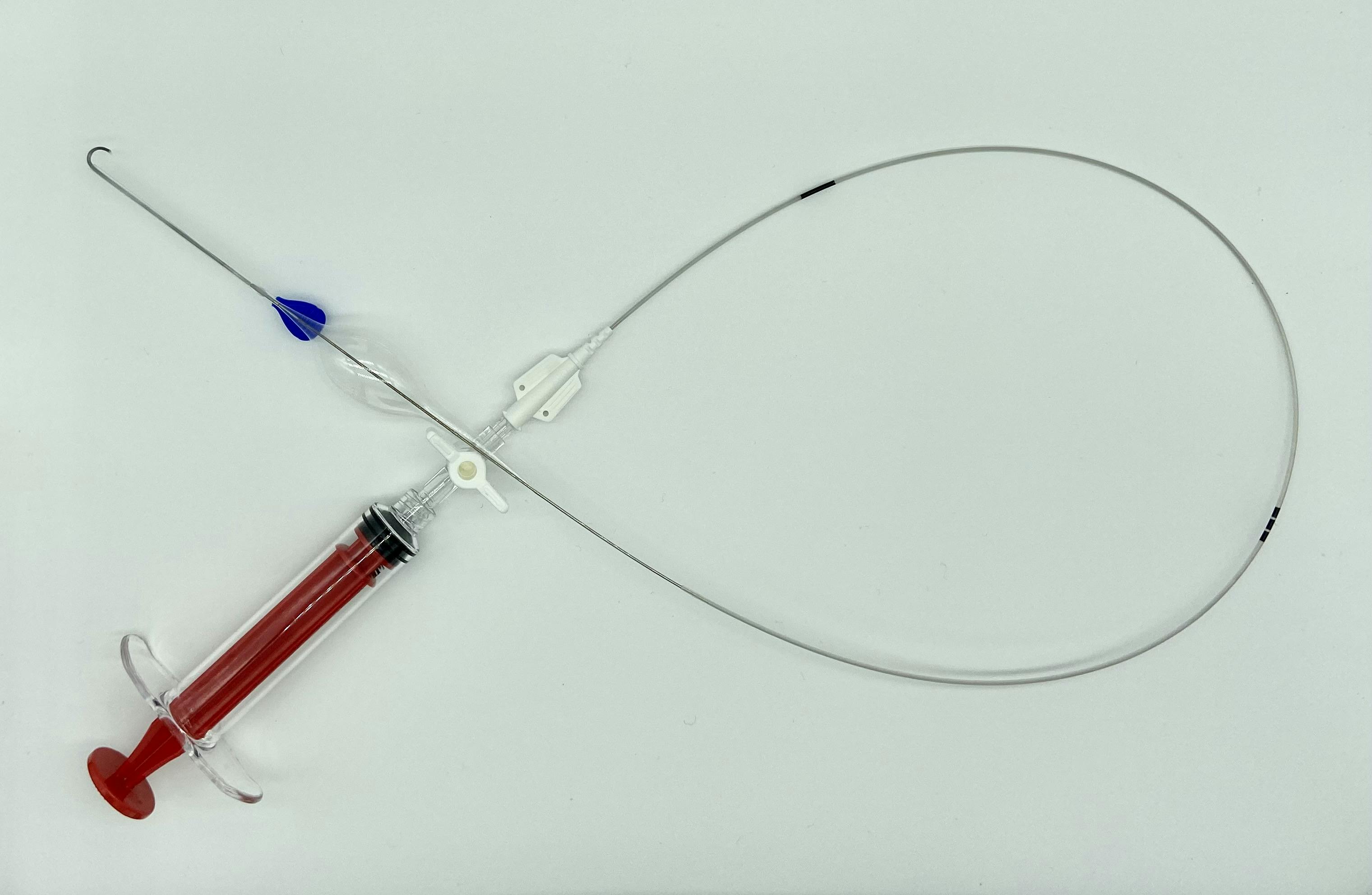 February 16, 2022—Front Line Medical Technologies, Inc. announced the expanded availability and distribution of COBRA-OS hemorrhage control device in the United States and Canada. The device was previously available in limited quantities. Front Line is increasing production based on patient success rates and interest from hospitals. The device is approved by Health Canada and cleared by the FDA.
Front Line Medical’s COBRA-OS (Control of Bleeding, Resuscitation, Arterial Occlusion System) is intended for use for resuscitative endovascular balloon occlusion of the aorta (REBOA) procedures. The device’s significantly reduced size of 4 F decreases both the time to complete the procedure and the risk of complications.
According to the company, the COBRA-OS device can provide full, intermittent, or partial occlusion depending on the patient’s need, and has a uniquely designed Safety Shoulder Reservoir incorporated into the device to help prevent aortic rupture during inflation.
In addition to trauma, the COBRA-OS has been recently used to treat a pregnant patient to help reduce the bleeding associated with placenta percreta. Also, it has been used for nonbleeding situations to bring a patient back to life who had cardiac arrest outside the hospital and cardiopulmonary resuscitation for 30 minutes before arriving in the emergency department.
Adam Power, MD, is co-creator of COBRA-OS and co-founder of Front Line Medical. As a vascular surgeon at Victoria Hospital in London, Ontario, Canada, Dr. Power has successfully utilized the device in traumatic bleeding cases to stabilize patients.
“The COBRA-OS is tiny but has a huge impact for patients,” commented Dr. Power in the company’s press release. “When a patient is bleeding to death in front of you, simple solutions are key, and the COBRA-OS is the most straightforward REBOA device available. When the COBRA-OS is used appropriately, it can be one of the most powerful tools in your hemorrhage control toolbox.”
Advertisement
Advertisement