Advertisement
Advertisement
September 17, 2026
GE HealthCare’s Photonova Spectra PCCT System Receives CE Mark Approval
KEY TAKEAWAYS
- GE HealthCare received CE Mark approval for its Photonova Spectra photon-counting CT system.
- The system combines Deep Silicon detector technology with ultra–high-definition and spectral imaging for applications including cardiovascular imaging.
- Potential clinical areas of use include neurology, oncology, musculoskeletal imaging, thoracic imaging, and cardiology.
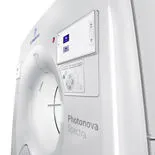
_1789662833.jpg?auto=compress,format) September 17, 2026—GE HealthCare announced it has received CE Mark approval for Photonova Spectra, a photon-counting CT (PCCT) system with the company’s Deep Silicon detector technology. The company is beginning commercial activities in countries that observe CE Mark.
September 17, 2026—GE HealthCare announced it has received CE Mark approval for Photonova Spectra, a photon-counting CT (PCCT) system with the company’s Deep Silicon detector technology. The company is beginning commercial activities in countries that observe CE Mark.
In March 2026, the company announced FDA 510(k) clearance and Japanese regulatory approval for the Photonova Spectra.
According to GE HealthCare, the system’s ultra–high-definition imaging is designed to work with wide coverage, enabling fast acquisition speeds and precise visualization of subtle tissue variations, small lesions, and vascular structures. Photonova Spectra provides on-demand spectral and spatial imaging to detect, characterize, and monitor disease while reducing complexity and supporting efficiency.
GE HealthCare noted that the clinical potential of Photonova Spectra with Deep Silicon spans a range of specialties, including neurology, oncology, musculoskeletal imaging, thoracic imaging, and cardiology. The company further stated that the system’s coverage combines ultra-high definition and spectral imaging to enable in-stent lumen assessment, plaque characterization, and myocardial assessment.
Photonova Spectra with the Deep Silicon detector also aims to facilitate research, including quantitative imaging, tissue characterization, and spectral biomarker discovery. Photonova Spectra uses Nvidia’s accelerated computing platform and CUDA-optimized reconstruction to manage the significant data volumes generated by PCCT, advised the company.
Additionally, GE HealthCare stated it is expanding collaborations across clinical disciplines to further evaluate Photonova Spectra, including the following:
- UZ Brussel—Vrije Universiteit Brussel in Brussels, Belgium, will assess the capabilities of Photonova Spectra across multiple clinical domains, including cardiology, oncology, and spectral imaging. In particular, the collaboration will support the evaluation of advanced imaging applications, generate clinical evidence, and optimize imaging protocols to facilitate broader adoption in routine clinical practice.
- Rigshospitalet in Copenhagen, Denmark, will include a focus on low-dose imaging, enhanced tissue characterization, and the use of spectral data across complex clinical cases such as neurology, cardiology, oncology, and musculoskeletal imaging.
Advertisement
Advertisement
