Advertisement
Advertisement
February 1, 2024
Gore TAG Thoracic Branch Endoprosthesis Introduced in Europe
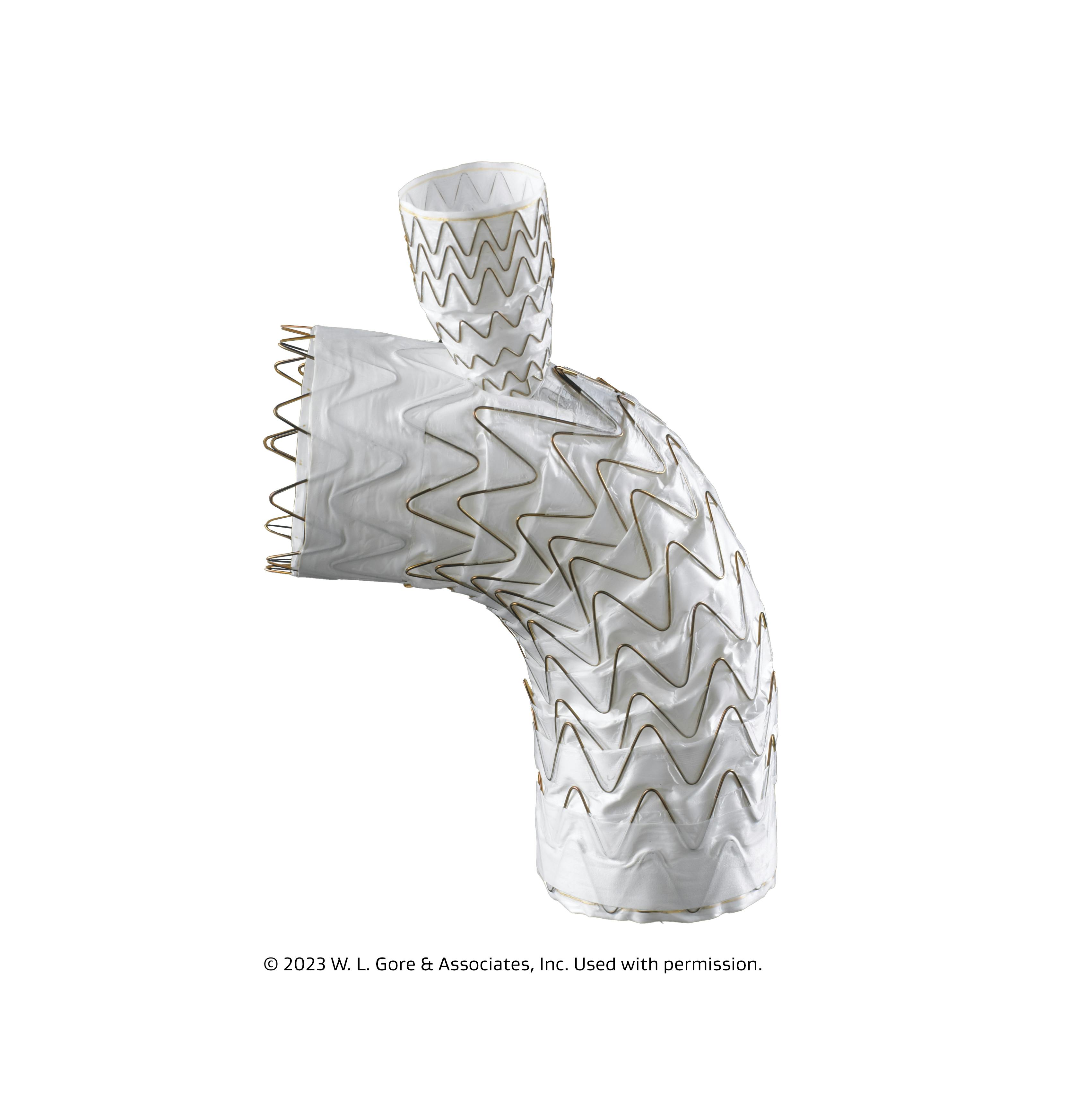 February 1, 2024—Gore & Associates announced the first implantation of the Gore TAG thoracic branch endoprosthesis (TBE) in Europe. The patient was treated by Prof. Dittmar Boeckler, MD, who is Chief of the Department of Vascular Surgery and Endovascular Surgery at University Hospital Heidelberg in Heidelberg, Germany.
The Gore TAG TEB, which is an off-the-shelf aortic branched zone 2 device designed for long-term durability, received CE Mark approval under the new European Medical Device Regulation certification.
The TAG device is indicated for endovascular repair of lesions in the descending thoracic aorta in patients with the appropriate anatomy—including isolated lesions, such as aneurysms, traumatic transections, and Type B dissections—while maintaining flow into the left subclavian artery (LSA).
In May 2022, Gore announced FDA approval of the TAG device in the United States.
According to the company, the safety and performance of the device have been demonstrated by rigorous in vitro and in vivo testing and extensive clinical trials.
The pivotal study conducted in the United States enrolled 238 patients requiring treatment across multiple aortic pathologies, including the LSA. All patients were enrolled with a technical success rate of 95.8%. Through 12 months of follow-up, the reintervention rate was 2.9%; LSA branch patency was 99.2%; and the rate of disabling was 3.4%.
“Treating aortic arch disease has traditionally posed challenges,” commented Prof. Boeckler in Gore’s press release. “Current options involve procedures like open surgery, hybrid approaches with surgical revascularization, or those that use non-CE Mark devices.”
He continued, “As a complete, single-device system, the Gore TAG thoracic branch endoprosthesis simplifies the treatment of zone 2 revascularization by eliminating the need for surgical LSA debranching. The ability to endovascularly perfuse the left subclavian artery plays a key role in minimizing surgical procedures and related risks. We are excited about this next significant step in treating a broader range of patients with this innovative device.”
Advertisement
Advertisement
