Advertisement
Advertisement
April 30, 2024
Gore’s Excluder Conformable AAA Endoprosthesis Approved for Expanded Indication
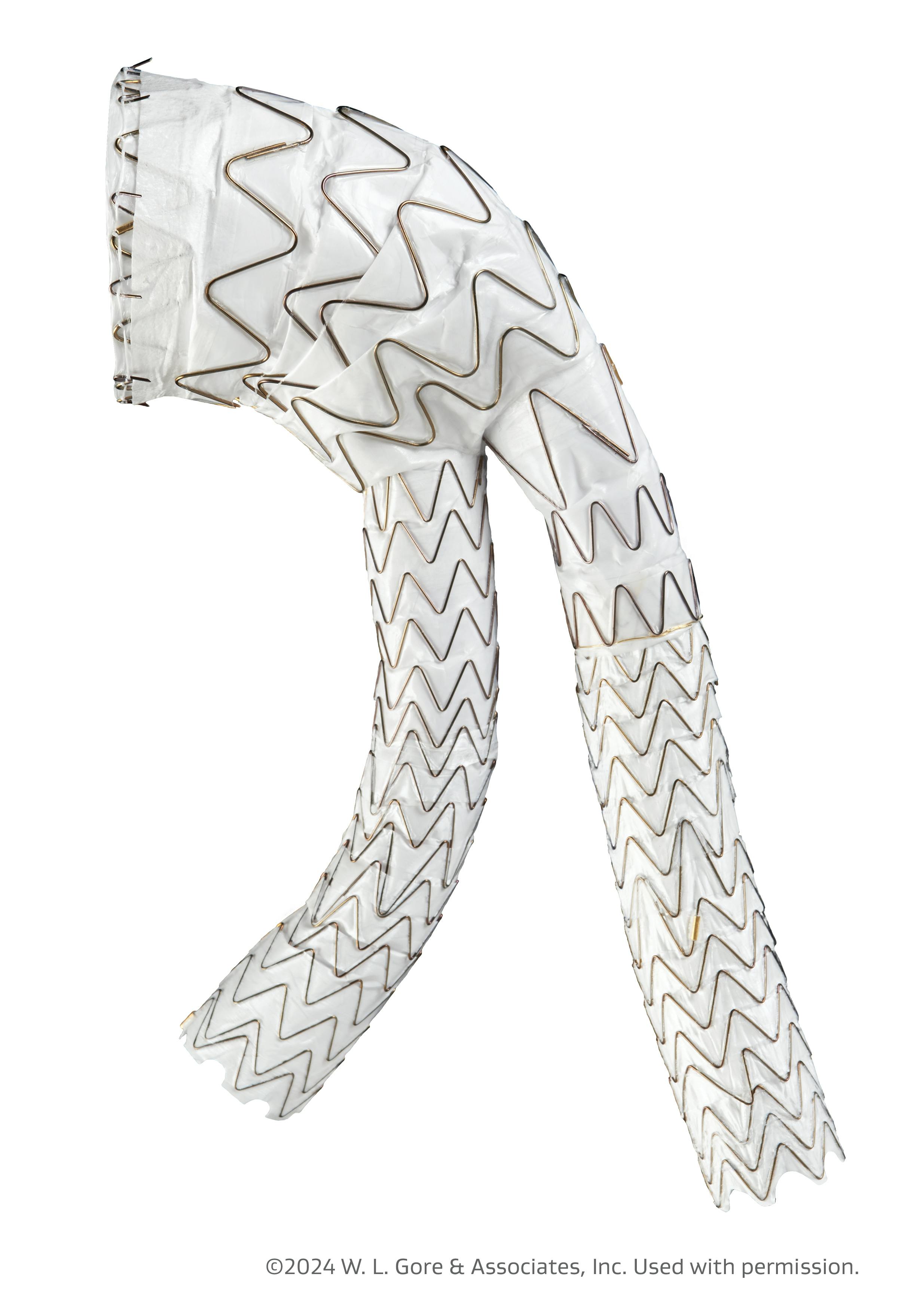 April 30, 2024—Gore & Associates announced FDA approval of an expanded indication for the Excluder conformable abdominal aortic aneurysm (AAA) endoprosthesis. The endovascular aneurysm repair (EVAR) device is now indicated for patients with aortic neck angulation ≤ 90° and a minimum length of 10 mm.
“This is a landmark indication for an EVAR device, equipping physicians with an on-label solution for more patients with hostile neck anatomy,” commented Robert Rhee, MD, in the company’s press release. Dr. Rhee serves as national Principal Investigator of the pivotal study that assessed the Excluder conformable AAA endoprosthesis.
According to Gore, a high neck angulation substudy was composed of 95 patients. Through 1 year, patients experienced a low incidence of type I endoleaks and zero type III endoleaks. There were zero reported aneurysm-related mortality, migrations, ruptures, or stent fractures.
Dr. Rhee, who is Chief of Vascular and Endovascular Surgery at Maimonides Medical Center in Brooklyn, New York, added, “We deliberately studied performance in both highly angulated and short necks, and the results demonstrate that we can safely and effectively treat these patients—providing an improved potential for favorable outcomes despite hostile anatomy.”
Gore’s Excluder conformable AAA endoprosthesis with Active Control system was introduced in the United States in 2020. It features angulation control, which allows operators two opportunities to achieve orthogonal placement in the aortic blood flow lumen. This control along with a nesting stent rows and individual stent rings, help maximize the conformability and seal of the device, stated the company.
In its press release, Gore advised that the Excluder conformable AAA device will also be studied as part of the 10,000-patient Together Registry, which will have up to 10-year follow-up and minimal inclusion and exclusion criteria to align with real-world clinical care practice. Gore noted that prospective imaging will be collected for most patients.
Advertisement
Advertisement
