Advertisement
Advertisement
January 10, 2024
iVascular’s Luminor DCB Evaluated at 1 Year in BIBLIOS and LUMIFOLLOW Studies
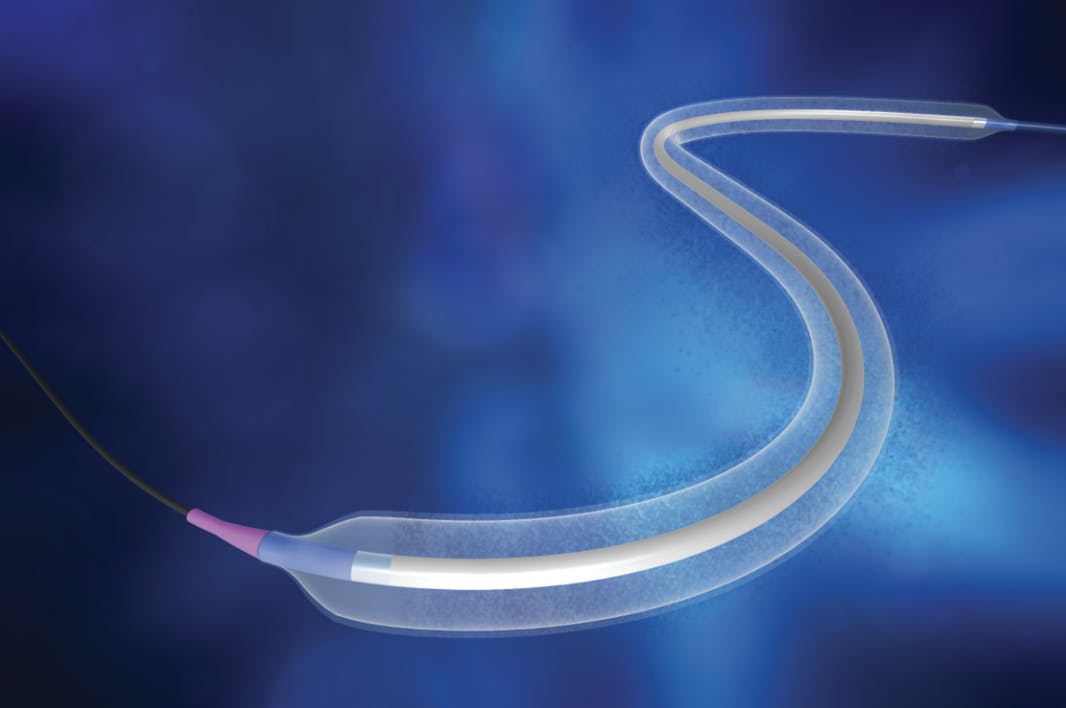 January 10, 2024—iVascular announced that 1-year findings from the BIBLIOS and LUMIFOLLOW studies of the company’s Luminor drug-coated balloon (DCB) were presented at PVI 2023, the Paris Vascular Insight congress held November 8-10 in Paris, France.
BIBLIOS is a prospective, single-arm, multicenter study conducted at eight sites across Belgium, Italy, and Spain. The study’s Principal Investigator is Koen Deloose, MD, with AZ Sint Blasius in Dendermonde, Belgium.
LUMIFOLLOW evaluated the performance of the Luminor DCB in femoropopliteal lesions. The prospective, multicenter, consecutive, postmarket study was conducted in France. The results were presented for the first time by Professor Eric Ducasse, MD, with CHU Bordeaux in Bordeaux, France, at PVI 2023. Prof. Ducasse is the trial’s Principal Investigator.
According to the company, the BIBLIOS study enrolled a total of 150 patients with critical limb ischemia (Rutherford class 5) experiencing a significant degree of stenosis < 70% or chronic total occlusion in P3 to the ankle-joint level lesions. Patients were followed to 12 months.
The study’s efficacy primary endpoint is freedom from major adverse limb events (fMALE, defined as absence of above-ankle target limb amputation or major reintervention to the target lesions) at 6 months.
The study’s primary safety endpoint is fMALE at 30 days. Key secondary endpoints include target vessel functional flow assessment, freedom from clinical driven target lesion revascularization (fCD-TLR), amputation-free survival, limb salvage, procedural success, and wound healing status and time.
The 12-month data from 150 patients confirmed the safety and efficacy of Luminor in BTK with a fCD-TLR rate of 86.6%. Additionally, fMALE of 95.6% was maintained during the 12-month follow-up.
“BIBLIOS’ objective is to confirm the safety and efficacy of Luminor in BTK in a well-defined study,” commented Dr. Deloose in iVascular’s press release. “Patient selection and wound care protocol are mandatory with this type of patients and illness. In BIBLIOS, we tried to overcome some of the flaws in BTK trials/treatment: strategy, treatment, protocols, and follow-up.”
The company reported that during his presentation at PVI, Dr. Deloose concluded, “These results showed that Luminor is a great option for the treatment of infrapopliteal lesions in patients with critical limb ischemia. It’s effective, it’s safe, and it’s available in all guidewire compatibilities and with small diameters.”
According to iVascular, LUMIFOLLOW was composed of 534 real-world patients enrolled at centers in France and with planned follow-up of 5 years. In the study, 77% of patients were Rutherford class 3 or higher; the average lesion length was 13 cm; all type of TransAtlantic InterSociety Consensus (TASC) lesions were included; 24% of the lesions were restenosis; and 76% were de novo. The bailout stenting rate was 43%, representing the percentage of TASC C and D lesions.
At 1-year follow-up, freedom from target lesion revascularization was 95.4% and freedom from target vessel revascularizaton was 94.2%. At 1 year, patient symptomatology had decreased, 68% of the patients were asymptomatic (Rutherford class 0), and no safety concerns were detected.
“LUMIFOLLOW confirms what we already knew about Luminor with a large population number: it’s an effective DCB for the treatment of femoropopliteal arteries,” commented Prof. Ducasse in the company’s press release. “iVascular’s proprietary nanotechnology makes the difference versus other DCBs.”
Advertisement
Advertisement
