Advertisement
Advertisement
April 24, 2024
Medtronic’s VenaSeal Closure System Evaluated for Superficial Venous Disease in Spectrum Program
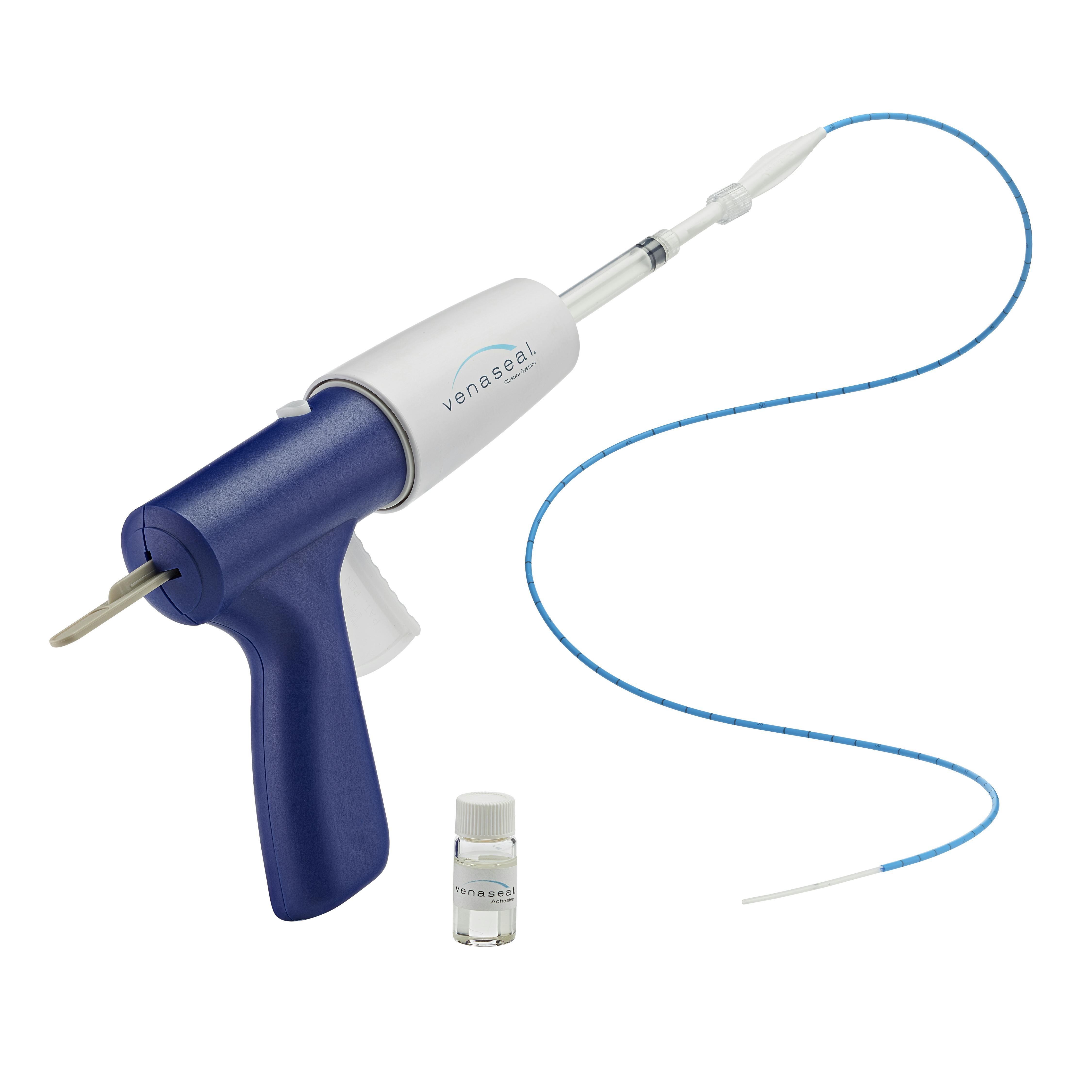 April 24, 2024—Medtronic announced primary endpoint and 30-day modified Aberdeen Varicose Vein Questionnaire (AVVQ) findings from the VenaSeal Spectrum Program on use of its VenaSeal closure system compared to surgical stripping (SS) and endothermal ablation (ETA) for treatment of superficial venous disease. The results also include safety and anatomic closure data through 6 months.
The VenaSeal Spectrum Program includes two randomized controlled trials (RCTs) investigating the VenaSeal system versus SS and VenaSeal versus ETA, and a single-arm study focused on venous leg ulcers.
Two of the primary endpoints of the RCTs were determined using the Venous Treatment Satisfaction Questionnaire (VenousTSQ) to measure patient satisfaction with the treatment received for superficial venous disease. Another primary endpoint of the study was elimination of truncal reflux, which represents the percentage of diseased vein treated.
The findings were presented at the 2024 Charing Cross International Symposium held April 23-25 in London, United Kingdom.
Professor Manj Gohel, MD, and Kathleen Gibson, MD, are primary investigators of the VenaSeal Spectrum Program. Prof. Gohel is a consultant vascular surgeon and honorary senior lecturer at Cambridge University Hospitals, Imperial College in Cambridge, United Kingdom. Dr. Gibson is a vascular surgeon with Lake Washington Vascular Surgeons in Bellevue, Washington.
“The 30-day and 6-month outcomes for both the SS and ETA studies are an important addition to the global clinical evidence for the VenaSeal system,” commented Prof. Gohel in Medtronic’s press release. “This new, multicenter, randomized evidence about the minimally invasive VenaSeal system will provide the clinical community with key data to inform treatment decisions for patients with superficial venous disease.”
Dr. Gibson added, “The Spectrum Program is expanding the way we look at the treatment of superficial venous disease by testing novel patient-centric endpoints. To gather the most robust data possible from this study, the primary endpoints are joined by a comprehensive set of secondary endpoints using traditional measurements, which we look forward to sharing in the future.”
According to the company, the VenaSeal system met one of the primary endpoints by demonstrating superior periprocedural patient satisfaction compared with SS. The other primary endpoint outcomes were not met.
Medtronic noted that AVVQ results were trending in favor of the VenaSeal system at 30 days. The anatomic closure rate through 6 months was found to be comparable with current standards of care for both studies.
The company further stated that although the VenaSeal system was not able to demonstrate superiority across all endpoints, the procedure performed comparably to current standards of care.
The Medtronic press release outlined the 30-day outcomes for the two RCTs presented at the Charing Cross Symposium.
For VenaSeal versus SS, investigators reported the following:
- In the VenousTSQ periprocedural findings, the primary endpoint was met, demonstrating superior patient satisfaction for the VenaSeal system (P = .0013; alpha = .025).
- In the VenousTSQ data at 30 days postprocedure, the primary endpoint was not met, with patients similarly satisfied (P = .0504, alpha = .05).
- For elimination of truncal reflux, the primary endpoint was not powered for testing because of early study closure; VenaSeal system performed similarly to SS (P = n/a; alpha = n/a).
- In the modified AVVQ, the secondary endpoint was trending in favor of the VenaSeal system at 30 days (P = .0039; alpha = n/a).
For VenaSeal versus ETA, the 30-day outcomes included the following:
- In the VenousTSQ periprocedural findings, the primary endpoint was not met, with patients similarly satisfied (P = .0260; alpha = .0167).
- In the VenousTSQ 30-day postprocedural findings, the primary endpoint was not met, with patients similarly satisfied (P = .7954; alpha = .05).
- For elimination of truncal reflux, the primary endpoint was not met; the VenaSeal system performed similarly to ETA (P = .0858; alpha = .025).
- In the modified AVVQ, the secondary endpoint was trending in favor of the VenaSeal system at 30 days (P = .0076; alpha = n/a).
In addition, 6-month data from both studies reinforced that the VenaSeal system has a safety profile consistent with that reported in peer-reviewed literature from other clinical studies, with a low incidence of serious adverse events and low rates of system-specific complications.
Finally, anatomic closure through 6 months in the VenaSeal-treated population was noninferior to SS (97.9% vs 92.9%; P = .00041). Anatomic closure was not formally tested (to control for multiple hypothesis testing) in the VenaSeal system versus ETA study, but similar effectiveness in each arm was observed (93.1% vs 93.6%, respectively), noted the company in the press release.
The VenaSeal closure system is commercially available in 70 countries, including the United States and all European Union member countries. The VenaSeal Spectrum Program will follow-up with patients over multiple years for select endpoints to expand the body of long-term evidence for the VenaSeal system, stated Medtronic.
Advertisement
Advertisement