Advertisement
Advertisement
November 16, 2021
Phenox p64 Flow Modulation Device Evaluated in Diversion-p64 Postmarket Study
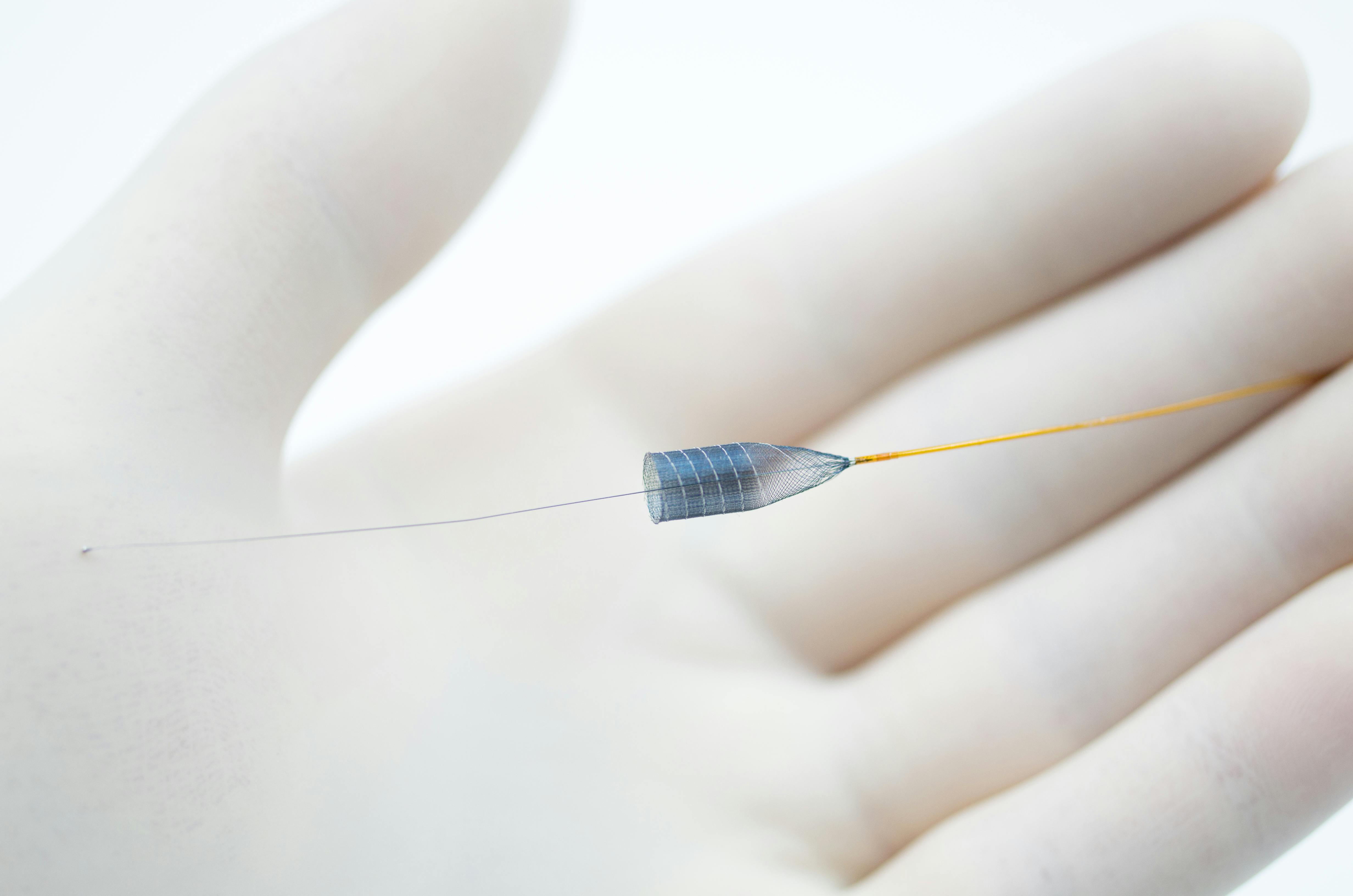 November 16, 2021—Phenox GmbH, a developer of technologies for treating neurovascular disease based in Bochum, Germany, announced findings from the large, prospective, real-world Diversion-p64 study of the company’s p64 flow modulation device.
The company stated that the study demonstrated that the p64 device has a high efficacy rate with low rates of morbidity-mortality compared to similar studies. Additionally, the results provide strong evidence for maximized flow modulation effect from the device’s 64-wire braid design.
The Diversion-p64 results were published by Professor Alain Bonafé, MD, et al online ahead of print in Journal of NeuroInterventional Surgery.
The p64 device, which received CE Mark approval in 2012, is designed to allow controlled and selective modulation of blood flow in intracranial arteries. It is constructed from 64 braided wires and is mechanically detachable.
Diversion-p64 was a single-arm, international, multicenter, prospective, postmarket clinical follow-up trial to assess the safety and effectiveness of the p64 device. The study was composed of 420 patients enrolled at 26 centers in 10 countries. A total of 445 devices were used to treat anterior circulation aneurysms between December 2015 and January 2019.
According to Phenox, all of the study’s primary and secondary endpoints were achieved. The primary efficacy endpoint was the complete occlusion of the aneurysm, based on the Raymond-Roy Occlusion Classification.
The study results confirm a high complete occlusion rate of 83.7% (86% adequate occlusion) at 1-year associated with a low morbidity-mortality rate of 2.69%. An independent core lab, blinded to all clinical information, reconfirmed the aneurysm types and locations, matched the eligibility criteria, and assessed aneurysms at both follow-up visits. In comparison to previous flow diverter studies, the aneurysm occlusion rates seen in Diversion-p64 are favorable, noted the company.
Phenox further stated that the study results prove that the implantation of p64 was highly reliable. In 98.1% of cases, the p64 was deployed at the desired location and 99.3% of the implanted devices detached without any difficulties.
Additionally, the company advised that it recently initiated the comparative, randomized COATING study to evaluate flow diverters with surface modification. The study will include the company’s newest device that features hydrophilic polymer coating technology (HPC), the p64 MW HPC flow diverter. The reduced thrombogenicity of the implant surface by HPC is intended to improve patient safety, stated the company.
Advertisement
Advertisement
