Advertisement
Advertisement
February 27, 2024
Philips Launches Azurion Neuro Biplane System
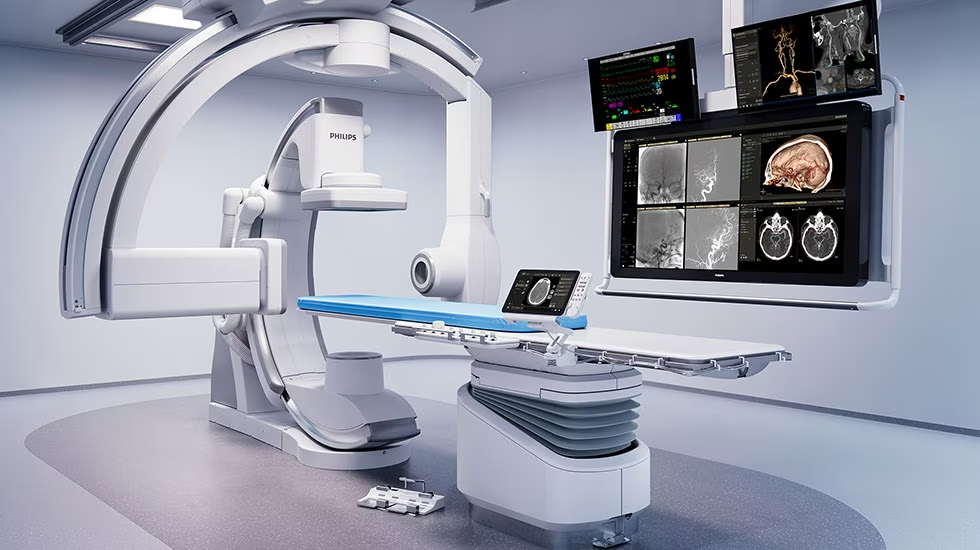 February 27, 2024—Royal Philips announced the launch of the Azurion neuro biplane system as an enhancement to its Azurion image-guided therapy system. The new interventional system features enhanced two-dimensional (2D) and three-dimensional (3D) imaging and X-ray detector positioning flexibility.
The system is set to be introduced at the European Congress of Radiology annual meeting, held February 28 to March 3 in Vienna, Austria.
According to the company, its Azurion neuro biplane image-guided therapy system is designed to smooth and optimize procedure workflows where a combination of 2D and 3D imaging is needed for confident diagnosis and precision treatment. Used with Philips’ latest Neuro Suite software and services, the goal of the platform is to provide neurointerventionists with a fully integrated solution that combines Philips’ ClarityIQ low dose imaging with a range of neuro dedicated tools and value-added services that offer efficiency, flexibility, and control.
Philips notes that the Azurion neuro biplane system's new features include: enhanced C-arm rotation; angulation (imaging angles) and parking facilities that allow rapid transitioning between 2D to 3D imaging; comprehensive tableside control that eliminates the need to leave the sterile field; automatic beam rotation to obtain correctly oriented images for every angulation and rotation; and a new head immobilizer to support enhanced stroke care.
To maximize up-time, artificial intelligence and machine learning can also be used to monitor system performance through the new remote connection services of the Philips ServiceHub. These services communicate, monitor, and proactively respond to potential service issues—for example, predicting likely component failures at least 7 days in advance so that pre-emptive action can be taken, noted Philips in the announcement.
Advertisement
Advertisement