Advertisement
Advertisement
We are delighted to have the opportunity to serve as Guest Chief Medical Editors for Endovascular Today, one of the few publications that crosses the tribal boundaries between the different groups involved in image-guided therapy. The development of this magazine and its success indicates the mass migration away from conventional open surgery toward minimally invasive techniques, something that patients want and the outcomes indicate are in their best interests. The challenges that we face are the need to find common languages among our disparate backgrounds that will allow us to make it as individuals and ensure that the patient is equally safe in all hands, which must be the credo that guides us.
Several pioneers, who are all still alive and who we can all name, helped guide interventional neuroradiology into the complex and technologically challenging field that we have today. We are fortunate to have seen astounding developments in plastics, computer technology, metals, and implantable devices. We face challenges such as issues of human resource and poor radiology management. Every day, image-guided therapists work in a multidisciplinary environment, yet for those in radiology departments, this causes friction. Nationally, in academic centers, IRs and INRs struggle with their diagnostic colleagues' lack of understanding of their different lifestyles. Well-known IRs are joining surgical and cardiology groups. This is not about money, but often about the distribution of call, leadership, and promotion. Academic radiology promotion committees respect a new MRI pulse sequence more than the pioneering of a new technique or the development of a new device. This must change. The largest challenge is the pursuit of quality outcomes. We need to establish national reporting of outcomes in endovascular therapy of all kinds to ensure that the patient can select the best possible practitioner to provide the best possible treatment.
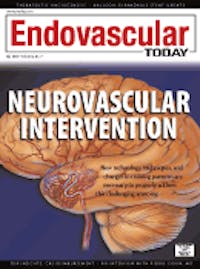
The cover story of this issue of Endovascular Today attempts to elucidate some interventional neuroradiology topics and procedures with which the majority of current endovascular specialists have limited experience. We detail the impact of the ISAT and ISUIA Trials on informed consent. The ISAT and ISUIA are landmark studies and, although they were not perfect, they are changing how we manage aneurysmal disease. We also have an article explaining why we remain without a gold standard in treating wide-neck intracranial aneurysms. Additionally, Robert D. Ecker, MD, provides an update on currently available bioactive coils, Philippe Gailloud, MD, discusses the reality of successful endovascular treatment of cerebral arteriovenous malformations, and the final feature article is a roundtable discussion regarding intracranial stenting, the use of coil treatments for aneurysms, the ideal treatments for acute strokes, and the role of endovascular techniques in the future of neurointerventional procedures. In addition, Lawrence V. Hofmann, MD, and colleagues discuss the impact of therapeutic angiogenesis in the treatment of peripheral arterial disease; Bart L. Dolmatch, MD, provides an overview of the history and progress of CT angiography; and Dorothy B. Abel presents a perspective from the FDA about CAS approval and reimbursement.
We hope that this issue of Endovascular Today provides you with new perspectives and information about cerebral interventions.
Lee R. Guterman, MD, PhD
Kieran P. Murphy, MD
Advertisement
Advertisement