Advertisement
Advertisement
February 2016 Supplement
Sponsored by OhioHealth
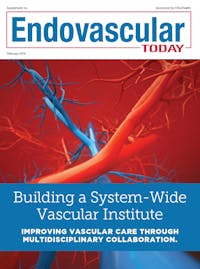
The OhioHealth Vascular Institute: Shaping a Multidisciplinary Institute Without Walls to Improve Vascular Care Outcomes
How one large health system is developing a model for collaborative health care focused on specialty integration for optimal patient care.
By Jose Vale, MD; David Hoenninger, MD; Gary M. Ansel, MD; and for the OhioHealth Vascular Institute
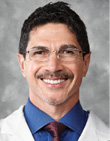
Jose Vale, MD, is a general and vascular surgeon, OhioHealth Marion General Hospital, Marion, Ohio. Dr. Vale may be reached at jose.vale@ohiohealth.com.
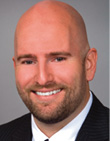
David Hoenninger, MD, is an interventional radiologist, OhioHealth Grant Medical Center, Columbus, Ohio. Dr. Hoenninger may be reached at dhoenninger@columbusrad.com.
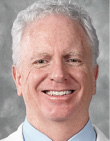
Gary M. Ansel, MD, is System Medical Chief for Vascular Medicine, OhioHealth; practices at OhioHealth Riverside Methodist Hospital; and is Associate Medical Director, OhioHealth Research Institute, Columbus, Ohio; and is Assistant Clinical Professor of Medicine, Department of Medicine, University of Toledo Medical Center, Toledo, Ohio. Dr. Ansel may be reached at gary.ansel@ohiohealth.com.
OhioHealth is reshaping the future of vascular care by creating an “institute without walls,” connecting all of its providers with the goal of providing new levels of collaboration among physicians to achieve the best vascular care outcomes in the most appropriate settings. The OhioHealth Vascular Institute (OHVI) brings together more than 40 clinicians from five specialties to share knowledge, resources, and best practices for optimal vascular care. Unlike other vascular institutes that typically are centered at one facility, the OHVI spans 11 hospitals and 42 care site locations.
OHVI BY THE NUMBERS
- More than 40 physicians
- 11 member hospitals
- 42 care site locations
- 5 multidisciplinary specialties:
As evidenced by a recent media release from the Society of Vascular Surgery, the delivery of vascular care has been fragmented and oftentimes contentious, with physicians fighting for their “vascular turf.” Tertiary care centers often claimed patients referred to them for ongoing care, which often led to physicians at smaller community hospitals being somewhat reluctant to ask for assistance or refer patients away from their base hospitals.
Historically, OhioHealth was no different, with physicians and hospitals competing within their own health care system instead of acting as an integrated business. OhioHealth is trying to take the lead to develop a national model for cooperative care across a health care system, focusing on the patient, with optimized specialty integration and quality outcomes.
AN INNOVATIVE DELIVERY SYSTEM FOR LEADING-EDGE, PATIENT-BASED CARE
The OhioHealth vascular leadership and system administration took note that our expanding care system offered a potentially unique setting for changing the delivery of vascular care in the region. With 11 hospitals ranging from large, tertiary care facilities to mid-sized and smaller, community-based hospitals encompassing both employed and nonemployed physicians, we felt that developing a coordinated, patient-centered quality initiative would benefit patients and produce a competitive delivery model in a changing health care environment.
OHVI PARTICIPANT CORE PRINCIPLES
- WE-integrated care
- Transparency
- Engaged and responsive
- Trust
- Candor
- Culture = What’s best for patients, not “politics”
Several institutions throughout the United States were assessed, but ultimately, we placed our primary focus on the integrated single-institution approach used by Massachusetts General Hospital.1 OhioHealth representatives, including both physicians and leadership administration, consulted with Massachusetts General Hospital on site, attempting to develop a plan that adapted a similar approach on a broader scale.
Our belief was that unifying the various OhioHealth institutions and incorporating cross-campus quality reviews and practice guidelines would help focus care delivery away from turf protection and more toward the quality of patient-centered care. However, we realized that to obtain broad acceptance across the system, we really needed to find a “what is in it for me” answer for most of the physicians and administration alike. Legal expertise was utilized at every step of the formation process to assess for and avoid potential violations of the Stark law.
A CULTURE OF TRUST AND COLLABORATION
The top-level administration of OhioHealth and legal teams were involved with the physicians at each step of the process. The result was that the buy-in was high.
In spreading information to potential members, physician teams relied heavily on face-to-face meetings rather than electronic communication. Our aim was to create a culture of transparency and trust and what is best for patients—not politics. The membership developed a mission statement, vision, and core values for OHVI.
OHVI also promoted collegiality rather than competition when undertaking the development of its seven supporting pillars. Physicians who normally would not collaborate came together to address components such as information technology, clinical research, and quality. Although there was initial healthy skepticism, the continued focus on moving the quality bar higher and not being merely a marketing tool led to increasing acceptance of the effort. An eight-member executive team, which includes broad representation across medical specialties and campuses, governs the institute (Figure 1).
MISSION STATEMENT AND VISION OF OHVI
- To deliver integrated, comprehensive vascular care of the highest quality that is nationally recognized, cost-efficient, drives clinical innovation and education, and best serves our patients
- World-class quality care
- System approach
- Multidisciplinary vascular team of experts
- Value = Quality + Experience
- Cost
Success of the vascular institute is built on trust throughout the system and is an essential requirement to continue to move the effort forward where others have failed. Sharing the same mission is important as well, so that the institute’s members learn from each other’s best practices across the system to deliver better care at the best value. Most OhioHealth-employed physicians no longer participate in a per-procedure reimbursement system, with compensation instead focusing on quality and outcomes.
Early in the process of creating an integrated system, several educational events were held for vascular institute members, including symposia on successful crossing of chronic total occlusions and critical limb ischemia. Several public screenings also were completed. These efforts were successful on several fronts. Not only were they educational, but they also helped develop camaraderie between members from the various specialties and institutions. Having premier physicians from several different subspecialties work collaboratively ensures higher quality of care and better outcomes at every stage—from the initial evaluation to treatment planning and therapeutic intervention.
SEVEN PILLARS OF THE OHVI
- Clinical research
- Education
- Information technology
- Marketing
- Network development
- Philanthropy
- Quality and patient safety
MEMBERSHIP CRITERIA REFLECT REAL-WORLD EXPERIENCE AND ADVANCED SKILL SETS
It was well recognized that each hospital is responsible for setting its own credentialing criteria; therefore, OHVI membership criteria had to be at or above each individual institution’s requirements for training, experience, and recertification.
Members of OHVI must meet specific experience and training criteria for open surgery, vascular consultations, and noninvasive vascular study interpretation. For proceduralists, there are two different levels of membership representing the various levels of care rendered at the participating institutions.
Global membership criteria were set for the tertiary care centers that perform a high volume of complex endovascular and surgical procedures. Partial membership criteria were designed for physicians at nontertiary centers and are procedure specific. Beyond this, there are further specifically defined membership criteria in several areas, including chronic total occlusions (80% success requirement), acute limb ischemia (specific limb salvage and mortality metrics), aneurysm stent grafting, and carotid procedures.
In an effort to go beyond the traditional methods of maintaining membership skill sets, OHVI additionally provides physicians a unique opportunity to use both simulators and proctoring experiences to achieve and maintain proficiency and to reapply for membership on a biannual basis.
Because each hospital in the system has its own peer review and credentialing process, OHVI faced certain limitations in implementing quality evaluations for the membership. Therefore, the institute acts as an “outside consultant” in such quality matters and can be used as an outside peer review organization for specific hospital peer review committees.
The vascular institute continues to refine outcomes data collection so OhioHealth physicians can benchmark themselves locally, regionally, and nationally. OhioHealth is building into the institute infrastructure the ability to amass information on success rates, complications, supply expenses, and other key elements of the patient care experience.
Research and Education
The OhioHealth Research Institute has a long history of participating in a large number of clinical research trials, as well as educational events on a national and international level. OHVI has offered broadened access to these trials, as well as more intimate knowledge of what trials are available, to the patients cared for by the members of OHVI. By moving to a central internal review board, multiple sites from OHVI could have access to a growing number of trials.
Furthermore, with the cooperation of many of the noninvasive laboratories being trained on protocol imaging, patients did not need to travel as often for follow-up studies. Bringing presentations to the membership allows the latest data to be actively distributed.
Data Development and Quality Assurance
OhioHealth has a history of successful quality initiatives and values high-quality care. After evaluation of the various available databases, the decision was made to join the Vascular Quality Initiative. Although the collected data currently are not independently adjudicated, this database allows for evaluation of both catheter-based and open surgical procedures. Active use of the Vascular Quality Initiative data will allow for benchmarking on a local, state, and national basis, as well as for continued assessment on developing “valued care” models.
Advanced Practice Providers
OHVI recognized the role of advanced practice providers by offering associate membership to certified nurse practitioners, clinical nurse specialists, and physician assistants. Although these practitioners are nonvoting, they take an active role in institute activities and its supporting pillars.
CLINICAL PATHWAYS AND MOBILE APP OPEN DOORS TO OPTIMAL TREATMENT
To provide the best treatment advice for clinicians, OHVI has modified the latest clinical practice guidelines to create clinically relevant pathways and help guide members and referring physicians with appropriate, realistic suggestions on treatment. For example, a patient with an abdominal aortic aneurysm that is smaller than traditional clinical guidelines still could be considered for endograft treatment if other factors warrant. A patient at risk of losing appropriate anatomy for stent placement or one who is psychologically crippled due to worry about the aneurysm rupturing may be reasonably considered for earlier endograft repair.
Although not every hospital is equipped to perform the same procedures, OHVI will help facilitate continuity of care throughout the system. Follow-up care for procedures performed at tertiary facilities often can be provided locally so patients can stay close to home and their referring physicians.
A recognized goal for OHVI is to provide support to our membership at the smaller community hospitals, giving them easier access to tertiary care physicians. The idea is to provide the most convenient, highest-level care at the appropriate place.
For physicians spread across a large geographic area, the ability to share knowledge and resources in a manner compliant with the Health Insurance Portability and Accountability Act (HIPAA) was critical and precipitated the development of a mobile app that gives clinicians access to information about treatment guidelines, clinical trials, and up-to-the-minute innovations in the treatment of vascular disease. For example, the app can give emergency department and other hospital personnel a “ready reference” on how best to treat emergent conditions such as pulmonary embolus, including when to transfer a patient to a tertiary care institution.
Members of OHVI also realized how HIPAA compliance and electronic medical record and phone routing systems have eroded communication to referring physicians. The app was designed to enhance communication with primary care providers by creating a convenient HIPAA-compliant texting/picture/video portal, as well as a resource for providing the most pertinent treatment and referral information (see page 6 for more information on the mobile app and its capabilities).
A MODEL FOR THE FUTURE
OHVI strives to be quality-focused, integrated, and cohesive. The goal is that no matter where patients enter our large and diverse system, they will have access to the same high quality of care, including access to nationally and internationally recognized experts in a truly integrated program for vascular care.
We hope the ongoing emphasis on driving one another to continually improve the quality and value of integrated, comprehensive vascular care we provide will allow us to serve as a model for other health care systems to emulate.
1. Jaff MR, Prestipino A, Rosenfield K, Ellis L. The Massachusetts General Hospital Vascular Center: emergence of a multidisciplinary program designed to improve quality outcomes for patients. Hosp Pract. 2009;37:22-32.
Advertisement
Advertisement