Advertisement
Advertisement
July 2019
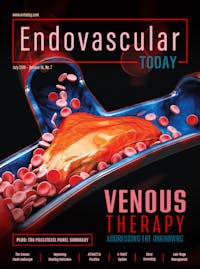
Addressing the Unknowns of Venous Care
By Raghu Kolluri, MS, MD, RVT, FSVM, and Manjit Gohel, MD, MBChB, FRCS, FEBVS


The venous landscape continues to change rapidly, not only with headline-grabbing new technologies and data, but perhaps more importantly, increasing awareness and enhanced understanding of the various states of venous disease and how they affect patients. What it means to be a venous practitioner and a member of a global community of specialists is also evolving.
As new therapies come to market, we embrace the excitement that comes with the potential to expand our treatment capabilities and their reach to more patients. We also appreciate that a market clearance is not a green light to consider all questions answered and, importantly, that overenthusiasm can lead to overuse. Similarly, data are rarely as black and white as the pages on which they are printed. Populations and practicalities must be considered and adjusted for.
For these reasons and more, we have selected a theme of exploring the most prescient unanswered questions in the field today.
We begin this issue with a look at venous stenting, which in the past year has seen rapid progress in market approvals and availabilities for dedicated venous devices. A comprehensive appraisal of existing and emerging stents used to treat venous obstruction and their clinical trial data to date is presented by Erin H. Murphy, MD. Next, Stephen A. Black, MD, and Rachael Morris, MD, explore three categories of stent failure (technical, hematologic, and flow-related) and outline how understanding these factors serves as a framework to allow for correction and achieving long-term patency.
Shifting our focus to deep vein thrombosis clinical trial insights, an expert panel including Riyaz Bashir, MD; Rabih Chaer, MD; Rick de Graaf, MD; Mitchell J. Silver, DO; and Brooke Spencer, MD, discusses the takeaways of the ATTRACT and CAVA trials for their practices. Our trial discussion continues with a comprehensive look at the C-TRACT trial from Suresh Vedantham, MD, who shares why this study is needed and what the endovascular community can do to support it.
Switching gears to venous ulcer management, we share a panel discussion among William Ennis, DO; Neil Khilnani, MD; Kathleen Ozsvath, MD; and ourselves. This multidisciplinary group of experts offer thoughts on robust screening programs for venous leg ulcers in light of the EVRA trial results. Next, Safa Salim, MBBS; Tristan R. A. Lane, MBBS; Alun H. Davies, DM; and Sarah Onida, MBBS, further discuss the findings of the EVRA trial, the challenges and opportunities in their real-world application, and the obstacles of managing late-stage venous disease.
Then, Ariel Borohovitz, MD, and Ido Weinberg, MD, examine the stance of prominent societies on several potential indications for inferior vena cava filters, one of the field’s perennially debated questions.
Elsewhere in this edition, developments in the continued evaluation of paclitaxel use in peripheral arterial applications are covered, including the recent FDA panel. In closing, we present an interview with Alison Halliday, MD, covering topics such as the status of the ACST-2 trial and its role in the carotid artery stenting trial landscape.
Although we know that this edition may merely scratch the surface of probing questions in the venous field today, we hope you find it informative and provocative. We welcome your feedback and look forward to hearing your own questions and experiences in the year to come.
Raghu Kolluri, MS, MD, RVT, FSVM
Manjit Gohel, MD, MBChB, FRCS, FEBVS
Guest Chief Medical Editors
Advertisement
Advertisement