Advertisement
Advertisement
January 2021
Evaluation and Management of Acute Limb Ischemia
Reviewing the etiology, clinical factors, and management options.
By Michael C. Siah, MD, and Michael Shih, MD
Acute limb ischemia (ALI) occurs due to the sudden cessation of arterial perfusion to an extremity. It is a common yet potentially devastating pathology occurring in 22 to 26 per 100,000 patients annually.1 Compared with critical limb ischemia, ALI is associated with a higher amputation and mortality rate. As a result, rapid diagnosis and therapy are critical for the management of these patients.
Open surgical revascularization has been the mainstay of therapy; however, over the last several years, many percutaneous technologies have emerged that have provided alternative modalities of restoring perfusion. Despite these newer catheter-based techniques, the management of ALI remains particularly challenging because amputation rates are variable and range from 15% to 20% (despite therapy) and mortality rates approach 26% at 1 year.2,3 Oftentimes, patients presenting with ALI are the sickest patient cohort that vascular interventionalists treat.
ETIOLOGY
ALI can be differentiated between two primary underlying pathologies: embolic or thrombotic. The difference between these two contributing mechanisms affects procedural decision-making and patient management. Patients with underlying cardiac dysfunction—whether because of atrial fibrillation, valvular dysfunction, or myocardial infarction—represent a large portion of patients who experience ALI due to embolic phenomenon. Less common etiologies of embolism include aortic and peripheral aneurysms. Thrombotic ALI is usually caused by the presence of underlying peripheral artery lesions, as well as the occlusion of previously placed bypasses, stents, or trauma.
CLINICAL EVALUATION
Patient history and a physical are paramount in evaluating a patient presenting with ALI to determine the timeline and severity of the condition. Typically, the symptoms of ALI develop within a 2-week period prior to patient presentation to a provider. The clinical features associated with ALI include pain, pallor, pulselessness, paresthesia, poikilothermia, and paralysis. These factors, known as the “six P’s,” provide a rough outline that may help differentiate ALI from chronic rest pain; however, the clinical diagnosis requires a subtle, nuanced approach to best determine the timing of intervention for revascularization. The Rutherford classification system can provide a framework to guide clinicians (Table 1).4
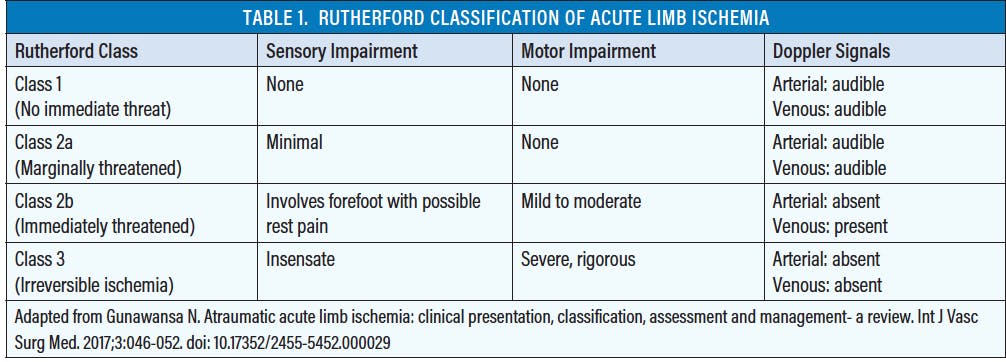
Rutherford class (RC) 1 ALI describes patients with nonthreatened limbs; these patients have no neurovascular compromise and may not require intervention. Patients with RC 2a and 2b have threatened limbs and some degree of neurovascular compromise. The primary difference between these two classes is the loss of motor function. Often, patients with RC 2b (the more advanced form of ALI) cannot afford to undergo therapies that require longer periods to achieve optimal benefit and instead undergo open revascularization. RC 3 patients are those who present with insensate, paralyzed, and rigorous extremities and have experienced irreversible ischemia. The implications of revascularization on these extremities can be catastrophic due to the systemic implications of reperfusion injury, and typically, these patients should undergo primary amputation.
MANAGEMENT
Catheter-Directed Thrombolysis
The first-line therapy for any patient presenting with ALI is therapeutic anticoagulation. The oldest and best-studied percutaneous therapy for the management of ALI is catheter-directed thrombolysis (CDT). Perfusion is restored through the administration of tissue plasminogen activator (tPA) via a catheter directly within the thrombus burden. Typically, contralateral access is obtained, and arteriography of the affected extremity is performed. When the location of the thrombus is identified, a wire is navigated into the runoff vessels, and arteriography of the runoff is performed. Following this, a multiside-hole catheter is exchanged over the wire, through which tPA can be infused. The catheter is then connected directly to a tPA infusion pump, through which the medication is continuously delivered at a rate ranging from 0.5 to 1 mg/hour. We also infuse heparin at 500 IU/hour through the sheath to prevent sheath and access vessel thrombosis. Patients are sent to the intensive care unit (ICU) for care and monitored serially every hour for neurovascular checks and labs, including complete blood count, and fibrinogen are checked serially every 4 to 6 hours during the tPA infusion. Patients are then taken back to the operating room for repeat arteriography to assess the success of therapy and any additional adjunctive interventions.
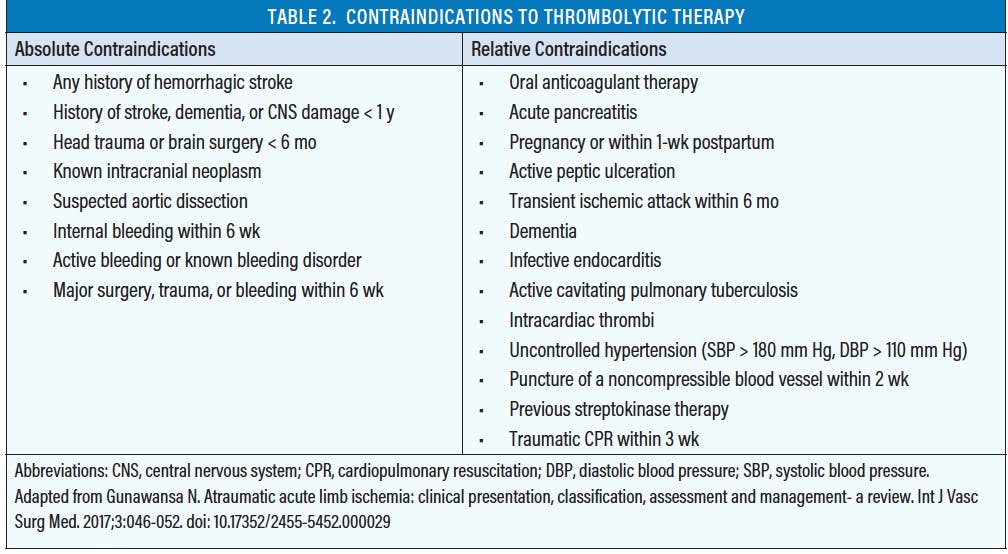
There are some critical patient selection and procedural considerations when considering patients for CDT. Not all patients are candidates for tPA administration because there are important clinical elements that are relative and/or absolute contraindications to thrombolysis (Table 2).4 These contraindications pertain to the potential for bleeding, which in CDT ranges between 5% and 15%.5,6 Careful, single-wall puncture ultrasound-guided access is vital to minimize access site complications. If double-wall punctures are performed, patients are at risk of developing access site complications that can be devastating with concomitant tPA administration. Furthermore, when traversing the actual thrombus burden, the ease with which the wire passes through the clot can lend insight into the age or acuity of the thrombus and, potentially, how the clot will respond to tPA administration.
Several randomized controlled trials have been performed comparing CDT to open surgery. The Rochester, STILE, and TOPAS trials were all conducted > 20 years ago and demonstrated the safety and efficacy of CDT, but additionally, they highlighted the unique complications associated with CDT compared to open surgery.
Mechanical Thrombectomy
Two of the drawbacks of CDT are the time to reperfusion and the risk of bleeding. Many patients with ALI do not have the luxury of waiting > 24 hours for revascularization or are at high risk for bleeding complications. These patients in particular may benefit from percutaneous mechanical or pharmacomechanical thrombectomy. These devices help expedite the clearance of thrombus, restore blood flow, and reduce the amount of thrombolytics needed. Pharmacomechanical thrombectomy can be used in conjunction with, or instead of, CDT. The use of pharmacomechanical thrombectomy to treat ALI in a single stage can obviate the need for ICU-level monitoring. There are many products on the market that function as thrombectomy. Some examples are Export AP aspiration catheter (Medtronic), Control mechanical thrombectomy system (Control Medical Technology), Indigo aspiration system (Penumbra, Inc.), QuickClear mechanical thrombectomy system (Philips), Jeti thrombectomy system (Walk Vascular, LLC), AngioJet thrombectomy system (Boston Scientific Corporation), Jetstream atherectomy system (Boston Scientific Corporation), Rotarex rotational excisional atherectomy system (BD Interventional), and Bashir endovascular catheter (Thrombolex, Inc.). This list is not meant to be comprehensive, and we have chosen to highlight a few representative products here from each category.
Aspiration is one of the simplest forms of mechanical thrombectomy. This can easily be performed without any special equipment. An adequately sized guiding catheter can be positioned at the level of the thrombus with a 20 to 30 mL syringe attached to the end. The catheter is then advanced further into the thrombus while manual aspiration is performed using the syringe. Multiple passes may be needed to get adequate results. Commercial products are also available, like the Export AP catheter and Control mechanical thrombectomy system, which both function as pure aspiration devices. The Export AP is available in kink-resistant 6- and 7-F catheters that can be passed over a 0.014-inch wire, thereby maintaining wire access throughout the procedure. The Control mechanical thrombectomy system has catheters ranging from 5 to 11 F. The Control’s aspirator is a hand-controlled pump that can generate more suction than a regular syringe and can be used in a continuous or pulsed fashion.
The Indigo aspiration system uses its proprietary Penumbra Engine pump to generate up to −29.2 in Hg of continuous vacuum. The catheters range from 3 to 12 F and are meant to be paired with a Separator to help clear the thrombus from the catheter tip (Figure 1 and Figure 2). The PRISM trial was a retrospective, single-arm, multicenter trial evaluating the safety and efficacy of the Indigo system. In 79 patients, complete or near-complete revascularization (thrombolysis in myocardial infarction grade 2/3) was reported in 87.2%.7 However, Lopez et al reported technical success in only 51% of 41 patients treated with Indigo in their single-center retrospective review.8
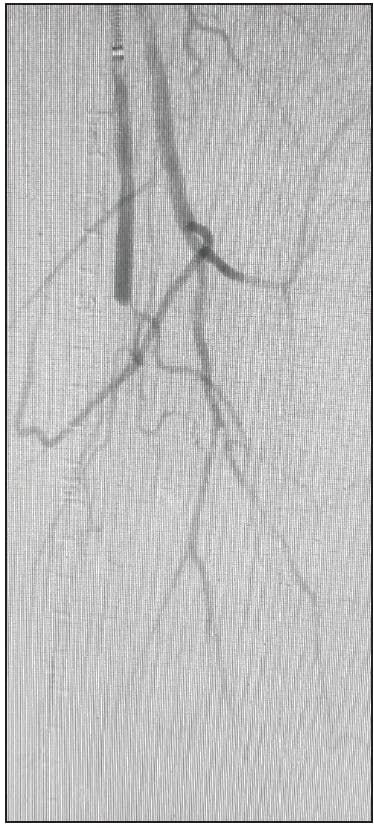
Figure 1. Arteriogram demonstrating an embolus occluding the superficial femoral artery and popliteal artery.
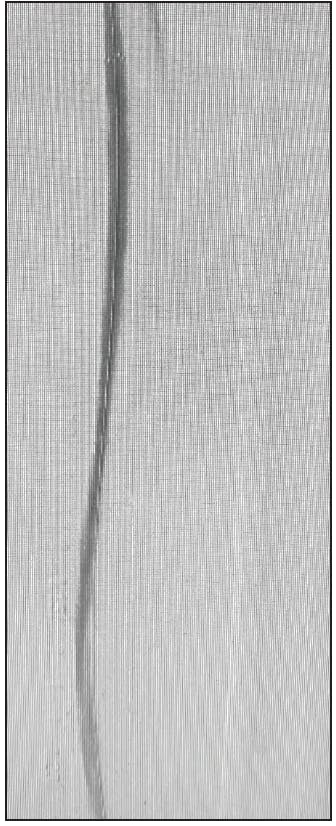
Figure 2. Completion arteriogram after the use of a CAT 6 (Penumbra, Inc.) and Viabahn (Gore & Associates) stenting of the superficial femoral and popliteal arteries.
The QuickClear mechanical thrombectomy system is a battery-operated, single-use aspiration pump and catheter system. Unlike other mechanical thrombectomy technology, it does not require any additional capital equipment. Catheters come in 6-, 8-, and 10-F sizes and range from 85 to 135 cm in length.
The Jeti thrombectomy system uses aspiration, as well as a focused jet of saline, to macerate thrombus within the catheter. It also has a Clot Detect feature that audibly communicates aspirate flow status, which aims to minimize blood loss and improve procedural success. The HyperPulse feature additionally provides an opportunity to deliver thrombolytics intraprocedurally. The Jeti is available in 6- and 8-F sizes, with a 100-cm working length.
Another tool in the armamentarium is AngioJet, a pharmacomechanical thrombectomy device that can first distribute tPA using its Power Pulse mode, which can then be followed up with the passage of the catheter in thrombectomy mode. The rheolytic thrombectomy is performed by activating high-pressure saline jets at the end of the catheter. Using Bernoulli’s principle, the jet of saline creates a low-pressure zone, thereby creating a vacuum to draw in the thrombus. Results from the PEARL registry showed AngioJet to be effective in treating ALI. In 283 treated patients, procedural success was achieved in 83%, measured as completion of the endovascular procedure without need for revascularization, bypass, or amputation, and with absence of substantial occlusion on completion angiography. The 12-month amputation-free survival rate was 81% in the cohort.9 Potential complications to be aware of include acute tubular necrosis and renal failure secondary to hemolysis and distal embolization.
Lastly, some atherectomy devices have aspiration capabilities and are therefore indicated for treating acute thrombus as well. Two such products are Jetstream and Rotarex, both of which are rotational atherectomy devices but can be used to treat ALI. Rotarex has a longer track record in Europe. One study from the Czech Republic showed technical success in 90.5% of 147 patients, and another in Germany showed 93% success in 156 ischemic events. Distal embolization complicated the procedures in 4.8% and 7%, respectively.10,11
CONCLUSION
The management of ALI remains challenging despite the variety of tools interventionalists have at their disposal. Surgery no longer represents the only modality of therapy because a host of endovascular techniques and devices are now available to achieve comparable outcomes. Ultimately, patient selection based on presentation, comorbidities, and acuity and the comfort level of the interventionalist are paramount in achieving the best outcome.
1. Creager MA, Kaufman JA, Conte MS. Clinical practice. Acute limb ischemia. N Engl J Med. 2012;366:2198-2206. doi: 10.1056/NEJMcp1006054
2. Norgren L, Hiatt WR, Dormandy JA, et al. Inter-society consensus for the management of peripheral arterial disease (TASC II). J Vasc Surg. 2007;45(suppl S):S5-S67. doi: 10.1016/j.jvs.2006.12.037
3. Enezate TH, Omran J, Mahmud E, et al. Endovascular versus surgical treatment for acute limb ischemia: a systematic review and meta-analysis of clinical trials. Cardiovasc Diagn Ther. 2017;7:264-271. doi: 10.21037/cdt.2017.03.03
4. Gunawansa N. Atraumatic acute limb ischemia: clinical presentation, classification, assessment and management- a review. Int J Vasc Surg Med. 2017;3:046-052. doi: 10.17352/2455-5452.000029
5. Weaver FA, Comerota AJ, Youngblood M, et al. Results of a prospective randomized trial evaluating surgery versus thrombolysis for ischemia of the lower extremity. The STILE trial. Ann Surg. 1994;220:251-268. doi: 10.1097/00000658-199409000-00003
6. Ouriel K, Shortell CK, DeWeese JA, et al. A comparison of thrombolytic therapy with operative revascularization in the initial treatment of acute peripheral arterial ischemia. J Vasc Surg. 1994;19:1021-1030. doi: 10.1016/s0741-5214(94)70214-4
7. Saxon RR, Benenati JF, Tiegen C, et al. Utility of a power aspiration-based extraction technique as an initial and secondary approach in the treatment of peripheral arterial thromboembolism: results of the multicenter PRISM trial. J Vasc Interv Radiol. 2018;29:92-100. doi: 10.1016/j.jvir.2017.08.019
8. Lopez R, Yamashita TS, Neisen M, et al. Single-center experience with Indigo aspiration thrombectomy for acute lower limb ischemia. J Vasc Surg. 2020;72:226-232. doi: 10.1016/j.jvs.2019.10.079
9. Leung DA, Blitz LA, Nelson T, et al. Rheolytic pharmacomechanical thrombectomy for the management of acute limb ischemia: results from the PEARL registry. J Endovasc Ther. 2015;22:546-557. doi: 10.1177/1526602815592849
10. Heller S, Lubanda JC, Varejka P, et al. Percutaneous mechanical thrombectomy using Rotarex S device in acute limb ischemia in infrainguinal occlusions. Biomed Res Int. Published online May 7, 2017. doi: 10.1155/2017/2362769
11. Vorwerk D, Triebe S, Ziegler S, Ruppert V. Percutaneous mechanical thromboembolectomy in acute lower limb ischemia. Cardiovasc Intervent Radiol. 2019;42:178-185. doi: 10.1007/s00270-018-2129-3
Advertisement
Advertisement