Advertisement
Advertisement
March 2021
Sponsored by Medtronic
Expert Perspectives on Treatment Approaches in Large-Diameter Necks
Moderator: Apostolos K. Tassiopoulos, MD, FACS
Panelists: Ross Milner, MD, FACS; Naiem Nassiri, MD, RPVI; and Brant W. Ullery, MD, FACS
MODERATOR

PANELISTS



Although advances in endograft technology over the past 2 decades have enhanced applicability of endovascular aneurysm repair (EVAR) and improved outcomes, unfavorable aortic anatomies still represent a significant challenge to the long-term durability of EVAR.1 A large-diameter (or dilated) aortic neck has been associated with a higher rate of proximal seal zone failure and late type Ia endoleaks.2-6 Current commercially available endografts offer main bodies with proximal diameters ranging from 22 to 36 mm to treat aortic neck diameters of 18 to 32 mm within the instructions for use. Despite some earlier studies suggesting favorable outcomes in patients treated with larger-size devices,7,8 several recent reports have shown that larger aortic neck diameter is a risk factor for proximal seal failure,5,6,9 and this failure does not appear to be dependent on the type of endograft device utilized.9
The definition of what constitutes a dilated neck is not consistent. Oliveira et al reported an increased risk of type Ia and type III endoleaks, neck-related secondary interventions, and proximal neck–related adverse events in patients with a neck diameter ≥ 30 mm.5 Schanzer et al,2 Jim et al,10 and Gargiulo et al6 found that patients with neck diameters ≥ 28 mm had higher rates of proximal seal zone failures and major adverse events. Despite a report by AbuRahma et al suggesting that only aortic diameters of ≥ 31 mm increased the risk of neck-related complications after EVAR,11 it appears that most studies indicate that aortic necks with diameters ≥ 28 mm should be considered an adverse anatomic characteristic associated with a higher risk of proximal seal zone failures over the long term.
An additional parameter to consider is that a significant percentage (≥ 20%) of patients who are treated with open surgical abdominal aortic aneurysm (AAA) repair or EVAR experience aortic neck dilatation at 2 years.6,10,12 Gargiulo et al found a large aortic neck to be associated with significant aortic neck enlargement at 24 months as well as a high risk of type Ia endoleaks and proximal neck–related interventions.6 The degree of endograft oversizing has been linked to a more accelerated aortic neck dilatation and a higher incidence of late type Ia endoleak and endograft migration.13,14 An alternative explanation may be that the presence of a larger aortic neck diameter is a marker of increased aneurysmal burden, and large aortic neck diameters may already be damaged and weakened; endovascular devices could initially achieve a sufficient seal but ultimately develop endoleaks over time.15,16 These observations point out the need to consider enhanced seal zone reinforcement strategies in order to prevent long-term proximal seal zone failures.
CASE STUDY
The patient was a 71-year-old man with an AAA measuring 7.3 cm, which was discovered during a workup for colon cancer. The patient had a sigmoid colon mass and was a candidate for surgical resection. Medical history was significant for moderate chronic obstructive pulmonary disease (COPD) and coronary stenting. Preoperative imaging is shown in Figures 1A-1H.
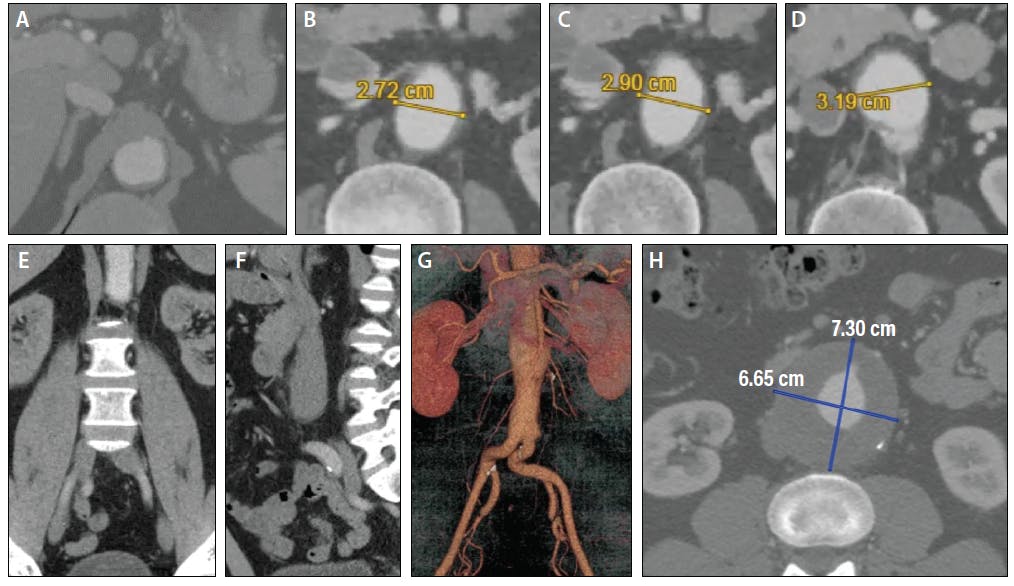
Figure 1. Preoperative imaging for the case patient. Preoperative axial CTA (A). Diameter at the lowest renal artery was 27 mm (B), diameter 9-mm below the renal artery was 29 mm (C), and diameter 12-mm below the renal artery was 32 mm (D). Preoperative coronal (E) and sagittal CTA (F). Volume rendering CT (G). Preoperative AAA size was noted as 73 X 67 mm (H).
Figure 1A. Preoperative axial CTA.
Figure 1E. Preoperative coronal CTA.
Figure 1F. Preoperative sagittal CTA.
Figure 1G. Volume rendering CT.
QUESTIONS
What key criteria influence your decision-making? Would you proceed with an endovascular therapy?
Dr. Milner: The decision-making regarding timing of repair for patients with a recent cancer diagnosis and an incidentally discovered AAA can be challenging. In this specific patient, a 7.3-cm AAA is more time sensitive than the cancer diagnosis due to the rupture risk associated with an aneurysm of this size. I would prefer to proceed with the AAA repair first. I would strongly prefer an endovascular approach in this clinical scenario.
Dr. Ullery: This patient appears to be an ideal endovascular candidate based on his age and comorbid conditions. In my experience, patients like this patient with limited physiologic reserve as a result of primary cardiopulmonary comorbidities garner the greatest benefit from endovascular therapy compared to conventional open aortic surgery. From an anatomic standpoint, his anatomy presents several high-risk features; however, none of these are prohibitive for endovascular repair.
Dr. Nassiri: Patient age, frailty score, comorbidities (eg, COPD, coronary artery disease), and intercurrent ailments such as the colonic mass noted in this particular patient are factors that would affect my clinical decision-making process. I would certainly proceed with a percutaneous endovascular approach in this scenario so as to minimize postoperative recovery time, expedite necessary care pertaining to the colonic mass, and avoid intra-abdominal manipulation in a patient who may need further abdominal surgery.
How would you address this patient’s durability needs? Would you consider the Heli-FX™ EndoAnchor™ system?
Dr. Ullery: The aortic morphology in this case would be classified as high risk, or hostile, based on multiple factors, including short infrarenal neck length (< 15 mm), reverse taper configuration, and wide neck diameter. As such, conventional EVAR would be expected to have limited durability owing to an unacceptably high risk for proximal aneurysm neck-related events, such as type Ia endoleak, progressive aortic neck dilatation, and distal migration. In such cases, complex EVAR using fenestrated technology, parallel stent grafts (eg, urgent cases, poor iliofemoral access), or conventional EVAR in combination with EndoAnchors would be more appropriate. Of these, I believe endosuture aneurysm repair (ESAR) is the best option in this case example, given the fact that both fenestrated and chimney techniques would likely force unnecessary sacrifice of the generous-sized bilateral accessory renal arteries. EndoAnchors provide a relatively facile therapeutic option that obviates the need for any renal artery catheterization or sacrifice.
Dr. Milner: My impression is that this patient’s anatomy is amenable to an endovascular repair. The aortic neck anatomy is complex due to the reverse taper (27 to 29 to 32 mm). In addition, the neck has some associated thrombus, which may predispose to later degeneration. I think EndoAnchors would provide the security of enhanced seal and fixation due to this patient’s neck characteristics in the acute setting. And, EndoAnchors may allow greater durability of the repair in terms of prevention of late neck dilation and development of a type Ia endoleak when a large-diameter device is needed.
Dr. Nassiri: In this case, several factors pertaining to the proximal neck warrant consideration of enhanced active fixation via EndoAnchors. First, the neck has a reverse conical shape dilating from a 27-mm diameter distal to the accessory right renal artery quickly to about 30 mm at the 10-mm mark distal to the lowest renal artery. Furthermore, there is a considerable anterior excursion of the main aortic axis at the level of the proximal neck rendering a neck angulation of approximately 45° (rough estimate). Finally, the presence of large, patent lumbar arteries and an inferior mesenteric artery can certainly contribute to type II endoleaks with robust inflow and outflow channels within the excluded aneurysm sac. The latter can contribute to persistent sac pressurization with further neck degeneration in the future. For these reasons, this patient would be a good candidate for enhanced active fixation at the proximal seal via EndoAnchors.
What data would inform your decision-making with ESAR?
Dr. Nassiri: Based largely on industry-sponsored registries, we know that EndoAnchor placement can be performed with high ≥ 90% technical success rates within the instructions for use. Less predictable overall is the clinical success rate based on various indications for this technique. The latter can include repair of immediate postoperative type Ia endoleak, repair of delayed or chronic type Ia endoleak, or prophylactic placement for tenuous proximal seal. Based on both anecdotal as well as clinical experience in the ANCHOR registry, I find that the use of EndoAnchors at the time of the index EVAR operation to be the best indication for this added fixation adjunctive maneuver. In other words, EndoAnchor placement has the best procedural success rate when used as prophylaxis against type Ia endoleaks in compromised proximal neck anatomy and/or as an immediate intraoperative maneuver to address a postdeployment type Ia endoleak. Chronic type Ia endoleaks can be more challenging to repair with EndoAnchor placement alone.
Dr. Ullery: Over the last 3 decades, endovascular aortic therapy has matured to the point that we have established high-risk anatomic criteria for conventional EVAR (eg, conical shape, length < 15 mm, > 60°, calcium or thrombus burden, wide diameter). Indeed, studies have reliably demonstrated that such anatomies are prone to suboptimal outcomes, including a greater than fourfold increase in proximal endoleak, 10-fold increase in aneurysm sac expansion, and a ninefold increase in early aneurysm-related mortality.1,17 Equally important to the identification of these hostile neck features during the case planning process is the recognition that aneurysmal disease is, by its very nature, a progressively dilating disease even after open or endovascular repair. It is this challenging anatomic cohort that demands the greatest scrutiny in terms of selecting the appropriate mode of aneurysm repair and steadfast adherence to both clinical and radiologic postoperative surveillance. Unfortunately, such surveillance strategies have proven to be mostly ineffective, as evidenced by an annual imaging follow-up compliance rate of just 50% among Medicare beneficiaries.18
EndoAnchors greatly augment the durability achieved from “active fixation” in conventional EVAR by recreating a surgical anastomosis via the circumferential placement of anchors that penetrate through the aortic endograft and into the aortic wall. The addition of EndoAnchors has been shown to protect against neck dilatation and promote aneurysm sac regression in this vulnerable anatomic group.19 The primary data supporting the application of such technology in challenging AAA cases derives from the ANCHOR registry, which is a prospective, observational study that includes over 900 patients with AAAs treated with a variety of commercially available aortic endografts in combination with EndoAnchors as either a primary (index) or revision (prior EVAR with proximal endoleak) procedure. Recently published 4-year follow-up data from this registry showed exceptionally high technical success (eg, > 95% EndoAnchors adequately penetrated the aortic wall), no migration, and a type Ia endoleak rate of 3.4% in the index EVAR group.20-22 The fact that 88.6% of enrolled patients met Society for Vascular Surgery criteria for hostile infrarenal aortic neck further supports the select use of this technology in high anatomic risk cohorts.
Dr. Milner: My decision-making for EndoAnchors is highlighted in my previous answer. Data from the study by Muhs et al showed improved aneurysm sac regression with the use of EndoAnchors.19 In addition, other studies have demonstrated the risk of late type Ia endoleak development with larger-diameter aortic devices.9,23-26
How would you maximize the utility of EndoAnchors in the seal?
Dr. Milner: EndoAnchor placement can be very precise. I would plan to use a minimum of six EndoAnchors in this patient, as I would select a 36-mm main body device. I correct for device parallax and attempt to place the EndoAnchors in a circumferential fashion. I place two anchors in three different image obliquities to accomplish this goal. The Heli-Fx sheath works well for me and I typically use the 22-mm deflectable sheath for most of my cases. I place the deflectable sheath through a 16-F sheath that is placed at the bifurcation of the main body device. I think the 16-F sheath support is valuable to accurately use the deflectable sheath and deploy each EndoAnchor.
Dr. Ullery: My technique and confidence in the EndoAnchor technology has evolved over time. Although EndoAnchors are most technically satisfying in the extremes of cases, I would recommend solidifying your individual technique with slightly less challenging cases (eg, perhaps necks 8-15 mm and with less angulation) at the beginning. During initial enrollment in the ANCHOR registry, a standardized deployment technique and recommendations on number of EndoAnchor implants were provided; however, physician experiences were still being refined. Investigators implanted a mean of 5.8 EndoAnchors per case and the mean implantation time of these EndoAnchors was 19 minutes.27 The current recommendation for minimum number in abdominal EVAR is four to six EndoAnchor implants, depending primarily on the infrarenal aortic neck diameter.
I tend to employ a minimum of six EndoAnchors per case, but I have a low threshold to utilize all 10 EndoAnchors in the cassette in particularly challenging cases. Placement of EndoAnchors is critical and it is important to devise a strategy at the beginning of the case to ensure you are targeting areas of the infrarenal neck most prone to endoleak (eg, calcium and thrombus [< 2-mm thickness], angulation, posterior bulge). I tend to do an initial layer of six EndoAnchors within the first 5 mm of the infrarenal neck. For many cases involving wide aortic necks where there is simply more circumferential real estate, I will empirically aim for an increasingly circumferential seal and add additional EndoAnchors. Some users have incorporated a dual-layer approach, whereby there is a secondary ring of EndoAnchors below the initial EndoAnchor ring and/or a “zig zag” appearance to the EndoAnchors within the proximal seal zone. In my experience, I have tried to keep true to the fundamental basis for why I integrate this technology into EVAR; that is, to replicate a surgical anastomosis. Therefore, I generally focus on one solitary row of EndoAnchors placed as close to the proximal fabric edge of the device as possible. Becoming familiar with the delivery catheter and the fluoroscopic appearance of its position in a 90° orientation greatly facilitates procedural efficiency and confidence. Furthermore, advancing your sheath deep into the main body device (eg, above the flow divider) enhances maneuverability and directionality of the catheter by reducing the negative effects imposed by iliofemoral occlusive disease, a narrow distal aorta, or angulation. Delivery of EndoAnchors in select cases involving extreme aortic angulation may also be facilitated by utilization of both femoral access sites. Lastly, intravascular ultrasound can provide additional insight in cases with refractory proximal endoleak by guiding optimal EndoAnchor placement within the hostile infrarenal aortic neck.
Dr. Nassiri: Once a decision has been made to proceed with enhanced, active proximal infrarenal fixation with EndoAnchors, I prefer to use the entire 10 EndoAnchors in a given kit and place these approximately 30° apart from one another by rotating the image intensifier 30° in both right anterior oblique and left anterior oblique directions and maintaining a 90° abutment of the flexed tip of the EndoAnchor delivery catheter relative to the stent graft edge under these views. I ensure that the flexed elbow of the delivery catheter apposes the contralateral wall of the stent graft, and I feel for the resistance provided by this maneuver to ensure that I have maximum direct pressure onto the stent graft fabric and the underlying aortic wall.
MODERATOR’S APPROACH TO THE CASE
This patient presented with a 7.3-cm infrarenal AAA that was discovered during a workup for colon cancer. The patient’s sigmoid colon mass required surgical resection. A discussion with the patient and his colorectal surgeon was held, and given the size of the AAA, the decision was made to repair the aneurysm first, with EVAR favored to expedite recovery and facilitate colon resection.
On planning AAA repair, a number of anatomic challenges were identified:
- The proximal neck was 9-mm-long, large, and conical (diameter, 27 mm at the lowest renal artery, 29 mm at 9-mm below the lowest renal artery, and 32 mm at 12-mm below)
- A sizeable accessory renal artery was present bilaterally
- There was mild anterior angulation (39°)
We considered a number of different treatment options. Open repair was not desirable because it would delay and complicate the surgical treatment of sigmoid cancer. Fenestrated EVAR would require a treatment delay of over 3 weeks for endograft manufacturing as well as sacrificing both accessory renal arteries, risking significant loss of kidney parenchyma and renal insufficiency/failure prior to the patient’s surgery for cancer. For the latter reason, chimney EVAR was also not favored. ESAR provides superior proximal sealing and fixation, which is particularly important in the case of a large aneurysm neck for adding proximal seal zone durability. Use of the Heli-FX™ EndoAnchor™ system has also been shown to have a protective effect on aortic neck dilatation14; therefore, we elected to preserve the two accessory renal arteries and use EndoAnchor implants not only to provide enhanced seal and fixation but also to dilatation of this large-diameter neck.
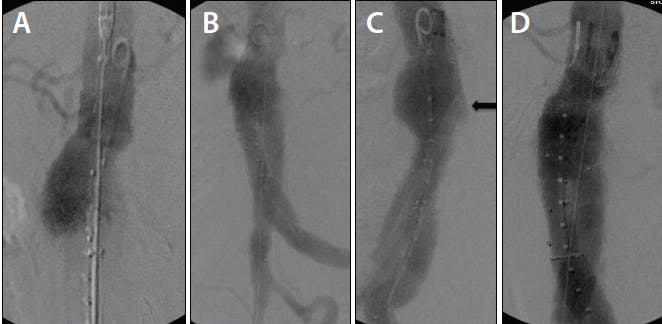
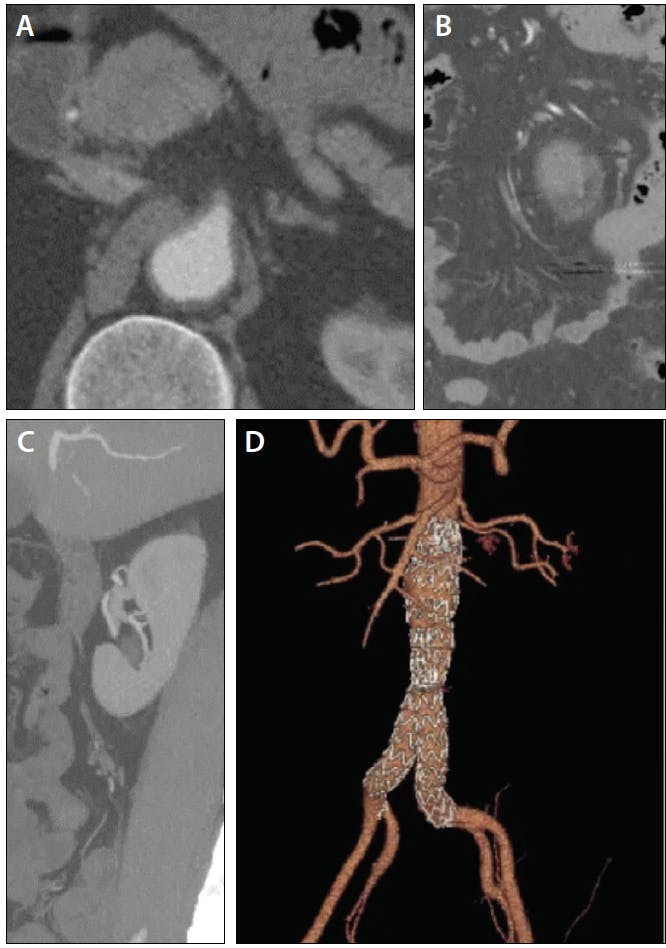
Figure 2. Intraoperative images showing CTA initially (A), post-EVAR (B), type Ia endoleak (C), and type Ia endoleak resolved after placement of EndoAnchors (D).
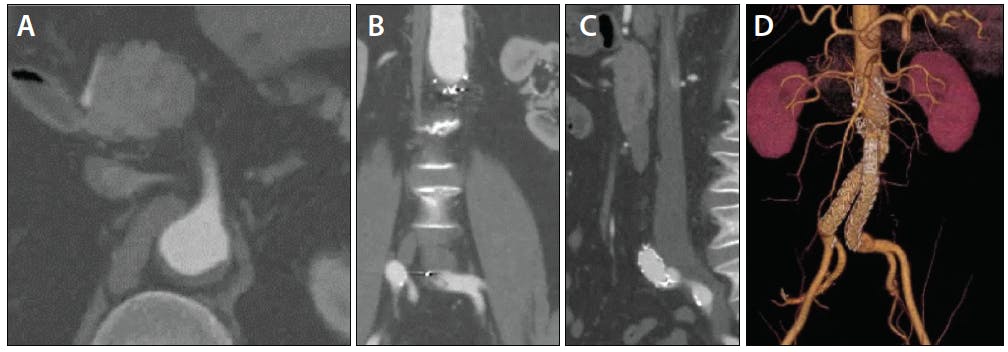
Figure 3. Postoperative CTA at 1-month follow-up showing no type I endoleak (A)
Figure 3. Postoperative CTA at 1-month follow-up showing no type I endoleak (B)
Figure 3. Postoperative CTA at 1-month follow-up showing no type I endoleak (C)
Figure 3. Postoperative CTA at 1-month follow-up showing no type I endoleak (D)
A 32-mm main body diameter endograft was deployed below the lowest accessory renal artery, and eight EndoAnchor implants were applied circumferentially at 45° intervals in the proximal 5 mm of the seal zone (Figure 2). The patient underwent a successful sigmoid colectomy 2 weeks after ESAR. There was no type Ia endoleak at 1-month and 3-year follow-up (Figure 3 and Figure 4). The patient has been followed for approximately 6 years. There was significant AAA sac regression (AAA max diameter decreased to 5.4 cm) 5 years after EVAR (Figure 5). Of note, the proximal neck diameter remained stable over 5 years in this high-risk neck that had the potential to experience significant degeneration and neck-related complications (Figure 6). There were no neck-related reinterventions in the follow-up period underlining the protective effect of EndoAnchor implants on aortic neck dilatation.
Figure 4. Postoperative CTA at 3-year follow-up showing no type I endoleak (A).
Figure 4. Postoperative CTA at 3-year follow-up showing no type I endoleak (B).
Figure 4. Postoperative CTA at 3-year follow-up showing no type I endoleak (C).
Figure 4. Postoperative CTA at 3-year follow-up showing no type I endoleak (D).
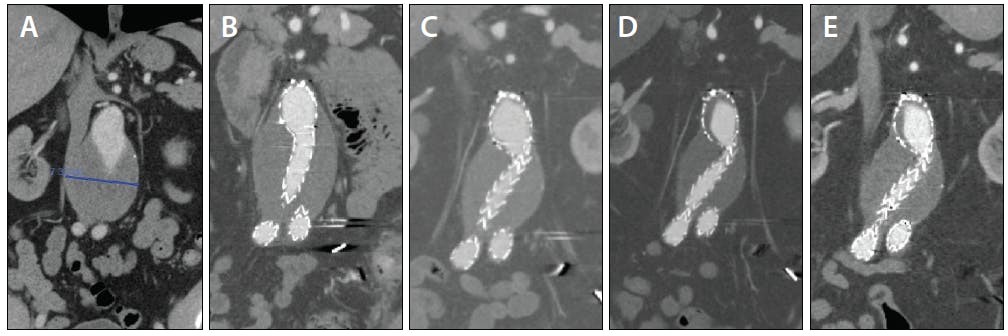
Figure 5. Shrinking AAA sac on preoperative imaging (73 mm) (A), at 1 month (72 mm) (B), at 1 year (65 mm) (C), at 3 years (61 mm) (D), and at 5 years (54 mm) (E) post-EVAR.
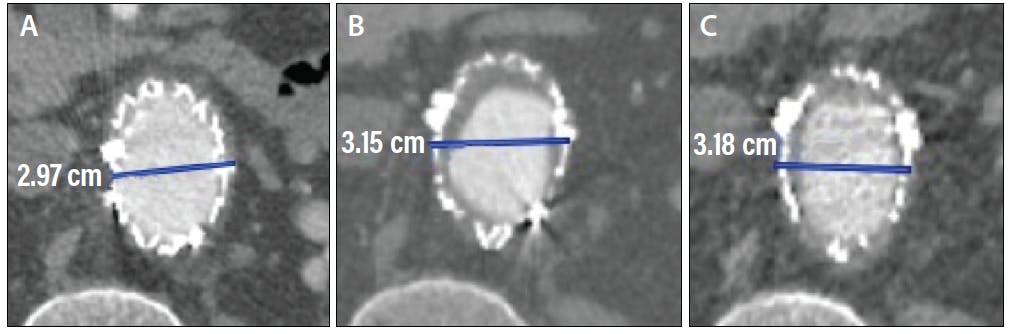
Figure 6. Change in neck diameter at 1 month (29.7 mm) (A), 3 years (31.5 mm) (B), and 5 years (31.8 mm) (C).
1. Antoniou GA, Georgiadis GS, Antoniou SA, et al. A meta-analysis of outcomes of endovascular abdominal aortic aneurysm repair in patients with hostile and friendly neck anatomy. J Vasc Surg. 2013;57:527-538. doi: 10.1016/j.jvs.2012.09.050
2. Schanzer A, Greenberg RK, Hevelone N, et al. Predictors of abdominal aortic aneurysm sac enlargement after endovascular repair. Circulation. 2011;123:2848-2855. doi: 10.1161/CIRCULATIONAHA.110.014902
3. AbuRahma AF, Campbell JE, Mousa AY, et al. Clinical outcomes for hostile versus favorable aortic neck anatomy in endovascular aortic aneurysm repair using modular devices. J Vasc Surg. 2011;54:13-21. doi: 10.1016/j.jvs.2010.12.010
4. Chaikof EL, Fillinger MF, Matsumura JS, et al. Identifying and grading factors that modify the outcome of endovascular aortic aneurysm repair. J Vasc Surg. 2002;35:1061-1066. doi: 10.1067/mva.2002.123991
5. Oliveira NFG, Bastos Goncalves FM, Van Rijn MJ, et al. Standard endovascular aneurysm repair in patients with wide infrarenal aneurysm necks is associated with increased risk of adverse events. J Vasc Surg. 2017;65:1608-1616. doi: 10.1016/j.jvs.2016.09.052
6. Gargiulo M, Gallitto E, Wattez H, et al. Outcomes of endovascular aneurysm repair performed in abdominal aortic aneurysms with large infrarenal necks. J Vasc Surg. 2017;66:1065-1072. doi: 10.1016/j.jvs.2017.01.066
7. Zayed HA, Bell RE, Clough RE, et al. Results of endovascular repair of abdominal aortic aneurysms with an unfavorable proximal neck using large stent-grafts. Cardiovasc Intervent Radiol. 2009;32:1161-1164. doi: 10.1007/s00270-009-9557-z
8. Jordan WD Jr, Moore WM Jr, Melton JG, et al. Secure fixation following EVAR with the Powerlink XL system in wide aortic necks: results of a prospective, multicenter trial. J Vasc Surg. 2009;50:979-986. doi: 10.1016/j.jvs.2009.05.057
9. Howard DPJ, Marron CD, Sideso E, et al. Editor’s choice—influence of proximal aortic neck diameter on durability of aneurysm sealing and overall survival in patients undergoing endovascular aneurysm repair. Real world data from the Gore Global Registry for Endovascular Aortic Treatment (GREAT). Eur J Vasc Endovasc Surg. 2018;56:189-199. doi: 10.1016/j.ejvs.2018.03.027
10. Jim J, Rubin BG, Geraghty PJ, et al. A 5-year comparison of EVAR for large and small aortic necks. J Endovasc Ther. 2010;17:575-584. doi: 10.1583/10-3140.1
11. AbuRahma AF, DerDerian T, AbuRahma ZT, et al. Comparative study of clinical outcome of endovascular aortic aneurysm repair in large diameter aortic necks (>31mm) versus smaller necks. J Vasc Surg. 2018;68:1345-1353. doi: 10.1016/j.jvs.2018.02.037
12. Illig KA, Green RM, Ouriel K, et al. Fate of the proximal aortic cuff: implications for endovascular aneurysm repair. J Vasc Surg. 1997;26:492-499; discussion 499. doi: 10.1016/s0741-5214(97)70042-9
13. Kret MR, Tran K, Lee JT. Change in aortic neck diameter after endovascular aortic aneurysm repair. Ann Vasc Surg. 2017;43:115-120. doi: 10.1016/j.avsg.2016.11.013
14. Tassiopoulos AK, Monastiriotis S, Jordan WD, et al. Predictors of early aortic neck dilatation after endovascular aneurysm repair with EndoAnchors. J Vasc Surg. 2017;66:45-52. doi: 10.1016/j.jvs.2016.12.117
15. Filis KA, Galyfos G, Sigala F, et al. Proximal aortic neck progression: before and after abdominal aortic aneurysm treatment. Front Surg. 2017;4:23. doi: 10.3389/fsurg.2017.00023
16. Diehm N, Di Santo S, Schaffner T, et al. Severe structural damage of the seemingly non-diseased infrarenal aortic aneurysm neck. J Vasc Surg. 2008;48:425-434. doi: 10.1016/j.jvs.2008.03.001
17. Kouvelos GN, Antoniou G, Spanos K, et al. Endovascular aneurysm repair in patients with a wide proximal aortic neck: a systematic review and meta-analysis of comparative studies. J Cardiovasc Surg (Torino). 2019;60:167-174. doi: 10.23736/S0021-9509.19.10869-5
18. Schanzer A, Messina LM, Ghosh K, et al. Follow-up compliance after endovascular abdominal aortic aneurysm repair in Medicare beneficiaries. J Vasc Surg. 2015;61:16-22. doi: 10.1016/j.jvs.2014.06.006
19. Muhs BE, Jordan W, Oureil K, et al. Matched cohort comparison of endovascular abdominal aortic aneurysm repair with and without EndoAnchors. J Vasc Surg. 2018;67:1699-1707. doi: 10.1016/j.jvs.2017.10.059
20. Jordan WD Jr. EndoAnchors can facilitate and maintain successful standard EVAR in hostile neck AAAs without increasing the cost: ANCHOR registry. Presented at VEITHsymposium 2019; November 21, 2019; New York, New York. Accessed January 20, 2021. https://www.veithsymposium.org/abstracts/2019/vei/739.pdf
21. Jordan WD Jr. Enhancing durability in hostile necks: technical and clinical insights on ESAR. Presented at The Houston Aortic Symposium; March 5, 2020; Houston, Texas.
22. de Vries JP. Mid-term results from ANCHOR and how these results affect my clinical practice. Presented at the Leipzig Interventional Course (LINC) 2020; January 28-31, 2020; Leipzig, Germany.
23. Antoniou GA, Alfahad A, Antoniou SA, Badri H. Prognostic significance of large diameter proximal aortic neck in endovascular aneurysm repair. Vasa. 2020;49215-224. doi: 10.1024/0301-1526/a000844
24. Kouvelos GN, Spanos K, Nana P, et al. Large diameter (≥29 mm) proximal aortic necks are associated with increased complication rates after endovascular repair for abdominal aortic aneurysm. Ann Vasc Surg. 2019;60:70-75. doi: 10.1016/j.avsg.2019.02.031
25. McFarland G, Tran K, Virgin-Downey W, et al. Infrarenal endovascular aneurysm repair with large device (34- to 36-mm) diameters is associated with higher risk of proximal fixation failure. J Vasc Surg. 2019;69:385-393. doi: 10.1016/j.jvs.2018.02.054
26. Oliveira NFG, Gonçalves FB, Ultee K, et al. Patients with large neck diameter have a higher risk of type Ia endoleaks and aneurysm rupture after standard endovascular aneurysm repair. J Vasc Surg. 2019;69:783-791. doi: 10.1016/j.jvs.2018.07.021
27. Jordan WD Jr, et al. Results of the ANCHOR prospective, multicenter registry of EndoAnchors for type Ia endoleaks and endograft migration in patients with challenging anatomy. J Vasc Surg. 2014;60:885-892. doi: 10.1016/j.jvs.2014.04.063
Heli-FX™& Heli-FX™ Thoracic EndoAnchor™ Systems
Indications for Use: The Heli-FX™ EndoAnchor™ system is intended to provide fixation and sealing between endovascular aortic grafts and the native artery. The Heli-FX™ EndoAnchor™ system is indicated for use in patients whose endovascular grafts have exhibited migration or endoleak, or are at risk of such complications, in whom augmented radial fixation and/or sealing is required to regain or maintain adequate aneurysm exclusion. The EndoAnchor™ implant may be implanted at the time of the initial endograft placement, or during a secondary (i.e. repair) procedure.
Contraindications: Treatment with the Heli-FX™ EndoAnchor™ system is contraindicated for use in the following circumstances:
- In patients with known allergies to the EndoAnchor™ implant material (MP35N-LT)
- In conjunction with the Endologix Powerlink™* endograft
Warnings:
- The long-term performance of the EndoAnchor™ implant has not been established. All patients should be advised endovascular aneurysm treatment requires long-term, regular follow-up visits to assess the patient’s health status and endograft performance. The EndoAnchor™ implant does not reduce this requirement.
- The EndoAnchor™ implant and the Heli-FX™ EndoAnchor™ system have been evaluated via in vitro testing and determined to be compatible with the Cook Zenith™*, Cook Zenith™* TX2™*, Gore Excluder™*, Gore TAG™*, Medtronic AneuRx™, Medtronic Endurant™, Medtronic Talent™ AAA, Medtronic Talent™ TAA, Medtronic Valiant Xcelerant™, Medtronic Valiant™ Captivia™, and Medtronic Valiant Navion™ endografts. Use with endografts other than those listed above has not been evaluated.
- The performance of the EndoAnchor™ implant has not been evaluated for securing multiple endograft components together. Not securing EndoAnchor™ implants into aortic tissue could result in graft fabric damage, component separation, and resultant Type III endoleaks.
The performance of the EndoAnchor™ implant has not been evaluated in vessels other than the aorta. Use of the EndoAnchor™ implant to secure endografts to other vessels may result in adverse patient consequences such as vascular perforation, bleeding, or damage to adjacent structures.
- The performance of the EndoAnchor™ implant has not been evaluated for securing multiple anatomical structures together. Such use could result in adverse patient consequences such as vascular perforation, bleeding, or embolic events.
MRI Safety and Compatibility:
- The EndoAnchor™ implants have been determined to be MR Conditional at 3T or less when the scanner is in Normal Operating Mode with whole-body-averaged SAR of 2 W/kg, or in First Level Controlled Mode with a maximum whole-body-averaged SAR of 4 W/kg.
- Please refer to documentation provided by the endograft system manufacturer for MR safety status of the endograft system with which the EndoAnchor™ implants are being used.
Potential Adverse Events: Possible adverse events that are associated with the Heli-FX™ EndoAnchor™ system, include, but are not limited to:
- Aneurysm rupture
- Death
- EndoAnchor™ implant embolization
- Endoleaks (Type III)
- Enteric fistula
- Failure to correct/prevent Type I endoleak
- Failure to prevent endograft migration
- Infection
- Renal complications (renal artery occlusion/dissection or contrast-induced acute kidney injury)
- Stroke
- Surgical conversion to open repair
- Vascular access complications, including infection, pain, hematoma, pseudoaneurysm, arteriovenous fistula
- Vessel damage, including dissection, perforation, and spasm
Please reference product Instructions for Use for more information regarding indications, warnings, precautions, contraindications and adverse events. Additional potential adverse events may be associated with endovascular aneurysm repair in general. Refer to the Instructions for Use provided with the endograft for additional potential adverse events.
CAUTION: Federal (USA) law restricts these devices to sale by or on the order of a licensed healthcare practitioner. See package inserts for full product information.
CAUTION: EndoAnchor™ implant locations should be based upon a detailed examination of the preoperative CT imaging in cases involving irregular or eccentric plaque in the intended sealing zones. EndoAnchor™ implants should be implanted only into areas of aortic tissue free of calcified plaque or thrombus, or where such pathology is diffuse and less than 2mm in thickness. Attempting to place EndoAnchor™ implants into more severe plaque or thrombus may be associated with implantation difficulty and suboptimal endograft fixation and/or sealing.
UC202115371 EN ©2021 Medtronic. All rights reserved. Medtronic, Medtronic logo and Further, Together are trademarks of Medtronic. All other brands are trademarks of a Medtronic company. For distribution in the USA only. 03/2021
Advertisement
Advertisement