Advertisement
Advertisement
May 2021
Mentors and Protégés: Conversations on Career and Craft With Avnesh S. Thakor, MD, PhD, MB BChir, FHEA, FRCR(IR)
SIR physician trainee Yang (John) Qiao, MD, speaks with Dr. Thakor about his varied experience training as a physician, being a physician-scientist, the effort to create a new IR subspecialty called interventional regenerative medicine, and more.
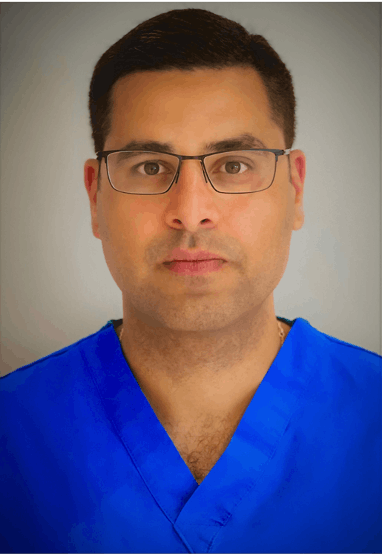
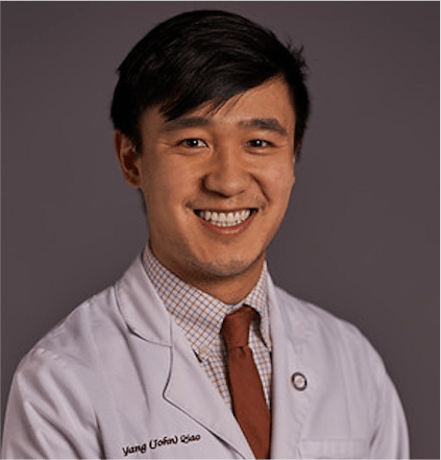
Thank you for taking the time to speak with me about your career as a physician-scientist. Please start by telling us some background about yourself and where you did your training.
I was born and raised in the United Kingdom and did my medical, radiology, and interventional training at the University of Cambridge. There I mainly did vascular and aortic interventional work; to gain further experience in interventional oncology (IO), I went to Vancouver, British Columbia, Canada, where I undertook another adult interventional radiology (IR) fellowship. From there, I went to Toronto, Ontario, Canada, for a pediatric IR fellowship and then subsequently came to Stanford where I am currently an academic pediatric interventional radiologist.
That sounds like an awesome experience training in such a diverse set of institutions. I can relate as someone who has also trained in a pretty diverse set of places in Montréal, New York, and Houston. I find it makes a difference getting to train everywhere.
It makes you realize that there’s no one true way of doing anything. It has been a privilege to be exposed to multiple different health care systems across the world and some fantastic mentors and teachers. Being exposed to all these institutions with different procedures and approaches was an invaluable experience, and I highly encourage this to all trainees.
Did you always want to go into IR or were there any other specialties that you considered?
The training structure in the United Kingdom is a little different than in the United States. I knew I wanted to do something cardiovascular related after finishing my first PhD in fetal cardiovascular physiology. I explored interventional cardiology, vascular surgery, and IR. I then explored which of these fields I thought I could best integrate my research into, and I was really impressed by the incredible breadth of innovation and future prospects of IR—so that’s the path I decided on.
That sounds like a wise decision and one that I think a lot of innovation-oriented trainees have in mind. What types of research projects have you been involved with in the past specifically?
I have had quite a dotted research career until settling here at Stanford where I now run my own translational laboratory, and this was mainly due to being opportunistic and getting involved in the projects that were available at the multiple institutions I worked in. At Cambridge, I worked a lot in physiology, starting in endocrine physiology for my master’s and then moving into cardiovascular physiology research for my doctoral thesis. I then took some time off from my clinical training and came to Stanford to work on nanotechnology, oncology, and molecular imaging, where I then did another doctoral thesis. In my fellowships, I was also fortunate to be exposed to clinical research looking at patient outcomes as well as basic science projects in oncology and venous thrombosis.
All these experiences taught me so many different skills: asking the right question, designing the right experiments, and then executing those experiments in the most efficient and logical way. It was also enlightening to see how transferable these skills were to all aspects of my life, inside and outside of medicine.
When I came to Stanford, I saw the huge potential of stem cell and gene therapy for tissue regeneration and realized that IR could play a significant role in offering ways for the precision delivery of these therapies to enable them to reach their full clinical potential. Our ability as radiologists to perform locoregional approaches and our current established infrastructures allow us to be uniquely positioned to bridge the gap from the bench to the patient bedside with collaborations with our clinical colleagues. With this vision and the vision for interventional regenerative medicine (IRM) as a new subspecialty for IR, I have focused my lab in this area, exploring cell therapies, locoregional delivery techniques, and novel cell priming and tissue microenvironment manipulating technologies.
From what I’ve read about your research and some of the projects we’ve previously worked on together, I’m not quite sure I know of anybody else working on these topics. Could you tell us a little bit more about the special significance of IRM to you?
Of course. In terms of the projects currently ongoing in my lab, I consider them in three main interlinked areas: (1) therapy, (2) delivery, and (3) optimization. Although stem cell–based therapies have shown considerable promise preclinically in cell culture and small animal models, their clinical translation has been suboptimal given that their delivery has not been optimized. Indeed, we can draw analogies to this from the implementation of chemotherapy delivery for certain solid tumors, where we initially encountered difficulties in getting the right amount of drug to the correct location while concurrently minimizing any associated systemic side effects. However, with the integration of IR into several treatment pathways, for example for hepatocellular carcinoma, we were then able to deliver chemotherapy drugs directly into tumors using transarterial approaches, thereby reducing the overall drug dose, eliminating side effects, and ensuring more efficient tumor treatment.
In the next decade, I think we will see similar approaches being adopted for cellular and gene therapies in which precision delivery, or targeted organ-specific approaches, will be implemented to ensure their clinical success. Hence, I believe the next biggest growth in IR will be in an IRM subspecialty, and ironically, I feel the adoption and implementation will be a lot quicker than encountered with IO given the infrastructure and devices that are already in place.
In addition, when we consider organ regeneration, we actually distribute the therapy uniformly throughout the whole organ, and this makes it easier than having to superselectively target a specific area as we do with tumors. Given we can deliver these therapies into organs using endovascular, endoluminal, or even percutaneous approaches, my lab focuses on using mesenchymal stem cells and their extracellular vesicles, and assessing their effects when we deliver these therapies directly to injured organs using locoregional techniques in small animal models. We can also cotransplant these cell therapies directly with other specific cell-targeting technologies like bioscaffolds, which is another area my lab is currently involved with modifying and optimizing.
Finally, in my lab, we look at ways to optimize these cellular therapies at the genetic level and also use novel noninvasive technologies that implement soundwaves, which, by the way, we are finding can also manipulate and prime target organs for stem cells.
Wow. These research topics that you and your team are working on sound like pioneering projects. What are some of the biggest challenges that you’ve had to overcome working on these innovative types of research?
Treading the unwalked path is always tough. It requires vision and then persistence. The truth is that this vision will take me at least 3 to 4 decades to realize, and hence, it’s important to tackle it with that mindset. Research takes time. It’s not the sort of thing that I’m going to find a solution, create an algorithm, or write a report/approach in 2 or 3 days. There is a “re” before the word “search” for a reason. Things rarely work out the first time—you have to keep on trying to find a solution and not give up, and that can take a significant amount of time. Therefore, it is important to realize that and have a clear vision of where you are heading and how to get there. Over the past decade, my lab has been fortunate to generate several high-impact publications and grants through the National Institutes of Health and societies such as the Society of Interventional Radiology, which helps to validate our approach and vision. But it’s a process, and it was very tough at the beginning. It’s easy for me to talk about all of the good things that have happened, but there are 20 times as many things that haven’t happened the way we wanted, with an equal number, if not more, of rejections and failures. This is why you always need to know the “why” of doing this, as it gives you the strength to allow you to be persistent in reaching your goals.
Absolutely. I set up an experiment over the weekend and came in on Monday to find all my cells dead, so I can relate to your experiences with persistence and tenacity. What are some of the biggest mistakes that you see trainees make when they try to assemble and execute a research project?
I think it comes back to what I said before, which is to have a vision and be passionate about that vision. There are no quick solutions or quick papers, and a quick paper is probably not worth doing anyway. Most of the worthwhile things, within research and life, will always take time. That’s one of the things that I always try to put into perspective for trainees, which is to say that they are not going to get a worthwhile paper within 2 months of doing any form of research. It will take time, and you will probably have a lot of setbacks. I think our role as senior academic people is to encourage and support students through that pathway and provide them with support, encouragement, and mentorship along the way, especially when things do not go as planned.
You’ve been through this process, and you’re now at this point where you have your own lab, and you’re teaching and working in a great clinical environment as well. Some people in the trainee community would call this the triple threat. With all these things going on for you, how do you achieve work-life balance along the way and avoid burnout? From the outside, it looks like it would be very challenging obviously, but is there any advice that you think would be helpful for aspiring young physician-scientists like me in the early stages of going through these experiences?
I am very fortunate to have a very understanding and supportive wife. My wife has been incredibly understanding, has helped me move countries, and has supported me throughout all the grant rejections and everything else that comes along the way with it. I think in terms of work-life balance it is hard, especially when you have young kids. Some of the greatest things that have kept me grounded are my day-to-day experiences in pediatric IR. You only have to come in to do something as simple as a gastrostomy-jejunostomy tube or peripherally inserted central catheter, and you see the amazing strength that families have in supporting their child, which makes you realize just how incredibly privileged you are and all the good things that have gone well in your life.
I would strongly recommend all budding academics to keep one foot in the clinical realm, as that contact will help ground you and focus your compass in terms of the reason why you are doing what you are doing. It reminds you of the reason for being a physician, and how your research can ultimately help people. You then start to realize that you’re in an incredible position where you can actually help make a difference, and indeed, it’s almost your responsibility to make that difference.
That is a very powerful statement—to keep the focus and not lose sight of using research as a means for improving the patient and human condition. I was wondering, did you originally try to fit your clinical interests around your research interests, vice versa, or some combination of both?
Good question. It’s interesting because, in England where I originally started my training back in the late 90s, you almost had to do a PhD if you wanted to be in an academic institution. When I first went into it, it was like a tick box exercise that I had to complete before I could focus on my clinical career. I had a phenomenal supervisor at that time, Dr. Dino Giussani, who gave me an amazing amount of knowledge and skills to become an excellent researcher, which led me to catch the “research bug.” I dwelled on it for the next decade thinking that I enjoyed research, but my work was mainly in a preclinical environment. When I came to Stanford to work under Dr. Sam Gambhir in his lab, he ended up showing me how to translate research into the clinical environment, and for that, I'll always be extremely grateful. I think if I wasn’t under his mentorship at the time and never gained the understanding of how to translate my knowledge on the benchtop to patient care, I probably wouldn’t be doing what I am currently doing.
I heard about Sam Gambhir as well. We emailed back and forth a few times, and he had always been extremely nice and open. I heard he was a great person and a kind of a giant in the field as well.
Dr. Gambhir is one of the main reasons I am who and where I am today. He taught me humility, the art of patience, and the necessity of vision. I remember having many discussions when I first came to Stanford, and I was saying, “Well, I want to create and then take on this field of IRM that’s never really been done before. What if I fail? What if I can’t make it work and it doesn’t take off?” And he said, “There’s only one way to know and that is to try.” Like any father figure or mentor, he would say that as long as I tried, he believed in me and would always be there to support me. And through his legacy, I want to pass on that to the next generation of physician-scientists. If it wasn’t for his support, I wouldn’t be here.
Absolutely. And I'm glad to hear that too. Most people don’t even do one PhD, so I’m glad you met your greatest mentor doing your second one. That’s pretty incredible. Looking back, if you could redo any parts of your training, are there projects in which you would have liked to stay for longer, redo completely, or not to have done at all?
I think I was kind of cooked, almost overcooked by the end of my training. But every single one of those projects and training experiences brought a phenomenal piece of insight in their own respect, and even the locations where I was made a huge impact on me. They were some of the most beautiful cities around the world, where I made amazing friends, and the insights I’ve gained in learning either a technical or research skill have all added considerable value. It’s interesting because I’ve leveraged every single one of those experiences in different forms throughout the years and continue to do so. That’s the other thing I would say to all trainees: Take opportunities as they come, and don’t be in such a rush to finish. We sometimes turn down opportunities because we think we want to become an attending, or consultant, or run our own lab as soon as possible. But at the end of the day, when you turn down an opportunity that at first looks like it would add a couple of years to your training, you might be giving up a potentially invaluable opportunity for growth. I would encourage everyone to take opportunities as they come, especially when you’re young; the few extra years really will not make a difference in the end when you put it into the context of your whole career. Don’t be in such a rush to finish.
That's great advice. I'm a big fan of the motto: When you’re young, work to learn, not to earn. You lose out on the experiences you choose not to have along the way. Thank you so much for speaking with me, Dr. Thakor.
Thank you, John. It was my pleasure.
Advertisement
Advertisement