Advertisement
Advertisement
November 2021
Sponsored by MicroPort Endovastec™
Real-World Use of the Castor™ Branched Aortic Stent Graft System for Treatment of TBAD
A collection of case studies from around the world showcasing the Castor™ stent graft for treatment of type B aortic dissection.
With Qingsheng Lu, MD; Xiaoye Li, MD; Prof. Michele Antonello, MD, PhD; Michele Piazza, MD; Piotr Gutowski, MD, PhD; Arkadiusz Kazimierczak, MD, PhD; Paweł Rynio, MD, PhD; and Gustavo Paludetto, MD, PhD
The Castor™ Branched Aortic Stent Graft System (MicroPort Endovastec™) is indicated for Stanford type B aortic dissection (TBAD) and has the potential to revascularize the left subclavian artery (LSA) while excluding primary entry tear. The unibody design of the branched stent graft and the delivery system—composed of an outer sheath (hard), inner sheath (soft), and sheath of the branch section—ensures safe, easy, and accurate deployment and greatly improves the technical success rate. Castor™ is developed by Shanghai MicroPort Endovascular MedTech (Group) Co., Ltd. (MicroPort Endovastec™). The concept of a branched stent graft was put forward by me and Professor ZaiPing Jing from the Vascular Surgery Department of Changhai Hospital as early as 2006. The project was promoted by the two parties based on 10 years of effort. In 2017, Castor™ was launched to market in China.
More than 7,000 patients have been successfully treated with the Castor™ branched stent graft since its market launch in China in 2017. Nowadays, more and more clinicians are trying to reconstruct multiple branches based on the Castor™ stent combined with chimney or fenestration techniques.
The development of the Castor™ branched stent graft is a successful example of translating clinicians’ ideas into clinical use under cooperation between clinicians and industry.
The following case studies offer a look at real-world experiences from around the globe that illustrate the use of Castor™ in practice.
–Qingsheng Lu, MD
CHRONIC TBAD WITH INSUFFICIENT HEALTHY AORTA BEYOND THE LSA


PATIENT PRESENTATION
A woman in her late 60s with chronic TBAD presented with acute, severe chest pain. She was admitted to the outpatient department with blood pressure of 140/105 mm Hg. For 5 months, the TBAD was asymptomatic under the best medical treatment. The patient had a 20-year history of hypertension (201/101 mm Hg) and received a cholecystectomy 14 years before.
Emergency CTA was performed and showed aortic dissection extending from zone 3 to zone 7. The primary entry tear was located distal to the ostium of the LSA. The celiac trunk and superior mesenteric artery originated from the true lumen (Figure 1).
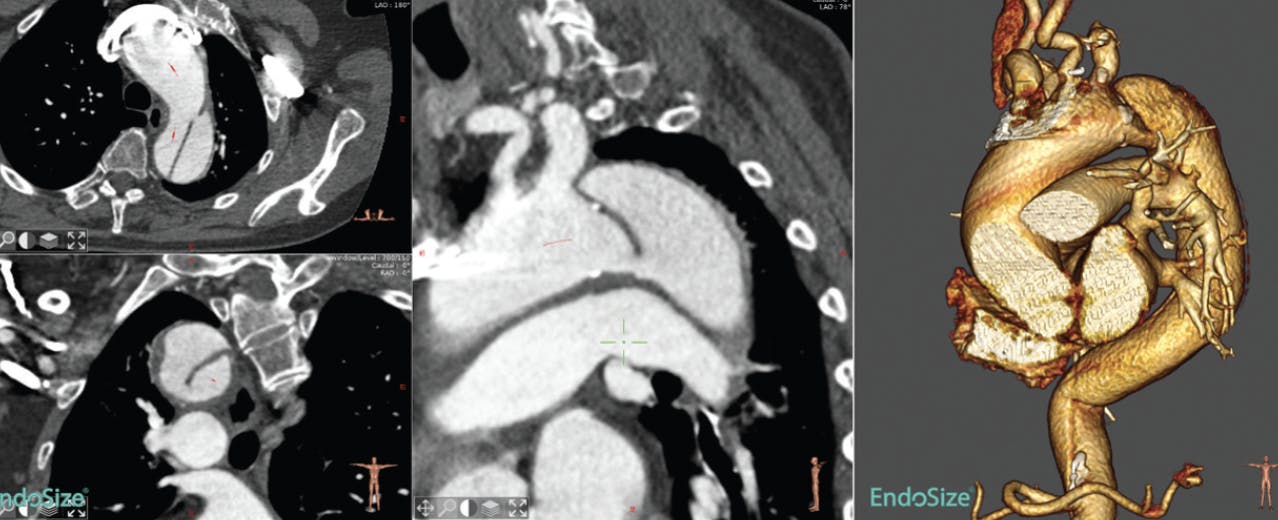
Figure 1. Preoperative CTA.
INTERVENTION
The left brachial artery (LBA) and right femoral artery (RFA) were exposed. The LBA was cannulated with a short 8-F sheath, and a 0.035-inch guidewire (Lunderquist, Cook Medical) was advanced into the ascending aorta through the RFA. Through the sheath in the LBA, a 4-F catheter was advanced over a 0.035-inch guidewire to the RFA and removed from the arteriotomy site. The guidewire was then removed, and the guidewire of the branch section (traction wire) was inserted into the 4-F catheter through the RFA and exited through the LBA. The 4-F catheter was then removed.
The Castor™ branched stent graft was advanced over the 0.035-inch guidewire into the thoracic aorta. The soft inner sheath was advanced into the aortic arch, and the outer sheath remained in the descending aorta. Once it reached the target position, the inner soft sheath was removed, deploying the main stent graft by a wire-control mechanism after the branched stent was accurately positioned. The sheath of the branch section was unlocked after deployment of the main body and deployed in the LSA by withdrawing the traction wire. Immediate aortography showed complete exclusion of primary entry tear and a patent brachiocephalic artery, left common carotid artery (LCCA), and LSA.
The patient was followed for 8 years without any reintervention or complication, and the most recent CTA showed complete thrombosis of the false lumen and a patent LSA (Figure 2).
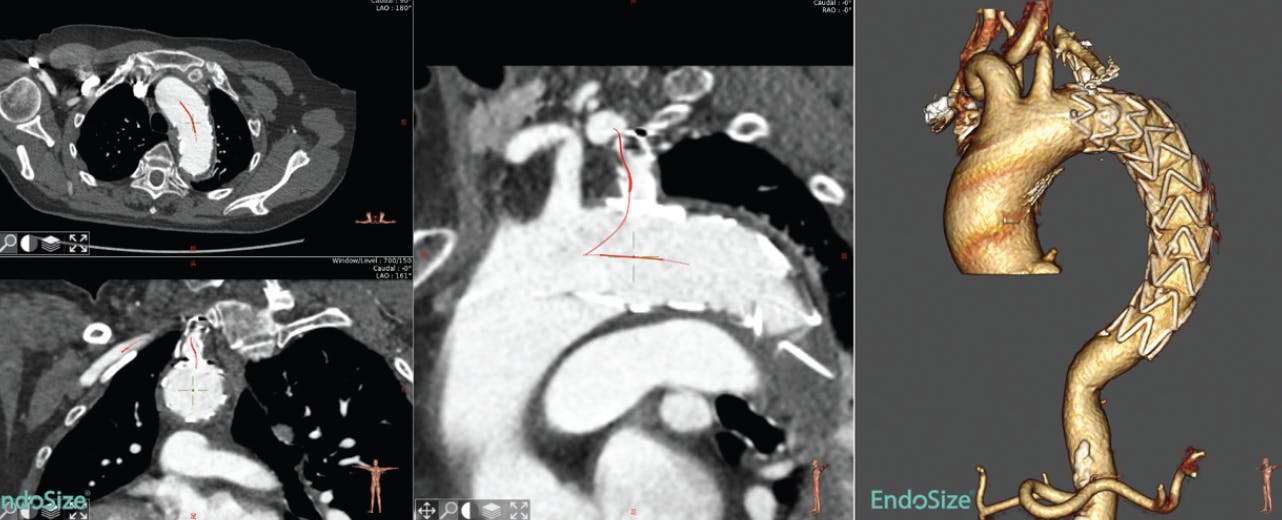
Figure 2. CTA at 8 years postintervention showed complete thrombosis of the false lumen and a patent LSA.
DISCUSSION
This case presents a typical TBAD with insufficient healthy aorta beyond the LSA that was successfully treated with the Castor™ branched stent graft. By extending the proximal landing zone into Ishimaru zone 2 and revascularizing the LSA, the Castor™ branched stent graft provides an effective and reliable endovascular option for TBAD with insufficient healthy aorta beyond the LSA or with LSA involvement. The unibody design of the branched stent graft reduces the risk of endoleak, and the total endovascular operation minimizes the invasiveness for patients. Initial outcomes with the Castor™ branched stent graft showed a high technical success rate (97%), low incidence of follow-up complications (10%), and no endoleak observed during follow-up.1
1. Jing Z, Lu Q, Feng J, et al. Endovascular repair of aortic dissection involving the left subclavian artery by Castor stent graft: a multicentre prospective trial. Eur J Vasc Endovasc Surg. 2020;60:854-861. doi: 10.1016/j.ejvs.2020.08.022
TYPE II THORACOABDOMINAL TOTAL ENDOVASCULAR REPAIR


PATIENT PRESENTATION
A man in his mid-60s presented with a type II thoracoabdominal aortic aneurysm (Figure 1). Several comorbidities excluded him from open surgical repair, and thus a total endovascular solution was required. The optimal and safest proximal sealing length was landing zone 2 in the aortic arch, with the LSA covered. Additionally, the need for total endovascular coverage of the thoracic aortic aneurysm made LSA revascularization mandatory, possibly with an endovascular solution.
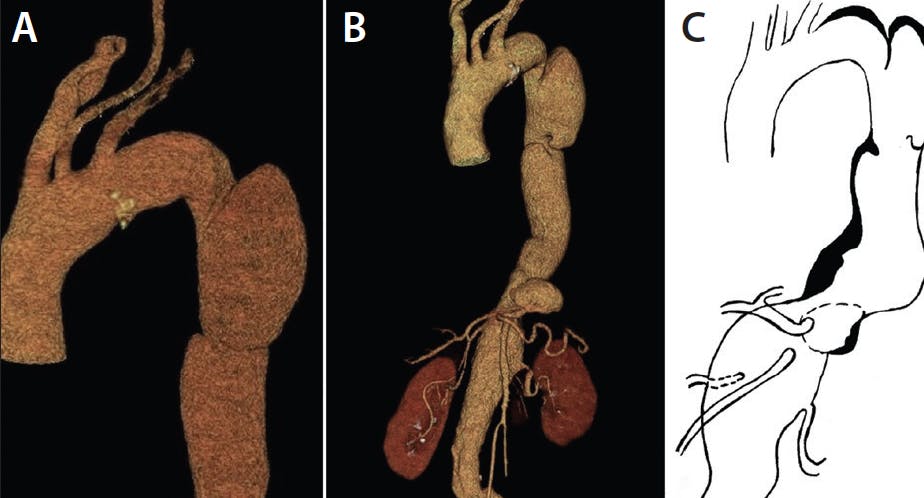
Figure 1. Three-dimensional reconstruction of the aortic arch (A) and the entire type II thoracoabdominal aneurysm (B) on preoperative CTA. A descriptive illustration shows the proximal extension of diseased aorta in the arch toward the LSA origin and the intraluminal anatomy of the entire aneurysm (C).
INTERVENTION
In this case, the Castor™ endograft was used for proximal thoracic endovascular aortic repair (TEVAR), with subsequent overlap with distal precannulated, multibranched, endograft implantation (E-nside, JOTEC GmbH) that was needed for endovascular thoracoabdominal aortic aneurysm repair. The distance between the LSA and the origin of the diseased aorta was 12 mm. Moving our landing zone proximally from zone 3 to zone 2 (just past the left carotid artery origin) allowed us to gain a total sealing length of 27 mm. The diameter of the aorta at this level was 33 mm. The distance between the LCCA and the LSA was 5 mm, and the LSA diameter was 10 mm.
A proximal 40-mm diameter Castor™ endograft was chosen. Considering that the subsequent distal thoracoabdominal E-nside inner branch was 38 mm in proximal diameter, we selected a tapered Castor™ endograft that ended distally at 34 mm. The distance from the Castor™ main body proximal end to branch take-off was 5 mm, and the branch length was 2.5 cm with a distal diameter of 12 mm.
To prevent spinal cord ischemia as much as possible, the repair was performed in two steps. The first step of the procedure was performed under local anesthesia with percutaneous right femoral and cutdown left brachial access. Under fluoroscopy, the stent graft was advanced in the ascending aorta under the protection of a soft sheath over a super-stiff guidewire, contemporary with the right femoral/left brachial “through-and-through” floppy buddy wire that was preloaded into the LSA branch. Gently moving the main endograft backward and retracting the floppy wire from the left brachial side, the Castor™ was finally parked in its desired position with the branch cuff into the LSA (Figure 2A). Both the main endograft and the branch cuff were then completely deployed with perfect apposition (Figure 2B). The total operating time was 50 minutes.
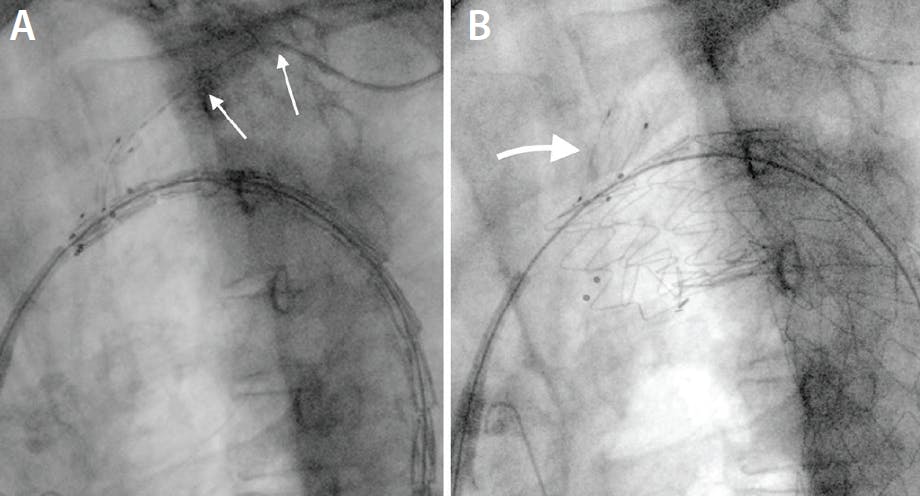
Figure 2. Intraoperative angiography showed the Castor™ endograft in place and constrained, with white arrows indicating the through-and-through wire with the LSA branch cuff (A). Angiography showed complete deployment of the Castor™ endograft, with a white arrow identifying the fully deployed LSA branch (B).
After 2 weeks, the second step with the distal endovascular repair was completed, and the postoperative course was typical, with no signs of central or peripheral neurologic complications. CTA 1 week postintervention demonstrated correct endograft positioning and complete exclusion of the entire type II thoracoabdominal aneurysm (Figure 3).
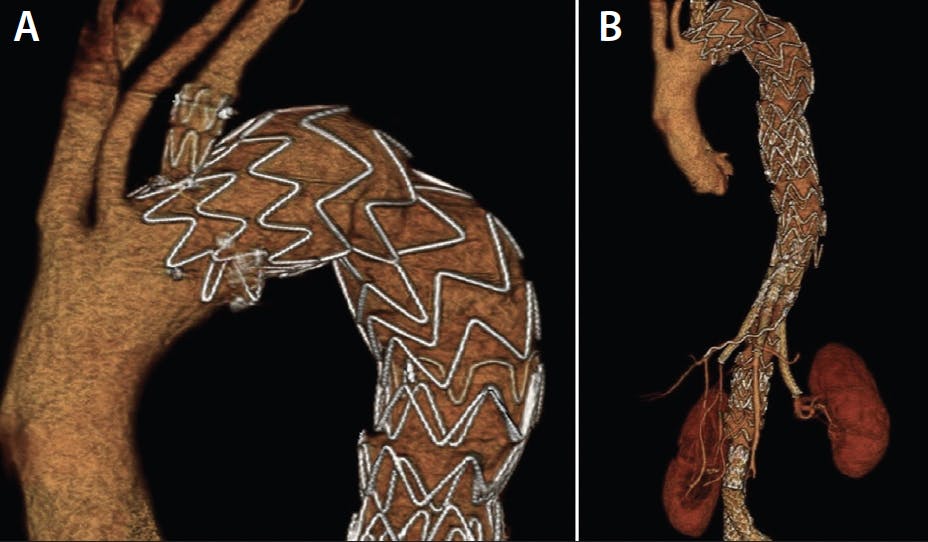
Figure 3. Three-dimensional reconstruction of the Castor™ endograft (A) and complete endovascular repair of the type II thoracoabdominal aneurysm on postoperative CTA (B).
DISCUSSION
Globally, the Castor™ branched aortic stent graft is the first branched stent graft specifically designed for the aortic arch, with a single branch extending into the LSA and no need for adjunctive surgical procedures. Castor™ adopts the “unibody design,” which sews the main body and branch stent together to make it possible to deploy and release at the same time, effectively avoiding type III endoleak and long-term migration and allowing for shorter operative time and potential for good long-term durability. The delivery system employs a dual-sheath design, and the stent graft is delivered to the aortic arch under the protection of a soft sheath. The orientation and position of the branched stent are assured by a patented wire-controlled, pull-in design. Accurate and fast deployment is achieved by a wire-controlled mechanism.
In this case example, using this new device allowed for several advantages. First, due to the patient’s multiple comorbidities, a minimally invasive TEVAR procedure with simultaneous LSA revascularization and no need for surgical procedures or complex endovascular treatment was fundamental. Second, the Castor™ stent graft is the only available device that allows for conformation of a 5-mm covered stent graft proximal to the LSA. Third, the sutured branch cuff to the main body allows for safer mechanical anchorage of the TEVAR to the arch, making long-term stability safer, especially in a case with a distal thoracoabdominal overlapped endograft.
STANFORD TBAD ENDOVASCULAR TREATMENT WITH BRANCHED STENT GRAFT



PATIENT PRESENTATION
A man in his late 50s was admitted to the hospital with chest pain diagnosed with CT as a long Stanford TBAD. The celiac trunk and right renal artery were supplied with blood from the false lumen. The patient had a previously implanted femorofemoral bypass in consequence of dissection of the distal part of the left femoral artery. This was the first implantation of a Castor™ branched aortic stent graft system outside of China.
A very short proximal aortic neck (< 10 mm) was insufficient for classic TEVAR. The patient had multiple comorbidities and previous events of peripheral dissection that made it impossible to consider open reconstruction (Figure 1).
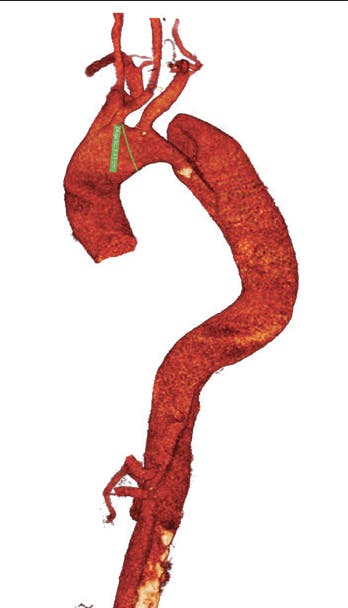
Figure 1. Preoperative CT showing Stanford TBAD and a very short proximal aortic neck.
INTERVENTION
TEVAR has been developed as the first treatment option for patients with TBAD.1 However, Stanford TBADs often require a sealing of the stent graft that covers the LSA or extends to the carotid artery or brachiocephalic artery.2 Sufficient landing zone (> 15 mm) and aortic (proximal, 33.6 mm; distal, 26.3 mm) and LSA (11-11.5 mm) diameters are the indications for using the unibody Castor™ branched aortic stent graft system. In this case, a prosthesis with a 34-mm proximal diameter, 28-mm distal diameter, 12-mm branch diameter, and 200-mm length was chosen and introduced by right-side access to avoid inducing a dissection in the left iliac artery via the 24-F delivery system. The unibody design enabled a reduction in both procedure time and risk of “gutter” endoleak from a parallel graft technique (Figure 2).
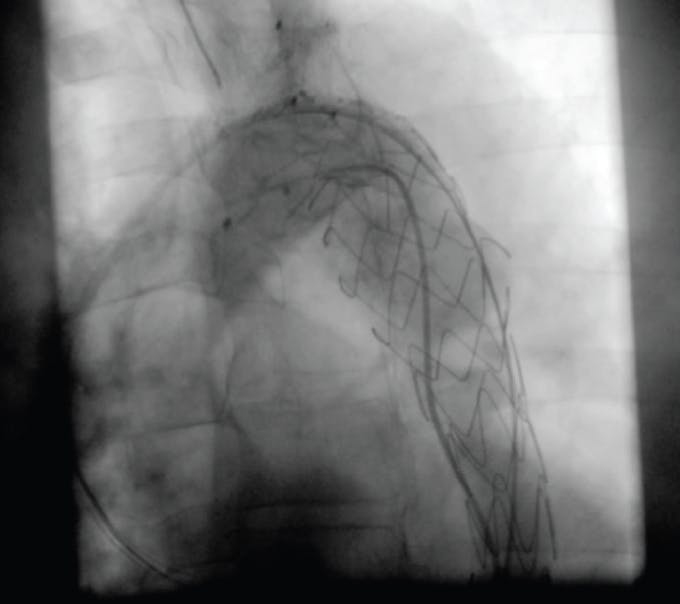
Figure 2. Periprocedural angiogram demonstrating proper implantation with no gutter endoleak and correct branch apposition.
This procedure had 100% technical success, and no endoleak of any type was observed at 24 hours and 1-month follow-up (Figure 3). There was proper device implantation and correct LSA branch apposition and deployment.
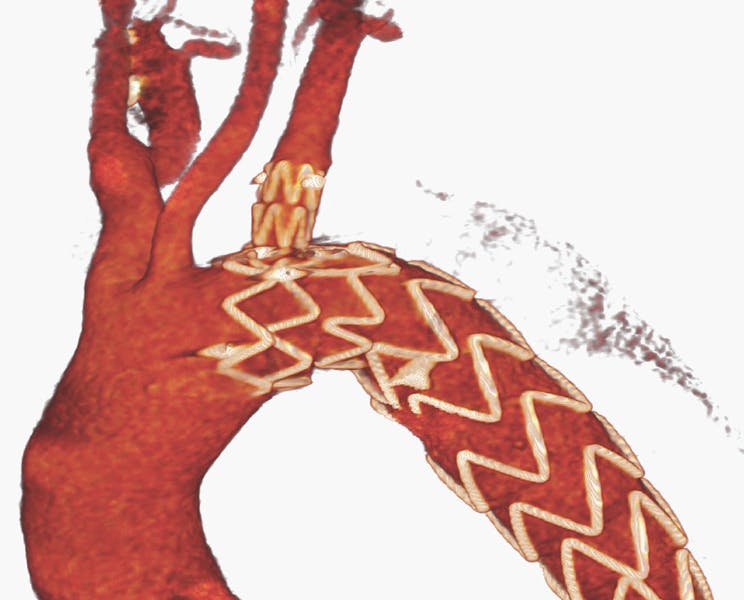
Figure 3. Follow-up CT image at 30 days confirming correct Castor™ device deployment with proper branch apposition and no endoleak.
DISCUSSION
The unibody, precannulated, and uncomplicated stent graft system design of Castor™ makes it intuitive and user-friendly and also reduces procedure time. The crucial point for safe stent graft deployment is a careful check that the guidewires are not twisted/wrapped around the delivery system before the Castor™ release. The operator should be sure to use at least a 7-F sheath for brachial access to safely withdraw a branch deployment cap locker. Future product development should be concentrated on reducing the delivery system profile to make it more accessible to a wider group of patients.
Compared with in situ fenestration, the unibody branched stent graft can assure precise placement, simplify the procedure, and shorten the operation time. It is a reasonable one-step endovascular treatment strategy to reconstruct a branch, especially if we take into consideration that 30% to 40% of TEVARs require covering zone 2 and the LSA. The Castor™ stent graft is a feasible treatment option for descending thoracic aortic dissection, but further follow-up and more studies are necessary to determine the clinical results in the long term.
1. Uchida T, Sadahiro M. Thoracic endovascular aortic repair for acute aortic dissection. Ann Vasc Dis. 2018;11:464-472. doi: 10.3400/avd.ra.18-00127
2. Smorenburg S, Montesano M, Hoogteijling T, et al. Anatomic suitability for branched thoracic endovascular repair in patients with aortic arch pathological features. J Am Heart Assoc. 2020;9:e016695. doi: 10.1161/JAHA.120.016695
PRESERVATION OF THE LSA DURING TEVAR

PATIENT PRESENTATION
A woman in her early 70s with a history of smoking, systemic arterial hypertension, and dyslipidemia was admitted to the emergency department with sudden hoarseness associated with left neck pain and hypotension.
A CT scan of the chest and cervical region showed the presence of a saccular aneurysm with rupture contained in the anterior surface of zone 3 of the aortic arch, 3 mm from the distal edge of the LSA. The diameter of the aorta in zones 1 and 2 was 35 mm. The LSA was 9.1 mm in diameter, and the distance between the distal edge of the LCCA and the origin of the LSA was 6.4 mm.
CT scan also showed a large hematoma contained in the left pleura, with contrast flow within the hematoma (Figure 1). Immediate treatment was indicated due to the risk of death from aortic rupture. Considering the patient’s anatomy, there was the possibility of endovascular treatment obtaining a minimum proximal neck of 15 mm. A stent graft implanted from the distal edge of the LCCA and covering the origin of the LSA would allow coverage of 18.5 mm.
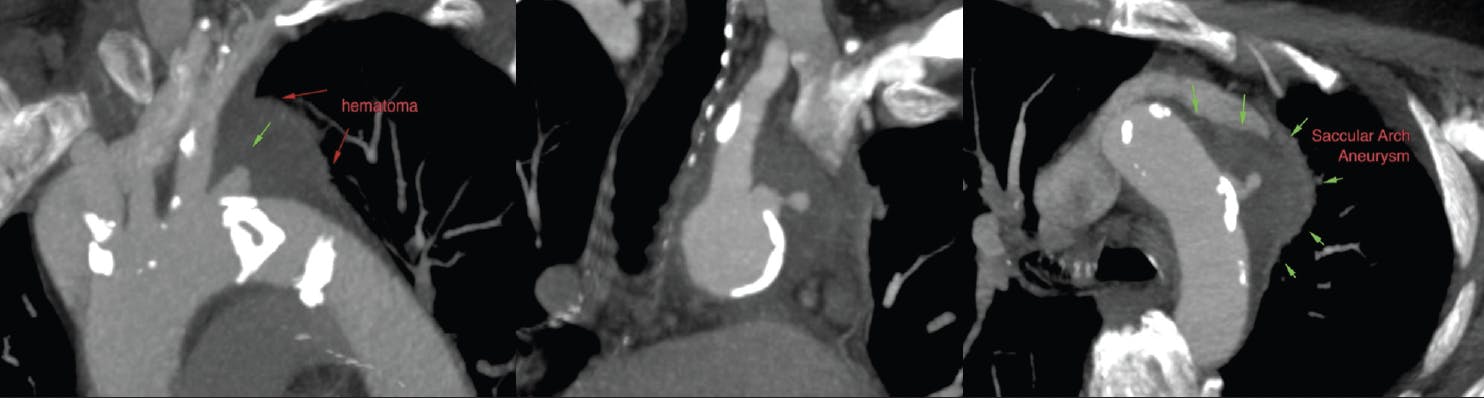
Figure 1. A CT scan showed the contained ruptured aneurysm on the arch.
INTERVENTION
We chose to implant a Castor™ endoprosthesis 40 to 36 mm in diameter, 200 mm in length, and 5 mm in length between the tissue edge to the origin branch for the LSA. This branch was 10 mm in diameter and 33 mm in length. The device was precisely released from the distal edge of the LCCA, with a branch directed toward the LSA to exclude the aneurysm and ensure flow to the left upper limb (Figure 2).
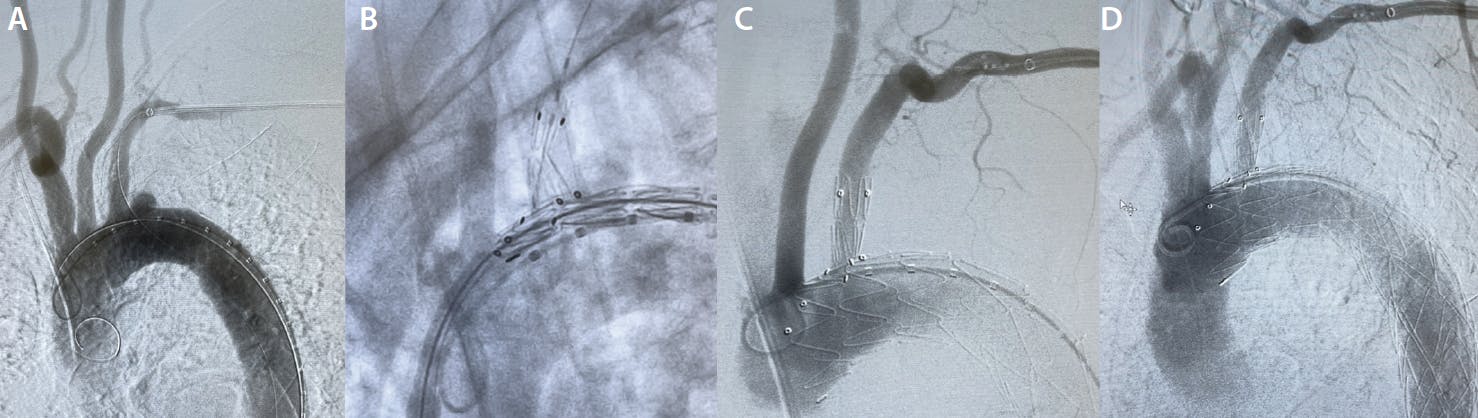
Figure 2. Angiogram: saccular aneurysm on the bottom of the LSA (A); endograft deployment (B); final angiograms: patency of LSA and LCCA (C, D).
The patient remained hospitalized without pain for 48 hours and was discharged on aspirin and clopidogrel. A CT scan was performed on postoperative day 5 and demonstrated complete exclusion of the aneurysm (Figure 3).
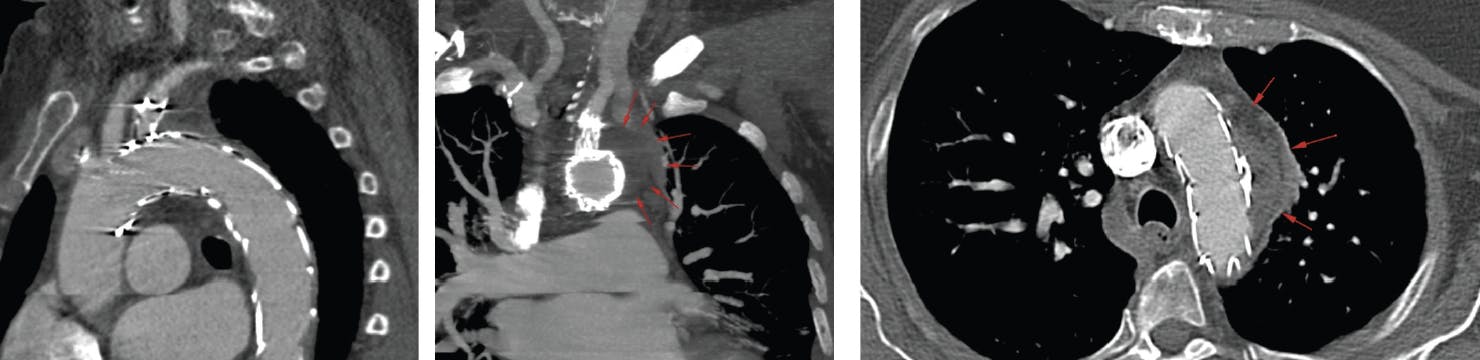
Figure 3. Follow-up CT showing the completely excluded aneurysm.
DISCUSSION
Preserving the LSA prevents arterial ischemia of the involved target organs (upper limb, brain) and allows future coronary bypass and construction of arteriovenous fistulas for hemodialysis patients.
Bypass, chimney techniques, in situ fenestration, and fenestrated/branched endografts are among several ways to preserve the LSA during endovascular treatment. Surgical bypass should be reserved for elective cases because of the risk for cervical plexus nerve damage and increasing incidence of infection. The chimney and in situ fenestration techniques are off-label techniques. Chimney techniques present an incidence of type Ia endoleak through the spaces between the stents, and in situ modification techniques can cause irreversible damage to the stent and result in treatment failure. In most countries, fenestrated/branched stents are customized and not available for immediate use, making emergency treatment impossible.
The Castor™ endograft is a preloaded branched device available for immediate use. It changes the paradigm—there will be no more reason not to preserve the LSA. It can also be applied to the LCCA or brachiocephalic trunk, expanding the possibilities for treating distal aortic arch diseases without opening the sternum. This is the beginning of a new era in endovascular therapy.
Advertisement
Advertisement
