Advertisement
Advertisement
April 2024 Supplement
Sponsored by Terumo Interventional Systems
Radial Training: How Far We’ve Come, and Where We Can Go
Experts discuss tips and tricks for learning radial techniques, methods for mastering the learning curve, and the value of the Terumo Learning Edge program.
With Edvard Skripochnik, MD, RPVI; David O’Connor, MD, FACS; and Sanjum Sethi, MD
The Terumo Learning Edge platform offers peer-to-peer, collaborative education for health care providers looking to develop or advance their radial access skills. With procedural discussions and live case observations, the educational platform is designed to allow operators to optimize procedural outcomes while preserving arterial function after intervention.
This panel discussion, comprising Terumo Learning Edge faculty and former students, tackles the importance of radial access education. From tips and tricks for learning techniques and decision-making for device choice, to radial access wishlists and success stories, these physicians have a wide-ranging conversation about the past and present state of radial training, highlighting why a dedicated education program like Terumo Learning Edge is key to improving and advancing the future of radial intervention.
How were you trained in radial access? What was the learning curve like, and how has it changed in recent years?
Dr. Skripochnik: I was introduced to radial access in training, particularly for visceral embolization procedures and adjunctive access for complex aortic procedures. I gained an appreciation for the ease of access management and the anatomic advantages of “coming from above” the visceral vessels. The learning curve was quick; we learned how to manage navigating in a difficult aortic arch and the approximate length of the sheaths and catheters that were needed to optimize positioning in the aorta.
Now that there is a vastly expanded portfolio for radial-to-peripheral interventions, I think the learning curve is a little longer. With more options for treatment, I again had to learn the lengths of devices in relation to the arterial anatomy being treated.
Dr. O’Connor: As a vascular surgeon, I did not have any formal training in transradial interventions. The launch of the R2P Portfolio (Terumo Interventional Systems) made me realize the relevance of learning radial access for my practice. I used a combination of training videos and case observations from my interventional cardiology colleagues, who were regularly employing radial access during coronary catheterizations.
One of the most important milestones during my learning curve was in patient selection. I spent time practicing the Allen test and forearm ultrasound examinations of the radial artery on my patients preoperatively. During my first cases, I limited radial access to patients with larger radial arteries, less tortuosity, and minimal radial artery calcification.
RADIAL SUCCESS STORY
By Edvard Skripochnik, MD, RPVI
A woman in her mid 60s with diabetes and end-stage renal disease developed severe rest pain and coldness in her right below-knee amputation (BKA) stump. Her medical history included multiple endovascular femoral and tibial interventions, as well as bypasses in the right leg. Ultimately, a right axillary–femoral artery bypass was needed due to the occluded iliac and common femoral arteries to provide adequate inflow to heal the BKA. An ultrasound obtained in the office demonstrated a severe stenosis at the distal anastomosis on the profunda femoris artery (PFA). Given the limitations in traditional access points, I proceeded to treat her through the right radial artery with balloon angioplasty of the stenosis. Comfort with the radial approach allowed for a very simple solution to her problem.
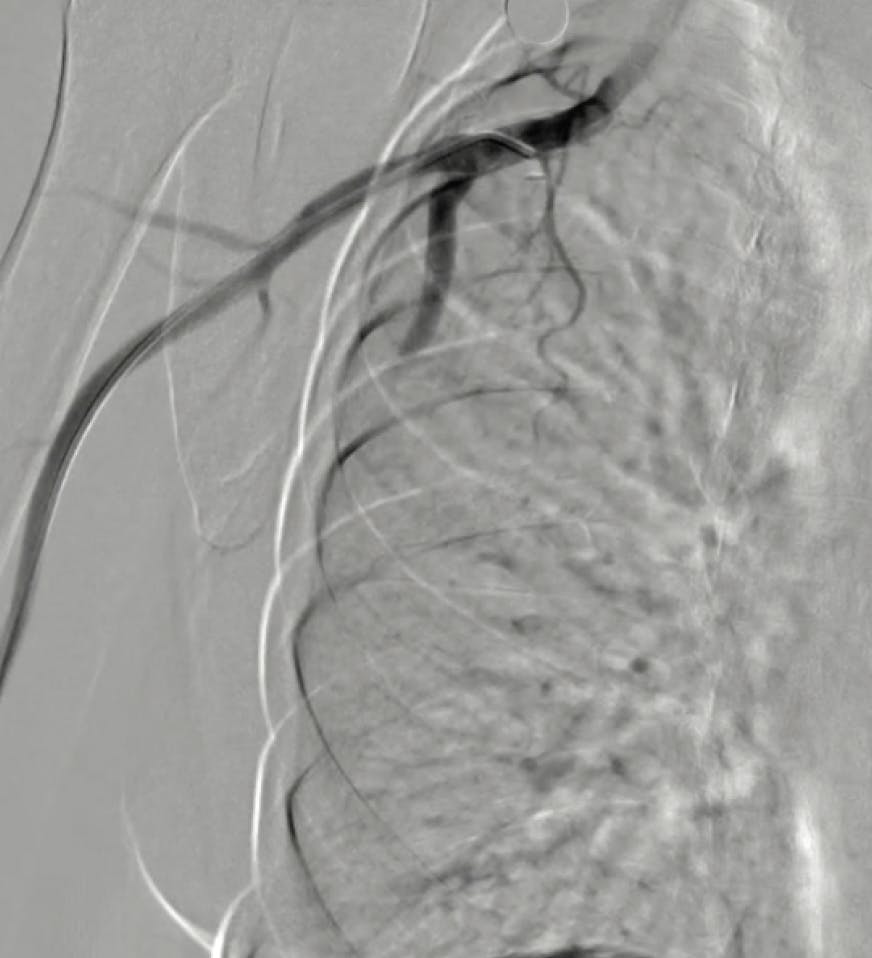
Figure 1. Right radial artery access to cannulate a right axillary–femoral artery bypass.
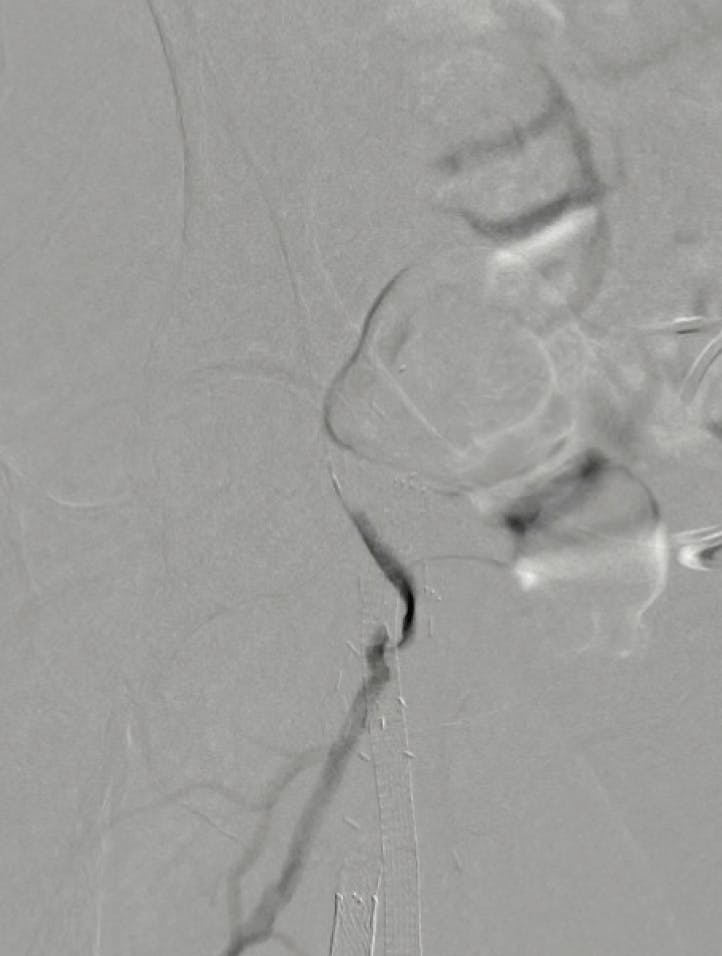
Figure 2. Right leg angiogram demonstrated severe PFA stenosis and known superficial femoral and distal bypass occlusions.
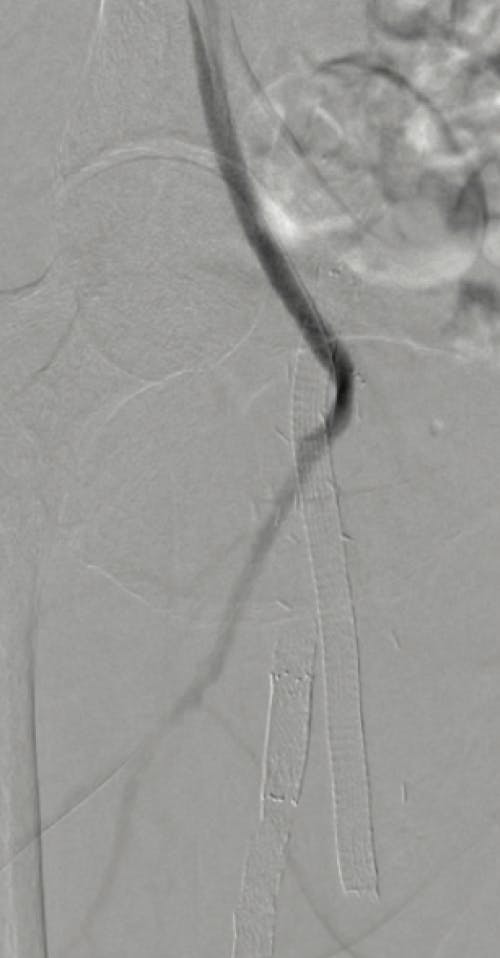
Figure 3. Completion angiogram demonstrated resolution of severe stenosis with robust PFA outflow.
Dr. Sethi: My process for training was a combination between fellowship and then seeking out more experience after fellowship. For somebody who is in training now, I would advocate that they obtain that initial radial experience in the training environment paired with a senior mentor. If you’re out of training, there are a lot of different resources available today. One would be a dedicated training program like Terumo Learning Edge where you can go for a short period of time and get a really concentrated experience.
We need to see more and more physicians being trained in radial during fellowship so it becomes more of a default routine and they fully understand what radial equipment like the R2P Portfolio can do.
What are some tips and tricks to keep in mind when learning and practicing radial access techniques?
Dr. O’Connor: One of the biggest obstacles of widespread adoption of radial to peripheral is the perception that it is an entirely new procedure and skill set. While there are several learning curves that need to be attained, a radial-to-peripheral intervention can prove to sometimes be easier or faster than a transfemoral intervention in some cases. The learning curve for radial-to-peripheral interventions is variable and depends on many factors. If patients with more favorable anatomy are chosen earlier in the process, it helps to gain confidence and a workflow by selecting less difficult cases in the beginning.
Dr. Sethi: A good first step is to get comfortable with diagnostics from the radial approach, whether you’re doing coronary or peripheral. For those who have done radial interventions in the coronary space, this is a natural transition. Diagnostic catheters track really easily. There are certain techniques you can use to get into both the ascending and descending aorta. Once you get comfortable with that, then you can start delivering the sheath and other equipment. It’s a step-by-step process.
The fundamental approach to keep in mind is to ensure patient safety is your number one priority. Training should take a stepwise gradual approach: learn the diagnostic, learn to deliver the sheath, and then move forward with the equipment. Begin with cases where you know up front that success is likely. You can then move on to more complex cases as needed.
RADIAL SUCCESS STORY
By David O’Connor, MD, FACS
As a vascular surgeon, I have several patients in my practice who have had a prior aortic repair or lower extremity bypass. In many of these patients, my options for femoral access are limited because an up-and-over technique is challenging after endovascular aneurysm repair or open aortic reconstruction. In patients with previous lower extremity bypass, there is always a risk that the bypass graft can compromise use of ipsilateral femoral artery access. Realizing the challenges in these patients motivated me to find a safer solution by coming from above. I traditionally have not been enthusiastic about brachial artery access due to its associated access complication rates, and the radial technique became a welcomed alternative.
Dr. Skripochnik:
- Tip 1: I check my access vessels in the preoperative area. I scan the radial and ulnar arteries up to the brachial artery to prevent hand complications and ensure a safe path up the arm. Establishing this as a routine is critical to making access complication a never event.
- Tip 2: I use a 100-cm angled glide catheter to traverse the arch in about 99% of cases, and this helps me estimate the sheath length I will need for each case. For example, if it reaches the aortic bifurcation when hubbed to the access sheath and I am planning a superficial femoral artery treatment, then I know I will need a 119-cm Glidesheath Slender guiding sheath (Terumo Interventional Systems).
- Tip 3: Know the available devices that can bail you out if you have reached the maximum length of your wires and catheters in the R2P Portfolio. The 0.014-inch ViperWire Advance (Abbott) is 475 cm in length. This has helped me reach and perform a distal tibial angioplasty with an over-the-wire balloon when necessary.
What is your process for deciding which devices you will use in radial access? What features are you looking for in a device for these procedures?
Dr. O’Connor: The minimum basic equipment needed for a radial-to-peripheral case includes low-profile hydrophilic sheaths, antispasmodic medications, longer wires (minimum, 300 cm), and longer balloons and stents (200-cm working length for infrainguinal interventions).
When deciding devices for radial access, I prefer devices that will provide pushability while minimizing the risk of radial artery spasm. Lower-profile hydrophilic sheaths are a core component in these cases since they have a greater likelihood of traversing through the upper extremity. In addition, longer wires and shaft working lengths are important to reach a lower extremity vessel. Rapid exchange balloons and stents are helpful for ease of device exchanges.
Dr. Skripochnik: Overall, the features I look for are safety and pushability. Whether it’s a wire or atherectomy device, it must have a low risk for vessel injury or embolization because bailouts can get challenging from radial access alone. My favorite devices for radial access are the rapid exchange balloons, like the 0.018-inch R2P Crosstella (Terumo Interventional Systems). I like that I have full control of the wire while delivering the balloon so that I can minimize loss of wire position. Fortunately, the rapid exchange balloons have amazing pushability from the stainless steel core wire, so that important factor is never compromised.
What value does the Terumo Learning Edge radial program add to a physician’s knowledge of and skill in radial? Why is a program specifically dedicated to radial training necessary?
Dr. Skripochnik: The Terumo radial program is helpful in preventing a failure-to-launch situation in your practice. The skills are the same as with any endovascular case, but the tool kit is almost entirely different. The last thing you want when adopting a new approach is to be in a position where you crossed a difficult lesion and don’t have the tools you need to complete the case. An introduction to the Terumo R2P Portfolio prior to attempting a case is important for building out your lab to have the tools you need on the shelf. Hands-on models help visualize what it means to have a 200-cm shaft balloon on a 300-cm wire in a 105-cm R2P Destination Slender guiding sheath (Terumo Interventional Systems). Diagrams are helpful, but it is always different in vivo.
Dr. O’Connor: The Terumo Learning Edge radial program is a comprehensive resource that covers patient selection, access techniques, troubleshooting, radial artery closure demonstrations, case examples, and insights for further innovation. The brochures and videos provide details and tips for each device in Terumo’s R2P Portfolio, and the training videos and case vignettes are great resources for after fellowship or residency training. Terumo Learning Edge can also help you prepare your program by giving examples of room setup and additional medications and ancillary equipment needed for radial cases.
Advantages of Radial Access for Diagnostics
By Sanjum Sethi, MD
- If there’s no intervention, the patient can go home in very short order.
- Patient satisfaction is high because they can sit up right away and their access site management is only a few hours long.
- You can visualize both legs—and treat both legs if needed.
- Radial access satisfies the ultimate goal of treating patients in an efficient, effective, and safe way.
This type of training is also important for residents and fellows—I think all programs should have some degree of R2P training. There will be instances where a transradial intervention may be the safest option for a patient, and exposure to this technique in training will help with familiarity and success once in practice. Formal conference training courses are available, as well as live case observations. Case observations may be virtual or in person. We have hosted several attending physicians at our institution to observe live cases of radial-to-peripheral interventions.
Dr. Sethi: Having a proctor or a company representative come to your institution or attending a dedicated training program like Terumo Learning Edge are both great options for hands-on, in-person training. Those trainings can be paired with online supplementation (videos, lectures, direct correspondence, etc). These are all great, necessary ways to ways to build your skill set in radial access. It can be challenging to integrate new skills and tackle the radial learning curve when you’re already so clinically busy taking care of your patients. Therefore, understanding the ways we can optimize physician education even postfellowship is critical to expanding the rules for things that may help our patients.
Radial training is also important from a patient perspective. Patients select physicians who are willing to think outside the box and use different methods and approaches. That’s who they feel they will give them the highest level of care. It’s important for your forward-facing image to be perceived by patients as someone who is not only treating a broad spectrum of conditions but also is dedicated to skill development.
Looking ahead to the future, what are some areas related to radial procedures, training, devices, etc. where you would like to see innovation?
Dr. Skripochnik: The more long-length tools we get the better. That would quell any hesitation regarding widespread adoption of radial access. I am hoping to see a 0.014- or 0.018-inch Glidewire Advantage (Terumo Interventional Systems) in lengths ≥ 400 cm accompanied by 200-cm, 0.014- or 0.018-inch R2P NaviCross catheters (Terumo Interventional Systems). Taller patients and distal lesions will become more comfortably accessible.
For vascular surgery trainees, I hope the future brings more dedicated radial training programs. There are still many hospitals that are not using Terumo’s R2P Portfolio, and this hinders that particular area of development for residents and fellows.
Dr. Sethi: We need to expand the data set to understand both feasibility and safety, as well as time efficiency and length of stay. The data on radial are still being developed. Once those data come out, depending on what they show, people could be more persuaded to move in that direction if the outcomes are favorable. It is incumbent on all of us to develop that data so that we understand whether the benefits of radial are just theoretical or actually proven in a data set.
Dr. O’Connor: Looking ahead, we are anticipating additional longer devices to support these cases. Terumo has done a great job with wires, sheaths, balloons, and stents. There are some products, such as drug-coated balloons, mechanical thrombectomy devices, and chronic total occlusion crossing catheters that will not reach the lower extremity from a transradial approach. These are the patients and cases that would benefit greatly from having expanded lengths to support treatment.
Disclosures
Dr. Skripochnik: Has a financial interest/arrangement or affiliation with Terumo Medical Corporation, Cook Aortic, Inari Medical, and Shape Memory Medical.
Dr. O’Connor: Has a financial interest/arrangement or affiliation with Terumo Medical Corporation, Silk Road Medical, and Integra LifeSciences.
Dr. Sethi: Has a financial interest/arrangement or affiliation with Janssen Pharmaceuticals, Boston Scientific, Terumo Medical Corporation, Chiesi USA, Inc., and Inari Medical.



©2024. Terumo Medical Corporation. All rights reserved. All brand names are trademarks or registered trademarks of Terumo. PM-07751
Advertisement
Advertisement