Advertisement
Advertisement
April 2024
Acute Ischemic Stroke With Tandem Occlusion Requiring Cervical and Intracranial Revascularization
An interactive case study intended to emphasize the basics of medical and procedural decision-making.
Stroke remains a leading cause of disability and death in the United States. Time to treatment is extremely important as neuronal death begins after 2 to 3 minutes in the absence of cerebral blood flow. This interactive case study aims to reinforce the basics of stroke diagnosis, treatment, and postintervention management.
CASE PRESENTATION
A woman in her early 60s presented to a community hospital by ambulance with leftward gaze deviation, right-sided weakness, and aphasia. She was last known to be normal 50 minutes prior to arrival at the hospital. Her National Institutes of Health Stroke Scale (NIHSS) on arrival was 21. The patient’s family noted she had been smoking one pack of cigarettes per day for many years but had no other significant stroke risk factors.
A noncontrast head CT showed subtle hypodensity within the left basal ganglia and otherwise preserved gray/white differentiation. A CTA demonstrated bilateral calcified plaques at the origin of the internal carotid arteries (ICAs) with occlusions of the left ICA both at its origin in the neck and at the origin of the middle cerebral artery (MCA) (Figure 1). She received IV tissue plasminogen activator (tPA) and was transferred to a CSC for further management.
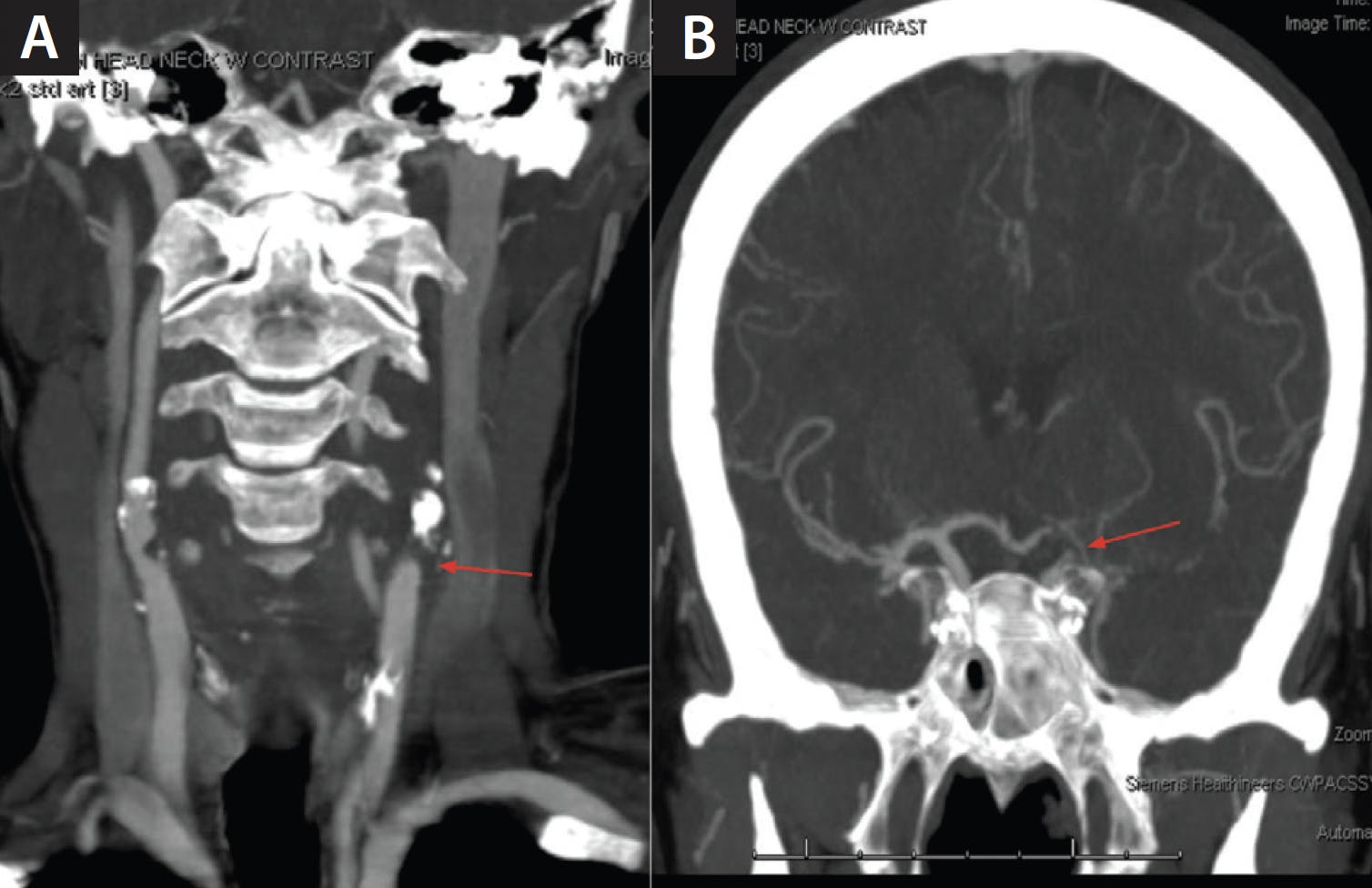
Figure 1. Coronal CTA of the neck demonstrating calcified plaques at the origin of both ICAs with occlusion of the left ICA at its origin (A). Coronal CTA of the head demonstrating occlusion of the left ICA summit at the origin of the left MCA (B).
1. Highlight Point
Importance of rapid triage to get patients with acute stroke to a comprehensive stroke center (CSC).
Neuronal death occurs in 2 to 3 minutes in the absence of cerebral blood flow, resulting in irreversible damage to brain tissue. The surrounding penumbra, or salvageable tissue, remains perfused through collateral circulation. However, without adequate and timely treatment, this tissue will progress to infarction as well. The standard of care involves the administration of intravenous (IV) thrombolytic within 4.5 hours of symptom onset. For patients with large vessel occlusions (LVOs), there is evidence supporting mechanical thrombectomy (MT) in many patients out to 24 hours after symptom onset.
Learning Point
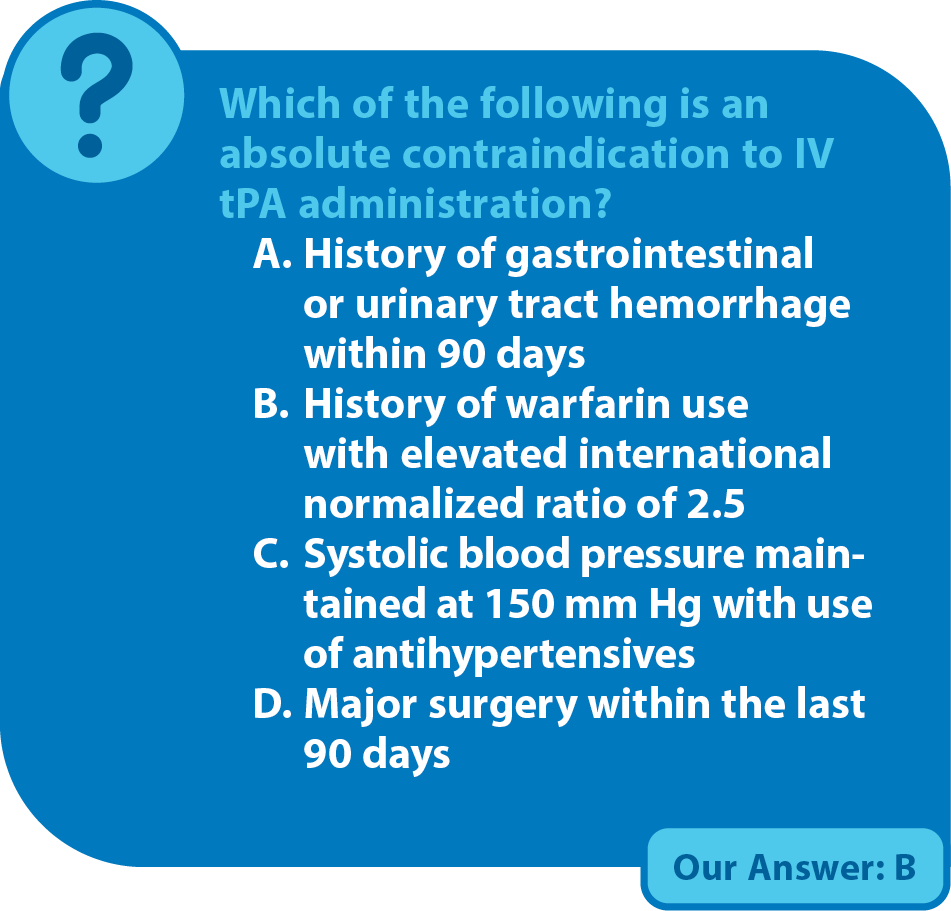
Answer choices A, C, and D are not absolute contraindications to IV tPA administration, but they are considered relative contraindications and should be considered cautiously prior to thrombolytic administration. Answer choice B is the only option that is an absolute contraindication due to the increased risk of bleeding.
CASE CONTINUED
On arrival at the CSC, the patient was examined and found to have stable vital signs and persistent neurologic deficits. The patient was taken emergently for endovascular intervention.
Learning Point
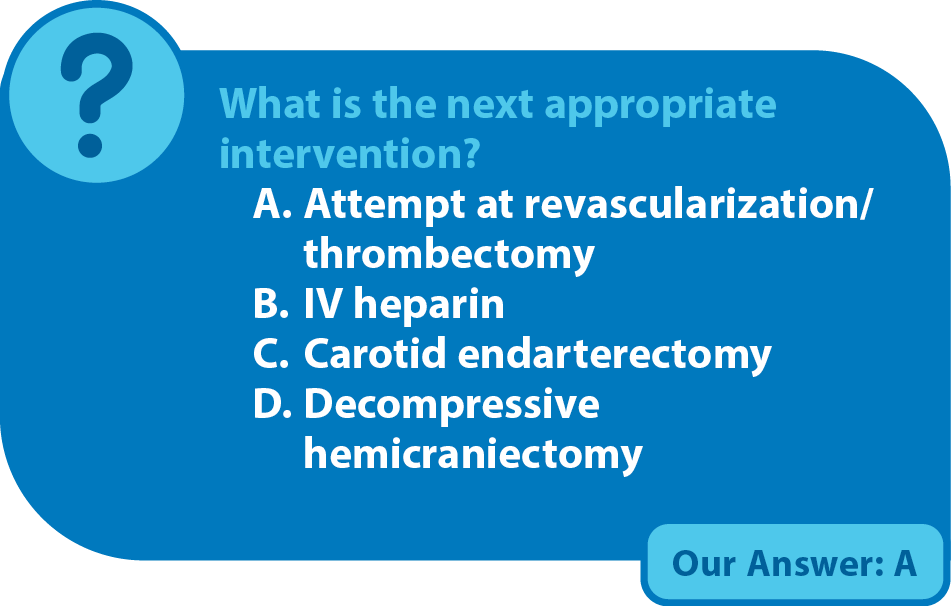
Quick endovascular intervention is favored in acute ischemic stroke with LVO. Endovascular revascularization is indicated in patients who either don’t receive or have persistent, significant signs and symptoms despite IV thrombolytics. In general, endovascular intervention is recommended up to 6 hours after symptom onset and can be extended up to 24 hours based on imaging criteria.1 IV heparin, carotid endarterectomy, and decompressive hemicraniectomy are not indicated at this time.
Learning Point
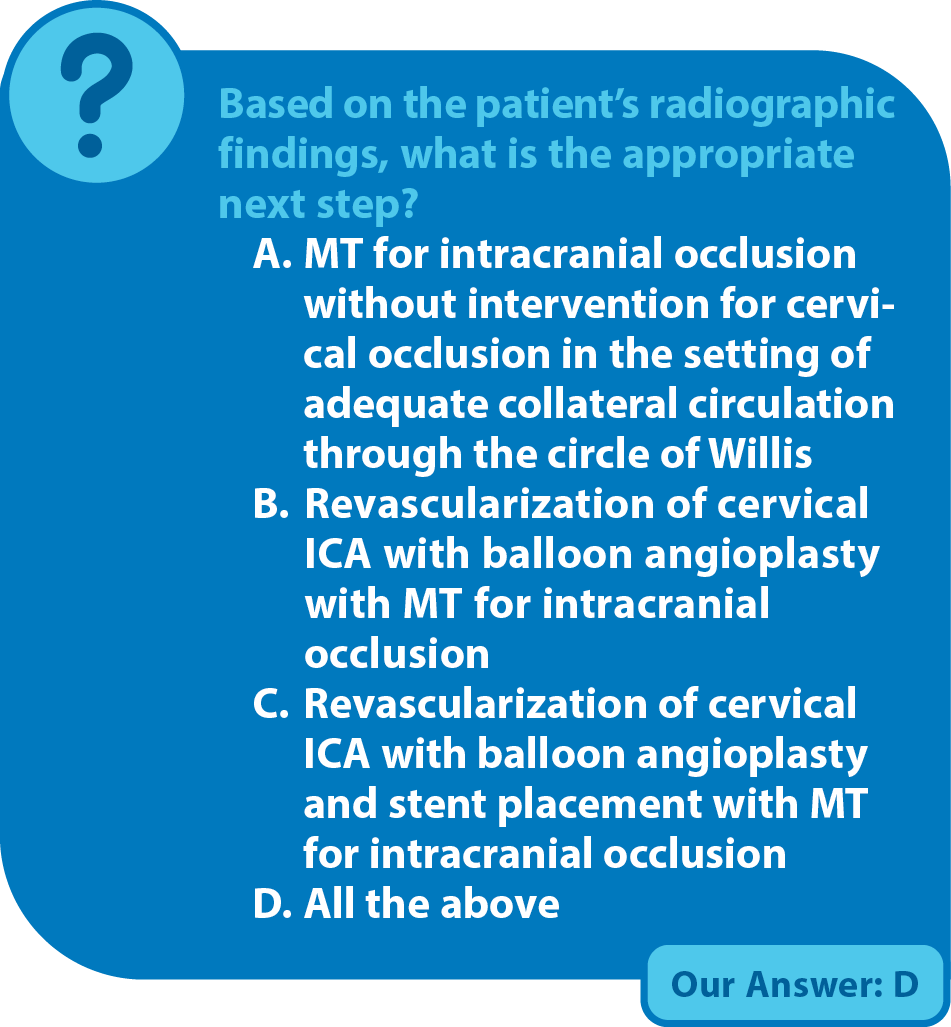
Tandem cervical ICA and intracranial LVOs have a higher morbidity when compared to solitary intracranial occlusions.2 Therapy for this anatomy in acute stroke often includes some combination of IV thrombolytics, MT of the intracranial occlusion, and balloon angioplasty with or without stent placement for the cervical ICA occlusion. IV thrombolytics alone are usually not sufficient in tandem occlusion given the large clot burden, and the occluded cervical ICA reduces the delivery of the medication to the downstream thrombus.2 The order in which to address the proximal and distal occlusions remains a topic of interest, and answer choices A, B, and C are acceptable in this scenario. Factors that must be considered include the patient’s NIHSS at presentation, cerebrovascular anatomy, comorbidities, and their ability to tolerate a procedure.
CASE CONTINUED
The patient was administered 180 mg of ticagrelor and 325 mg of aspirin in preparation for possible carotid stent placement. There was no contrast opacification of the left ICA beyond the common carotid bifurcation (Figure 2A). The occlusion was crossed using a diagnostic catheter and Glidewire guidewire (Terumo Interventional Systems). The balloon guide catheter was then advanced past the occluded segment of the left ICA, and balloon angioplasty was performed. The balloon guide catheter was then pulled back to the left common carotid artery (CCA) where repeat arteriography demonstrated improved opacification. A 9/7- X 40-mm tapered stent (Xact, Abbott) was placed extending from the occluded portion of the proximal left ICA and into the left CCA. Postdeployment arteriography revealed successful revascularization of the left ICA up to the posterior communicating artery. The ICA bifurcation and MCA remained occluded. Therefore, MT of the intracranial occlusion was performed using a 6-F aspiration catheter and 6- X 40-mm stentriever. Repeat arteriography demonstrated complete revascularization of the left ICA and MCA territory (Figure 2B). Thrombolysis in cerebral ischemia 3 (complete) flow was achieved.
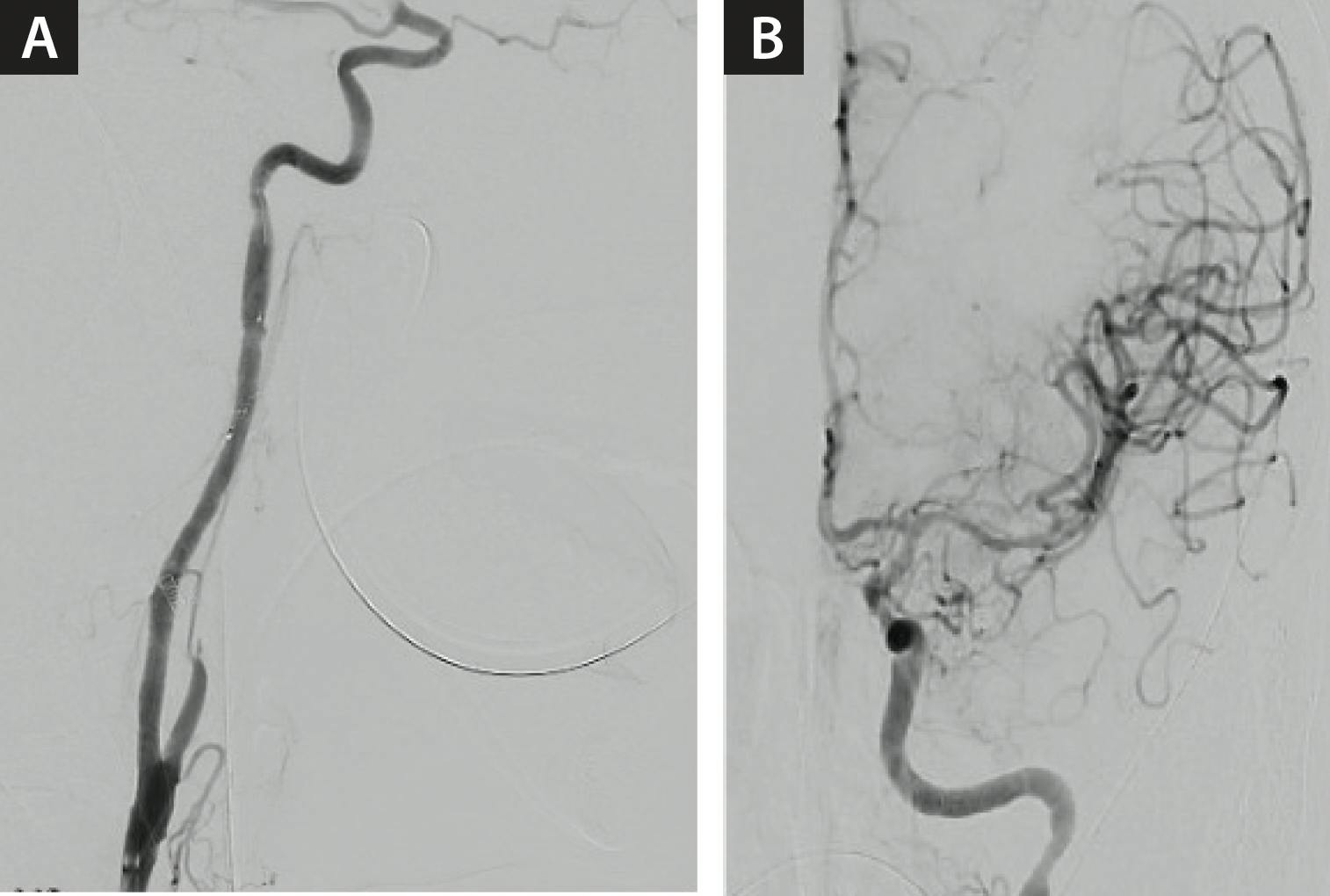
Figure 2. Digital subtraction angiography after balloon angioplasty and stenting of the left ICA (A). Postintervention angiography with complete revascularization of the left ICA and MCA territory (B).
2. Highlight Point
Post–interventional radiology care and stroke workup.
Post–endovascular intervention care is essential to reduce recurrent stroke risk, decrease complications, and aid in the neurologic recovery of patients. Workup with echocardiography to look for patent foramen ovale and valvular abnormalities, evaluation for cardiac arrhythmia, and hypercoagulable labs are often used to elucidate stroke etiology and guide future therapy. Prior to discharge, it is imperative to make sure patients have been started on appropriate antithrombotic and cholesterol-lowering agents, have adequately controlled hypertension and diabetes, and have been given smoking cessation resources.
After a stroke, most patients are started on aspirin. In high-risk patients, DAPT with clopidogrel and aspirin has been shown to decrease the 90-day risk of stroke without increasing the risk of hemorrhage. After stent placement, patients remain on DAPT for at least a month and aspirin indefinitely. Patients with atrial fibrillation should be started on anticoagulation.3
CASE CONCLUSION
After endovascular treatment, the patient was monitored overnight in the neurologic intensive care unit. Postintervention MRI showed areas of restricted diffusion correlating with ischemia in the left MCA territory involving the left insula and basal ganglia. No atrial fibrillation was documented. A transthoracic echocardiogram showed no evidence of patent foramen ovale or other abnormalities. In this case, the stroke was related to large artery atherosclerosis. The patient continued to regain neurologic function with improvement in her right-sided deficits and mild mixed aphasia. The patient was discharged to facility-based rehab on hospital day 8 on a medication regimen including dual antiplatelet therapy (DAPT) and a high-dose statin.
DISCUSSION
Stroke remains one of the leading causes of death and morbidity in the United States. Time to revascularization is one of the most important factors related to patient outcomes. Because of this, early diagnosis, efficient transfer to a CSC, and an understanding of medical and endovascular treatment options are extremely important when taking care of these patients. Additionally, poststroke care is essential to maximize neurologic recovery and reduce the risk of additional strokes.
1. Kwok CS, Gillani SA, Bains NK, et al. Mechanical thrombectomy in patients with acute ischemic stroke in the USA before and after time window expansion. J Neurointerv Surg. Published online July 12, 2023. doi: 10.1136/jnis-2023-020286
2. Guerrero W, Dababneh H, Mocco J, et al. Management of tandem occlusion stroke with endovascular therapy (P01.230). Neurology. 2013;80(suppl 7). doi: 10.1212/wnl.80.7_supplement.p01.230
3. Wang Y, Wang Y, Zhao X. Clopidogrel with aspirin in acute minor stroke or transient ischemic attack. J Vasc Surg. 2013;58:1140. doi: 10.1016/j.jvs.2013.08.010
Advertisement
Advertisement