Advertisement
Advertisement
August 2024
Spinal Drains: When, How, in and by Whom, and Optimal Follow-Up
A review of risk factors for spinal cord ischemia, protective strategies, and rescue measures, plus one institution’s approach to spinal drainage.
Spinal cord ischemia (SCI) is a known risk after both open and endovascular approaches to aortic repair and is the most feared complication after aortic surgery. Many of my patients have a harder time coping with the thought of being bound to a wheelchair for the rest of their lives than accepting death. It is not something to be taken lightly in the preoperative setting. After drawing out the technical plan for the surgery, I spend the remainder of a clinic visit exploring what SCI means, and I regularly bring patients and their families back for a second appointment to further drive home the possibility of SCI. This article reviews risk factors for SCI, protective measures including spinal drainage and spinal preconditioning and staging, and rescue measures and describes our approach to spinal drainage at The Ohio State University.
RISK FACTORS FOR SCI
Despite 100 years of aortic work, we still do not truly understand why some patients experience SCI. Certainly, the days of clamp and sew for a type II thoracoabdominal aortic aneurysm (TAAA) and the 25% SCI rate are largely behind us (Figure 1). Among risk considerations for SCI are length of coverage or replacement and previous aortic surgery, which may have sacrificed collaterals. Although these collaterals may have been inconsequential during that first procedure, in subsequent interventions, they could mean the difference between walking out of the hospital or being rolled out in a wheelchair. Along that same understanding, patients with chronically occluded vascular beds, especially the internal iliac and subclavian arteries, are also at higher risk. Should we consider opening the left subclavian artery before embarking on large aortic surgery to reduce the risk of SCI? This is not a common practice outside of acute dissections requiring coverage of the left subclavian artery.

Figure 1. Type II TAAA with chronic dissection.
Large-volume blood loss and prolonged hypotension, especially in the immediate postoperative period, are also harbingers of SCI. Therefore, patients undergoing aortic surgery in large-volume centers have demonstrated improved outcomes, but SCI is still not an insignificant possibility.
PROTECTIVE TECHNIQUES
What have we done to mitigate the risk of SCI this past century? Extracorporeal bypass for open thoracic aortic aneurysm (TAA) repair is standard in most centers. This allows for distal aortic, lower extremity, and pelvic perfusion. Additional revascularization of an intercostal or lumbar artery can be undertaken at the time of repair. Some institutions perform preoperative CTA of the spine to identify a dominant intercostal artery (Figure 2). Somatosensory and motor-evoked potentials have been shown to predict intraoperatively which patients should have an extra bypass to the golden artery of Adamkiewicz.1 Patients who never lose motor function seem to have the lowest rate of SCI, and those who do lose motor function during the case should be considered for revascularization of an intercostal or lumbar artery. Techniques such as Carrel patch versus end-on bypass versus bucket-handle bypass are debated academically, but often the patient’s body habitus and anatomy dictate the decision. I favor the bucket handle despite the need for an additional anastomosis because the additional outflow seems auspicious to long-term patency of the bypass (Figure 3).
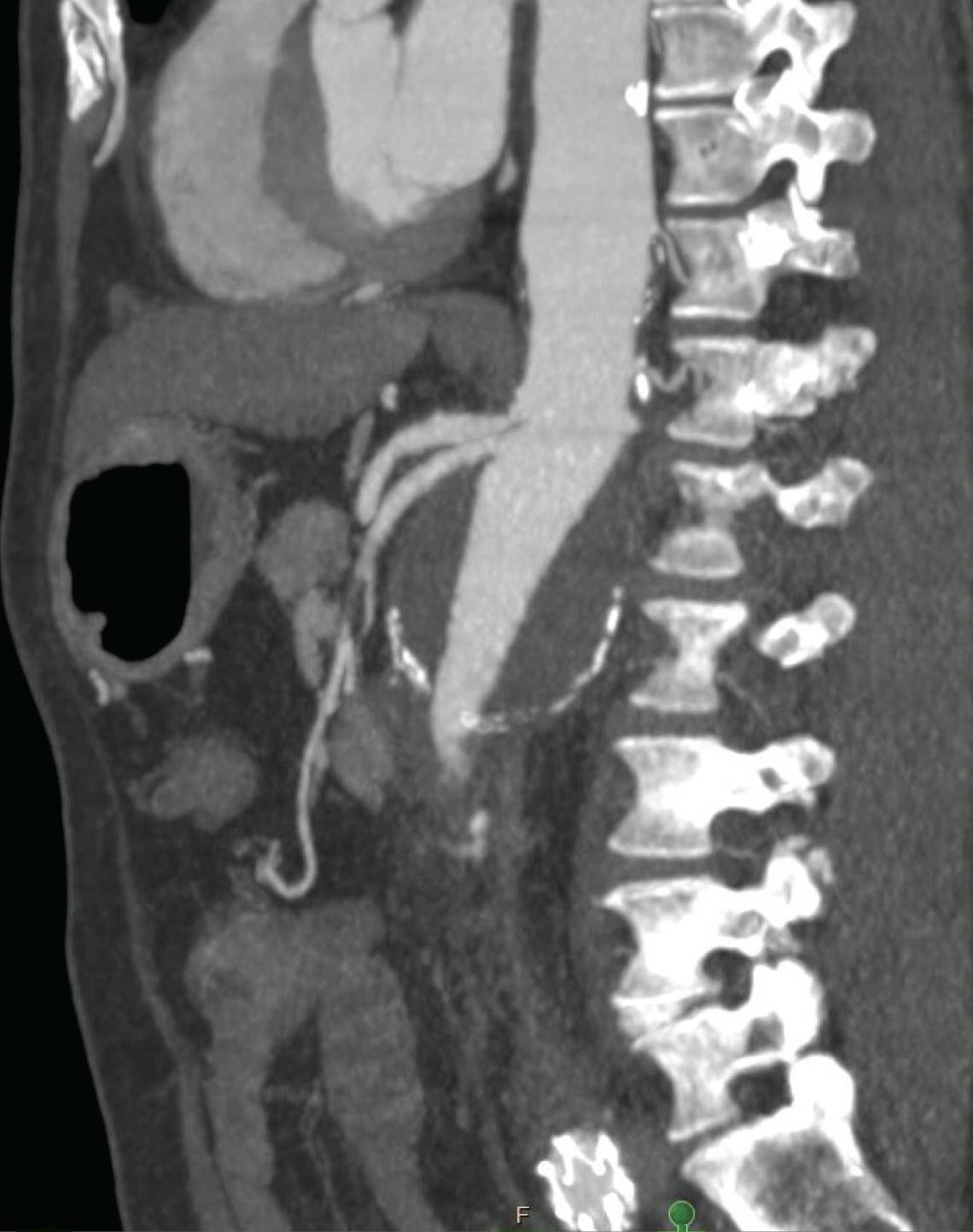
Figure 2. Artery of Adamkiewicz.
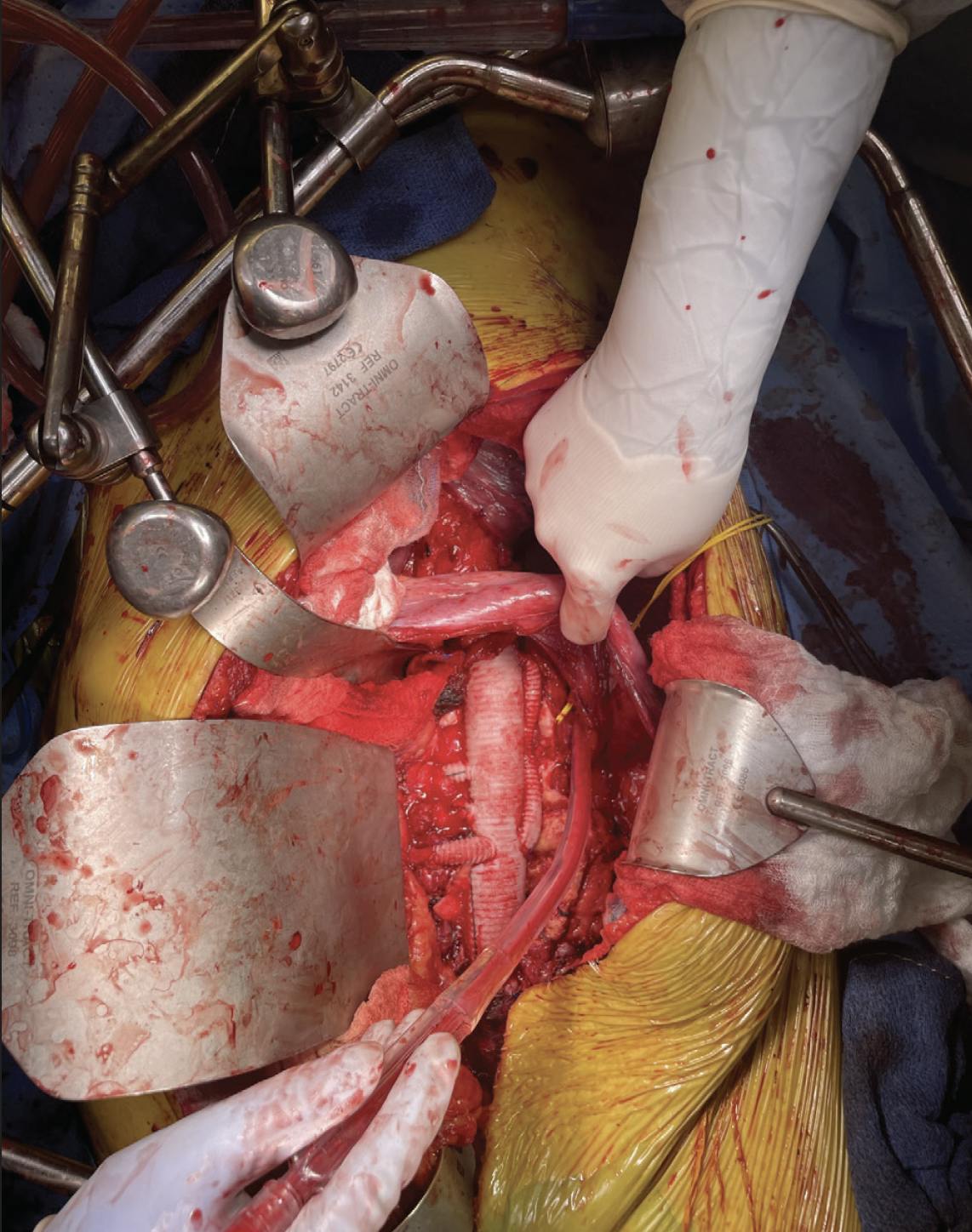
Figure 3. Bucket-handle bypass to intercostal artery.
Spinal Drainage: The Debate Continues
Spinal drainage has also been studied extensively. The pendulum continues to swing back and forth. Currently, many favor selective drainage for several reasons, including cost and the patient’s limited mobility with drains in place. More importantly, drain-associated complications such as epidural hematomas are rare but devastating. For some who would prefer selective drains, they are unfortunately bound by resources of their institutions. The clock is ticking when SCI occurs, and patients have approximately 2 hours for spinal rescue. If there is no clear pathway for expeditious placement of a spinal drain, this may relegate the surgeon to placing spinal drains for all patients undergoing complex aortic repair.
Furthermore, there is debate on who should be placing these drains. Cardiac anesthesia is trained and exceptionally adept at the procedure but may not be readily available in the middle of the night. Interventional radiologists use fluoroscopy for drain placement, which could result in fewer bloody taps, but not all interventional radiologists are trained to place spinal drains. Certainly, neurosurgery residents are capable and can be found any time day or night. However, one might pause to ask a neurosurgery resident to prioritize a spinal drain to the top of the 100 head CTs and neuro checks they have left to do that night.
Preconditioning and Staging Coverage
Preconditioning the spine is a method utilized in complex endovascular TAAA surgeries. Staging coverage of intercostal or lumbar arteries in a few surgeries instead of a single setting is quickly becoming the standard of care. Leaving an intentional endoleak with delayed plugging is also a good option. Near-infrared spectroscopy is noninvasive and can provide real-time data on perfusion by measuring regional hemoglobin oxygen saturation. This practice is ideal for surgeons who utilize selective spinal drainage.
Yet, with all the knowledge of risk factors and protective techniques, our patients nonetheless experience SCI. In big open repairs, we are mentally prepared for this, but sometimes SCI occurs in patients undergoing a routine infrarenal open abdominal aortic aneurysm repair. SCI can be delayed as much as 2 to 4 weeks after recovery from an open TAA repair—sometimes with an inciting event, other times not.
RESCUE MEASURES
Early recognition of SCI is paramount, and treatment should be protocol driven. Measures to rescue are immediately deployed: placement or replacement of a spinal drain, driving mean arterial pressures to > 100 mm Hg or to the point of coronary demand ischemia, naloxone infusion, and transfusion to a hemoglobin of 10 g/dL. Steroids are still used in selected institutions around the country. There has been a paucity of evidence regarding hyperbaric treatment for rescue. Most are case reports but perhaps represent some promise.2,3 Emergent dives for recent aortic surgical patients are limited by the comfort of the hyperbaric team, the hemodynamic stability of the patient, and whether chest tubes (for open repair) have already been removed. In our experience, there has been partial recovery but undoubtedly not the Holy Grail for rescue.
OUR SPINAL DRAIN ALGORITHM
I authored the clinical practice guideline on spinal drains after aortic surgery for the Ohio State University. Patients who are identified to need drains are evaluated for risk. Those with prior lumbar spine surgery, significant back pain/radiculopathy or fractures, scoliosis, neurologic disorders affecting the spinal cord, or abnormal coagulation studies are classified as high risk, and drains are placed under fluoroscopy with our neuroradiology interventional radiologists. Those who are low risk will have drains placed by our cardiac anesthesiologists. Only MRI-safe lumbar drains are placed at our institution, and the procedure is done the day before the planned aortic surgery. Drains are clamped, and patients are admitted to our progressive care unit. Postoperatively, patients are admitted to the intensive care unit, and drains are leveled at the tragus. When a patient is transported or receiving particular nursing care (turning or suctioning), the drain is always clamped. For open thoracoabdominal procedures, drains are set at 10 cm of water for the first 24 hours. Depending on the patient’s neuro exam, the drain is slowly raised over the next 24 to 48 hours. It is then clamped for 24 hours prior to removal. In endovascular aortic procedures, this process is expedited, and drains are removed in 1 to 2 days post op. We maintain central venous access for 24 hours after the drain is removed in the event that we need to drive the MAP goal. Any issue with the lumbar drain or change in neurological exam is escalated immediately to the surgical attending and intensivist. There is direct communication between the two to establish a plan that can then be immediately executed.
FUTURE DIRECTIONS
Patients who experience SCI have astronomically high 1-year mortality. At The Ohio State University, Drs. Hamdy Awad and Bradley Gigax continue to pursue greater knowledge of SCI through large-animal research. I was privileged to participate in the most recent research performing endovascular aortic coverage in sheep, and published results are forthcoming. The Aortic Research Consortium is calling for a randomized controlled trial to study prophylactic versus therapeutic spinal drain placement for endovascular TAA surgery.
Vascular surgery is the pinnacle of advancement in technology and technique for aortic pathology in the last 20 years. I would challenge our field to spend a similar effort toward understanding SCI so that we can prevent this devastating complication for our patients.
1. Liu LY, Callahan B, Peterss S, et al. Neuromonitoring using motor and somatosensory evoked potentials in aortic surgery. J Card Surg. 2016;31:383-389. doi: 10.1111/jocs.12739
2. Parotto M, Ouzounian M, Fedorko L, et al. Hyperbaric oxygen therapy for spinal cord ischaemia after complex aortic repair- a retrospective review. Anaesthesiol Intensive Ther. 2018;50:102-109. doi: 10.5603/AIT.a2018.0010
3. Urquieta E, Varon J, Lin PH. Reversal of spinal cord ischemia following endovascular thoracic aortic aneurysm repair with hyperbaric oxygen and therapeutic hypothermia. Vasc Endovascular Surg. 2017;51:517-520. doi: 10.1177/1538574417725238
Advertisement
Advertisement