Advertisement
Advertisement
August 2024
Sponsored by RapidAI
Validated AI-Powered Clinical Expertise: A Lifeline for Rural Care
It’s important for patients to feel confident in their primary and rural centers. How are tools like RapidAI expanding access to expert-level imaging analysis, supporting experienced readers, and delivering ROI?
There are many tangible—and sometimes insurmountable—inequalities between urban and rural hospitals related to budget constraints, staffing, and resource availability. For instance, while larger comprehensive medical centers often have access to advanced imaging technologies such as CT angiography (CTA) and CT perfusion (CTP), many small and rural hospitals rely heavily on basic imaging technology like noncontrast CT (NCCT) and are therefore often limited to the depth of insights delivered by NCCT scanners.
These resource disparities extend beyond physical technology, as rural hospitals also often lack specialty-trained physicians, which in turn places a heavy burden on emergency room doctors and radiologists to assess every condition. Lacking the expertise of specialists and erring on the side of caution, these rural hospitals frequently play it safe and transfer patients to comprehensive centers. This can lead to an increase in unnecessary and costly transfers that direct revenue away from rural centers that desperately need it.
CASE STUDY: STROKE
Primary Stroke Center (PSC) to Comprehensive Stroke Center (CSC)—Team Activation in Minutes
11:53 AM: A woman in her mid 70s with a history of atrial fibrillation and Parkinson’s disease arrives at Ascension All Saints PSC in Racine, Wisconsin.
11:53 AM–12:06 PM: NCCT, CTA, and CTP are performed, and within 90 seconds of scan completion, Rapid LVO (RapidAI) alerts providers and transmits all imaging outputs to the clinical team.
12:46 PM: Patient departs from All Saints to CSC via 14-minute helicopter ride.
1:00 PM: Patient arrives at Ascension Columbia St. Mary’s Hospital CSC in Milwaukee, Wisconsin, and is sent straight to the angio suite for thrombectomy.
1:20 PM: Arterial puncture is conducted, and fluoroscopy shows left M1 occlusion.
1:24 PM: A 4-minute single-pass TICI (thrombolysis in cerebral infarction) 3 procedure is conducted, eventually resulting in complete recovery of right-sided weakness and significant improvement in speech.
“91 minutes may be the best door at a PSC to recanalization at a CSC I have ever seen in my career.”
–Daniel P. Gibson, MD
Interventional Neuroradiologist, Ascension
However, the consequences of these disparities don’t stop at unnecessary transfers. The uncertainty in diagnosis that nonspecialized rural physicians experience can also translate to longer door-to-treatment times, poorer patient outcomes, and longer lengths of stay.
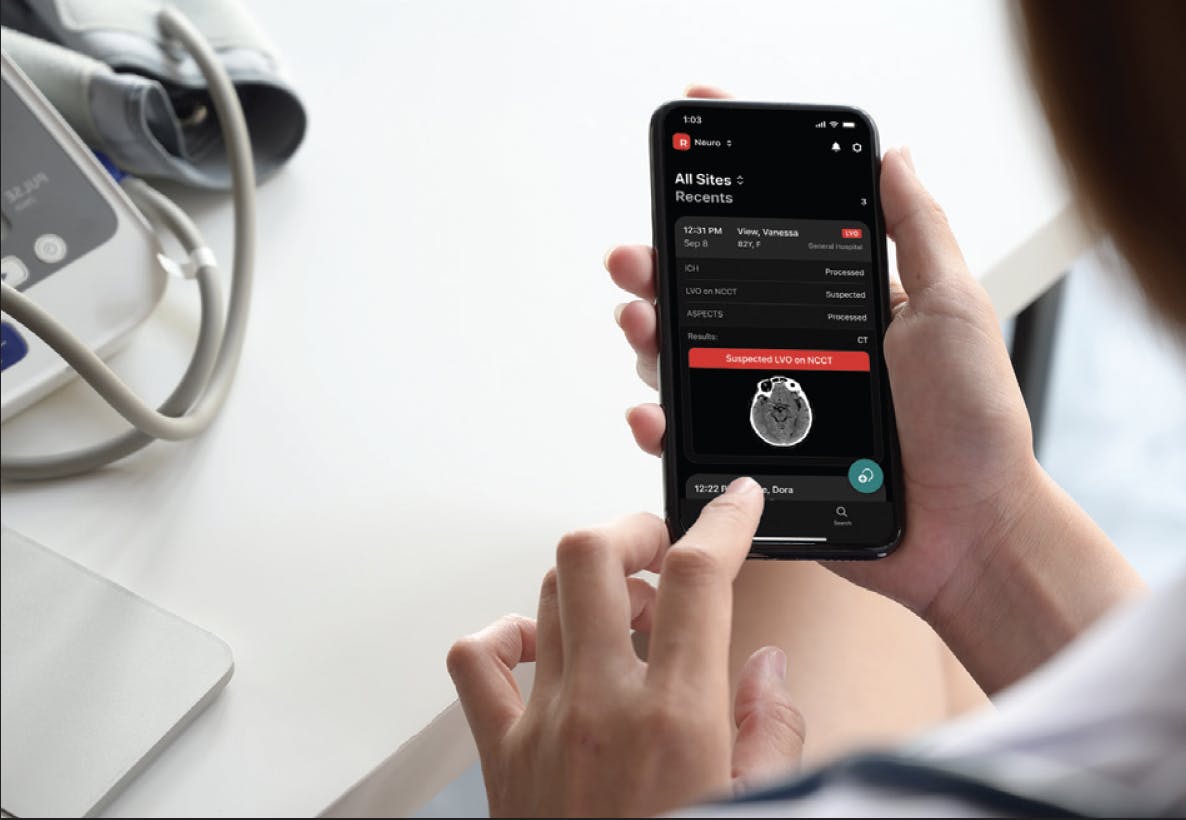
According to the American Heart Association, every 10-minute delay between when a patient with a severe ischemic stroke arrives at the emergency room and begins to receive treatment puts them at risk of losing up to 8 weeks of good health.1 That means every second of delay in care equates to a loss of 2.2 hours of healthy life. Similar disparities are also seen with hemorrhagic strokes where it is increasingly seen that timely transfer decisions can have a critical impact on patient outcomes.
Artificial intelligence (AI)–powered solutions are not a silver bullet for every inequity between urban and rural endovascular care. However, they can play a critical role in leveling the playing field by creating broader access to clinical expertise, which is a key factor in achieving faster and more accurate diagnostics, improved provider satisfaction, and greater operational efficiency—or, the ability to deliver high-quality care in a timely manner.
ENHANCING DIAGNOSTIC SPEED AND ACCURACY
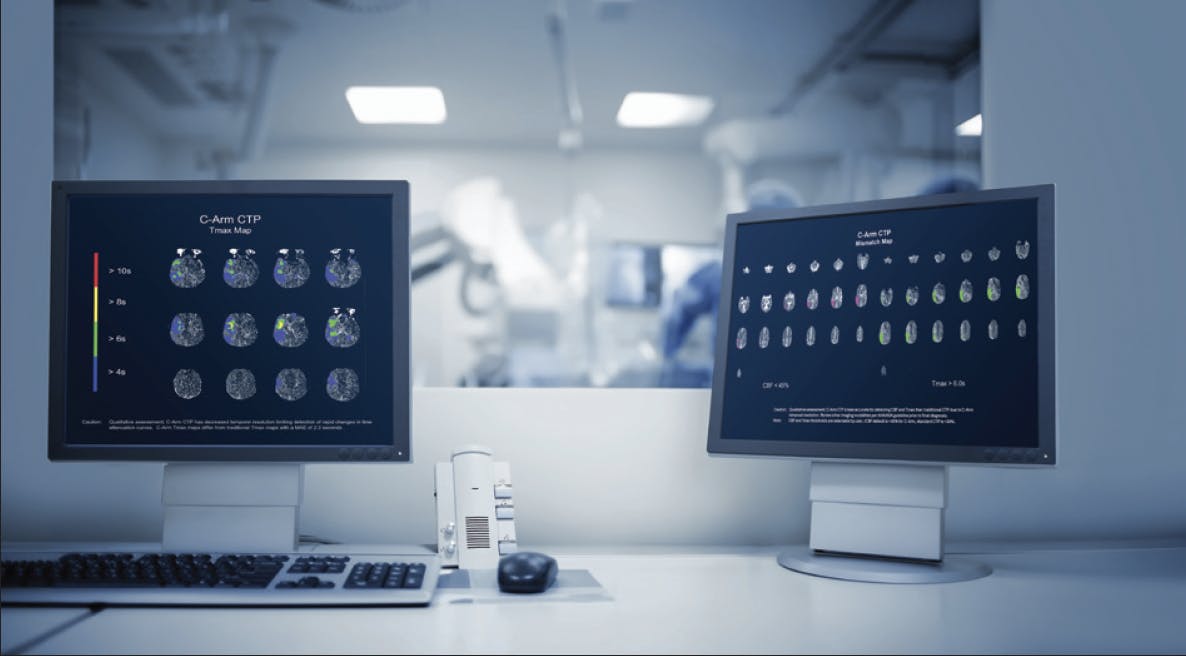
One of the most critical ways AI is democratizing clinical insights and enhancing rural care delivery is by improving diagnostic speed and accuracy and reducing human errors in overburdened and understaffed care teams.
First, not only does manually sorting through and interpreting high volumes of source images often require specialized knowledge to be done effectively, it is also incredibly time consuming for small, rural care teams. By quickly identifying patterns and other critical information on patient scans, deep AI can assist less experienced readers in triaging and even diagnosing patients faster. Tools like RapidAI further enhance this capability by enabling care teams to easily bring in expert readers from other hospitals when needed.
CASE STUDY: PE
96% Increase in Pulmonary Embolism (PE) Interventions at Wichita Hospital
A Wichita, Kansas, hospital was experiencing suboptimal case capture, inconsistent PE response team (PERT) response, and lack of multidisciplinary communications. By conducting in-person and virtual trainings to optimize its hub-and-spoke model, RapidAI’s technology and Workflow Optimization team helped them develop and enhance their PERT and acute PE patient care processes.
After going live with RapidAI, the hospital reported:
- A 96% increase in venous thromboembolism interventions 6 months postlaunch
- A 96.3% sensitivity and 92.1% specificity based on 598 scans using Rapid PE (RapidAI)
Through the implementation of its technology and partnership with RapidAI’s team, the hospital was able to significantly boost its revenue, reduce transfer rates, and enhance its reputation for specialized PE care.
Additionally, RapidAI’s platform goes deeper than others to provide advanced imaging analysis through detailed localization, quantification, characterization, and tracking of pathologies, including for more commonly available NCCT imaging. This additional information helps medical specialists of all experience levels better understand their patients’ conditions, allowing them to make life-saving decisions faster and with more confidence.
Finally, a key benefit of clinical AI is creating standardization where possible. For example, Rapid ASPECTS (RapidAI) uses validated machine learning algorithms to quickly identify areas of irreversible injury and automatically delivers a score based on the Alberta Stroke Program Early CT Score guidelines. This helps care teams using the technology to more uniformly assess a patient’s eligibility for thrombectomy and make faster triage-or-transfer decisions—which is particularly valuable for rural hospitals.
PROVIDER DEVELOPMENT, SATISFACTION, AND RETENTION
In addition to supporting less specialized physicians, AI can also help rural hospitals overcome one of their biggest operational and financial challenges: physician dissatisfaction and burnout. According to Medscape’s 2024 Physician Burnout report, 44% of neurologists, 47% of cardiologists, and 63% of emergency medicine providers, including those in rural care centers, reported experiencing burnout.2 However, feeling supported and equipped to handle complex cases can go a long way toward reducing burnout and improving retention rates in rural hospitals.
AI can also deliver enormous value by complementing the expertise of more experienced physicians. In addition to growing workloads and pressure to work quickly, many physicians often find themselves reading images in the middle of the night, and AI-powered clinical decision support can provide a critical second set of eyes to enhance their confidence in clinical decision-making.
OPTIMIZED RESOURCE UTILIZATION AND OPERATIONAL EFFICIENCY
Finally, in addition to enhancing clinical knowledge and decision-making, AI can significantly impact a rural hospital’s operational efficiency by supporting both effective and efficient care. One critical piece of operational efficiency is effective resource utilization, which includes everything from optimized staffing to efficient use of equipment and facilities to streamlined patient workflows that reduce bottlenecks between different stages of care—all of which AI-powered workflow tools like RapidAI can support.
Another component and benefit of improved operational efficiency is cost management, which can result from preventing unnecessary transfers, streamlining patient pathways, reducing time to treatment, and, ultimately, driving better patient outcomes—all of which drive financial benefits and increased revenue for these often cash-strapped organizations.
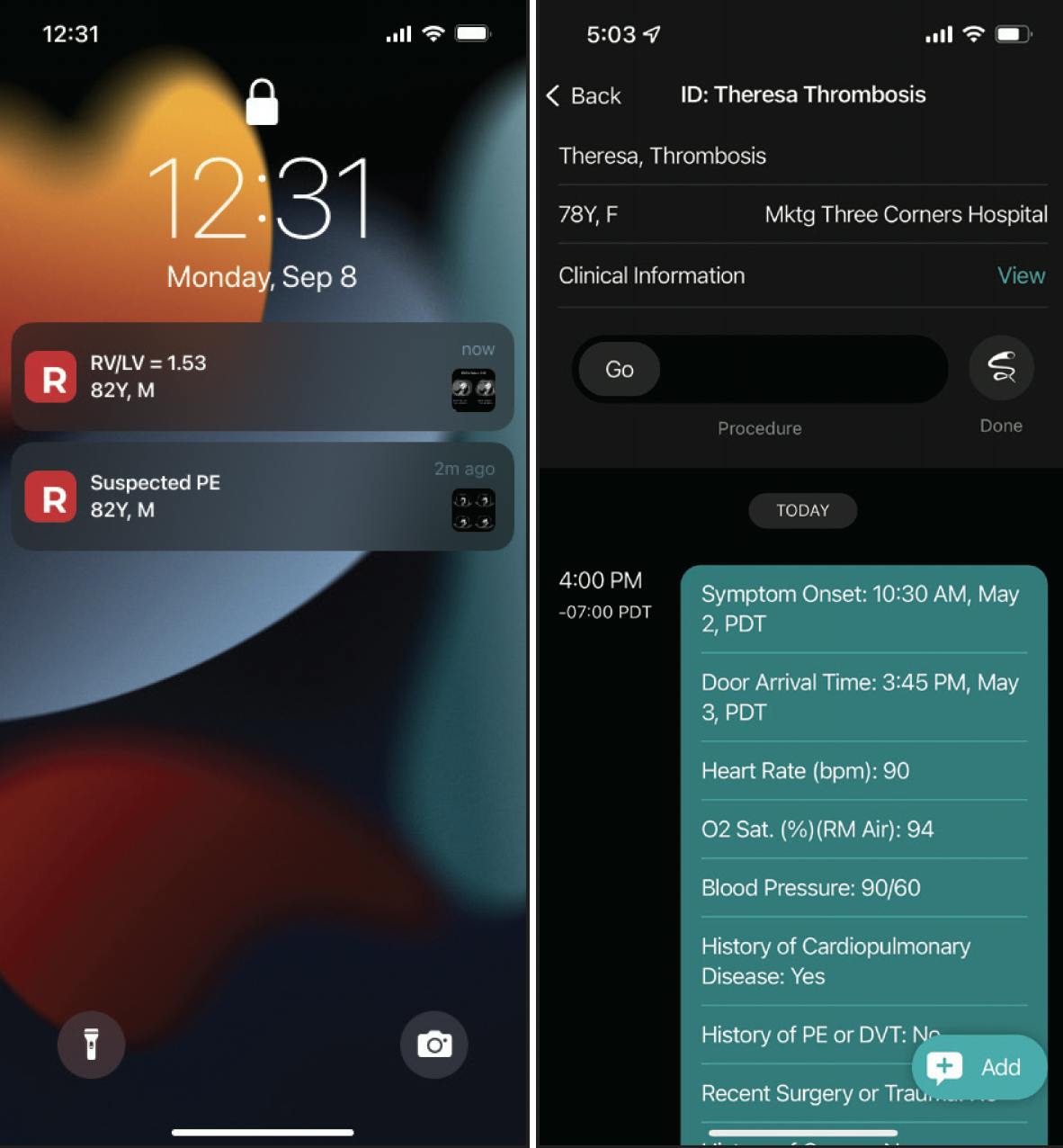
However, for AI tools to meaningfully reduce friction and generate efficiencies, it is critical that they fit into the hospital and network’s existing workflows without causing disruptions. For example, RapidAI’s seamless integration with PACS (picture archiving and communication system) and Radiology Worklist helps care teams automate AI-driven prioritization while also providing secure mobile-based communication tools that give care teams the information they need for collaborative, coordinated care—right at their fingertips.
CONCLUSION
Ensuring the availability of deep AI–powered tools in every hospital is the first and most critical step toward addressing disparities in rural health care. By providing NCCT imaging support, enhancing cross-network connection and collaboration, and supporting physicians in their most urgent needs, tools like RapidAI are helping close the gaps.
As innovative AI solutions continue to be developed to address these challenges, investing in AI tools is not just about technologic advancement; it is an effort to improve health care outcomes and quality of life in underserved areas to ensure that every patient, regardless of their point of entry, receives the best care available.
Note: Patient name, details, and location in images are hypothetical.
1. Even short delays in the ER may reduce the lifespan of stroke survivors. News release. American Heart Association. March 11, 2021. Accessed August 7, 2024. https://newsroom.heart.org/news/even-short-delays-in-the-er-may-reduce-the-lifespan-of-stroke-survivors
2. Mckenna J. Medscape physician burnout & depression report 2024: ‘we have much work to do’. Medscape Nurses. January 26, 2024. Accessed July 25, 2024. https://www.medscape.com/slideshow/2024-lifestyle-burnout-6016865
Advertisement
Advertisement