Advertisement
Advertisement
June 2024 Supplement
Sponsored by Contego Medical
Introduction

This focused edition of Endovascular Today featuring carotid artery stenting is both timely and important to all physicians treating this disease state, given the key milestones accomplished this past year.
After presenting the Centers for Medicare & Medicaid Services (CMS) with > 8,000 transfemoral/transradial carotid stenting (CAS) outcomes that demonstrated equivalence to carotid endarterectomy (CEA) (death, stroke, and myocardial infarction), a change to the National Coverage Determination (NCD) was approved in October 2023, removing the previous restrictions on carotid stenting. There are important requirements regarding neurologic assessment, preprocedure imaging, and shared decision-making to include CEA, CAS, transcarotid artery revascularization (TCAR), and optimal medical therapy. In addition, specific facility requirements all practitioners should be aware of were detailed.
Importantly, there are also now new device innovations designed to make carotid stenting even safer for patients. After several studies documented that post-stent balloon dilation generates the most embolic signals on transcranial Doppler during CAS, the Paladin balloon (Contego Medical) with a 40 µm integrated embolic protection filter (IEP) was designed and then validated in the Paladin registry. The natural device evolution in design was to then add a purpose-built, closed-cell nitinol stent onto the Paladin—hence, the 3-in-1 Neuroguard IEP System (Contego Medical).
The following roundtable features experts in carotid artery disease sharing candid perspectives and experiences regarding microembolization, embolic protection and stent technologies, post-NCD decision-making, and the results of the PERFORMANCE I and II studies using the Neuroguard IEP System, which have truly set a new standard in CAS.
Given the new NCD and device innovation that now provide enhanced safety, carotid stenting should become part of the armamentarium for interventional cardiologists, interventional radiologists, interventional neurologists, interventional neuroradiologists, vascular surgeons, and neurosurgeons who manage patients with carotid artery disease in their daily practices. Lastly, it is critical that societies and industry work together to be certain all practitioners receive adequate training and education on carotid stenting, putting patient outcomes and safety first.
—Mitchell J. Silver, DO (Moderator)
Note: The Neuroguard IEP System is an investigational device, limited by US Federal law to investigational use.
What Is Microembolization?
Dr. Silver: Emerging data have verified that subclinical microembolization is common during carotid artery intervention. Dr. Zhou, what did your study on subclinical microemboli, embolic infarct volume, and the effect on long-term cognitive changes show?

Dr. Zhou: Although the clinical outcomes of carotid revascularization are excellent, procedure-related subclinical embolization is common, ranging between 20% and 80%.1,2 The embolization can be detected by transcranial Doppler or diffusion-weighted imaging (DWI) MRI sequence. DWI lesions represent abnormal diffusing of water in the injured brain cells that resulted in infarcts, namely silent brain infarcts (SBIs). Many studies, including ours, have demonstrated negative cognitive impact of these procedure-related SBIs. However, the importance of microembolization and SBIs has not been widely accepted by the interventional community despite a large body of literature support.
Initially, we also showed that procedure-related SBIs only transiently impacted memory function, whereas the impact on executive function was more long lasting.2 To understand the controversy a little better, we decided to evaluate whether the size of SBIs plays a role. After all, dose-dependent effects of embolization on neuronal injury and cognition have been well established in experimental models. There is a paucity of information on the human brain.
We prospectively recruited patients who underwent clinically indicated carotid revascularization for severe asymptomatic and symptomatic stenosis. These patients were evaluated with rigorous brain MRI pre- and post-op, as well as cognitive battery at pre-op, 1-, 6-, and 12-month post-op. A total of 55 carotid endarterectomy (CEA) and 60 carotid artery stenting (CAS) patients were studied using currently FDA-approved devices. The neurologic complication rate was 2.6% for this mixed cohort, but 36% of CEA patients had new DWI lesions, with an average volume of 145 mm3, and 82% transfemoral CAS patients had new DWI lesions, with an average volume of 471 mm3. When we correlated the size of SBIs to memory function, we found that patients with medium and high infarct volumes had memory deterioration in various memory measures, while those with low volume did not experience the same extent of cognitive insults.3 This is the first time that volume of infarction was shown to significantly influence long-term cognitive effects in patients who underwent carotid interventions.
Dr. Silver: What is the clinical significance of these findings, and how might this impact future treatment approaches?
Dr. Zhou: Although still controversial, we and others have shown an overall improvement in one or more cognitive domains after carotid revascularization.4-7 Specifically, we recently demonstrated improvement in episodic memory, executive function, and language following carotid revascularization procedures. However, the high incidence of subclinical microembolization raises the concern for adverse cognitive outcomes of carotid revascularization. This inconsistency in the cognitive effects of carotid intervention is consistent with the facts that microemboli are heterogeneous and that large-volume emboli have a more profound negative cognitive impact while smaller ones have a minimal impact.3
Cognitive function affects daily living and is vital for the independence of older patients. As our population is getting older, it is critical for our interventional community to recognize the importance of cognitive effects of each vascular procedure. We need to identify at-risk patients for procedure-related cognitive deterioration and help develop better devices to minimize microembolization. I believe that cognitive outcome should be incorporated into outcome measures for carotid intervention and used to evaluate of the effectiveness of carotid intervention.
1. Bonati LH, Jongen LM, Haller S, et al. New ischaemic brain lesions on MRI after stenting or endarterectomy for symptomatic carotid stenosis: a substudy of the International Carotid Stenting Study (ICSS). Lancet Neurol. 2010;9:353-362. doi: 10.1016/S1474-4422(10)70057-0
2. Hitchner E, Baughman BD, Soman S, et al. Microembolization is associated with transient cognitive decline in patients undergoing carotid interventions. J Vasc Surg. 2016;64:1719-1725. doi: 10.1016/j.jvs.2016.06.104
3. Zhou W, Baughman BD, Soman S, et al. Volume of subclinical embolic infarct correlates to long-term cognitive changes after carotid revascularization. J Vasc Surg. 2017;65:686-694. doi: 10.1016/j.jvs.2016.09.057
4. Whooley JL, David BC, Woo HH, et al. Carotid revascularization and its effect on cognitive function: a prospective nonrandomized multicenter clinical study. J Stroke Cerebrovasc Dis. 2020;29:104702. doi: 10.1016/j.jstrokecerebrovasdis.2020.104702
5. Ancetti S, Paraskevas KI, Faggioli G, Naylor AR. Effect of carotid interventions on cognitive function in patients with asymptomatic carotid stenosis: a systematic review. Eur J Vasc Endovasc Surg. 2021;62:684-694. doi: 10.1016/j.ejvs.2021.07.012
6. Zhou W, Succar B, Murphy DP, et al. Carotid intervention improves cognitive function in patients with severe atherosclerotic carotid disease. Ann Surg. 2022;276:539-544. doi: 10.1097/SLA.0000000000005555
7. Succar B, Chou YH, Hsu CH, et al. Carotid revascularization is associated with improved mood in patients with advanced carotid disease. Ann Surg. Published online Jan 23, 2024. doi: 10.1097/SLA.0000000000006216
Limitations of Existing Embolic Protection Methods
Dr. Silver: We have heard of the clinical importance of microembolization during carotid artery intervention. Dr. Langhoff, do the currently available embolic protection methods adequately address microembolization? If not, what are some limitations of current technology?

Dr. Langhoff: Minor stroke is still the Achilles’ heel of carotid artery stenting (CAS), which is directly related to inadequate embolic protection as well as inadequate patient selection. Currently available embolic protection devices have a pore size not smaller than 100 µm, and most of the particles we collected in the Paladin trial were smaller than 100 µm.1 With the distal protection devices available in different sizes, most will cover a range of different anatomies. The distal protection device within the Neuroguard IEP (Contego Medical) is adjustable to a wide range of diameters to ensure the best protection in terms of wall apposition, and it comes with a pore size of 40 µm, so it has a very fine porosity.
Dr. Silver: Based on your vast clinical experience and the available data, when is stroke occurring during carotid intervention?
Dr. Langhoff: First, you need skills to perform CAS, and I absolutely follow Prof. Alison Halliday’s statement for the ACST-2 trial that CAS and carotid endarterectomy (CEA) should only be done in competent centers. In general, the highest risk occurs during the post-dilation of the stent when you potentially squeeze plaque material through the stent mesh.
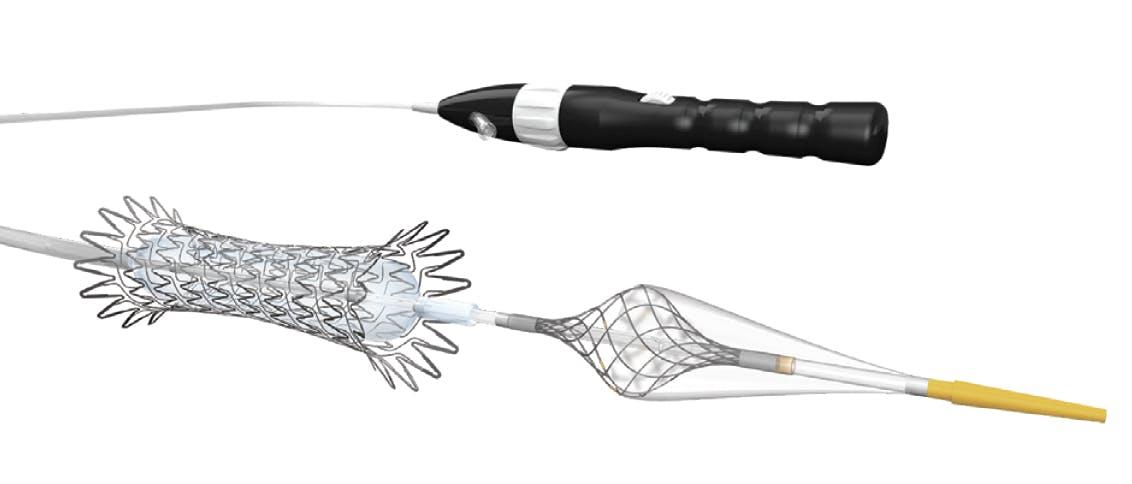
The Neuroguard IEP System. Investigational Device. Limited by US Federal law to investigational use.
Dr. Silver: You have been a pioneer in the use of integrated embolic protection technology (IEP). Can you share with us what that exactly is?
Dr. Langhoff: In Europe, we talk about a mythical creature—people, especially farmers, would like to have a creature that provides milk, eggs, wool, and meat. The concept of the Neuroguard IEP is somewhat like this for the carotid stenting interventionist because you have everything you need for a safe intervention on a single delivery system. With a single handle, you can release your distal protection device with an adjustable filter with a pore size of 40 µm, you can release a closed-cell stent, and you can have the proper post-dilation balloon already in place. After stent release and post-dilation, the embolic protection device is folded back to normal, and you leave the lesion within one step. It is potentially a single pass with all devices and a single return with a maximum of protection.
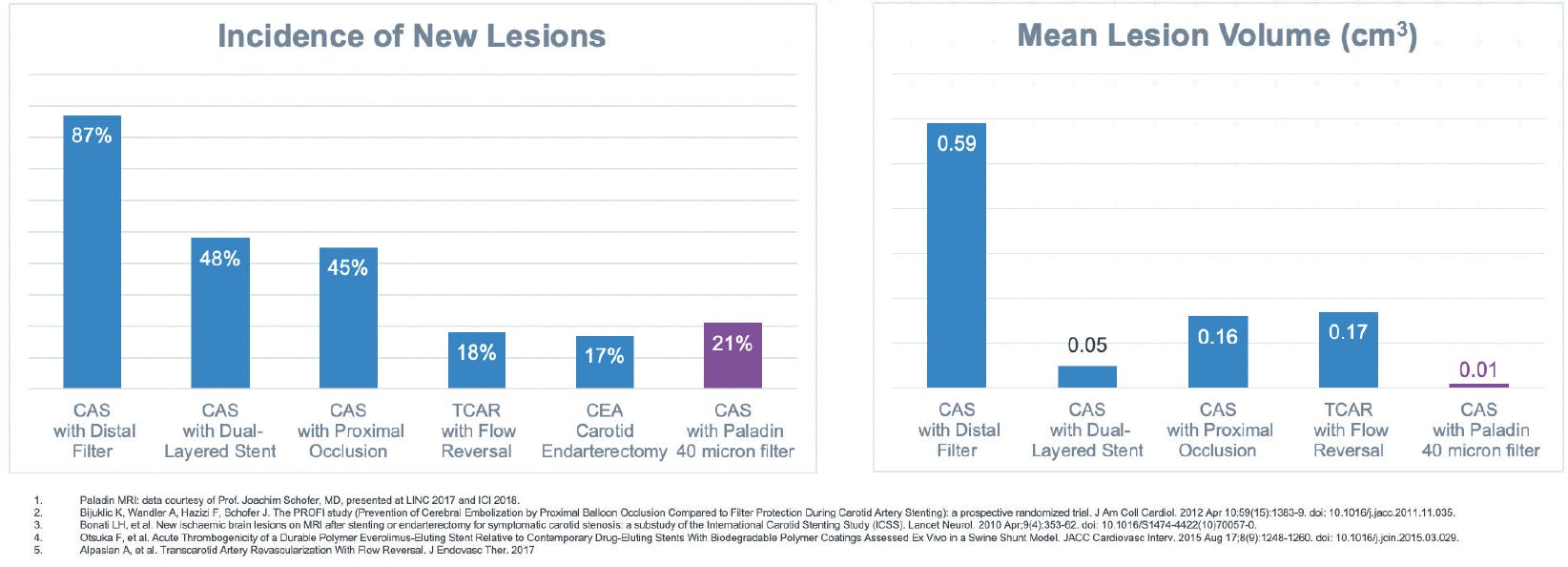
Incidence and volume of new DW-MRI ischemic lesions after carotid revascularization.
Dr. Silver: Can you share with us your insights from the findings of the 106-patient Paladin trial that you published in 2019?1
Dr. Langhoff: The Paladin trial was a great success because we were able to use, within our standard procedure, a post-dilation balloon that incorporates the filter (40 µm pore size). This is the same 40 µm filter used in the Neuroguard IEP System that also includes the postdilation balloon and Neuroguard stent. Because it was an investigational device, per protocol, we had to use our standard distal filter protection device during the procedure. We collected the Paladin filter samples and looked into those for more detail on the particle size, and we performed an MRI scan pre- and post-procedure to measure the size of potentially new diffusion-weighted imaging (DWI) lesions. Compared with other trials, we had fewer and smaller DWI lesions and the stroke rate related to the procedure was 0%. We had one stroke that occurred on day 12 in a patient who stopped his co-medication and suffered from a stroke due to a short-term mesh-covered stent thrombosis, which was successfully thrombolysed.
1. Langhoff R, Schofer J, Scheinert D, et al. Double filtration during carotid artery stenting using a novel post-dilation balloon with integrated embolic protection. JACC Cardiovasc Interv. 2019;12:395-403. doi: 10.1016/j.jcin.2018.11.039
When Is Stroke Occurring and Perspectives on PERFORMANCE II
Dr. Silver: We have heard about the clinical importance of microembolization and some of the limitations of the currently available embolic protection devices (EPDs). Dr. Gray, based on your vast clinical experience and available data, when is stroke occurring during carotid intervention?

Dr. Gray: We can break down the carotid artery stenting (CAS) procedure into distinct elements: carotid access, filter passage through the lesion, pre-dilation, stent implantation, post-stent dilation, and filter retrieval. Determining when stroke occurs in these steps based on clinical observations is an inexact science because microembolization that occurs during the CAS procedure and actually bypasses the distal EPD to enter the distal circulation may not immediately manifest symptoms. This may be due to the relatively small territory of brain involved (major stroke in CAS is typically well less than 1%), such that neurologic defects may be subtle and difficult to detect on table. It also may be due to the permissive hypertension that is protocolized in CAS to accommodate any sudden drops in blood pressure that can occur with intraprocedural carotid body stimulation. This hypertension can increase collateralization into an ischemic cerebral territory, and a neurologic deficit may not be evident until after the procedure when blood pressure is brought under control.
So we can use objectified measures of microembolization to further bolster the somewhat confounded clinical observations such as intraprocedural transcranial Doppler (TCD) which is a very sensitive measure of embolic activity. While TCD cannot reliably distinguish gaseous from solid emboli, it nevertheless appears that the most embologenic step in the CAS procedure is the post-stent balloon dilation. This not only makes intuitive sense, but also comports with the experiential reports of high-volume CAS operators.
Dr. Silver: You recently presented the 30-day and 1-year outcomes from the PERFORMANCE II study at the VIVA 2023 late-breaking clinical trial session. Can you share what led up to PERFORMANCE II and these results?
Dr. Gray: The PERFORMANCE II study was preceded by a series of European studies, starting with the Paladin registry. The Paladin IEP device consists of a balloon with an integrated filter located distal to the balloon. The Paladin filter is actuated remotely from the proximal handle and is constructed using 40 µm pores, which is roughly three times smaller than the pore size found in current distal EPD. Armed with both more refined and double filtration, the use of Paladin in four separate small studies totaling approximately 180 patients resulted in a remarkable combined 0.55% rate of death/stroke/myocardial infarction. Equally important was the mechanistic demonstration of filter effectiveness via two objectified measures. First, when the Paladin filter is examined post-procedure approximately 90% of all particulate matter captured were < 100 µm, suggesting that the majority of liberated material would not be captured by today’s standard distal EPDs. Reinforcing this finding was the observation that new asymptomatic lesion count on diffusion-weighted MRI post-procedure using the Paladin device was on par with the gold standard of carotid endarterectomy (CEA), and three to four times less than standard distal filter EPDs.
Next, PERFORMANCE I studied a relatively small group of patients using the Neuroguard IEP System. Neuroguard is a 3-in-1 system combining a 40 µm filter, dilation balloon, and a purpose-built, closed-cell but flexible nitinol stent. The PERFORMANCE I study enrolled 67 patients at nine European sites with independent central core lab and clinical event committee adjudication of outcomes, there was no death/stroke at 30 days and no ipsilateral strokes to 365 days—an excellent confirmation of the earlier studies and foundation for the pivotal trial.
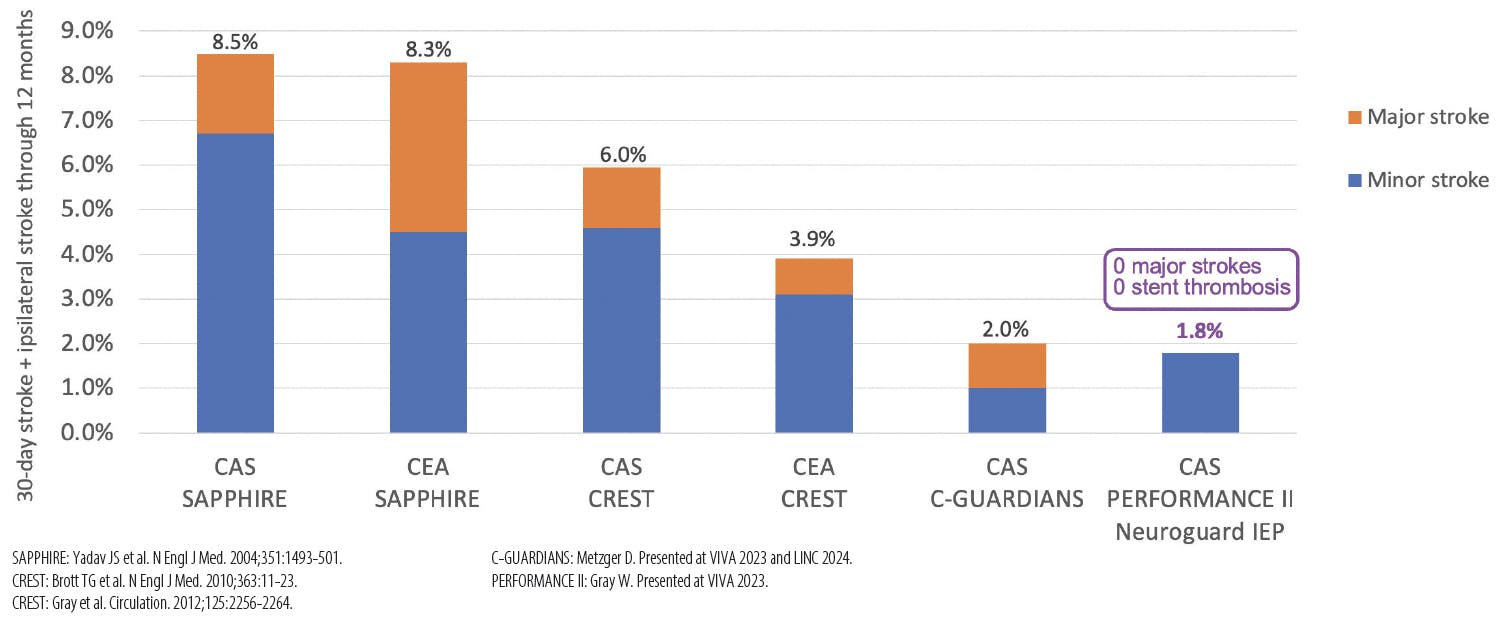
One-year stroke comparison from large multicenter studies of asymptomatic and symptomatic patients.
PERFORMANCE II followed on from the positive experience from PERFORMANCE I. This pivotal trial enrolled approximately 300 high-surgical-risk patients. The outcomes were remarkable, with a 1.3% stroke rate—all minor—at 30 days, and one further minor ipsilateral stroke unrelated to the stent; there were no major strokes through 1 year. Moreover, the stent proved durable, with no clinically driven target lesion revascularization or stent thrombosis. The results of PERFORMANCE II are pending FDA review.
PERFORMANCE II established a new standard for not just CAS outcomes but carotid intervention more broadly.
Impact of Stent Design on Outcomes: Does It Matter?
Dr. Silver: Dr. Mathews, with your background in engineering, can you address the oft-debated issue on closed-cell versus open-cell stents for carotid intervention?

Dr. Mathews: Most single-layer carotid stents follow either a closed- or open-cell design. Closed-cell stents have interconnected smaller cells that confer more radial strength but tend to be stiffer. In contrast, open-cell stents have larger cells that provide more flexibility at the expense of radial strength. Both designs may have benefits, and some have argued the advantage of one design over the other during carotid intervention. In a European retrospective analysis of 1,684 patients across 10 centers, there was no difference in outcomes between stent designs for transient ischemic attack (TIA), stroke, and death.1 Another retrospective analysis of 3,481 patients across four European centers found no difference in cell size once the nonstandard definition of TIA was excluded.2 Finally, within the Vascular Quality Initiative (VQI) database of 2,671 patients, the use of open- or closed-cell designs made no difference within the internal carotid artery.3
Dual-layer or mesh-covered stents may theoretically result in lower stroke rates by containing covered plaque. However, with such a dual-layered cell design, there appears to be a higher risk of restenosis or stent thrombosis. A signal regarding stent thrombosis was found in a series of 54 patients, whereby occlusions of double-layer mesh stents occurred in a considerable proportion of emergent CAS procedures, with occlusion-related symptoms in half the cases.4 In a nonemergent population of CAS procedures, a recent trial showed early and late stent thrombosis that led to neurologic death when dual antiplatelet therapy was stopped.5 It is possible that the mesh covering creates a surface that adversely impacts endothelial/platelet interaction, introducing a new catastrophic risk of stent thrombosis. Finally, histologic data show that microparticulates can still extrude through the mesh design and embolize distally,6 calling into question the risk/benefit of adding another layer of material to carotid stents.
Dr. Silver: Based on these findings regarding stent design, what do you feel really matters for mitigating stroke in carotid intervention?
Dr. Mathews: Stroke in the setting of carotid intervention is a complex issue. Fortunately, in the modern era, it is possible to achieve low rates of stroke with either carotid endarterectomy, transfemoral/transradial carotid artery stenting, or transcarotid artery revascularization. What seems to drive low stroke rates with carotid intervention is periprocedural embolic protection strategies, regardless of stent type used. Utilizing proximal protection strategies including the Gore Flow Reversal System (Gore & Associates) and the Mo.Ma (Medtronic) resulted in low 30-day stroke rates of 0.8%, regardless of stent design used.7 Within the VQI database of 29,853 patients undergoing transfemoral carotid artery stenting, the use of distal embolic protection was associated with lower rates of periprocedural stroke (2.5% vs 3.7%) and death (1.7% vs 3.5%).8 The ROADSTER study also demonstrated low stroke rates of 1.4% using the Enroute transcarotid flow reversal system (Silk Road Medical) within the intent-to-treat analysis.9 Ultimately, selection of carotid revascularization technique is patient specific, but when stenting is utilized, embolic protection is important in preventing stroke.
1. Schillinger M, Gschwendtner M, Reimers B, et al. Does carotid stent cell design matter? Stroke. 2008;39:905-909. doi: 10.1161/STROKEAHA.107.499145
2. Bosiers M, de Donato G, Deloose K, et al. Does free cell area influence the outcome in carotid artery stenting? Eur J Vasc Endovasc Surg. 2007;33:135-141. doi: 10.1016/j.ejvs.2006.09.019
3. Faateh M, Dakour-Aridi H, Mathlouthi A, et al. Comparison of open- and closed-cell stent design outcomes after carotid artery stenting in the Vascular Quality Initiative. J Vasc Surg. 2021;73:1639-1648. doi: 10.1016/j.jvs.2020.08.155
4. de Vries EE, Vonken EJ, Kappelle LJ, et al. Short-term double layer mesh stent patency for emergent or elective carotid artery stenting. Stroke. 2019;50:1898-1901. doi: 10.1161/STROKEAHA.118.024586
5. Metzger DC. 1-year outcomes from the C-GUARDIANS trial of the CGuard carotid stent system. Presented at: Leipzig Interventional Course (LINC) ; May 28-31, 2024; Leipzig, Germany.
6. Petkoska D, Zafirovska B, Vasilev I, et al. Transradial carotid artery stenting using double layer micromesh stent and novel post-dilation balloon with integrated embolic protection. Cardiovasc Revasc Med. 2024;63:43-51. doi: 10.1016/j.carrev.2024.01.006
7. Hornung M, Bertog SC, Franke J, et al. Evaluation of proximal protection devices during carotid artery stenting as the first choice for embolic protection. EuroIntervention. 2015;10:1362-1367. doi: 10.4244/EIJY14M07_10
8. Wang SX, Marcaccio CL, Patel PB, et al. Distal embolic protection use during transfemoral carotid artery stenting is associated with improved in-hospital outcomes. J Vasc Surg. 2023;77:1710-1719.e6. doi: 10.1016/j.jvs.2023.01.210
9. Kwolek CJ, Jaff MR, Leal JI, et al. Results of the ROADSTER multicenter trial of transcarotid stenting with dynamic flow reversal. J Vasc Surg. 2015;62:1227-1234. doi: 10.1016/j.jvs.2015.04.460
The Future of Carotid Artery Revascularization: Putting It All Together
Dr. Silver: Dr. Lyden, as a vascular surgeon who performs all modalities of carotid revascularization, how does enhancing periprocedural embolic protection resonate with you? How do you see the future unfolding?

Dr. Lyden: It resonates immensely. With the announcement of the CMS alterations to NCD 20.7, as physicians we can finally discuss all modes of carotid revascularization with our patients, including optimal medical management, and through shared decision-making decide on the best course of action that is specific to each patient. My patients overwhelmingly favor a minimally invasive option. As someone who performs carotid endarterectomy, transcarotid artery revascularization (TCAR), and transfemoral carotid stenting (TFCAS), I recognize each has strengths and limitations. We have seen finite risk with all three modalities.
With the change in coverage, we will see growth in these procedures and also increased interest from industry to start putting research and development dollars into the carotid space to continue to improve outcomes.
The goal is zero harm, and with both TCAR and TFCAS, the reduction in minor and major stroke will come in large part with further optimization of intraprocedural embolic stroke prevention. Most distal protection filters have a porosity of ≥ 140 µm, and they are effective at catching larger emboli. However, we know that some of the emboli that reach the brain are smaller, so achieving a finer porosity while still maintaining very low event rates would be advantageous. I am very excited, as we have recently seen new technologies tested to improve our outcomes with intraprocedural embolic protection, including Contego’s 1-year data from the PERFORMANCE II trial of Neuroguard IEP with a 40 μm filter, which demonstrated the lowest 1-year stroke rate of any trial to date. I also look forward to the results from the PERFORMANCE III trial of the Neuroguard IEP Direct System for TCAR.
Dr. Silver: Dr. Rosenfield, with the NCD change and new technologies emerging, could you reflect on the importance of training and education for all involved in carotid revascularization?

Dr. Rosenfield: In supporting this patient-centered carotid NCD, CMS made a clear positive statement about the future of carotid therapies. To achieve high-quality care and good outcomes, all operators will require proper education and training to master the cognitive, clinical, and technical skills necessary for carotid stenting. Initiatives to provide such training are well underway, with coordinated efforts amongst professional societies, industry, hospital systems, and multidisciplinary physician groups such as the Multi-Specialty Carotid Alliance (MSCA).
The future of carotid stenting is bright. As demonstrated by the unprecedented results in the most recent trials, outcomes will continue to improve with innovation in devices and technique. Ultimately, carotid stenting is likely to become the preferred revascularization therapy for the majority of patients with carotid stenosis.
Advertisement
Advertisement