Advertisement
Advertisement
June 2024
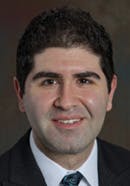
An Interview With Nima Kokabi, MD, FRCPC
Dr. Kokabi explains his collaborative, personalized medicine approach to interventional oncology, knowledge gaps for Y90 dosimetry for hepatocellular carcinoma, updates on the Road2IR training program in East Africa, and more.
Personalized medicine is a passion of yours—what does this look like on a daily basis when interacting with your patients?
In a nutshell, personalized medicine is going that extra mile to ensure the treatment plan devised for each patient is based on that patient’s specific disease characteristics. Specifically, when it comes to liver tumors, a personalized medicine approach I practice on a daily basis is to create the most appropriate treatment plan for each patient in a multidisciplinary fashion and based on our center’s expertise and available treatment options. The bottom line is that when it comes to cancer therapies, liver or otherwise, the entire oncology community is moving toward personalized approaches, and we need to adopt that in the interventional radiology (IR) and interventional oncology (IO) communities.
And, how does this philosophy connect to your approach to clinical research?
I have been involved in personalized yttrium-90 (Y90) dosimetry research since my first year of radiology residency in 2012. At that point, the whole concept of a personalized treatment planning approach and dosimetry for patients undergoing Y90 radioembolization was more of an academic exercise that was quite time consuming and inefficient. However, with compelling data from multiple studies (including some of my group’s research) showing survival advantages of personalized dosimetry and treatment planning, the standard of care at many centers is now to use a personalized planning approach.
Last May, you joined the University of North Carolina (UNC) from Emory University, taking on roles including Director of both Interventional Oncology and Cancer Imaging. Can you tell us a bit about the collaborative cancer care model you envision?
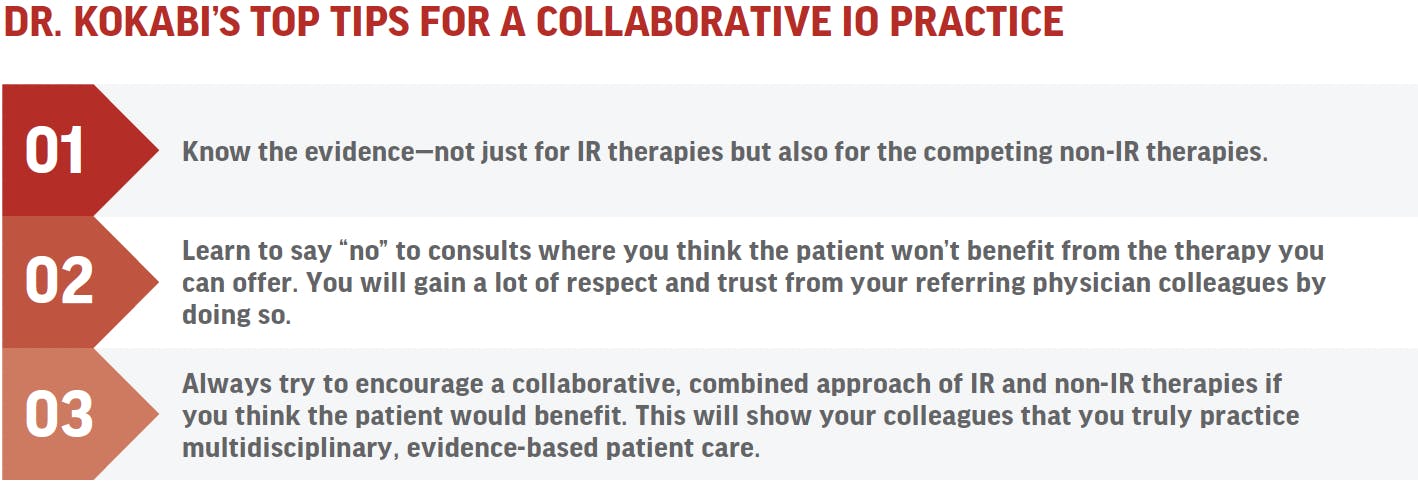
Since the start of my new job at UNC, I have been pleasantly surprised with the collaborative nature, with different experts taking care of patients with various cancers. Apart from biweekly multidisciplinary liver tumor boards and weekly genitourinary tumor boards, we have a rather unique multidisciplinary liver tumor clinic in which patients are consulted by IR, hepatology, medical oncology, and surgical oncology during the same visit to devise the best treatment for each individual patient. This greatly streamlines patient care, and a decision is made regarding the therapy to be offered in a true multidisciplinary fashion. This has shown to improve outcomes in various cancers, including those of the liver.
The topic of Y90 dosimetry for primary and metastatic liver tumors has been a central theme of your work. When surveying the current knowledge base regarding Y90 dosimetry, what are the main questions you’d like to see tackled in the next few years?
I truly believe that we have reached a state of maturity for dosimetry, particularly for glass-based Y90 in segmental or focal treatment of hepatocellular carcinoma (HCC). Similar data are being actively generated for resin-based Y90 in HCC.
The gaps in the knowledge that I would like to see addressed in the next few years include optimal dose to the background liver in the lobar or bilobar approach for either glass or resin devices, in the setting of both primary and metastatic tumors. Additionally, the optimal dosing of tumors in the metastatic palliative setting for both options remains a significant gap in knowledge. Finally, with a significant interest in the combination of Y90 radioembolization and immunotherapy, particularly in HCC, I would like to see research on the optimal priming dose of Y90 to harness the most benefit from the addition of systemic immunotherapy.
On the topic of Y90 use, in one paper you analyzed combination therapy with Y90 radioembolization and immune checkpoint inhibitors in advanced unresectable HCC and found the therapy to be safe and well tolerated.1 What do these findings mean for the future of HCC treatment, and what are the next steps for research?
As mentioned above, there is now significant interest in combination of Y90 and immunotherapy for different stages of HCC. Several clinical trials are ongoing, and we hope to see further safety and, more importantly, efficacy data become available in the next 2 to 3 years.
However, an exciting area of research in my opinion is the most optimal Y90 tumor dose to create a synergistic treatment with immunotherapy. I believe this question can create several interesting and much-needed research opportunities in the near future.
Trauma management is another theme seen in your publications, with analyses of both blunt splenic and blunt liver trauma from the Trauma Quality Improvement Program (TQIP) registry.2,3 How did this method of research with the registry come about? How would you describe the benefit of working with these types of databases?
I think large administrative databases such as TQIP can serve as a unique set of real-world information regarding utilization rate and efficacy and safety of minimally invasive therapies provided for IR. My group has used similar databases to evaluate the efficacy of minimally invasive imaged-guided therapies for liver and kidney cancer. Such databases can also help shed light on the cost of various competing therapies for cancer and noncancer treatments where IR provides care for patients. Finally, these large databases can be harnessed as tools to improve and update practice guidelines both locally and nationally.
What impact do you hope your role as Cochair for the Society of Interventional Radiology Foundation Comparative Effectiveness Research (CER) Committee has on the IR and IO landscapes?
I have had the pleasure of being Cochair of the CER Committee along with Dr. Osman Ahmed for the past 2 years. Over this time period, we have encouraged multi-institutional collaboration between members of the committee. We have also streamlined mentorship for the more junior members of the committee interested in CER. These efforts have resulted in several presentations and peer-reviewed publications, generally using the large administrative databases outlined above. The topics published have included both oncology and nononcology indications where IR plays an active role in patient care.
Along with academic responsibilities and clinical practice, you’re also involved in efforts to expand global access to IR, particularly via building IR training programs in East Africa. What have been some of the highlights of this work, and what are the next steps to continue developing IR in these countries?
I have been fortunate to be part of the Road2IR program since its inception in 2018. The goal of the program is to create self-sustaining IR training programs in several countries in East Africa. The program started in Tanzania, a country with a population of 65 million and, in 2018, zero IR-trained physicians. The program has now trained > 10 IR physicians based in Tanzania, Rwanda, and other East African countries. Our robust accredited fellowship program in Tanzania includes three to four new IR physicians each year who are trained by local IR physicians. When the program started, the goals set forth by its founders may have seemed quite audacious and unrealistic, but I am happy to report that the program has truly exceeded all expectations and is now “metastasizing” to other East African countries, regions with > 450 million people and no official IR-trained physicians before 2018.
In the United States specifically, what are the biggest remaining hurdles when it comes to access to IO specifically, and how might these issues be addressed?
From practicing in North Carolina for the past year, I quickly realized that access to IO care in most rural communities is very sparse. I believe it is incumbent on us as the IR/IO community to educate relevant referring physicians in those communities about the effectiveness of the cancer-directed therapies our specialty can offer for their patients, with the goal of more streamlined referral to centers where IO therapies are available.
1. Villalobos A, Dabbous HH, Little O, et al. Safety and efficacy of concurrent atezolizumab/bevacizumab or nivolumab combination therapy with yttrium-90 radioembolization of advanced unresectable hepatocellular carcinoma. Curr Oncol. 2023;30:10100-10110. doi: 10.3390/curroncol30120734
2. Ryce AL, Hanna T, Smith R, et al. Contemporary management of blunt splenic trauma in adults: an analysis of the Trauma Quality Improvement Program registry. J Am Coll Radiol. Published online March 14, 2024. doi: 10.1016/j.jacr.2024.03.007
3. Ryce AL, Somasundaram A, Duszak R Jr, et al. Contemporary management of blunt liver trauma: an analysis of the Trauma Quality Improvement Program registry (2007-2019). J Vasc Interv Radiol. 2023;34:1441-1450.e4. doi: 10.1016/j.jvir.2023.04.018
Advertisement
Advertisement
Interested in reading more interviews?
To read more interviews with thought leaders in the vascular field, check out our Profiles & Perspectives hub.
Read More