Advertisement
Advertisement
March 2024
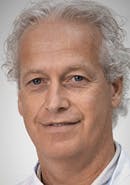
An Interview With Michel M.P.J. Reijnen, MD, PhD
Prof. Reijnen ponders innovations and unmet clinical needs in the vascular field, both clinically in the Rijnstate Hospital and from a translational point of view; the aims of Multi-Modality Medical Imaging group at University of Twente; next steps for the CERAB technique; and more.
Over the years, you have been involved in research and clinical trials for numerous pioneering technologies and techniques in the endovascular field. How do you know when you have come across a true “innovation,” and how do you practice incorporating novel therapies responsibly?
During the 2 decades I have been working in this field, there were quite a few innovations. Endovascular options have expanded significantly in various fields, in part due to the development of better devices, improved imaging, and also more experience. This led to a firm shift from open to endovascular treatment but also to novel treatment options for patients who previously could not be treated. An example of the latter is the stenting of deep venous pathology. Previously, patients (who were often still young) would have postthrombotic syndrome for years, impacting their quality of life. With the introduction of deep venous stenting, the life of many patients was improved significantly.
How to recognize a true innovation is something that is hard to comprehend and very subjective. Often, I was asked to look at early stage developments; some of these were very appealing to me personally, whereas others were not. I think it is very important to acknowledge that when you introduce innovations in your clinical practice, the technology will likely not be matured yet. Be ready to learn and improve. A relatively slow, controlled introduction in clinical trials is key for success.
An important component of this conversation is of course the need being addressed by an innovation. What are some of the most glaring unmet needs that interventionalists and their patients are currently facing?
There are still many unmet needs in clinical practice. An example is endovascular aneurysm repair for abdominal aortic aneurysms. After 30 years of development, the current endografts are likely fully developed. Yet, we are still facing similar complications that were faced in the early days, such as endoleak and migration. This means that if we want to improve outcomes, we need to change the therapy itself—for example, by adding something like additional fixation in the neck to prevent migration and type Ia endoleaks. Also, adjunctive treatment of the aneurysmal sac, called active sac management, is something that could significantly improve outcomes of the therapy. It has recently been shown that active sac management using a porous polymer improves the sac shrinkage rate, which in turn is related to better outcomes. Various techniques are in development for active sac management, and we’ll certainly learn more of that in the coming years.
These topics are key to your role as Professor of Endovascular Imaging and Innovation for the Multi-Modality Medical Imaging (M3I) program at University of Twente. Can you tell us a bit about how M3I works and some of the research your group has in store for the year?
The M3I group aims to improve diagnostics and treatment of a variety of medical conditions by combining existing and novel imaging modalities. One of the topics we work on is arterial flow quantification. Currently, we often use anatomic data from CT or MR to plan our interventions and combine that with one-dimensional flow estimates from duplex ultrasound. With our newly developed techniques like plane-wave ultrasound particle imaging velocimetry, we are now able to provide much more insight into actual flow patterns inside the arteries. We can show vortices, areas of recirculation, and stases of blood that are related to the initiation and progress of atherosclerosis and thrombus formation. Using these technologies, we eventually hope to improve patient outcomes by selecting the right treatment modality at the right time.
As part of your work with M3I, you play a vital role in shaping the next generation of clinicians and researchers. What are some of the nontechnical skills you believe are key to instill in your students?
Nontechnical skills are very important, both for researchers and clinicians. It is important to realize that, regardless of your background, anything you do in this field is related to teamwork. This means that open-mindedness and communication are basic skills that are needed. Also, there is often a tendency to be self-protective regarding research, which I find rather counterproductive. Good, honest, open collaboration is a key factor for success.
Another particular interest of yours has been the covered endovascular reconstruction of the aortic bifurcation (CERAB) reconstruction technique, for which you published good long-term outcomes in 2023.1 Where are we currently regarding recognition of CERAB as a valid option? And, what are the next research steps and/or remaining hurdles?
I am very happy that I, along with Dr. Peter Goverde, had the opportunity to work on CERAB from the very start—already more than 10 years ago. Together, we developed this technique to what it is right now: a reliable endovascular treatment of aortoiliac occlusive disease, with long-term outcomes comparable to open surgery.
This does not mean that we are there. Flaring is still outside the instruction for use of the balloon-expandable covered stents, making CERAB off-label. Also, with the CERAB configuration, future crossover procedures become more complex due to the steep angle. The development of dedicated devices that preserve the natural bifurcation could further improve this treatment. We also need more information on patient selection, as some patients may still be treated effectively with old-fashioned kissing stents.
You are also involved in chronic limb-threatening ischemia (CLTI) research—for example, leading two key papers in 2022 and 2023 on the IN.PACT Global study.2,3 Outside of technology needs and advancements, what aspects of CLTI care would most benefit from further phases of clinical research?
In CLTI, patients often have multilevel disease. Great progress has been made in the treatment of the below-the-knee arteries, but results are still far from ideal. There is certainly room for improvement in devices, but also in imaging. We are now running the OPTIMO study in which we use optical coherence tomography in the superficial femoral artery. The interim data show that by using this technology, much more information is provided that really impacts the treatment, with regard to the angiography.4 For example, dissections and residual stenosis can be judged much more reliably. This will likely be even more impactful in the below-the-knee arteries.
If you were given the opportunity to spend a year studying or training in a field outside of medicine, what would you choose, and why?
If I had a year to study outside of medicine, I’d like to take the opportunity to learn about ancient cultures. The Maya civilization for example has always intrigued me, and I would love to understand more about the way they lived and how they used mathematics and astrology to understand nature. This is really intriguing not only because they knew so much about natural cycles specifically but also because there are countless interesting aspects we can learn from ancient cultures.
1. Rouwenhorst KB, Abdelbaqy OMA, van der Veen D, et al. Long-term outcomes of the covered endovascular reconstruction of the aortic bifurcation (CERAB) technique in patients with aorto-iliac occlusive disease. J Endovasc Ther. Published online April 28, 2023. doi: 10.1177/15266028231166539
2. Pietzsch JB, Geisler BP, Iken AR, et al. Cost-effectiveness of urea excipient-based drug-coated balloons for chronic limb-threatening ischemia from femoropopliteal disease in the Netherlands and Germany. Cardiovasc Intervent Radiol. 2022;45:298-305. doi: 10.1007/s00270-021-03050-6
3. Reijnen MMPJ, van Wijck I, Brodmann M, et al; IN.PACT Global Study Investigators. Five-year outcomes after paclitaxel drug-coated balloon treatment of femoropopliteal lesions in diabetic and chronic limb-threatening ischemia cohorts: IN.PACT Global study post hoc analysis. Cardiovasc Intervent Radiol. 2023;46:1329-1345. doi: 10.1007/s00270-023-03478-y
4. The impact of optical coherence tomography on the endovascular treatment planning of femoropopliteal disease (Optimo). Clinicaltrials.gov. Accessed January 25, 2024. https://clinicaltrials.gov/study/NCT05057637
Advertisement
Advertisement
Interested in reading more interviews?
To read more interviews with thought leaders in the vascular field, check out our Profiles & Perspectives hub.
Read More