Early Career Insights
Advertisement
Advertisement
Early Career Insights Part 1
Subspecializing: When and How to Decide on a Practice Focus
Experts share advice on career decision-making, skill development, and balancing passions.
With Kush R. Desai, MD, FSIR; Anahita Dua, MD, MS, MBA; and Sameh Sayfo, MD, MBA, FSCAI, FACC
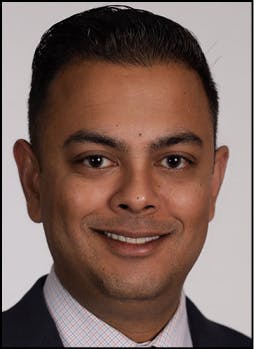

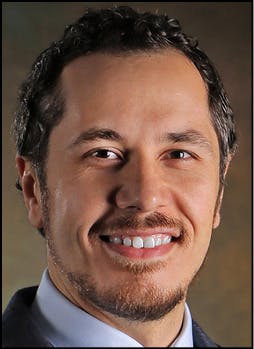
Whether you’re an interventional radiologist, interventional cardiologist, vascular surgeon, or vascular medicine specialist, interventional physicians often choose to be either a “jack-of-all-trades,” focusing on multiple areas, or a “master of one,” choosing one clinical focus. What do you think are the advantages and disadvantages of each path?
Dr. Desai: I have found that your career goes in a direction that is dictated not only by your interests and personality but also the needs of the moment and the needs of your practice. Do you want to be someone who can handle a wide variety of problems and situations, and is that what your practice needs? For example, this may be the case in a medium- or smaller-size community practice where you may be one of a few providers. Or, do you want to become proficient in a particular niche area, much like what I do in venous disease, for example? That is what was needed not only in my practice here in a large academic center but in vascular intervention as well.
So, it will depend on interests, career stage, the available resources (most importantly, time), and what kind of job you have. The clear benefit of being the expert is that you get to be highly proficient at a relatively narrow focus. If it is of interest, being that expert allows you to get involved in high-level research, potentially leading trials.
This is not to say that you can’t get involved in research if you have more than one focus, but the likelihood of leading those efforts is going to be somewhat lower. You can provide head-to-toe, high-quality care for patients no matter what they come in for, but perhaps being on the vanguard is less likely to be the case. I think the baseline advice I’d give to folks starting a career is to just be open-minded and consider what works for you in terms of work-life balance and professional growth.
Dr. Dua: Deciding what you want to focus on in your life should always be driven by your passion, but it is also important to be realistic. For example, if you work at a big academic center and are required to take call where you should be able to manage everything, it will not be possible logistically nor fair to your colleagues to say you only do one thing. There are certainly careers like that, and if you decide up front that you wish to focus on only one area, then the job you seek out should reflect that. The first step in making the decision is to ask yourself, “What do I want to do? What type of lifestyle do I want to live? What do I want to contribute?” You must be honest with yourself.
Sometimes we are so focused on doing the most hardcore job or skill that we forget it may not be what we actually want. It is okay to want to be home at 5 PM every day to be with your family, and it is also okay to say that you want to be the one the whole hospital calls day or night to take care of any problem they have. It is your choice, but again, you have to be honest with yourself. Once you decide on this aspect, you will then have a much better sense of the type of job you want. No job is perfect, and you have to take the good with the bad, so it is important that what you decide is where your passion lies. Personally, I am a “jack-of-all-trades” clinically and wanted to be known as someone who could do any procedure in vascular, but when it came to a research focus and diving in depth into a field, I chose peripheral artery disease (PAD). In other words, in this day and age, you can choose to focus on one thing in the education or research realm, while your clinical practice may look different, and that is okay.
Dr. Sayfo: Interventional physicians often face the choice of being a “jack-of-all-trades” or a “master of one,” and each approach has distinct advantages and drawbacks. A broad practice offers versatility, especially in community-based or rural areas; the ability to care for patients with overlapping conditions like PAD and venous disease; and resilience in practice in case a demand for one expertise is diminished. Additionally, some hospitals or groups may prefer to hire physicians skilled in a variety of cases, especially in community or resource-limited settings. However, spreading across multiple areas can limit depth of expertise and reduce efficiency, which causes procedures to take longer and makes it harder to build a focused research or academic profile.
On the other hand, specializing deeply in one niche allows physicians to develop mastery, achieve higher procedural volumes, improve efficiency, and gain recognition through research, innovation, and leadership, often positioning them as regional or national experts. Yet, a narrower scope may limit clinical opportunities, where a physician can only practice in certain environments (academic), flexibility is reduced, and physicians are left more vulnerable to market or guideline changes like reimbursement cuts and technology shifts. Ultimately, the right path depends on career goals and practice setting. Breadth tends to suit community practices, while depth is often rewarded in academic or referral-based environments. In addition, it might be more attractive for early career physicians to broaden their practice, while more senior practitioners narrow their focus and interest.
How did you decide which specific clinical focus was right for you?
Dr. Dua: I went with what I love doing, which is PAD. For me, it was driven in the end by the patients—I like taking care of someone who comes in with a serious problem, and after a little vascular magic, their wound heals, their leg is saved, and they are happy. This resulted in my gravitating to meetings where I could learn new techniques, which in turn resulted in my research questions being focused in this field. So, it was a very natural progression down this path.
That being said, I have always wanted to be someone who can clinically do everything (complex aortic, thoracic outlet syndrome, popliteal entrapment, venous, carotid, etc). I personally decided on vascular for the variety, and I wanted my case mix to be wildly different throughout the day. Luckily, I have managed to build exactly the type of practice I always wanted to do, with a niche focus on PAD but without giving up what comes on call and through clinic.
Dr. Sayfo: I was fortunate to train under some of the most talented physicians in the world during my time at Brown University, and that experience reinforced an important lesson: The right clinical focus often lies at the intersection of passion and skill. Early in my career, I made a point of staying open to different aspects of practice, but within my first 3 years, I began to notice a pressing and unmet need in endovascular therapy, particularly in the management of critical limb ischemia and both acute and chronic deep vein thrombosis. Far too many patients are still losing limbs in an era when advanced therapies exist, yet access and awareness often remain limited. This gap in care motivated me to dedicate myself to advancing my expertise in this field. By focusing on limb salvage and improving outcomes for patients with vascular disease, I found a clinical niche where I could not only apply my skills but also make a meaningful difference in patients’ lives. Over time, this has grown into both a professional passion and a mission—helping to expand access to advanced endovascular therapies and raising the standard of care for patients who might otherwise face life-altering consequences.
Dr. Desai: It can be any number of things: prior research, interest in an underdeveloped area, or even serendipity, as it was in my case. I suspect that will be the case for a lot of interventionalists you ask—you walk into something by accident and end up there. In my case, venous disease wasn’t even remotely on the horizon, and then a series of events took place, and I ran with it. I think this is probably true for a lot of my contemporaries; I don’t think people graduate knowing exactly what path they want to follow. They entered a practice, and there was a need for a certain patient population to be treated, they got really good at it, and then they become well-known in that clinical area.
At what point in training do you recommend picking a clinical focus, and why?
Dr. Sayfo: It’s natural to develop interests during fellowship, but I don’t think it’s necessary—or even advisable—to narrow your clinical focus too early. Training years are really the time to learn as broadly as possible and expose yourself to different techniques, patient populations, and practice models. That breadth provides the foundation you’ll need for whatever direction you ultimately take. In my view, the first 2 to 3 years of independent practice are when you begin to see where your passions align with your strengths. That’s the stage when you can identify not only the areas in which you excel but also where your unique skills and focus have the potential to drive meaningful improvements in patient care and advance the field. Choosing a clinical focus at that point allows you to build on a strong generalist background while positioning yourself for both impact and long-term fulfillment.
Dr. Desai: I don’t think you should pick a clinical focus beyond that initial subspecialty (interventional radiology, interventional cardiology, or vascular surgery) as a trainee. You don’t know enough, and frankly, you’re still training when you leave. You should do all the different types of cases you can do. After you’ve achieved some level of stability, it is easier to choose based on the combination of factors I noted previously: location, interest, temperament, and practice needs.
Dr. Dua: Training is not the time to pick a focus; training is the time to learn everything to the best of your ability, so you can contribute when you get a job. If you focus too early on a clinical niche, you may be forced into it even if you don’t necessarily want to do only that thing. Plus, the majority of what you learn comes in your first 5 years as an attending, where you really develop. I recommend learning absolutely everything, taking a job that allows you to explore and contribute to all facets of vascular, and then honing in on what gets you up in the morning, which will become obvious as you gain experience.
What advice would you share for those looking to gain experience in a specific area?
Dr. Dua: I would suggest you engage with mentors in the area and do a deep dive into what their world is like. Emulate them in terms of what meetings they attend, how they have set up their lives, and what extra training you may need to get to their level. In this fashion, you will get the true essence of what they do and see (1) if it is really for you and (2) what you need to do to supplement your training. For example, while at fellowship at Stanford, I did two mini trainings in Italy and in North Carolina with an interventional radiologist and cardiologist who were world-renowned limb salvage experts to supplement the great training I got in fellowship.
Dr. Desai: The best way to gain experience is make use of your local experts as a trainee. Then, you can see what the local politics are, the flow of patients, what the experts already do, what there is an additional need for, and what you are interested in. If a mentor needs additional resources and you’re the next junior person coming in, that’s the best-case scenario. If there isn’t an opportunity like this, start listening to talks, attending webinars and any educational experiences that are available on demand, and go to conferences. When you’ve decided on a focus, start building a practice, build your referral networks, understand who controls patient flow, and understand where the gaps are.
Dr. Sayfo: My advice is to begin by immersing yourself in the literature—read widely and stay current with the latest publications in your area of interest. Supplement that foundation with webinars, online videos, and other educational resources, and then take the next step by attending regional and national conferences, such as VIVA, SCAI, and VEINS. These meetings provide not only cutting-edge updates but also invaluable opportunities to network and learn from leaders in the field. Whenever possible, seek hands-on experience: Ask to be proctored, shadow experts within your institution, and take advantage of industry-supported training opportunities. Equally important is mentorship. Having a mentor during training is critical, but finding one who can guide you through your early career is just as valuable. Finally, continue to challenge yourself by committing to learn at least one new skill or procedure each year, focusing on those that will directly benefit your patients. This combination of self-directed learning, mentorship, and structured training experiences will allow you to grow steadily and meaningfully in your chosen focus.
What are the pros and cons of a career based more on performing cases versus one focused more on research? How do you find a balance between the two?
Dr. Sayfo: In today’s environment, it is challenging to pursue a career focused solely on research unless you are in a dedicated academic position. For most interventionalists, the more practical path is to build a strong clinical practice while also engaging in research initiatives. A career centered primarily on clinical work offers the advantage of direct patient impact, procedural expertise, and professional growth through experience. On the other hand, research provides opportunities to contribute to advancing the field, gain early exposure to new technologies, and diversify one’s professional life beyond the day-to-day demands of clinical medicine. Many also find research and academic writing deeply fulfilling, as it allows them to leave a lasting mark on the specialty. Ultimately, the balance depends on where your passion lies. For some, research complements clinical practice by broadening perspective and breaking up routine, while for others, clinical care itself is the most rewarding focus. Striking the right mix is about aligning your strengths, interests, and practice setting to create a career that is both impactful and personally meaningful.
Dr. Desai: You need to really understand what you love. I love taking care of patients, but I also love being a part of what’s next. So, I've found something that works for me where I can do both. This is really going to be a personal decision based on what’s driving you.
Dr. Dua: Research requires idle time to sit and think. In 2025, being research-heavy typically means you need to identify external funding that can support your salary to some extent so you can focus on your research, which can be challenging but very rewarding as you push the field forward. Research comes in many different types these days, including clinical research with new device trials, which is common in vascular surgery. A career fully focused on clinical work is highly rewarding and allows you to commit fully to your patients; however, on the con side, my colleagues doing only clinical work often tell me that there are hospital and administration overlords in academic centers who do not value the work they do because they are perceived as a “cog in a wheel,” whereas my colleagues in private practice say the opposite. (Research can be undervalued by the same overlords, as they just want the staff to “churn and burn” through cases.) In the end, it all comes down to what you want as an individual. The biggest jump from training to being an attending is that you get to finally decide what makes you happy.
As a vascular surgeon, what advice can you offer for new vascular surgeons on ensuring they develop and maintain strong open skills while also attaining expertise in endovascular approaches?
Dr. Dua: My biggest piece of advice is do not stop learning. Keep taking courses, keep putting on challenging cases, and don’t pigeonhole yourself early. Just because you didn’t do it in fellowship doesn’t mean you can’t do it. It just means you have to learn, which is totally fine and actually what makes it exciting!
Disclosures
Dr. Desai: Speaker’s bureau/consulting for Cook Medical, Boston Scientific, Becton Dickinson, Medtronic, Penumbra, Tactile Medical, and Philips; consultant to W.L. Gore, Asahi Intecc, enVVeno, Varian, Terumo, and Veryan.
Dr. Dua: None.
Dr. Sayfo: None.
Advertisement
Advertisement
Find more Early Career Insights
Read more career reflections and practical advice for residents, fellows, and early career physicians in the Early Career Insights hub.
Read More