Early Career Insights
Advertisement
Advertisement
Early Career Insights Part 2
First Case Dos and Don’ts
Experts share advice for junior colleagues before their first case, including basic keys to success and pitfall avoidance, what to watch for when observing a case, and questions to ask and when to ask them.
With Pavan K. Kavali, MD; Danielle Sutzko, MD, MS; and Trisha Roy, MD
DEEP VEIN THROMBOSIS

Performing your first deep vein thrombosis (DVT) intervention is an exciting milestone in your interventional training. It is also a moment that can be intimidating given the complexity, potential complications, and patient impact of these procedures. With nearly a decade of experience in mentoring trainees through these cases, I have found that preparation, humility, and longitudinal follow-up are the keys to success. Here are some practical considerations I routinely share with my junior faculty and trainees approaching their first case in practice in the real world.
Do: Mise En Place—Prepare Beyond the Procedure
Mise en place refers to the culinary practice of preparing and organizing all ingredients and tools before one begins cooking. Similarly, success in the interventional space begins well before you enter the procedure room. Review the patient’s imaging and clinical context thoroughly and gather all the information you can before you even see the patient in clinic. Ask yourself: What is the chronicity of the thrombus? What are the patient’s bleeding risks? Does this patient truly benefit from intervention? Know the risks and benefits of each approach of treatment whether it be catheter-directed thrombolytic (CDL) therapy or mechanical thrombectomy (MT). Lastly, discuss these in detail with the patient so they are aware of all the possibilities before even going into the room.
Don’t: Ignore the Basics
Gaining venous access may seem routine, but poor (choice of) access can compromise the entire case. Plan your access based on clot burden and anatomic considerations. Ultrasound guidance should be nonnegotiable; blind sticks are a setup for hematoma, arterial puncture, or delay and may even open you up for liability in the event of a poor outcome. Always confirm your wire position within the vein fluoroscopically before upsizing to a larger sheath, regardless of performing CDL or MT.
Do: Know Your Venous Anatomy and Tools
Take the time to understand the anatomy, inflow and outflow, and presence of collaterals. A common early pitfall is underestimating the importance of a robust inflow vessel. Along the same vein (pun intended), incomplete treatment of outflow obstruction, particularly at the iliocaval level from May-Thurner syndrome, can set you up for early failure or recurrence.
Additionally, appropriate device selection is a major contributor to the success (or failure) of a DVT case. When you choose a device, know its mechanism (eg, aspiration, mechanical disruption, rotating element, coring elements, baskets), its limitations (eg, clot length, vessel diameter, likelihood of distal embolization), and what to do if it doesn’t fully clear clot (eg, adjunctive lysis, multiple passes, staged strategy). In your first few cases, stick to devices you and your mentors are comfortable with—and make sure backup plans are at hand (eg, a smaller catheter, different wire, switch to lytic).
Utilize intravascular ultrasound (IVUS) if it is available to you. IVUS is increasingly recognized as a critical adjunct in DVT interventions, especially for identifying residual thrombus, evaluating iliocaval compression, and guiding stent deployment.
Don’t: Be Afraid to Ask Questions
It is better to ask a “basic” question than to make an avoidable mistake. If you’re unsure about access or choice of therapy—whether related to venous access of the internal jugular versus popliteal vein or CDL versus MT, ask your attending or senior faculty. I have been the beneficiary of having great mentors that would routinely guide me through my cases, especially early on. Humility or willingness to ask for help shows maturity, not weakness.
Do: Anticipate and Prevent Complications
Bleeding, pulmonary embolism (PE) during intervention, and iatrogenic injuries including inferior vena cava perforation are real risks. Communicate clearly with anesthesia and nursing to avoid any delays in identifying complications. Keep a resuscitation plan in mind, including the availability of filters, stents/stent grafts, or balloon occlusion if needed.
Don’t: Focus Only on the Technical
DVT intervention is not just a technical exercise, it is a patient-centered therapy. Explain the procedure to the patient and family in a way they understand—before and after the procedure. Document clearly. Engage your local multidisciplinary team for postprocedural care, anticoagulation strategy, and follow-up. Your role doesn’t end when the sheath comes out. I routinely see my patients in clinic 1 month out from the procedure, and then subsequently at 3-, 6-, and 12-month intervals.
Closing Thoughts
Your first DVT case should not be about proving independence; it should be about building a foundation of safe, effective habits. Stay humble, stay curious, and remember that every case is both a learning opportunity and a patient entrusting you with their health. Excellence comes not from flashy/slick maneuvers that can be posted to your favorite social media site but from disciplined attention to detail.
AORTIC INTERVENTION

It is finally here, your first elective aortic case. You think to yourself, “Ok, I have done 5 to 10 years of surgical training for this, so why am I so nervous!?” Well, I am here to tell you that we have all been there, and it is totally normal to be nervous. Take a deep breath and realize that you were trained well, and you can do this! Here are some first case dos and don’ts.
Do: Take a Deep Breath
This is what you have trained for, and you can do it! You are not alone; we have all been in your shoes.
Don’t: Bite off More Than You Can Chew
Pick a straightforward case, follow the indications for use, and stick to the “board answer.” You don’t want your first case to be an off-label adventure.
Do: Prepare
Remember to review for the case, including the patient’s specific anatomy and all device specifics. Discuss pertinent details with your partners if complicated, and don’t forget to review the case with the device representatives who will be helping you with the case.
Do: Load the Boat
Be humble and ask for a partner’s opinion or backup. For your first few aortic cases, it is also a good idea to know where your partners are and tell them what case you will be doing. Be open-minded to device representative suggestions. Remember that they have done way more of these cases than you, but don’t ever forget that at the end of the day, this is your patient—not theirs.
Do: Know Your Team
You may be new, but make sure to get to know the team that will be helping you. This will make you and them more comfortable. This is also a plus because they will start to learn your preferences and have any special equipment ready to go the day of the case!
Do: Say Thank You!
This may sound obvious, but when you are nervous you may forget. Thank you goes a long way—to your team, partners, and representatives. They will appreciate it, and it will make them excited to help you on your next case.
Do: Learn From the Case
Ultimately, if there was anything that didn’t go exactly how you had planned, learn from this and adapt. You can apply these pearls to the next case you do. If you do this every time, you will become a better surgeon for your patients.
LOWER EXTREMITY INTERVENTION

Your first lower extremity case won’t look like the polished angiograms on conference slides. It won’t follow the algorithm you studied. More often, it will feel messy, unpredictable, and humbling.
I still remember mine: brand new on staff, standing at the hybrid operating room table, trying to look composed while every move felt magnified. What I wish I had then wasn’t another flow chart. It was the handful of lessons people rarely say out loud but everyone learns the hard way.
These aren’t universal truths. In lower extremity interventions, every operator has their own style. But, these are the tips I wish I’d known before my very first femoral puncture as the attending.
Do: Be There From the Beginning
Show up early. Be part of the setup. Pull your anticipated devices (but don’t open them, you’ll jinx yourself!). And yes, tape up the pannus, it’s an underrated art form that can make or break antegrade access.
Do: Treat Access Like It’s Life or Death—Because It Is
Access isn’t just technical; it can be deadly. I triple check:
- Ultrasound: See the needle in the vessel, not just tenting tissue.
- X-ray: Use a micropuncture needle and wire, take an x-ray, and confirm you’re over the femoral head.
- Angiogram: Puff a sheath shot, make sure you’re below the inferior epigastric and above the femoral bifurcation.
If you’re unsure, take an orthogonal view. If you’re still unsure, pull out, hold pressure, and start again.
Do: Feel the Case—Don’t Just Watch It
Your hands will tell you things the screen doesn’t: the resistance crossing the bifurcation and the subtle give of true lumen versus subintimal planes. Don’t just push the wire: Torque it, wiggle it, listen. Every movement is feedback.
Don’t: Trust the “Gold Standard”—Angio Lies
“One view is no view.” What looks open in one projection may be a tight stenosis in another. Hibernating vessels exist: Inject, wait, or probe with a wire, and you may find a lumen. Don’t let the angiogram trick you into undersizing balloons, stents, or other devices. Use intravascular imaging or cross-sectional imaging when possible.
Do: Show Me the Foot
Never skip foot shots, before and after. They’re the only way to know if poor runoff was the patient’s baseline or something you just caused. After you’re done, mag up on the foot and look for wound blush. If you don’t see blush at the wound base, the chances of healing are slim.
Do: Remember That the Cath Lab Warps Time
Ten minutes crossing a lesion feels like 10 seconds; 3 minutes inflating a balloon feels like 3 hours. Use timers to keep yourself honest and on track.
- Balloons: Inflate slow, hold 3 minutes, deflate slow.
- Crossing: If no progress in 5 minutes, switch strategy.
- Hemostasis: Hold longer than you think.
- Overall case: Know when to stop and come back.
Do: Watch the Flow, Not Just the Lesion
A vessel may look wide open after your intervention but still show a step-change in velocity or sluggish outflow. That’s not a victory—it may be a problem you have just created! Watch the flow carefully before and after you intervene.
Do: Draw a Diagram
Even if you’re not an artist, make a drawing of your case (Figure 1). Note access, devices, and decisions. Because with lower extremity interventions, you’ll be back. A 30-second doodle now saves a lot of confusion later. A bad drawing beats the best memory.
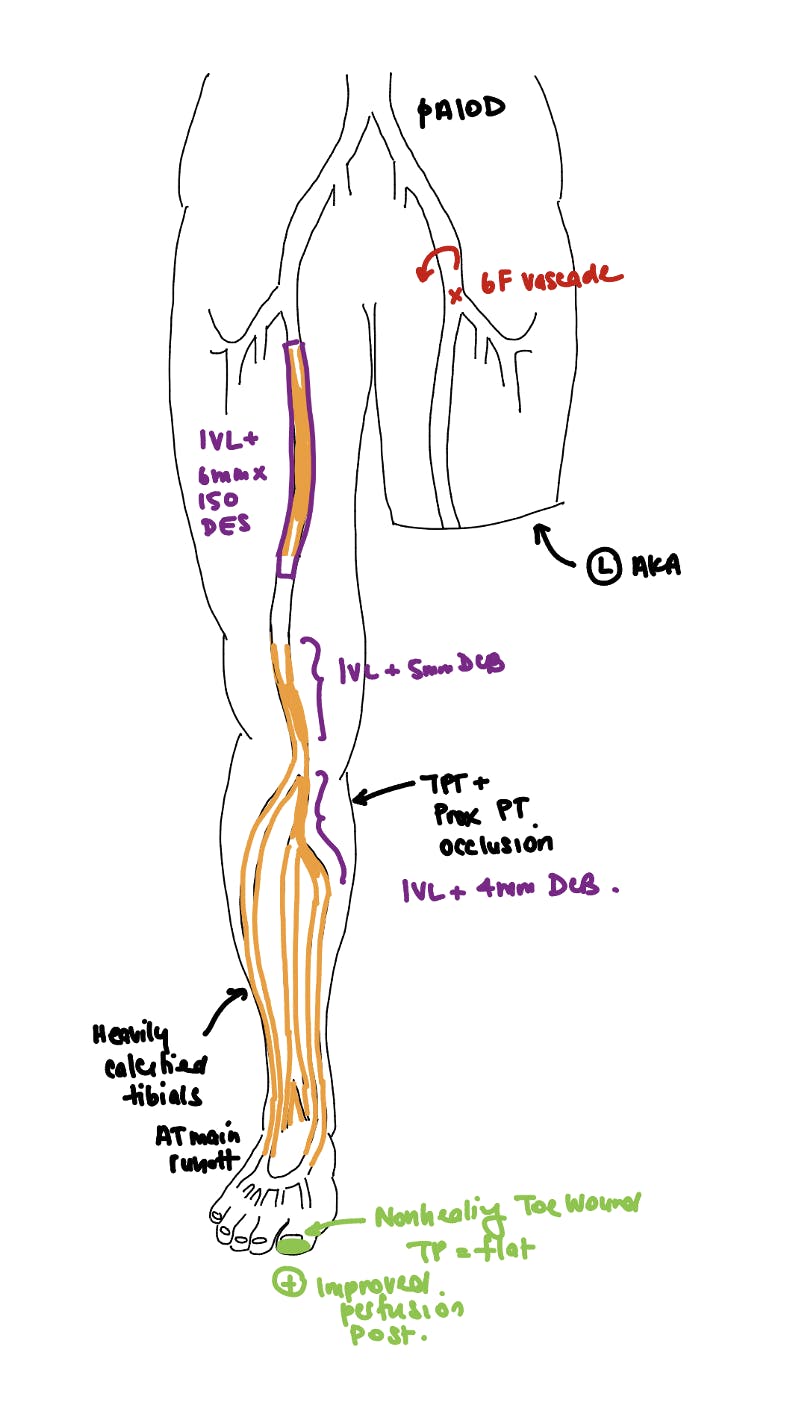
Figure 1. Sample diagram for case preplanning.
Do: Remember, Everything Before and After Matters
Lower extremity interventions are still the Wild West; no two operators agree on preoperative workup, imaging, anticoagulation, follow-up, or wound care regimens. Pay attention to these choices. Ask your attendings why they do what they do. When you’re on your own, these decisions will be harder to master than the procedure itself.
Your first case won’t be perfect. Just prepare, keep it safe, draw it out, and do better each time!
Advertisement
Advertisement
Find more Early Career Insights
Read more career reflections and practical advice for residents, fellows, and early career physicians in the Early Career Insights hub.
Read More