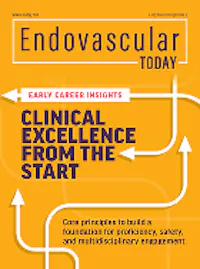
Early Career Insights
Advertisement
Advertisement
Early Career Insights Part 2
Joining a Multidisciplinary Network—It’s Never Too Early
Insights from PERT/DVT, limb salvage, and aortic team members on effective networking that lasts longer than the launch meeting.
With Daniel Troha, MD, FACEP; Aditya M. Sharma, MD, FSVM, RPVI; Yulanka Castro, MD; Omar Sheikh, MD; and Nathan L. Liang, MD, MS, FACS, FSVS
PERT AND DVT TEAMS

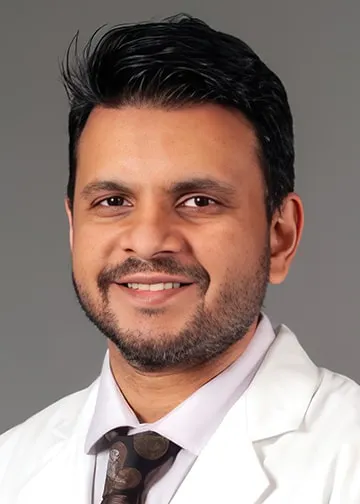
Early in your career, the most powerful thing you can do beyond your clinical training is to join a multidisciplinary network. Whether it’s a pulmonary embolism response team (PERT), a deep vein thrombosis (DVT) team, or any other collaborative initiative, these teams shape not only how patients receive care but also how you grow as a clinician, collaborator, and leader. Multidisciplinary networks accelerate your learning and, more importantly, improve patient outcomes. You don’t need a formal role or title to contribute; you need curiosity, reliability, and, along the way, the ability to connect with people who rarely have time to talk.
In today’s landscape, no single specialty can provide comprehensive care for patients with venous thromboembolic disease. The most successful programs are those that bring several specialties together to share responsibility and perspective. As a trainee or early career physician, stepping into this environment gives you an invaluable front-row seat to how real-world decisions are made: when to intervene, when to observe, how to align care with guidelines, and how to navigate system-level challenges.
But joining a network isn’t just about showing up to meetings; it’s about active, sustained engagement. Begin with earning trust by being responsive and volunteering for roles. Whether your role is large or small, what matters is choosing something that allows you to make an impact or learn along the way. Attend discussions with curiosity. These early experiences expose you to diverse viewpoints and sharpen your clinical judgment far beyond what a textbook or single specialty rotation can offer.
Equally important, multidisciplinary teams build relationships that last. These are the colleagues who will one day become your collaborators, mentors, and referral partners. In a field as dynamic as vascular medicine, where new technologies and treatment paradigms evolve rapidly, a trusted network becomes your compass for lifelong learning. A quick conversation with a specialist outside your area of expertise can often clarify a management dilemma better than hours of literature search.
For residents and fellows, joining a PERT or DVT team early cultivates confidence, teamwork experience, and leadership. You see firsthand how structure, coordination, and data-driven quality improvement transform patient outcomes. You learn how to communicate across disciplines, advocate for patients, and appreciate the impact of collaboration. These are the same skills that later define successful program builders and clinical leaders. Always remember that excellence in medicine is a team achievement, never an individual one. Working in teams reinforces valuable traits—humility, listening, adaptability, and respect for others’ expertise—characteristics that define a long and fruitful career.
Join early, be reliable, stay humble, and keep learning. That is how you turn a launch into a durable PERT or DVT program, and how you build a long, fulfilling, and successful career.
LIMB SALVAGE TEAMS

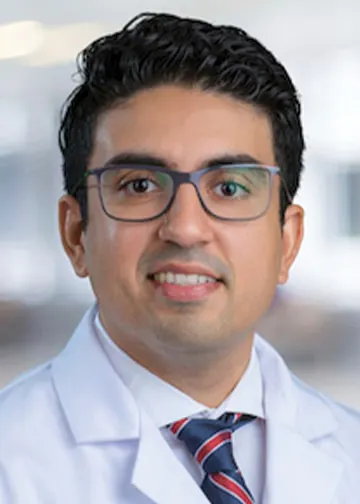
Chronic limb-threatening ischemia (CLTI), the most severe form of peripheral artery disease (PAD), carries significant morbidity and mortality, with reported amputation and mortality rates of up to 30% to 40% at 1 year.1 CLTI is a complex condition that requires a multidisciplinary team approach to address risk factor management, revascularization, and optimal wound care. Multiple providers are often involved in addressing the different aspects of care necessary to reduce cardiovascular and limb-related morbidity in CLTI.2 Many institutions have developed limb salvage programs given the need for coordination along the multiple facets of care of CLTI patients.3 Limb salvage programs will look different in every institution according to the organization type, providers involved, and administrative support. These programs can streamline care of CLTI patients by providing prompt vascular assessment and revascularization, offering concomitant wound and podiatric care, and ensuring increase surveillance after revascularization. 3
As a vascular provider, understanding the dynamics of the practice and of the stakeholders involved is key for success. Learn and study the institution structure, the providers, the resources available, and the needs of the community. Limb salvage programs will be different in every practice, and gaining an understanding early on of what resources are available in terms of testing, procedures, and administrative support will help you start on the right track.
Meet the providers and stakeholders who care for CLTI patients and make yourself available to them. Get to know all the members—including vascular surgery, interventional cardiology, interventional radiology, podiatry, wound care providers, internists, and endocrinologists, as well as the administrators, nurses, medical assistants, and social workers who will also interact with patients with PAD/CLTI.
Another very helpful task for those starting out in a new practice is community outreach. This can be done in many ways depending on the community and practice setup. PAD is still largely underdiagnosed and undertreated; therefore, raising awareness is a major necessity. Educating the community on PAD signs and symptoms, foot care, and amputation prevention are relevant topics for vulnerable communities. Participating in community meetings, providing educational talks, or administering vascular screenings to high-risk populations are different ways to engage with the community. Similarly, raising awareness about PAD and limb salvage to the first-line providers will help improve patient care and your involvement. This includes direct engagement with internists, emergency room physicians, and wound care specialists. This engagement can involve introducing yourself, the type of conditions you treat, and your expertise.
The next step is to further engage with the members of the limb salvage team. An open line of communication with your podiatry and wound care colleagues, where you can provide updates on the intervention results and they can provide updates on the wound progress, is invaluable. Also, identify a senior colleague, whether within or outside your institution, who can help you navigate clinical and, possibly more important, logistical and institutional challenges. Careful case selection is often overlooked, and at times, you may feel pressured to prove yourself as a junior partner by taking on high-risk cases. If there is a particularly high-risk case that you believe is suitable to your skill set, consider having your senior partners scrub the case with you for support. Furthermore, participating or helping set up engagement meetings has a lot of value, from limb salvage meetings and quality meetings to outreach dinners and so forth.
In summary, as an early career physician, joining a limb salvage team can provide immense satisfaction and purpose to your career. But limb salvage takes a village, and as the potentially new member of that village, making sure you understand the lay of the land and that you integrate as a valuable team member will be some of your main tasks at hand.
1. Abu Dabrh AM, Steffen MW, Undavalli C, et al. The natural history of untreated severe or critical limb ischemia. J Vasc Surg. 2015;62:1642-51.e3. doi: 10.1016/j.jvs.2015.07.065
2. Armstrong EJ, Alam S, Henao S, et al. Multidisciplinary care for critical limb ischemia: current gaps and opportunities for improvement. J Endovasc Ther. 2019;26:199-212. doi: 10.1177/1526602819826593
3. Castro-Dominguez Y, Shishehbor MH. Team-based care in patients with chronic limb-threatening ischemia. Curr Cardiol Rep. 2022;24:217-223. doi: 10.1007/s11886-022-01643-2
AORTIC TEAMS
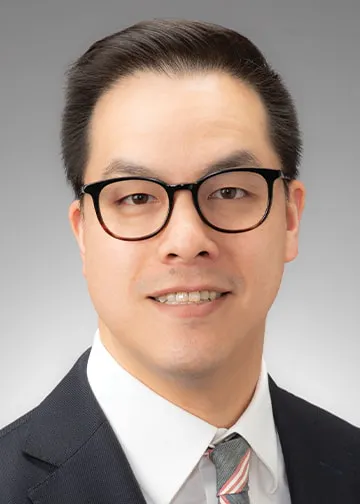
Aortic surgery, both endovascular and open, has evolved to be highly multidisciplinary. A large component of care is provided by nonsurgeons/interventionalists, such as anesthesiologists and critical care physicians, and joining an existing team poses different challenges than building one from scratch. I’ve learned several things during the early part of my career, both from experience and from observing colleagues going through similar struggles and successes.
1. The system is mainly about the people. In any highly multidisciplinary environment, getting to know and understand the people you’ll be working with is key. Get to know your fellow physicians, as well as the ancillary staff who have influence. Understand their personalities and goals. Similarly, getting to know how patients move through the system is critical. There can oftentimes be unwritten rules or processes that accompany official procedures, or sometimes there may be no official procedures at all. Learning these processes can take time and patience.
2. Learn from everyone. Although this is more obvious in a place where senior physicians can act as mentors, it applies in all situations. Interactions with peers, junior attendings, trainees, and staff can all be incredibly helpful in solidifying your personal approach to both patient care and team building.
3. Find a supporter. I encourage my graduating trainees who are considering joining an aortic center to make sure that they identify supporters who can back them up. Typically, this comes in the form of a senior partner can mentor and assist in decision-making but also has the experience and credibility to absorb any complications that occur.
4. Handle complications well. Complications will happen—it’s how you respond to them that makes a difference. Taking responsibility for and being transparent about complications and recognizing opportunities for improvement is critical for building credibility with other members of the team.
5. Conflicts also happen. Personalities will inevitably clash. Choosing how you respond to conflict can have a significant impact on long-term success. Navigating these situations can be tricky for young attendings seeking to strike a balance between assertiveness and deference. It is ideal to avoid a significant amount of confrontation, but if needed, identify specific things that you are willing to take a stand on and try as hard as possible to be respectful yet firm in your beliefs.
6. Success is a long game. Much of the mid- and long-term success you will encounter is built on foundations established early in your tenure. Establish relationships early, both for collaboration and support. Identify and continue to build on systems for program growth. Minimize early complications and conflicts.
Functioning well within a multidisciplinary aortic team as a junior attending can be challenging and stressful but ultimately fulfilling. The challenges will be vastly different from one program to another, and a lot of patience is often required to succeed. In the end, the goal is to take good care of the patient and do so in a systematic and consistent way.
Advertisement
Advertisement
Find more Early Career Insights
Read more career reflections and practical advice for residents, fellows, and early career physicians in the Early Career Insights hub.
Read More