Advertisement
Advertisement
May 2025
Establishing a CLTI Center of Excellence
Dr. Mehdi Shishehbor discusses the primary goals of the Lorraine and Bill Dodero Limb Preservation Center and its care models; essential components of a center of excellence, including team members, educational and support initiatives for patients and providers, and training; and advice for starting a CLTI center from the ground up.
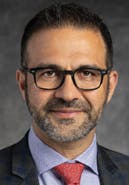
In February, it was announced that the Lorraine and Bill Dodero Limb Preservation Center at University Hospitals (UH) Harrington Heart & Vascular Institute would be established with $5 million in funding from the Doderos. What will be the primary goals of this dedicated center?
The goal is to revolutionize the care of patients with peripheral artery disease (PAD), diabetes mellitus, and chronic limb-threatening ischemia (CLTI). We will implement strategies to prevent and reduce major amputations locally, nationally, and globally.
How will care at your center augment that which is provided in the UH setting? How will care at the new center be unique, and how will the locations and models complement each other?
Despite having a renowned and established limb preservation program, we continue to find many gaps that we hope this center will fill. As we know, CLTI patients are frequently smokers and often have diabetes, chronic kidney disease, and multiple other comorbidities. Every hospital in the United States treats these conditions, but very few offer treatment collectively and in coordination. That is why, in study after study, we see PAD and CLTI patients undertreated. Five years ago, we created the Center for Integrated and Novel Approaches in Vascular-Metabolic Disease (CINEMA) program at UH Harrington Heart & Vascular Institute. The center focuses on managing overlapping diabetes, heart, and kidney disease issues. This unique cardiometabolic program involving physicians, nurses, certified diabetes educators, and pharmacists encompasses cardiology, nephrology, endocrinology, and advanced imaging. We are now going to bring these two centers together (CINEMA-CLTI) and invest in dedicated coordinators and providers with expertise in CLTI and vascular-metabolic diseases. We are also going to invest in additional care coordinators to support wound care, appropriate prosthetics, and lifestyle changes.
As you know, research, innovation, and education are also part of any center of excellence. We will invest in novel therapies and create appropriate incubators for new technologies and approaches to prevent amputation. Additionally, we have committed over $300,000 annually to train three endovascular fellows to become experts in vascular medicine, endovascular intervention, and CLTI diagnosis and treatment.
What are the key staffing positions needed at a CLTI center of excellence?
A center usually will require a director and several CLTI coordinators. The number of coordinators is dependent on the center's size. We also recommend a navigator that supports scheduling and care coordination with a CLTI coordinating team, and ideally, a multidisciplinary team of providers, including physicians, advanced practice providers, and nurses. For our CLTI center, this is all complemented by staff from the CINEMA program who support nutrition, diabetes, renal, and cardiac care. With new support from Lorraine and Bill Dodero, we also want to bring in social services and other offerings to support the care of these patients at risk for major amputation.
At your center, will the operators be primarily from interventional cardiology, or will other specialties be involved?
We have consistently advocated for a multidisciplinary team of vascular medicine, vascular surgery, interventional cardiology and radiology, podiatry, wound care, and now we are adding CINEMA, which is very novel. When patients come to see us, we are going to address the wound, revascularization options, and risk factor optimization and coordinate their care.
What are the necessities for imaging capabilities in a dedicated CLTI center?
A very strong vascular lab goes without saying. We rely heavily on duplex ultrasound and perfusion assessment (ankle-brachial and toe-brachial indices). Additional imaging is conducted on a selective basis with CTA or MRA.
What screening and community education initiatives do you see the center leading in Cleveland?
This is very important. Unfortunately, many patients with CLTI don’t ask for a second opinion and don’t have the resources to get help. We also all know about the disparities related to amputations in our communities. In my opinion, a major step in addressing these issues is community work and education. As a result, we created the Harrington Heart and Vascular Institute Community Center, and the Lorraine and Bill Dodero Center will work with our community team to conduct screening, outreach, and lectures. We also have a comprehensive bimonthly educational program for providers that includes case-based discussion. Lastly, we work with the local podiatry school and independent physicians to address CLTI and preserve limbs.
How will the center guarantee the longitudinal needs of this population are met, especially follow-up?
As previously noted, in collaboration with CINEMA, local podiatry colleagues, and other colleagues, we provide a care continuum. Even if the ulcers and wounds have healed, these patients need significant attention because of risk factors such as diabetes, obesity, smoking, heart disease, and venous insufficiency.
What role can a specialized CLTI center play in education and training on a national and international level?
Our aim is to train the next generation of CLTI experts. We have already committed to starting an international CLTI conference here in Cleveland. Our goal is to bring world experts to our center to learn, share, and push the boundaries of limb salvage. Lastly, we will continue developing live courses and technical courses to elevate CLTI care nationally.
With the generous $5 million funding of this center, your team will have a strong start to its mission. What tips or advice do you have for those interested in starting a CLTI facility from the ground up who may not have access to grant funding?
If you’ve ever saved a leg, you know the feeling. Yes, resources are extremely important and essential, but without passion and purpose, little can be achieved. The first step is to find like-minded people who are interested in saving limbs, want to work in interdisciplinary teams, and are committed to a patient-centric approach. Once you have the team, you just keep adding the resources as they become available.
Advertisement
Advertisement