Advertisement
Advertisement
May 2025
Sponsored by Vesalio
pVasc™ Thrombectomy System: A Simple and Elegant Solution for Thromboembolic Disease
pVasc offers the lowest-profile 0.035-inch catheter–compatible delivery to remove diverse clot morphologies from the peripheral arterial vasculature.
Acute limb ischemia (ALI) is a severe limb-threatening condition. The most common causes include a local thrombotic event from a preexisting plaque or an embolus from a proximal source such as the heart. ALI requires prompt diagnosis and treatment due to a high risk of limb loss (15%-20%) and mortality (15%-20%).1,2
Treatment of ALI includes percutaneous interventions such as catheter-directed thrombolysis, thromboaspiration, pharmacomechanical thrombectomy, and mechanical thrombectomy, in addition to traditional surgical interventions. Given the urgent nature of ALI, there are important considerations in selecting the appropriate treatment modality, including time to reperfusion, location of the lesion, and the frequent need to treat small tibial vessels.
The pVasc Thrombectomy System (Vesalio, Inc.) offers a simple and effective percutaneous mechanical solution for removing thromboembolus from vessels ranging 2 to 6 mm in diameter (Figure 1). Comprised of a self-expanding nitinol structure mounted on a 200-cm pusher wire, pVasc’s low-profile design allows delivery through a 0.035-inch wire–compatible catheter,* providing exceptional navigation to distal arteries.
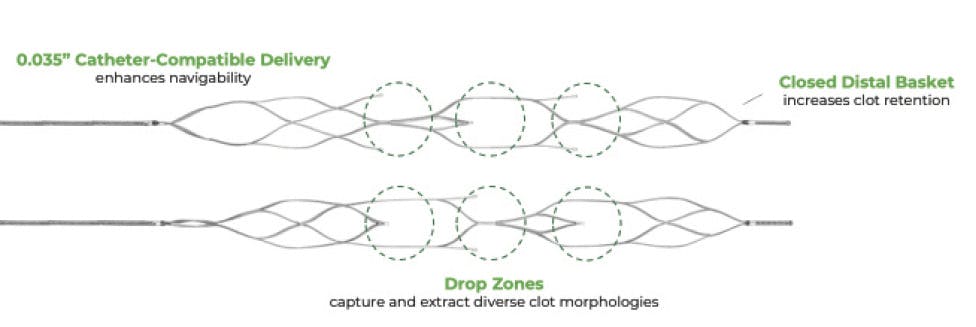
Figure 1. pVasc key features and benefits.
pVasc features a streamlined, intuitive design that enables easy handling to minimize device manipulation for efficient delivery and clot retrieval with minimal blood loss. It is engineered with proprietary Drop Zone™ technology (Vesalio, Inc.) to trap and retain thromboembolus inside the device’s lumen for secure clot removal. Combined with a closed distal basket, pVasc is designed to address diverse clot morphologies and organized emboli while minimizing the risk of clot migration (Figure 2). There is no capital equipment involved.
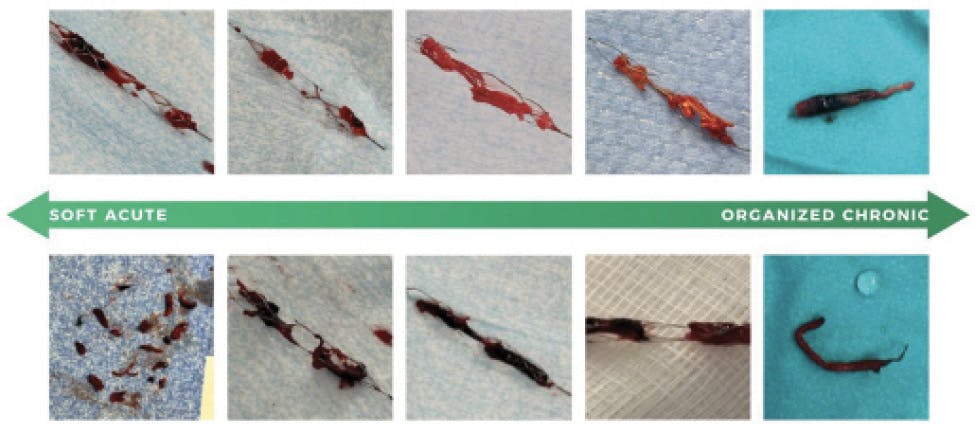
Figure 2. Diverse clot morphologies captured by pVasc.
CASE REPORT
Case Presentation
A woman in her late 70s presented with acute left lower extremity ischemia due to popliteal artery occlusion from embolization.
After contralateral access was achieved, a 7-F, 90-cm sheath was introduced into the proximal left popliteal artery. An initial angiogram revealed complete occlusion of the popliteal artery as well as the proximal tibial arteries with reconstitution (Figure 3).
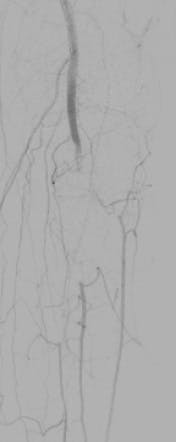
Figure 3. Initial angiogram.
Procedural Overview
A 6-mm pVasc device was delivered through a 0.035-inch CXI catheter (Cook Medical) into each of the three tibial vessels for clot removal.
In each pass, the CXI catheter was introduced into the tibial vessel over a wire and placed distal to the clot such that each Drop Zone was fully utilized to maximize clot capture. Next, pVasc was advanced into the catheter until its tip reached the distal end of the catheter without exiting it. pVasc was deployed by retracting the catheter until the device was fully exposed. With pVasc deployed and firmly in place, the catheter was then completely removed before withdrawing the device slowly into the sheath. The sheath valve was removed before pVasc exited the sheath. After pVasc was completely removed, the sheath valve was then flushed and reinserted to perform follow-up angiography. Finally, the device was cleaned on the back table. These steps were repeated in the next vessel.
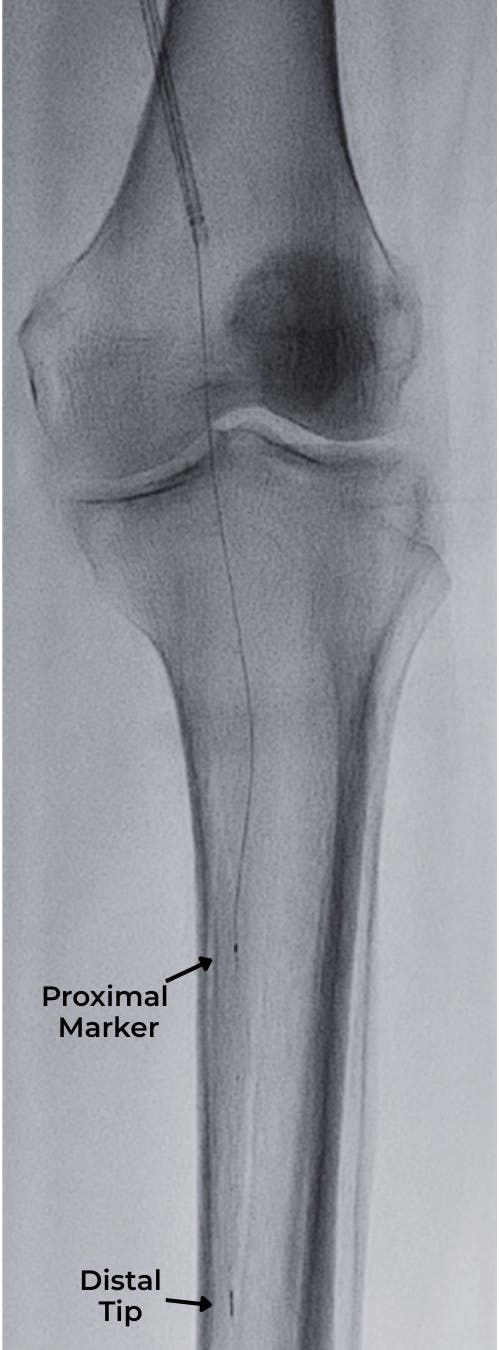
Figure 4. pVasc deployed in the peroneal artery.
We began with pVasc in the peroneal artery (Figure 4), followed by the anterior tibial artery (ATA) (Figure 5), and finally the posterior tibial artery (PTA) (Figure 6). Although not used in this case, a 0.014-inch wire can be maintained alongside the 0.035-inch CXI catheter as a buddy wire to facilitate reaccess.
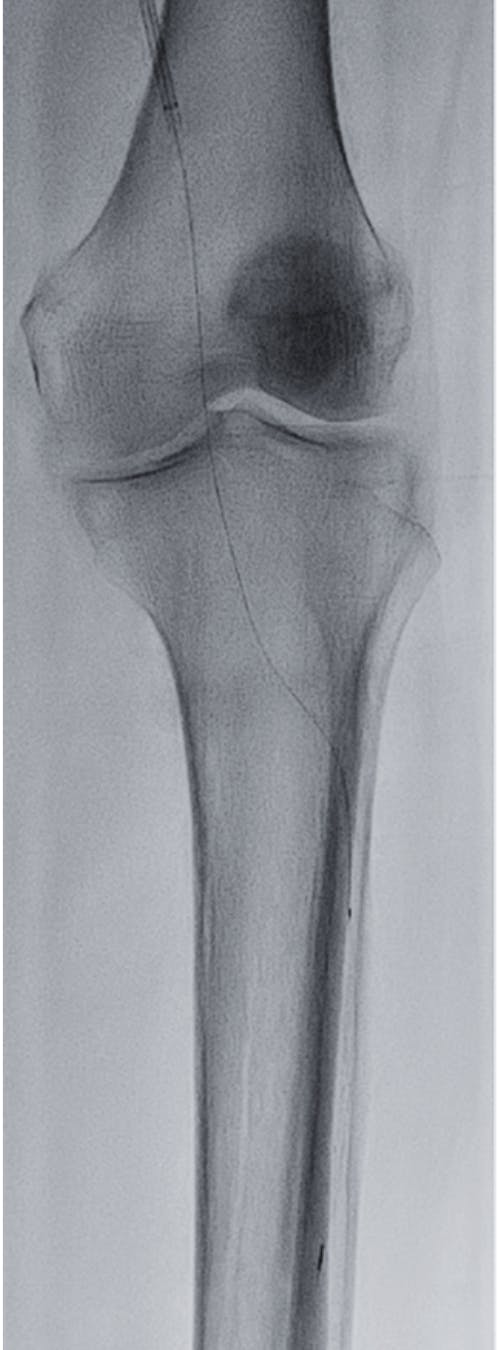
Figure 5. pVasc deployed in the ATA.
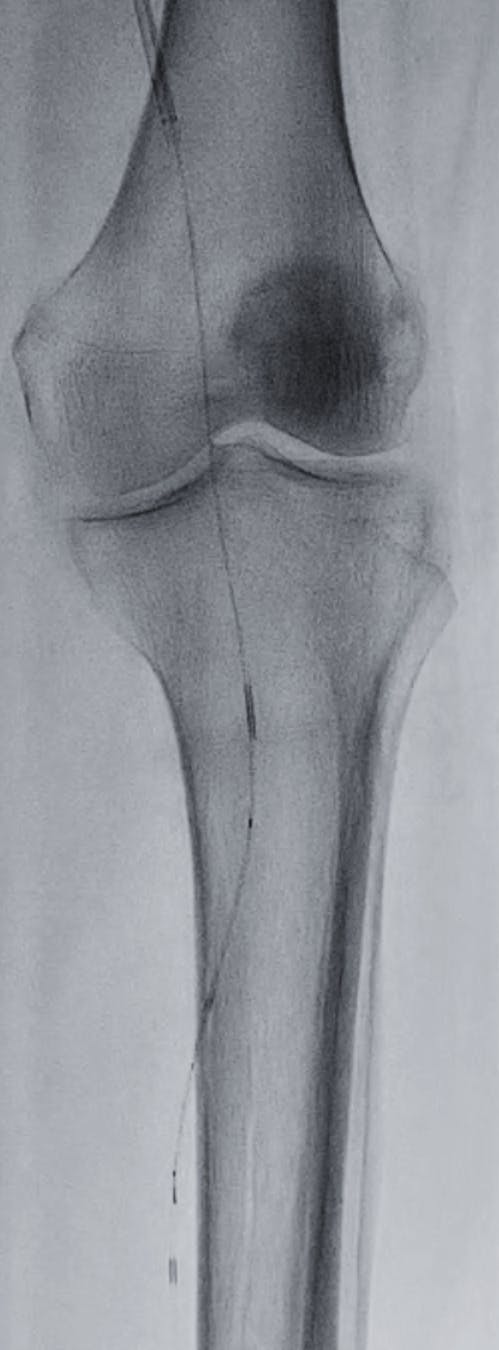
Figure 6. pVasc delivered through 0.035-inch catheter into the PTA.
pVasc easily navigated into each vessel and successfully removed clot with each pass. The device took the curve of the ATA very easily and withdrew smoothly without any issues.
Case Conclusion
Complete flow restoration was achieved (Figure 7) with three-vessel runoff all the way to the foot in < 60-minute total procedure time from skin to skin. Pulses were present in the dorsalis pedis artery and PTA post-intervention. Total blood loss was about 20 mL.
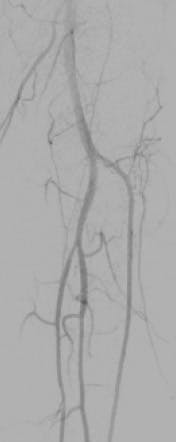
Figure 7. Final angiogram.
CONCLUSION
Since its release in the fall of 2024, the pVasc Thrombectomy System has been used successfully to retrieve thromboembolus of varying composition with its proprietary Drop Zone™ technology. Early feedback highlights pVasc’s low-profile design, which provides exceptional navigability through a 0.035-inch catheter for traversing stenotic vessels and working in distal arteries. Along with the device’s easy handling and simple setup, pVasc offers a powerful, streamlined thrombectomy solution to answer the challenges in ALI treatment.
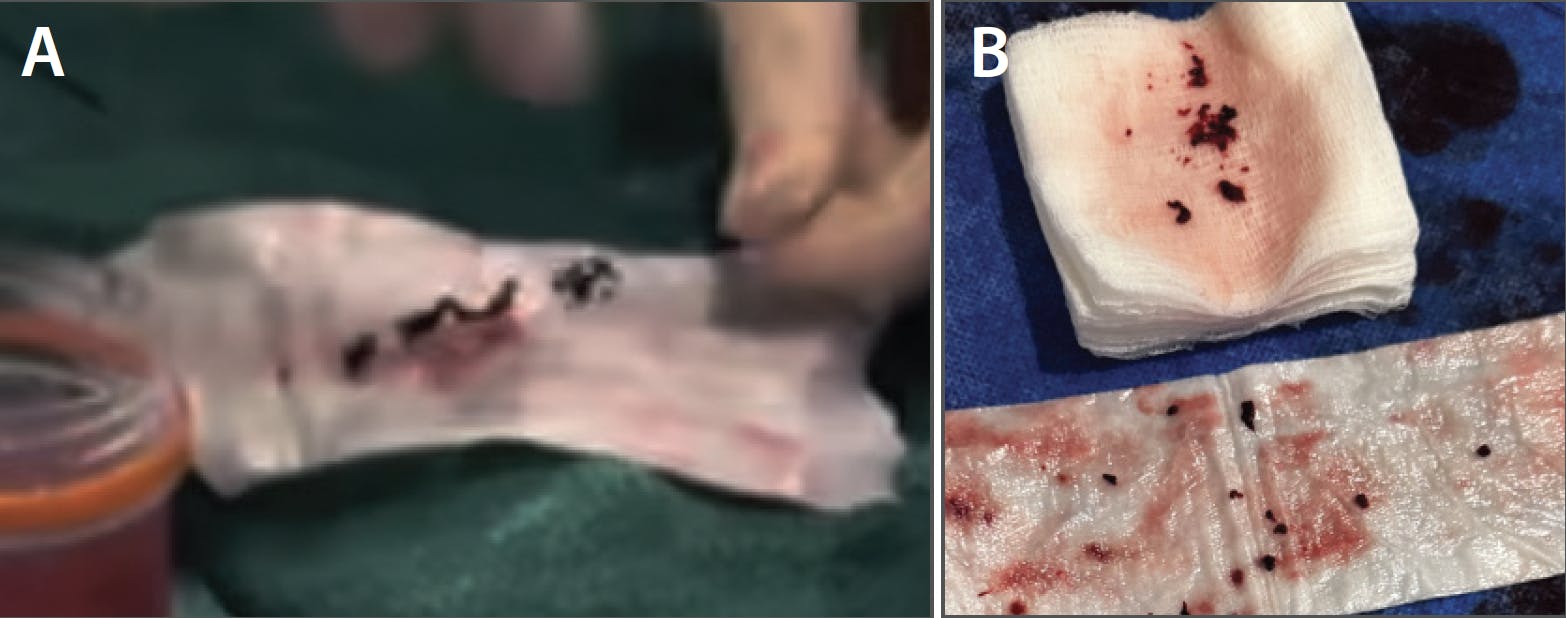
Figure 8. Clot secured on pVasc (A) and samples of captured clot (B).
*Minimum delivery catheter inner diameter for 4-mm pVasc is 0.021 inches and for 6-mm pVasc is 0.027 inches.
1. Siah MC, Shih M. Evaluation and management of acute limb ischemia. Endovasc Today. 2021;20:63-66. https://evtoday.com/articles/2021-jan/evaluation-and-management-of-acute-limb-ischemia
2. Obara H, Matsubara K, Kitagawa Y. Acute limb ischemia. Ann Vasc Dis. 2018;11:443-448. doi: 10.3400/avd.ra.18-00074

Advertisement
Advertisement