Advertisement
Advertisement
May 2025
Sponsored by Shockwave Medical
Shockwave Javelin Peripheral IVL Catheter: A Deep Dive Into the Technology
The Shockwave Medical IVL System with the Shockwave Javelin Peripheral IVL Catheter (Shockwave Medical – Johnson & Johnson Medtech) is intended for intravascular lithotripsy (IVL)–enabled modification and crossing of calcified lesions in the peripheral vasculature, including the iliac, femoral, iliofemoral, popliteal, and infrapopliteal arteries, prior to final treatment. This first-of-its-kind Forward IVL Platform features a single emitter positioned distally toward the catheter tip, enabling cracking of calcium ahead of the catheter to assist in both modifying and crossing calcific occlusive disease (Figure 1).*
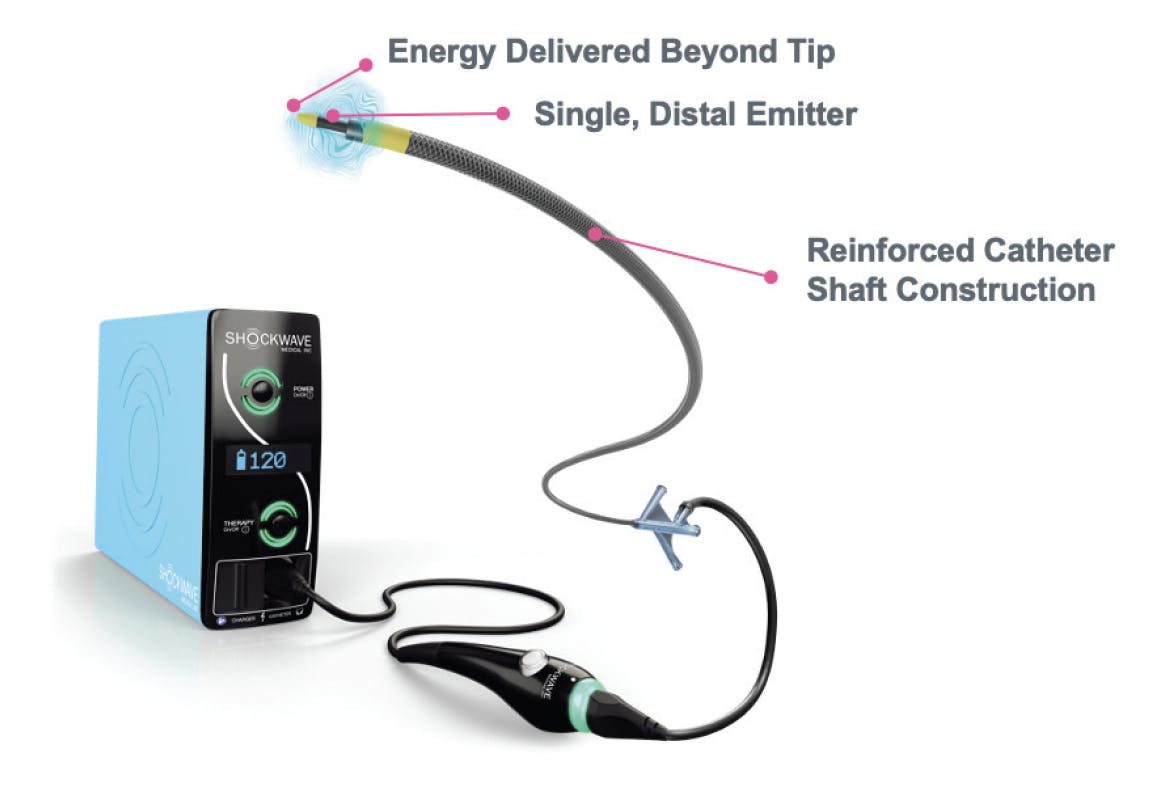
Figure 1. The Shockwave Javelin Peripheral IVL Catheter.
SHOCKWAVE BALLOON IVL PLATFORM COMPARED TO FORWARD IVL PLATFORM
With the traditional Shockwave Balloon IVL Platform, the balloon must cross the calcified lesion for effective treatment (Figure 2A). The Shockwave Forward IVL Platform (ie, Shockwave Javelin) has an emitter located close to the distal tip of the catheter. This allows delivery of acoustic pressure waves closer to calcified occlusive disease than the Shockwave Balloon IVL Platform would allow (Figure 2B).
Figure 2A. Shockwave Balloon IVL Platform. Emitters in the balloon—too far from occlusive disease.
Figure 2B. Video 2B. Shockwave Forward IVL Platform. Emitter closer to tip—closer to occlusive disease.
THE SONIC OUTPUT OF SHOCKWAVE JAVELIN
The Shockwave Javelin IVL emitter has a spherical sonic output similar to traditional balloon-based IVL devices, which translates to similar calcium modification effectiveness (Figure 3). Due to the emitter proximity to the distal tip, the emitter’s spherical sonic output extends beyond the tip of the catheter, enabling cracking of calcium in front of the catheter.* The ability to crack calcium ahead of the catheter enables modifying and crossing of difficult-to-cross lesions.
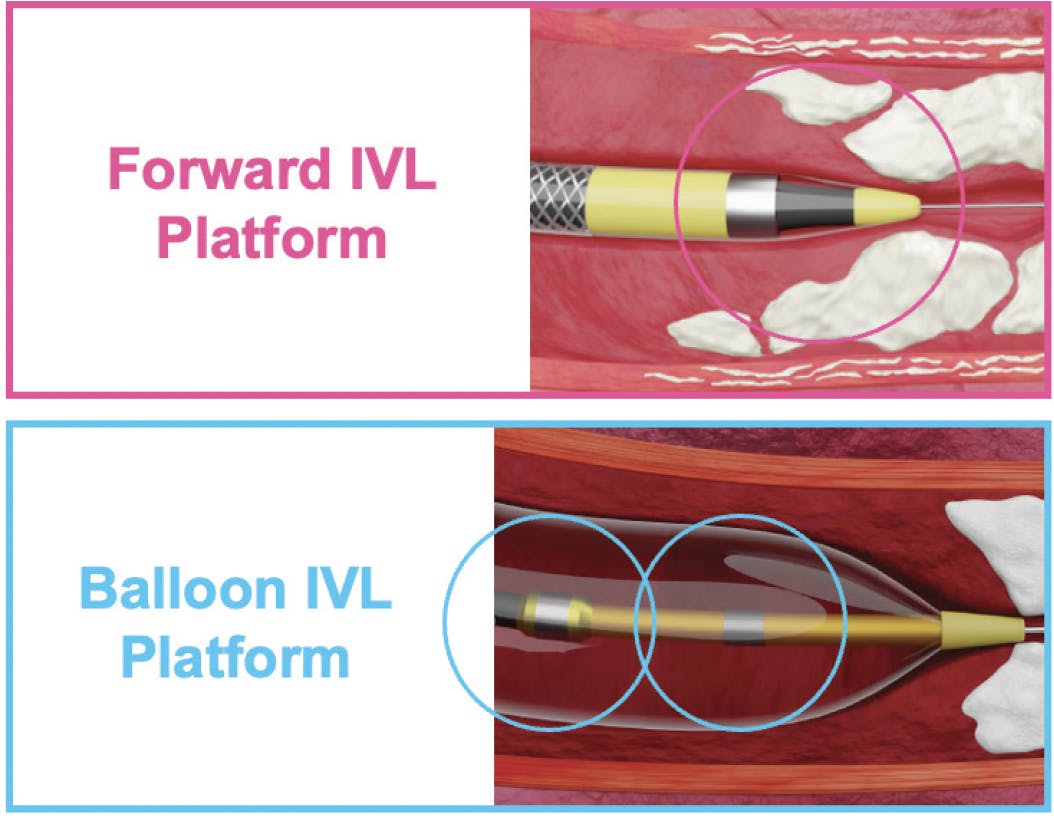
Figure 3. The sonic output of the Shockwave Forward IVL Platform compared to the Shockwave Balloon IVL Platform.
SHOCKWAVE JAVELIN ANATOMY
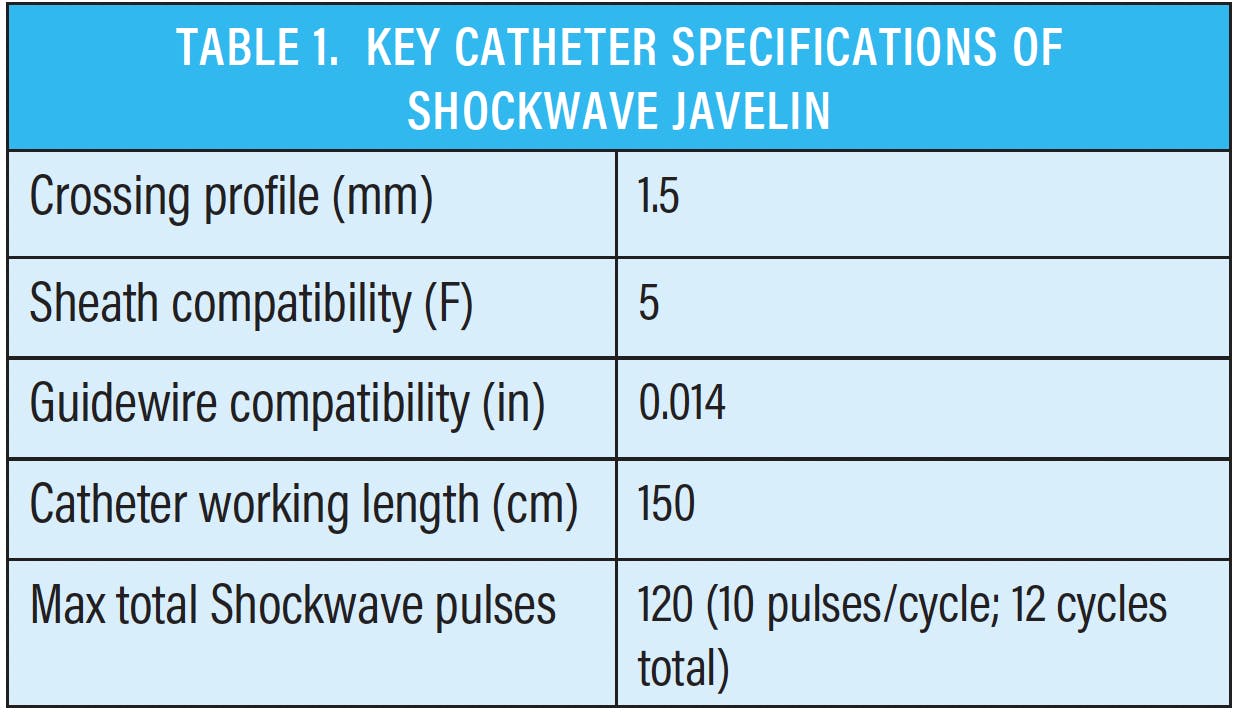
The single distal IVL emitter is positioned inside a nonexpandable IVL window at the distal tip of the catheter (Figure 4). The IVL window contains saline, which enables energy transfer from the emitter to the calcium. The reinforced shaft provides pushability, flexibility, and kink resistance to optimize device deliverability in challenging anatomy. The distal segment of the catheter is more flexible and has hydrophilic coating, improving trackability and deliverability. Key catheter specifications are outlined in Table 1.
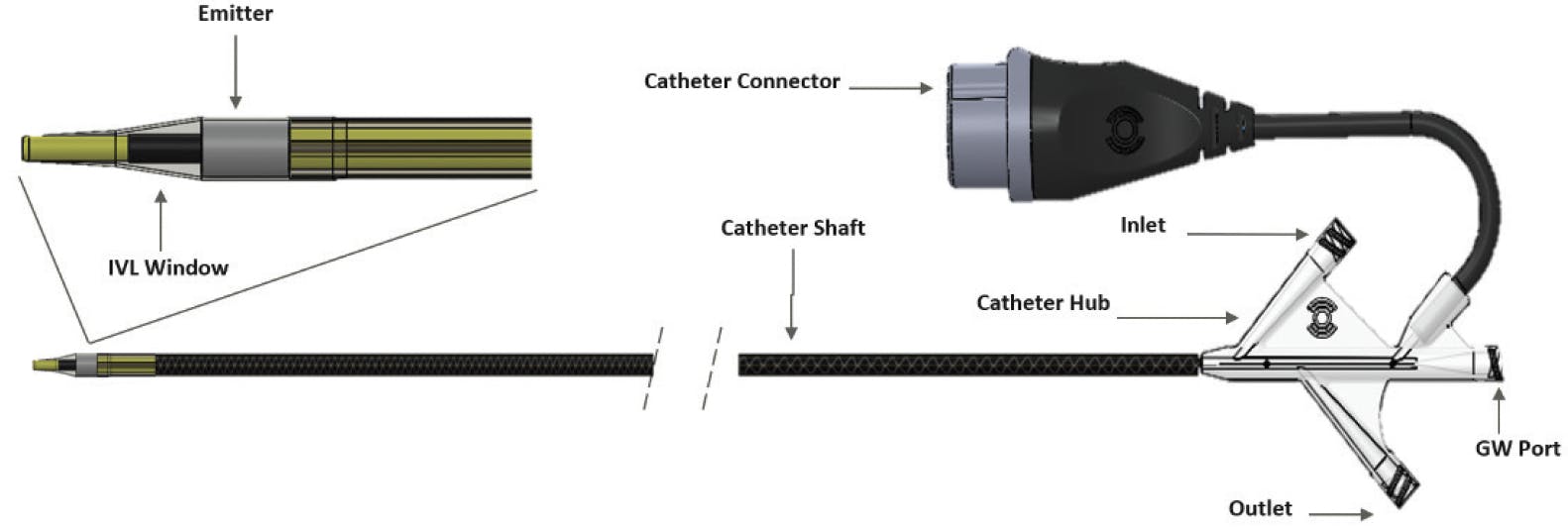
Figure 4. The components of the Shockwave Javelin Catheter.
THE SHOCKWAVE JAVELIN IVL WINDOW
The IVL window is made of noncompliant material, and it does not expand with pressurization, ensuring a consistent crossing profile. The IVL window serves the same function as the balloon on traditional balloon-based devices, with two primary purposes. First, it enables lithotripsy. The IVL window is filled with saline, which contacts the emitter to enable lithotripsy (Figure 5). Second, it facilitates energy transfer. Apposition of the IVL window to the occlusive disease facilitates the efficient transfer of IVL energy from the emitter to the calcium (Figure 6). During treatment, the IVL window must be flushed and replaced with saline after each cycle of 10 pulses to remove air bubbles and ensure effective sonic output.
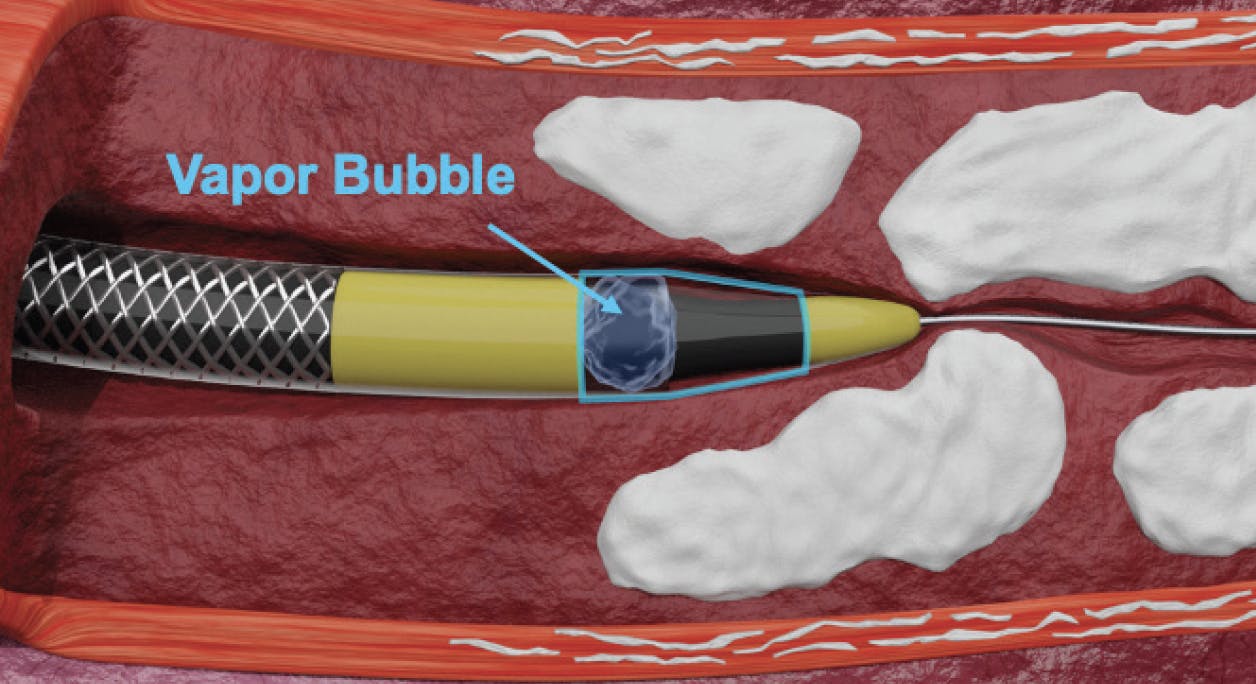
Figure 5. The IVL window—enables lithotripsy.
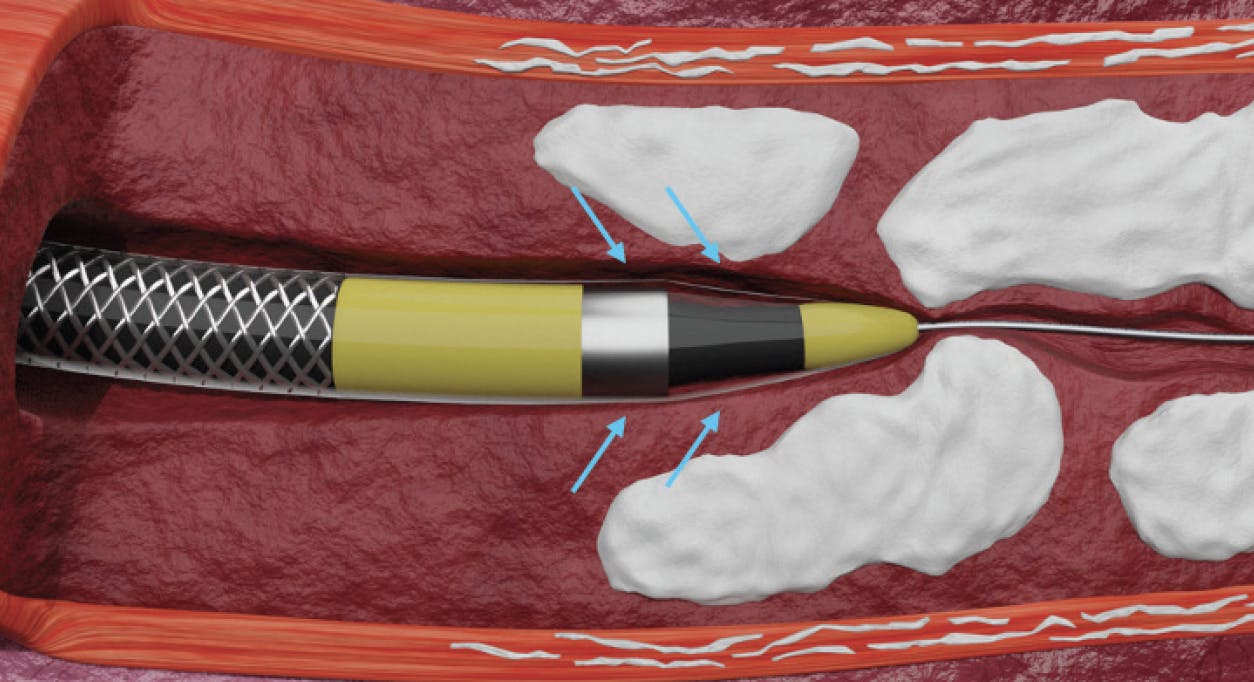
Figure 6. The IVL window—facilitates energy transfer.
HOW TO USE SHOCKWAVE JAVELIN
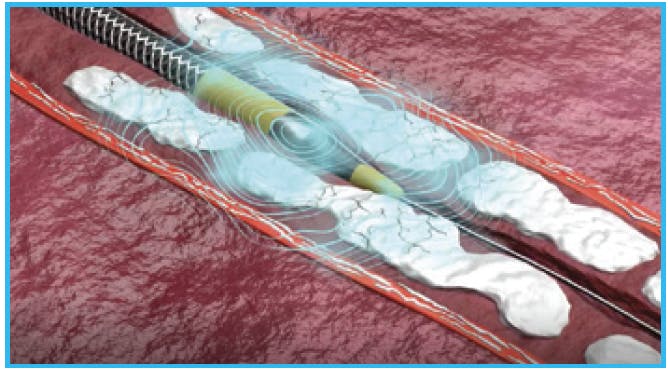
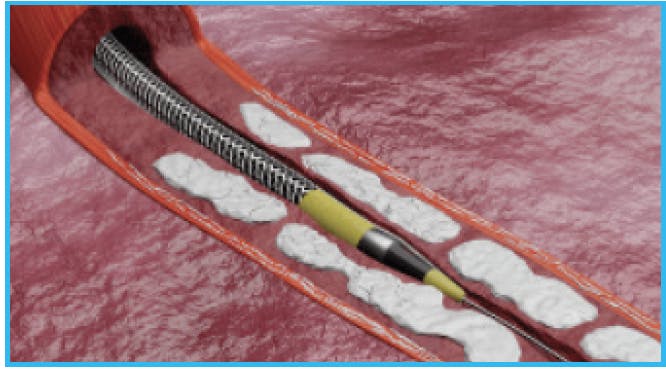
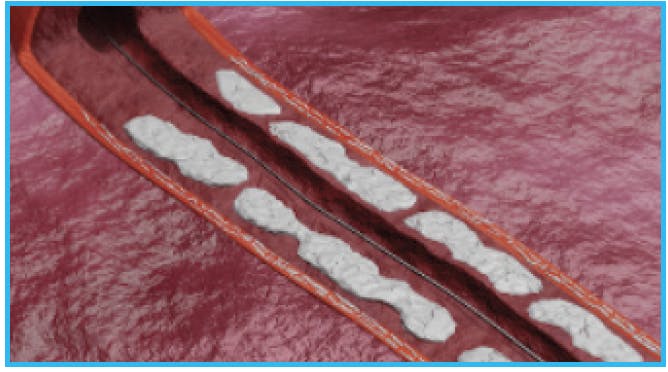
THE DATA
The Shockwave Javelin feasibility study and FORWARD PAD investigational device exemption (IDE) study are premarket, prospective, multicenter, single-arm studies of the Shockwave Medical Javelin Peripheral IVL Catheter to treat heavily calcified, stenotic peripheral arteries. Both studies shared the same eligibility criteria, data collection requirements, electronic data capture system, and monitoring (core lab, clinical endpoint committee, data safety), allowing for prespecified data pooling of the first 90 consecutive patients.1
Between 2022 and 2024, 103 lesions in 90 patients were enrolled at 19 sites. The mean age was 74.5 ± 9.3 years, 56.7% had diabetes, and 18.9% had renal insufficiency. Preprocedural lesion characteristics included a mean diameter stenosis of 82.9% ± 16.7% and a mean lesion length of 76.9 ± 59.4 mm; 38% of lesions were chronic total occlusions, and 82.5% were severely calcified.
Despite the heavily calcified and significantly stenosed lesions, Shockwave Javelin successfully crossed the majority of lesions (device crossing success, 93% [107/115]). The primary effectiveness endpoint—defined as ≤ 50% final residual stenosis without flow-limiting dissection—met prespecified performance goals (99.0; 95% CI, 94.4%-100%; P < .0001). The primary safety endpoint—defined as a composite of cardiovascular death, clinically driven target lesion revascularization, or unplanned target limb major amputation (above the ankle) at 30 days—also met prespecified performance goals (1.1%; 95% CI, 0%-6%; P = .0012).
Shockwave Javelin’s safety profile has been shown to be consistent with traditional Shockwave IVL balloon-based devices, with low rates of angiographic complications (Figure 7).1-4
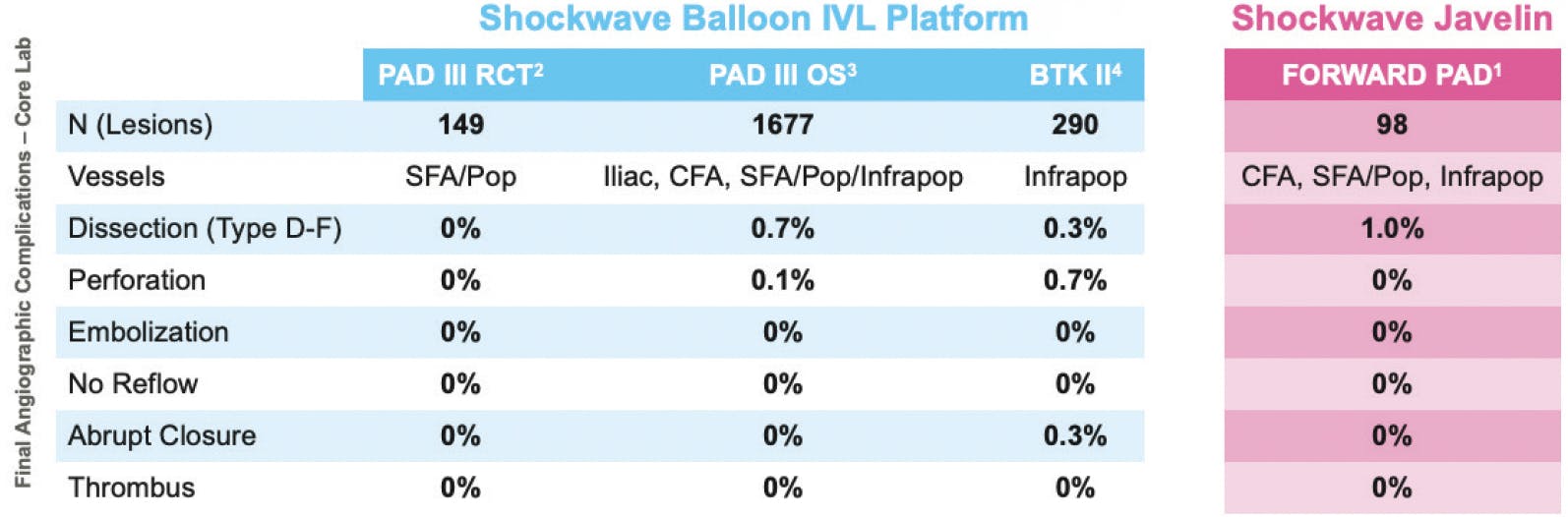
Figure 7. The safety profile of Shockwave Javelin compared to the traditional Shockwave Balloon IVL Platform.
Shockwave Javelin’s effectiveness has been shown to be consistent with traditional Shockwave IVL balloon-based devices, with similar diameter stenosis reduction (Figure 8).1-4
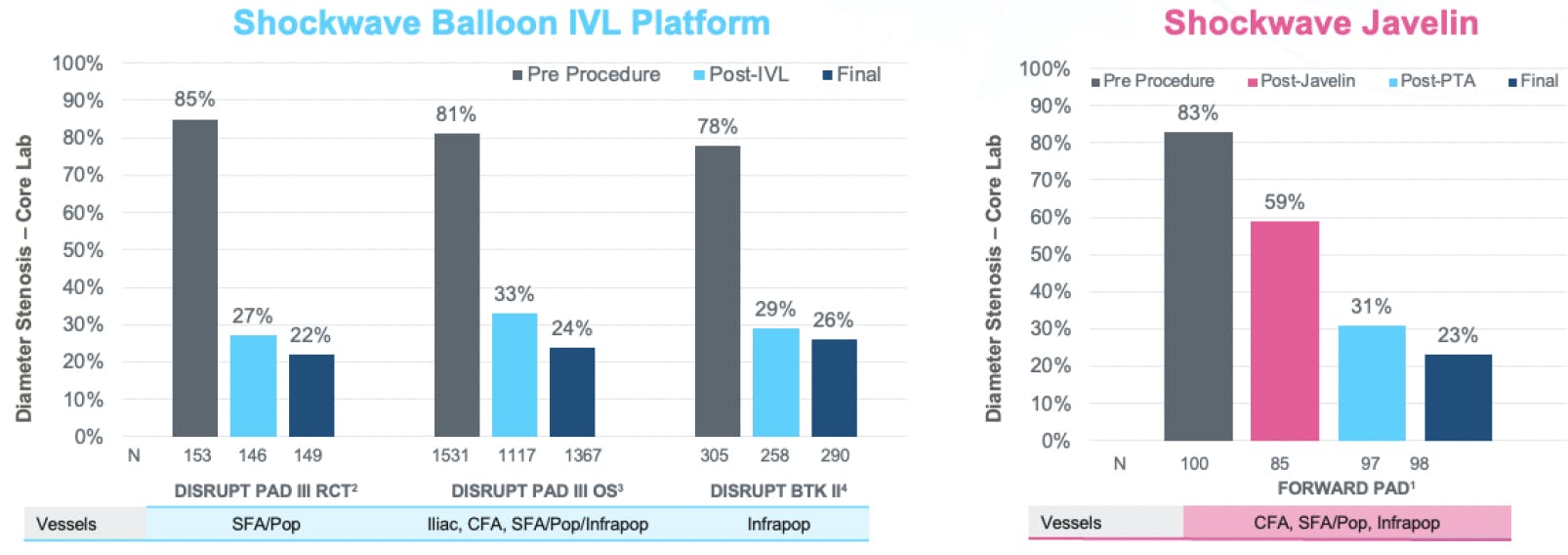
Figure 8. The effectiveness of Shockwave Javelin compared to the traditional Shockwave Balloon IVL Platform.
SUMMARY
Through the Shockwave Javelin feasibility study, the FORWARD PAD IDE study, and early commercial experience, Shockwave Javelin has demonstrated safe and effective calcium modification and crossing of challenging lesions, including chronic and subtotal occlusions and extremely narrowed vessels.
*Internal testing shows a spherical sonic output from distal emitter consistent with previous Shockwave balloon-based IVL emitters, with sonic output extending beyond the tip of the catheter.
1. Corl JD, Clair D, Mwipatayi P, et al. FORWARD PAD IDE/feasibility studies: primary endpoint analysis of a novel non- balloon-based peripheral IVL catheter. JACC Cardiovasc Interv. 2025;18:398-399. doi: 10.1016/j.jcin.2024.10.035
2. Tepe G, Brodmann M, Werner M, et al; DISRUPT PAD III Investigators. Intravascular lithotripsy for peripheral artery calcification: 30-day outcomes from the randomized DISRUPT PAD III trial. JACC Cardiovasc Interv. 2021;14:1352-1361. doi: 10.1016/j.jcin.2021.04.010
3. Armstrong EJ, Adams G, Soukas PA, et al. Intravascular lithotripsy for peripheral artery calcification: 30-day outcomes from the DISRUPT PAD III observational study. J Endovasc Ther. Published online October 18, 2024. doi: 10.1177/15266028241283716
4. Chandra V, Lansky AJ, Sayfo S, et al. Thirty-day outcomes from the DISRUPT PAD BTK II study of the Shockwave intravascular lithotripsy system for treatment of calcified below-the-knee peripheral arterial disease. J Vasc Surg. 2025;81:710-719.e2. doi: 10.1016/j.jvs.2024.11.003
PERIPHERAL SAFETY INFORMATION
Shockwave S4, Shockwave M5, Shockwave M5+, Shockwave E8, and Shockwave L6
In the United States: Rx only.
Indications for Use—The Shockwave Medical Intravascular Lithotripsy (IVL) System is intended for lithotripsy-enhanced balloon dilatation of lesions, including calcified lesions, in the peripheral vasculature, including the iliac, femoral, ilio-femoral, popliteal, infra-popliteal, and renal arteries. Not for use in the coronary, carotid or cerebral vasculature. Peripheral IVL is also indicated for use in renal arteries in certain jurisdictions, including the United States. Please reference Instructions For Use for country specific information.
Contraindications—Do not use if unable to pass 0.014” (M5, M5+, S4, E8) or 0.018” (L6) guidewire across the lesion-Not intended for treatment of in-stent restenosis or in coronary, carotid, or cerebrovascular arteries.
Warnings—Only to be used by physicians who are familiar with interventional vascular procedures—Physicians must be trained prior to use of the device—Use the generator in accordance with recommended settings as stated in the Operator’s Manual.
Precautions—Use only the recommended balloon inflation medium—Appropriate anticoagulant therapy should be administered by the physician— Decision regarding use of distal protection should be made based on physician assessment of treatment lesion morphology.
Adverse effects—Possible adverse effects consistent with standard angioplasty include–Access site complications–Allergy to contrast or blood thinner–Arterial bypass surgery—Bleeding complications—Death—Fracture of guidewire or device—Hypertension/Hypotension—Infection/sepsis—Placement of a stent—renal failure—Shock/pulmonary edema—target vessel stenosis or occlusion—Vascular complications. Risks unique to the device and its use—Allergy to catheter material(s)—Device malfunction or failure—Excess heat at target site.
Prior to use, please reference the Instructions for Use for more information on indications, contraindications, warnings, precautions and adverse events. www.shockwavemedical.com/IFU
Shockwave Javelin
In the United States: Rx only.
Indications for Use—The Shockwave Medical IVL System with the Javelin Peripheral IVL Catheter is intended for lithotripsy-enabled modification and crossing of calcified lesions in the peripheral vasculature, including the iliac, femoral, ilio-femoral, popliteal, and infra-popliteal arteries, prior to final treatment. Not for use in the coronary, carotid, cerebral, or pulmonary vasculature.
Contraindications—Do not use if unable to pass 0.014” (0.36mm) guidewire across the treatment site-Not intended for treatment of in-stent restenosis or in coronary, carotid, cerebral or pulmonary arteries.
Warnings—Only to be used by physicians who are familiar with interventional vascular procedures—Physicians must be trained prior to use of the device—Use the generator in accordance with recommended settings as stated in the Operator’s Manual.
Precautions—Avoid applying acoustic pressure pulses while IVL window is not filled with sterile saline—Appropriate anticoagulant therapy should be administered by the physician—Decision regarding use of distal protection should be made based on physician assessment of treatment lesion morphology.
Adverse effects—Possible adverse effects consistent with standard angioplasty include–Access site complications–Allergy to contrast or blood thinner–Arterial bypass surgery—Bleeding complications—Death—Fracture of guidewire or device—Hypertension/Hypotension—Infection/sepsis—Placement of a stent—renal failure—Shock/pulmonary edema—target vessel stenosis or occlusion—Vascular complications. Risks unique to the device and its use—Allergy to catheter material(s)—Device malfunction or failure.
Prior to use, please reference the Instructions for Use for more information on indications, contraindications, warnings, precautions and adverse events. www.shockwavemedical.com/IFU
© Shockwave Medical, Inc. All Rights Reserved. SPL 76001 Rev. A.
Advertisement
Advertisement