Advertisement
Advertisement
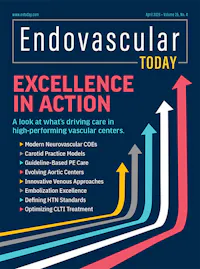
Centers of excellence have become a defining construct in contemporary vascular and endovascular care, reflecting technical capabilities as well as the orchestration of multidisciplinary expertise, standardized pathways, and a commitment to continuous quality improvement. As disease complexity increases and therapies evolve, these centers serve as hubs where innovation, outcomes, and patient experience converge, setting benchmarks that extend beyond individual procedures to encompass entire systems of care. This issue of Endovascular Today highlights how centers of excellence across key vascular fields are defining best practices, advancing multidisciplinary care, and elevating standards for patient outcomes.
Starting with the neurovascular domain, Jaims Lim, MD; Gustavo M. Cortez, MD; Devan Patel, MD; Matthew Moser, MD; Rosalind Pui Man Lai, MD; Jason M. Davies, MD; Kenneth V. Snyder, MD; Adnan H. Siddiqui, MD; and Elad I. Levy, MD, share their experience at the Gates Vascular Institute and the University at Buffalo Neurosurgery, illustrating how infrastructure, specialization, and collaboration underpin a modern neurointerventional center of excellence.
Extending the theme of multidisciplinary coordination, William A. Gray, MD; Preethi Ramchand, MD; and Vincent M. DiGiovanni, DO, outline a comprehensive carotid care model, emphasizing how integrated decision-making across specialties enhances patient selection, procedural safety, and long-term outcomes.
Jay Giri, MD, then examines how the 2026 American Heart Association/American College of Cardiology pulmonary embolism guidelines translate into real-world practice, highlighting how evidence-based protocols and rapid response systems are central to delivering consistent excellence in this high-stakes clinical setting.
Turning next to complex aortic disease, Rana Afifi, MD; Matthew J. Eagleton, MD; and Hence Verhagen, MD, explore how aortic centers continue to evolve, driven by advances in endograft technology, imaging, and the need for highly coordinated surgical and endovascular expertise.
Similar innovations are evident in venous care, where Kush R. Desai, MD, discusses how leading centers are incorporating new technologies while maintaining a patient-centered approach, ensuring that innovation translates into measurable improvements in care delivery.
When examining the applications of embolization, Ariana Mills, MD; Bryan Pacheco, MD; Linzi Webster, MD; Rahul Patel, MD; Kirema Garcia-Reyes, MD; and Aaron Fischman, MD, detail how excellence can be achieved across diverse applications, underscoring the importance of technique refinement, cross-specialty collaboration, and procedural standardization.
Next, Cara East, MD, explores the role of a hypertension center of excellence, outlining referral pathways, strategies to optimize management, and how to integrate emerging therapies.
Finally, in the challenging space of chronic limb-threatening ischemia, Mehdi H. Shishehbor, DO; John H. Rundback, MD; Leigh Ann O’Banion, MD; and Naseer Ahmad, MD, examine how centers can optimize both outcomes and patient experience, reinforcing the role of longitudinal care models and multidisciplinary engagement in achieving meaningful success.
As with every issue, we close with an insightful interview, this time with Kathleen Ozsvath, MD, who talks with us about her leadership at the society level, engaging communities for vascular care, building rapport with patients, and much more.
Together, these contributions underscore that centers of excellence are not static designations but dynamic ecosystems continuously adapting to new evidence, technologies, and patient needs while setting the standard for vascular care.
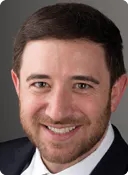
Eric A. Secemsky, MD, MSc, RPVI, FACC, FAHA, FSCAI, FSVM
Guest Chief Medical Editor
Advertisement
Advertisement