Advertisement
Advertisement
March 2026
Septotomy to Facilitate EVAR in Dissection Patients
Using electrosurgical disruption of the chronic dissection septum to expand true lumen channel and improve stent graft outcomes in aortic dissection.
Endovascular repair of chronic aortic dissections is often complicated by a compressed true lumen (TL) and difficult access to branch vessels. Over time, two-thirds of medically managed type B aortic dissection patients experience aneurysmal degeneration or require intervention within 5 years, underscoring the need for definitive treatment in suitable cases.1 Current guidelines recommend repair of chronic postdissection aneurysms once the diameter reaches ≥ 6 cm (class I), with open surgery favored for patients with connective tissue disorders.2 Thoracic endovascular aortic repair (TEVAR) and branched/fenestrated endovascular aneurysm repair (B/FEVAR) have become viable options for many chronic dissection anatomies, achieving high technical success in experienced centers.3,4 However, endovascular repair is frequently challenged by the presence of a dissection flap separating TL and false lumen (FL). Inadequate TL expansion can prevent full stent graft deployment or branch vessel incorporation, contributing to reintervention rates as high as 38% in complex postdissection aneurysms.4
To address these challenges, clinicians have adapted techniques from both open surgery and transcatheter cardiac interventions. Early solutions for septal division in chronic dissections included “cheese-wire” fenestration or septotomy methods, in which two guidewires or catheters are used to physically tear the dissection membrane; this achieved the goal of lumen creation but with potential for uncontrolled intimal damage, dislodgement of the lamella, and complications.5,6 Meanwhile, in the structural heart literature, electrosurgical techniques such as BASILICA and LAMPOON were developed in 2015 to lacerate internal cardiac tissues with radiofrequency (RF) energy, enabling transcatheter valve therapies without obstruction.7 Inspired by these advances, aortic specialists began applying transcatheter electrosurgery to aortic dissection flaps. Initial case reports demonstrated that an electrocautery-tipped guidewire could create a fenestration in a chronic dissection membrane safely.8 Building on this concept, operators refined a dedicated approach termed transcatheter electrosurgical septotomy (TES), in which RF energy is used to perforate the septum and effectively convert the two luminal channels into one. TES has now emerged as a useful adjunct to facilitate TEVAR in patients with chronic dissections and complex anatomy. Early series have reported high technical success and encouraging safety with this technique.9-11
BACKGROUND
Open surgical fenestration of the dissection flap has long been an option to treat malperfusion or prepare landing zones, but at the cost of added invasiveness. Endovascular operators sought less invasive solutions. The first reports of endograft repair in chronic postdissection aneurysms date back over a decade. Verhoeven et al described treating six patients with chronic dissecting thoracoabdominal aneurysms using F/BEVAR, achieving 100% technical success with no mortality or paralysis.3 Since then, larger multicenter studies have confirmed that complex EVAR in this scenario is feasible with acceptable outcomes. A recent series of 246 patients who underwent B/FEVAR for chronic postdissection thoracoabdominal aortic aneurysms reported low 30-day mortality (3%) and permanent paraplegia (2%) rates, with < 0.5% risk of rupture or open conversion through 5 years.4 However, these repairs required frequent secondary interventions (approximately 38% of patients) due to issues such as endoleaks and FL persistence.4 This highlights the core limitation: standard EVAR alone cannot always overcome the chronic dissection flap that maintains FL pressurization.
Various endovascular “septotomy” attempts preceded the electrosurgical method. In one approach, a stiff guidewire was passed across the septum and exteriorized from another access, then pulled to tear the membrane (resembling a cheese-wire cutting through the flap).5,6 While effective in some cases, this mechanical technique can be unpredictable and carries risk of intimal injury propagation or inability to control the tear’s extent. Recognizing the need for a more controlled and targeted method, surgeons turned to electrosurgery. In 2018, Khan et al demonstrated that a RF guidewire could precisely cut intracardiac tissue (the BASILICA technique for leaflets) without excessive collateral damage.7 Adapting this principle, around 2019 vascular teams began using electrocautery wires to perforate and slice aortic dissection septa. Kabbani et al documented one of the first such cases, using a modified electrocautery wire to fenestrate a chronic dissection flap, a “proof of concept” for TES.8 Over the next few years, single-center experiences refined the technique, and operators defined specific indications and safety measures for TES.10 Most recently, a multicenter analysis by Kanamori et al reported on 33 chronic dissection patients treated with adjunct TES during endovascular repair: technical success was 94%, with no aortic rupture or new dissections caused by the procedure and only one target vessel loss (in an acute dissection setting).9 These developments solidify TES as a valuable tool in the armamentarium for complex aortic dissection cases.
INDICATIONS FOR TES
Careful patient selection is critical when considering TES. In chronic or subacute dissection patients, TES is indicated as an adjunct when the anatomy would otherwise preclude a successful endograft seal or branch incorporation. Specific indications include: (1) creating a viable proximal or distal landing zone in a dissected aortic segment that is not yet aneurysmal—by tearing the septum, a single larger lumen is achieved for graft sealing; (2) relieving severe TL compression to allow full stent graft expansion and prevent gutter leaks; and (3) establishing flow to a branch vessel arising from a collapsed or separate FL channel (eg, a visceral artery originating in the FL that needs to be perfused by the stent graft).10 In practice, these scenarios are identified on preoperative imaging: a TL diameter too small for the necessary device, a dissection flap dividing critical landing areas, or vital arteries isolated in the FL. It is important to note that TES is generally reserved for chronic dissections (typically defined as > 90 days from onset) or subacute dissections and is avoided in the acute phase due to the risk of destabilizing a fragile, recently formed septum and causing propagation or embolization.11 The ideal candidates for TES are those with relatively stable chronic dissection membranes that are preventing effective endovascular treatment. Conversely, cases with heavily calcified or extremely thick or thrombus-laden septa, prior PETTICOAT, or those with very tortuous dissection channels (eg, in iliac arteries) may not be suitable for this technique, as the electrosurgical wire may have difficulty traversing or fully cutting through the septum in such conditions. All patients considered for TES undergo thorough imaging review (CTA with intraluminal measurements, intravascular ultrasound [IVUS] during case planning) to confirm that TES will meaningfully improve luminal diameter or branch access.
TECHNIQUE
TES is typically performed in a hybrid operating room under general anesthesia, immediately before or in conjunction with endovascular repair. Meticulous preparation and imaging guidance are paramount for safety. Figure 1 provides an overview of the procedural setup and the septotomy mechanism. The steps are as follows:
- Equipment setup. A specialized electrocautery guidewire is prepared. Commonly, a 0.014-inch polytetrafluoroethylene (PTFE)-coated guidewire (such as the Astato XS 18, [Asahi Intecc USA, Inc.]) is used; about 5 to 10 mm of its distal PTFE coating is intentionally stripped off to expose bare metal, creating an active electrode tip.8 This wire is connected via an adaptor to a standard electrosurgery generator (set to a cutting current mode). An insulating catheter (for example, a 0.018-inch NaviCross [Terumo Interventional Systems] or similar) is used to protect the electrosurgical wire and prevent unintended contact with surrounding tissue. The catheter is filled with nonionic fluid (commonly 5% dextrose water) instead of saline, given that saline can conduct current and dissipate energy. A large snare (32- to 36-mm Amplatz GooseNeck 0.035-inch snare [Medtronic]) is in the FL, while the 0.014-inch PTFE wire is in the TL. A steerable sheath is often used in the TL to help orient the wire toward the septum.
- Dual-lumen access and imaging. Gaining access to both the TL and FL is often required. Usually, a guidewire is navigated into the TL from a femoral approach, and a separate access (femoral or brachial) is used to enter the FL. IVUS is introduced to confirm positioning in each channel and identify the target septum location for fenestration. IVUS or fusion CT guidance can delineate the thickness and orientation of the dissection membrane (often showing the compressed TL as a crescentic slit). The steerable sheath and the electrocautery wire should be pointed at the snare in the FL, and this should be confirmed in multiple views (ideally 180°).
- Crossing the septum. Under fluoroscopic and IVUS guidance, the operator positions the tip of the insulated catheter against the dissection flap at the desired fenestration site. The orientation of the 0.014-inch electrified wire is then advanced slightly out of the catheter to make contact with the intimal flap. At this point, RF energy is applied in short bursts while gentle forward pressure is used. The energized wire tip cleanly perforates the septum, creating a small hole through the membrane. The wire can then be snared from the opposite lumen to secure a through-and-through position.
- Septum laceration (septotomy). Once the wire is through the flap, a controlled tear is propagated to enlarge the communication. To achieve this, the wire is externalized to form a “trapeze,” which is then reintroduced through the sheath under the protection of the bilateral NaviCross catheters. By applying tension on both ends of the wire (similar to a cheese-wire technique but now with electrocautery), the dissection membrane can be safely sliced open along a desired line using the trapeze portion of the wire.5 The electrosurgical current is activated intermittently as the operators pull the wire to ensure the flap cuts rather than tears. This creates a longitudinal septotomy, often several centimeters in length, effectively uniting the lumens.
- Stent graft deployment. With the septum divided, the endograft or branched/fenestrated stent graft is then delivered in standard fashion. The absence of a restrictive septum means the device can expand to the full diameter of the aorta, and any covered branches or fenestrations can now perfuse both sides of the aorta as needed. Final angiography and IVUS are used to confirm a wide TL and proper apposition of the stent graft. Often, the formerly FL will thrombose over time once excluded; however, if a persistent FL endoleak is seen, additional coils or plugs can be deployed as adjuncts.
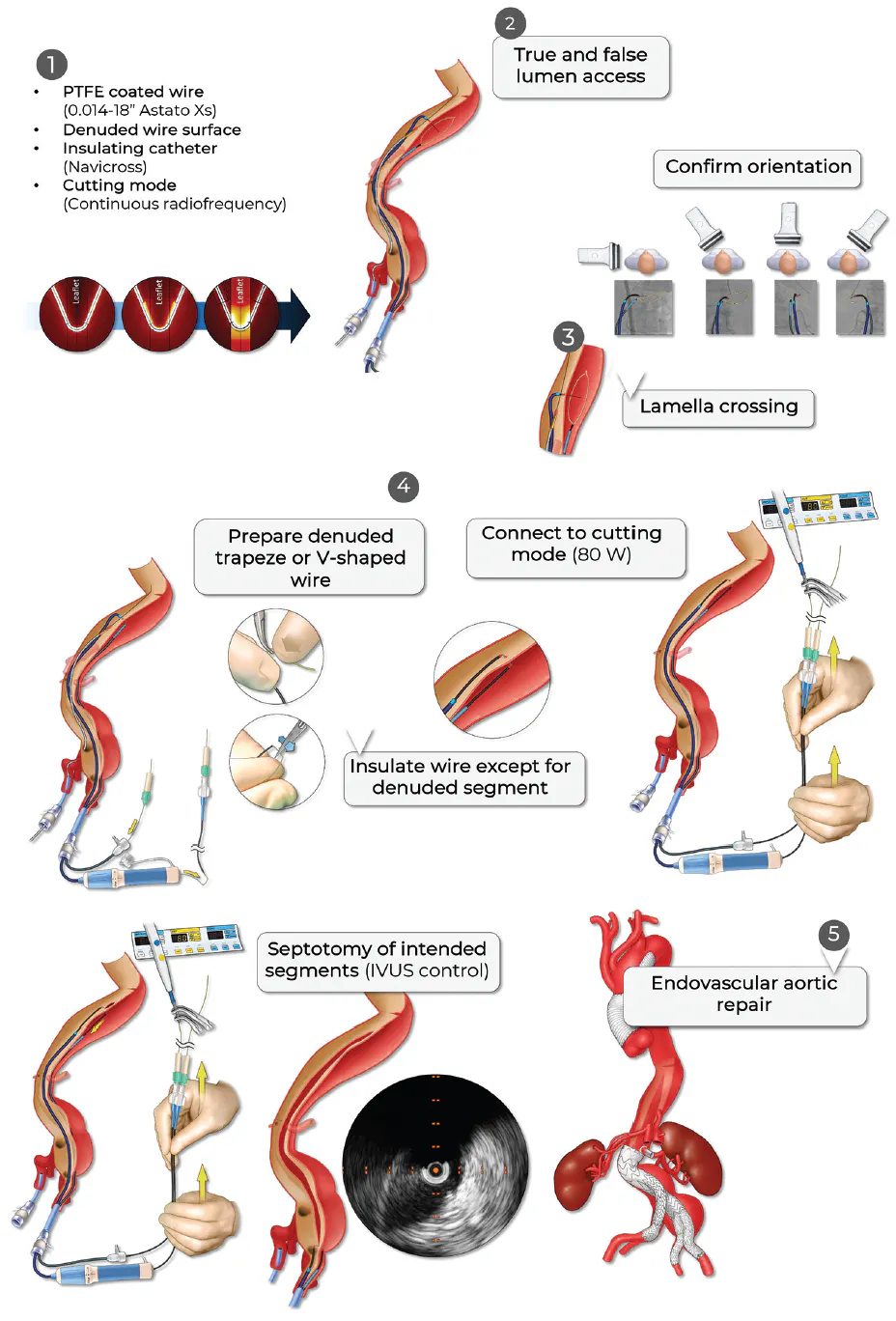
Figure 1. Overview of the procedural setup and mechanism for TES. Used with permission from Baylor College of Medicine.
Throughout the procedure, certain technical pearls help maximize success (see Sidebar). It is important to choose a septotomy site that is relatively central in the aortic lumen (away from the outer curvature where the flap may be thicker or calcified). Maintaining wire tension during energy application helps ensure a linear, predictable tear. Short, controlled bursts of RF energy (1-2 seconds at a time) are preferred to avoid excessive heat that could damage adjacent aortic wall. Blood pressure is managed to be normotensive during the septotomy to reduce the risk of pressurizing a new tear. If the first attempt at crossing fails due to a particularly tough septum, repositioning a few millimeters away and retrying can be effective. In some cases, multiple septotomies may be performed (for instance, creating proximal and distal fenestrations) if needed to facilitate graft landing zones. The entire electrosurgical portion typically adds only a few minutes to the procedure once the equipment is prepared, demonstrating the efficiency of this technique when performed by an experienced team.
TECHNICAL PEARLS TO MAXIMIZE SUCCESS OF TES
- Choose a septotomy site that is central in the aortic lumen
- Maintain wire tension during energy application to help ensure a linear, predictable tear
- Use short, controlled bursts of RF energy (1-2 seconds at a time)
- Ensure blood pressure is within normal range to reduce the risk of pressurizing a new tear
- If initial crossing fails, reposition and try again
COMPLICATIONS AND CONSIDERATIONS
No adjunctive procedure is without risk, and TES must be undertaken with a full understanding of potential complications. Fortunately, reported adverse events with TES have been infrequent and largely manageable. The most feared risk is uncontrolled propagation of the intimal tear or a new aortic rupture. To date, no aortic ruptures directly attributable to TES have been reported in published series,9 and the controlled nature of electrosurgical laceration seems to spare the healthy outer aortic wall. However, there is a theoretical possibility of creating a larger dissection or retrograde tear if excessive force is used. Procedural imaging vigilance is required to detect any extravasation or flap separation, in which case the operator should be prepared to cover the area with a stent graft or, if necessary, convert to open repair.
Another concern is target vessel injury or occlusion. If a branch artery originates very close to the septotomy line, there is a chance the electrocautery could extend through the branch ostium or the tearing process could deform it. In the series by Kanamori et al, one renal artery originating from the FL was lost during TES in an acute dissection case.9 To mitigate this, the septotomy should be planned away from critical branch takeoffs whenever possible or performed only after securing the branch with a wire and sheath.
Cardiac arrhythmias or conduction issues are not typical during TES because the RF application is far from the heart (unlike transseptal cardiac ablations). Likewise, systemic embolization risk is low but not zero, and fragments of the intimal tissue could in theory embolize; ensuring a clean cut with electrocautery and prompt exclusion of loose septal tissue with the stent graft minimizes this risk. We routinely flush catheters and maintain adequate anticoagulation during the case to prevent thrombus formation on wires or catheters.
One complication unique to TES is the potential for thermal injury to adjacent structures. Nonionic infusate in the catheter and the short-burst technique help confine heat to the wire tip. No instances of thermal damage to the aortic wall or surrounding tissues have been reported in TES publications to date, and the intimal invagination or “rolling” of the flap that can occur with purely mechanical tearing is generally avoided.11
It must be emphasized that TES is an advanced technique usually performed by high-volume aortic centers. Proper training and proctorship are advised for teams new to the procedure. Operators should practice the equipment setup and understand the energy delivery settings on bench models or simulators. Patient selection is also key to avoid unwarranted risk. For example, we do not advocate performing TES in acute dissections, where the dissection membrane is fragile and highly mobile, due to the risk of creating a proximal flap dislodgement or retrograde type A dissection.11 Similarly, routine use of TES in tortuous distal anatomies (such as the iliac arteries) is not recommended, as steering the wire and achieving a straight-line tear can be challenging in that setting.11 In such cases, alternative strategies such as intentional coverage and bypass of a difficult branch or open fenestration might be safer.
Overall, early data suggest that when applied in appropriate patients, TES adds minimal morbidity to the endovascular procedure. In the largest reported cohort, there was no significant increase in operative time or blood loss associated with TES, and 30-day outcomes were comparable to those in patients who did not require TES.9 Careful technique and adherence to the inclusion criteria outlined previously help ensure that the benefits of TES—improved stent graft apposition and branch perfusion—are realized without introducing undue complication risk.
FUTURE DIRECTIONS
TES is still a relatively new adjunct, and ongoing developments aim to refine its use and expand its applicability. One anticipated area of progress is the design of specialized septotomy tools. Currently, TES relies on repurposing available wires and catheters. In the future, we may see purpose-built electrosurgical septotomy devices—for example, a guidewire with a predefined weak point to prevent overpulling or a catheter with an integrated energy delivery blade that could simplify the technique. Device manufacturers are also investigating RF-powered reentry catheters (sometimes called translaminar fenestrators) that could make lumen crossing even more straightforward for less experienced operators.
Another future consideration is the role of septotomy in acute and subacute dissections. Although at present this technique is avoided in the acute phase due to concerns of causing new intimal tears, there may be specific urgent scenarios (eg, an impending rupture with no other option) where a controlled septotomy could be life-saving. If so, developing protocols or devices to stabilize the septum (perhaps using balloon tamponade or temporary stent support) during energy delivery might mitigate risks. For now, further research and possibly animal studies would be needed before extending TES to acute dissections.
Long-term durability of TES-assisted repairs is another question under active follow-up. By effectively creating a new channel or enlarging the TL, TES aims to promote favorable aortic remodeling. We will learn from longer-term imaging surveillance whether the newly torn septum remains stable or if there is any late reconnection of lumens. Early results are promising, with series reporting durable FL thrombosis and no late aneurysm-related complications in the septotomy segments at intermediate follow-up.9 Continued data collection from multicenter experiences, including the outcomes of newly created landing zones, will help validate that TES does not compromise the longevity of repairs.
Lastly, the adoption of TES into broader practice will require education and training. As more centers begin treating complex postdissection aneurysms, disseminating the lessons learned, specifically patient selection criteria and step-by-step technique, is crucial. Proctorships, training workshops, and inclusion of TES techniques in advanced endovascular courses are likely to increase. The technique’s learning curve appears reasonable, but hands-on experience under expert guidance can build operator confidence. Over time, one can envision TES being incorporated into standard templates for branched endograft procedures in chronic dissection, much as other adjuncts (eg, FL embolization) are today.
CONCLUSION
TES has proven to be a safe and effective adjunct for facilitating TEVAR in patients with chronic aortic dissections. By harnessing RF energy to divide the dissection flap, TES addresses the key anatomic hurdles of a compressed TL and isolated FL branches. The technique expands the viable treatment options for complex aortic dissection cases, offering a minimally invasive means to create adequate landing zones and improve perfusion to vital branches. Early clinical outcomes have been encouraging, with high technical success and low complication rates in appropriately selected patients.9,10 Although careful consideration must be given to patient selection and procedural details, TES can significantly enhance the feasibility of TEVAR in anatomies that would otherwise be deemed suboptimal or impossible for endovascular repair. As our experience grows and technology continues to advance, TES is poised to become an integral component of the armamentarium for endovascular specialists managing chronic dissection aneurysms. Ultimately, this innovation exemplifies how cross-disciplinary techniques and thoughtful adaptation can overcome traditional barriers, improving outcomes for patients who previously had limited options.
1. Durham CA, Cambria RP, Wang LJ, et al. The natural history of medically managed acute type B aortic dissection. J Vasc Surg. 2015;61:1192-1198. doi: 10.1016/j.jvs.2014.12.038
2. Isselbacher EM, Preventza O, Black JH 3rd, et al. 2022 ACC/AHA guideline for the diagnosis and management of aortic disease. J Am Coll Cardiol. 2022;80:e223-e393. doi: 10.1016/j.jacc.2022.08.004
3. Verhoeven EL, Paraskevas KI, Oikonomou K, et al. Fenestrated and branched stent-grafts to treat post-dissection chronic aortic aneurysms after initial treatment in the acute setting. J Endovasc Ther. 2012;19:343-349. doi: 10.1583/12-3860R.1
4. Abdelhalim MA, Tenorio ER, Oderich GS, et al. Multicenter trans-Atlantic experience with fenestrated-branched endovascular aortic repair of chronic post-dissection thoracoabdominal aortic aneurysms. J Vasc Surg. 2023;78:854-862.e1. doi: 10.1016/j.jvs.2023.05.053
5. Gandet T, Alushi K, Westermann D, et al. “Powered cheese wire” technique for septal fenestration in complex endovascular repair for chronic thoracoabdominal aortic dissection. J Endovasc Ther. 2021;28:676-681. doi: 10.1177/15266028211007474
6. Stern JR, Cafasso DE, Schneider DB, Meltzer AJ. Totally percutaneous fenestration via the “cheese-wire” technique to facilitate endovascular aneurysm repair in chronic aortic dissection. Vasc Endovascular Surg. 2018;52:218-221. doi: 10.1177/1538574417753006
7. Khan JM, Dvir D, Greenbaum AB, et al. Transcatheter laceration of aortic leaflets to prevent coronary obstruction during transcatheter aortic valve replacement: from concept to first-in-human. JACC Cardiovasc Interv. 2018;11:677-689. doi: 10.1016/j.jcin.2018.01.247
8. Kabbani L, Eng M, Onofrey K, et al. Novel technique to fenestrate an aortic dissection flap using electrocautery. J Vasc Surg Cases Innov Tech. 2023;9:101108. doi: 10.1016/j.jvscit.2023.101108
9. Kanamori LR, Tenorio ER, Babocs D, et al. Indications, safety, and effectiveness of transcatheter electrosurgical septotomy during endovascular repair of aortic dissections. J Vasc Surg. 2024;80:1396-1406. doi: 10.1016/j.jvs.2024.07.089
10. Baghbani-Oskouei A, Baig S, Timaran CH, Oderich GS. Transcatheter electrosurgical septotomy technique for chronic postdissection aortic aneurysms. J Vasc Surg Cases Innov Tech. 2024;10:101402. doi: 10.1016/j.jvscit.2023.101402
11. Bastianon M, Di Gregorio S, Melani C, et al. Visceral aorta electrocautery septotomy to allow branched endovascular aortic repair in ruptured chronic post-dissection thoraco-abdominal aneurysm. J Endovasc Ther. 2025;32:1929-1936. doi: 10.1177/15266028241240900
Advertisement
Advertisement