Advertisement
Advertisement
May 2026
Sponsored by Cagent Vascular
From Concept to First Human Use: Inside the Serranator® SONIC IVL System
A conversation between Paul Wilson, Chief Commercial Officer, and Peter Schneider, MD, Senior Medical Advisor and Co-Founder, Cagent Vascular.


Cagent Vascular recently announced two milestones: the successful completion of first-in-human (FIH) cases with the Serranator® SONIC Intravascular Lithotripsy (IVL) System (Cagent Vascular) and the closing of an oversubscribed $41 million Series D financing. Paul Wilson and Dr. Peter Schneider sat down to reflect on the company’s evolution, the technology behind the platform, and where it goes from here.
Paul Wilson: Peter, you cofounded this company. Before we get into the SONIC milestone, I think it is worth stepping back. When you started Cagent Vascular, what was the original thesis?
Peter Schneider: The thesis was rooted in a fundamental problem with conventional balloon angioplasty. By now, I cannot even guess how many thousands of plain balloon catheters I have used. Thank goodness for this invention and for the timeframe in which it became useful decades ago, but there are legacy issues with plain balloons that will never be resolved: risk of flow-limiting dissection, elastic recoil, and inabilities to adequately modify calcified or fibrotic plaque and create the desired luminal gain. Common sense would suggest that a better approach is possible and that our patients deserve better. Controlled, targeted serration of the vessel wall could remodel plaque without relying on stretching alone. That became Serration Remodeling Therapy™ (SRT), and it became the foundation of everything that followed. SRT directs the energy exerted by the balloon and leads to a more effective and predictable result.
Paul Wilson: And I can tell you, from the commercial side, that thesis translated. When I joined Cagent, the Serranator® (Figure 1) was already gaining traction, but what struck me was how quickly physicians adopted it once they used it for the first time. Today, the portfolio is sold across most major United States markets and select international markets, with more than 40,000 safe and effective procedures performed. That is real clinical validation at scale.
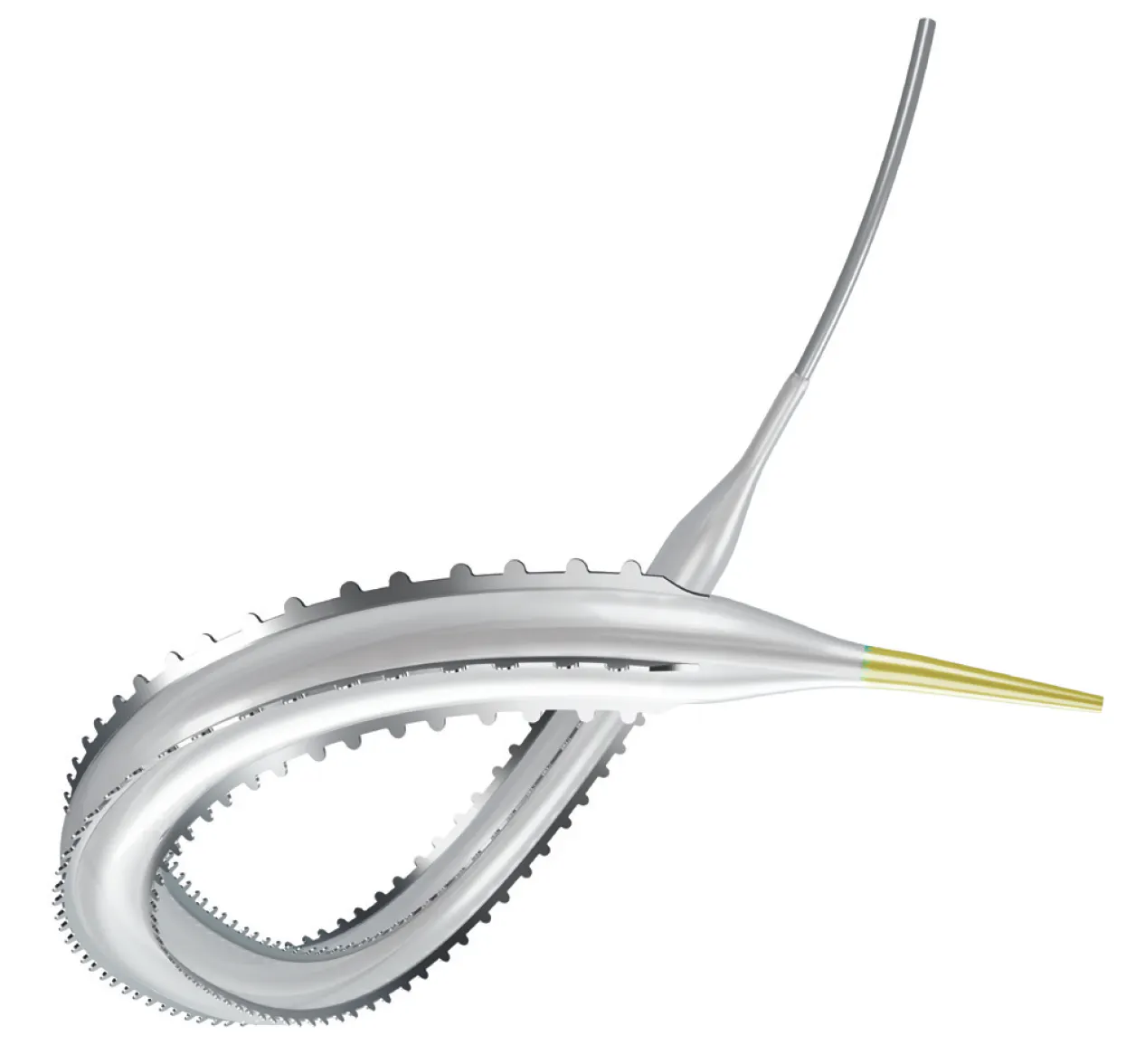
Figure 1. Serranator® PTA Serration Balloon Catheter.
Peter Schneider: It is incredibly gratifying to have many patients benefiting from this concept. The foundation of this technology as an alternative to plain balloons is important context for the recent announcement of SONIC IVL. SRT directs the balloon energy and when IVL is added, the level of energy can be optimized for the clinical presentation. Paul, you spend more time with physicians in the field than anyone. When did the idea of combining SRT with IVL start to take shape?
Paul Wilson: Physicians were telling us that SRT was delivering excellent results across a broad range of lesion types, and at the same time, they were describing the frustrations they experienced with current IVL systems: the capital cost, the fixed energy profiles, the complexity of managing a console-based platform in the middle of a case. So, the vision became very clear. What if we could build a single device, rooted in the proven SRT mechanism, that could treat the complete spectrum of lesion compositions—calcified, fibrotic, mixed—and do it efficiently, without the overhead and anxiety that comes with first-generation IVL? That was the insight behind SONIC, and it came directly from the physicians using SRT every day.
Peter Schneider: That’s a great point, Paul. And the result is a system that is genuinely more than the sum of its parts. The Serranator® SONIC IVL System is the first IVL system to transmit ultrasonic acoustic waves through the balloon and serrated metal elements directly into calcified plaque, rather than through balloon wall alone. That direct transmission force-multiplies the therapeutic effect on the arterial wall at low inflation pressures. The synergy between SRT and lithotripsy energy is something that differentiates this technology in terms of mechanism of action.
Paul Wilson: And the form factor is a differentiator. The entire system, including the generator, is fully disposable. No capital equipment, no console, no service contracts. Peter, from a clinical standpoint, what does that mean in practice?
Peter Schneider: It means the technology is accessible the moment you open the package. But what I think matters most is the ability to tailor both the intensity and frequency of the ultrasonic acoustic energy. You can adjust based on the patient’s specific clinical presentation. That flexibility will be a meaningful clinical advantage.
Paul Wilson: Let me add to that, because this is where the commercial conversation with physicians gets very direct. The frustrations I hear about first-generation IVL systems come down to three things: (1) clinical workflow complexity due to capital equipment; (2) limited pulses, meaning the system stops before you’re done; and (3) as we know, plain old balloon angioplasty is not an optimized tool for yielding lesions. SONIC will address all three. No capital. It’s a system that removes the pulse anxiety. Because SRT handles fibrous and mixed-morphology disease that conventional IVL misses, the device utility and treatable patient population expands substantially across peripheral and coronary applications.
Paul Wilson: Peter, let’s shift gears and talk about the FIH use experience, because that is the milestone that makes all of this real. What stood out to you about the early REMODEL I1 results?
Peter Schneider: What stood out was the complexity of the cases. These were not straightforward lesions. The first procedures, performed in Uzbekistan by Drs. Iskhakov and Madrakhimov along with Dr. Steven Kum from Singapore, involved complex calcified chronic total occlusions. The results were encouraging across the board: successful calcium modification, lesion remodeling confirmed through angiographic and intravascular ultrasound imaging, and no device-related serious adverse events. Dr. Kum commented specifically on his observed technical outcomes, deliverability, and flexibility of the adjustable energy delivery. Hearing that from an experienced vascular operator validated what we have been building toward.
Paul Wilson: Now we have the capital to take the next step. The $41 million Series D, co-led by U.S. Venture Partners, Astoria Health Investors, Sectoral Asset Management, and Blue Ridge Medical LLC, was oversubscribed. That funds our global REMODEL II pivotal trial, commercial launch of the SONIC IVL System, and our coronary artery platform. Peter, when you think about where this company started, a cofounder with a thesis about serration, to where we are today, what does that trajectory look like to you?
Peter Schneider: It looks like a company that built the right foundation and earned an opportunity to take the next step. The Serranator® proved the mechanism. Your team in the field has made this technology available across a broad geography with over 40,000 procedures to date serving as a clinical evidence base. Now, SONIC takes that platform and expands what is possible. For physicians who have had to choose between SRT and IVL, that tradeoff will soon disappear given that both mechanisms will be available at the operator’s discretion in a single device, in a single procedure.
Paul Wilson: That is the message we are most excited to bring to the field. Peter, thank you. This has been a remarkable chapter for Cagent Vascular, and the best is still ahead.
Peter Schneider: Thank you, Paul. I could not agree more.
Disclosures
Dr. Schneider: Consultant to Medtronic, Boston Scientific Corporation, Cagent Vascular, Acotec, Abbott, Endologix, Shockwave Medical, Healthcare Inroads, BD Interventional, Stryker, and Cordis.
Mr. Wilson: Employee at Cagent Vascular.
The Serranator® PTA Serration Balloon Catheter is currently approved to be sold in the US and specific OUS regions. Please reach out to a Cagent Vascular Representative for more information.
The Serranator® PTA Serration Balloon Catheter is intended for dilatation of lesions in the iliac, femoral, iliofemoral, popliteal, and infrapopliteal arteries and for the treatment of obstructive lesions of native or synthetic arteriovenous dialysis fistulae. Not for use in the coronary or neurovasculature.
The Serranator SONIC IVL System is not available for commercial sale. It is currently in development and has not been cleared or approved by the U.S. Food and Drug Administration (FDA) or any other regulatory authority.
1. Revascularization with modification using definitive IVL and serration remodeling for optimal lumen (REMODEL I). Clinicaltrials.gov website. Accessed May 22, 2026. https://clinicaltrials.gov/study/NCT07575568
Advertisement
Advertisement