Advertisement
Advertisement
May 2026
Sponsored by Stryker Peripheral Vascular
The LimFlow® TADV System: Taking CLTI Patients From “No Option” to “Next Option”
Purpose-built innovation, durable evidence, and the imperative to treat earlier.
With Daniel Clair, MD; Mehdi H. Shishehbor, DO, MPH, PhD; Steven Abramowitz, MD; Michael C. Siah, MD; Yana Etkin, MD; and Miguel Manzur, MD
Chronic limb-threatening ischemia (CLTI) remains one of the most devastating manifestations of peripheral artery disease, with “no-option” patients historically facing major amputation as an almost inevitable outcome.1
Transcatheter arterialization of deep veins (TADV) with the purpose-built LimFlow TADV System (Stryker Peripheral Vascular) represents a fundamental shift in this paradigm by transforming limb salvage from a last-resort maneuver into a reproducible, durable therapeutic strategy.
This article shows how the LimFlow TADV System, combined with growing clinical evidence and earlier patient identification, is transforming care for CLTI patients—turning those once labeled “no-option” into patients with a real chance at limb salvage.
Q&A: Durable Outcomes and Expanding Evidence
Co-Principal Investigators from the PROMISE Studies discuss the uniqueness of the recently published study, key highlights from the data, and more.


What do the 2-year PROMISE data tell us about durability?
Dr. Clair: The 2-year outcomes from the PROMISE Studies2 fundamentally reinforce what many of us observed clinically during the trial: TADV with the LimFlow System is not simply a short-term technical success but rather a durable limb salvage strategy.
Limb salvage rates at 2 years remain strong and notably similar to 1-year outcomes, demonstrating stability rather than attrition over time. Importantly, 83% of patients were healed or healing at 2 years, and the median pain score was 0 (Figure 1).3,4 For a patient population historically destined for major amputation, these findings represent not incremental improvement but transformation.
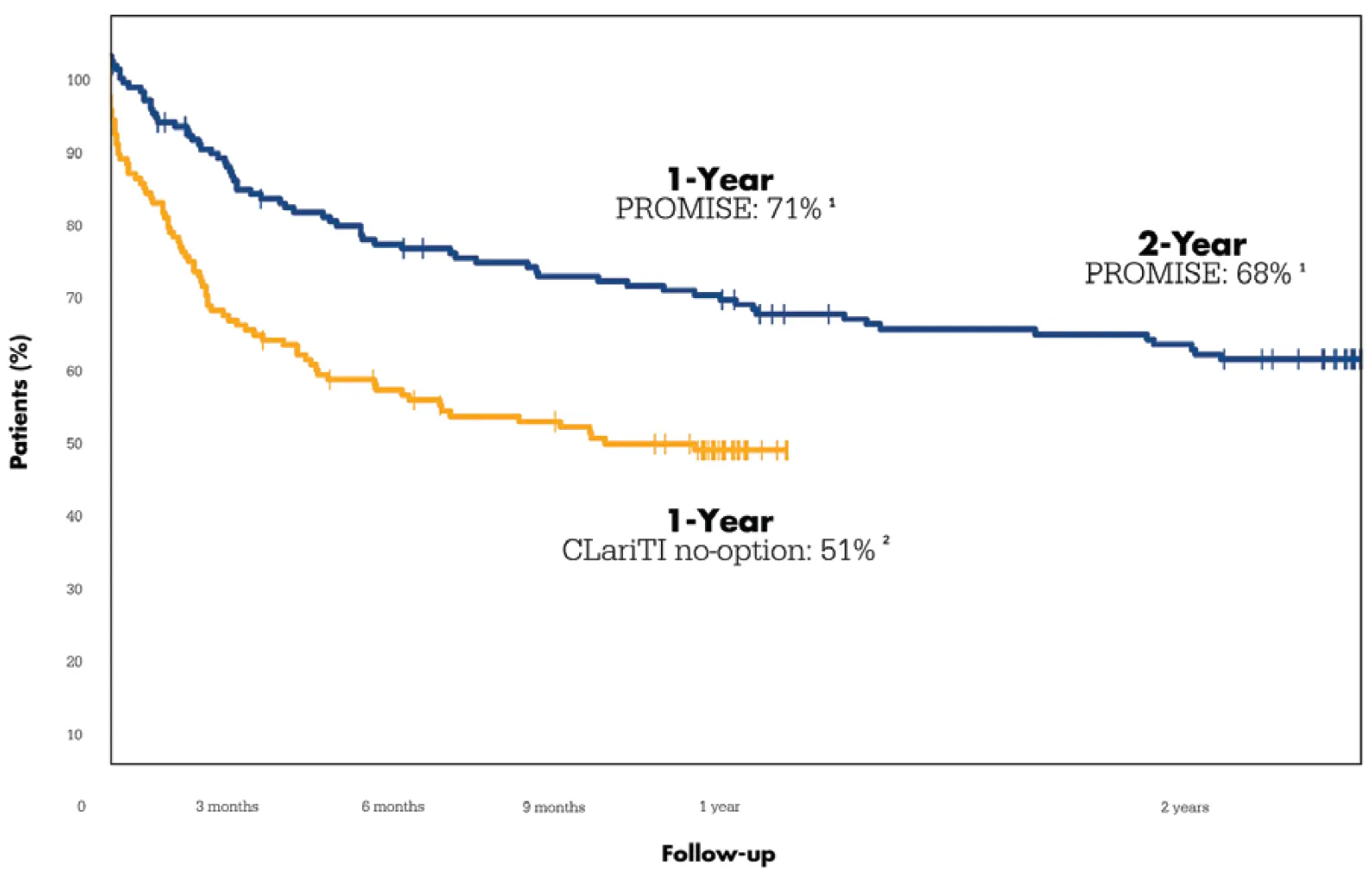
Figure 1. PROMISE I/II Studies demonstrate durable limb salvage through 2 years (68%), while CLariTI reflects the steep 1-year decline expected with standard care in no-option CLTI.
Durability is the critical word. In CLTI, an early signal is meaningful, but sustained benefit is what ultimately validates a therapy.
Why is early patency so important?
Dr. Shishehbor: One of the most clinically relevant insights from long-term follow-up is the strong association between patency through the first 3 months after the LimFlow procedure and subsequent limb salvage.
Early circuit patency is both procedural and biological. It allows time for venous remodeling, collateral recruitment, and tissue-level perfusion to evolve. Patients in the PROMISE Studies who maintained patency through 3 months experienced significantly better long-term limb outcomes.2
This reinforces two key principles: Technical execution is critical, and appropriate patient selection and timing are equally essential to achieving durable outcomes.
How does PROMISE III reinforce the growing body of evidence?
Dr. Clair: PROMISE III 6-month data further support the reproducibility and scalability of TADV with LimFlow (Figure 2).5 Outcomes across a broader group of operators confirm strong technical success and meaningful early limb salvage in no-option CLTI patients.
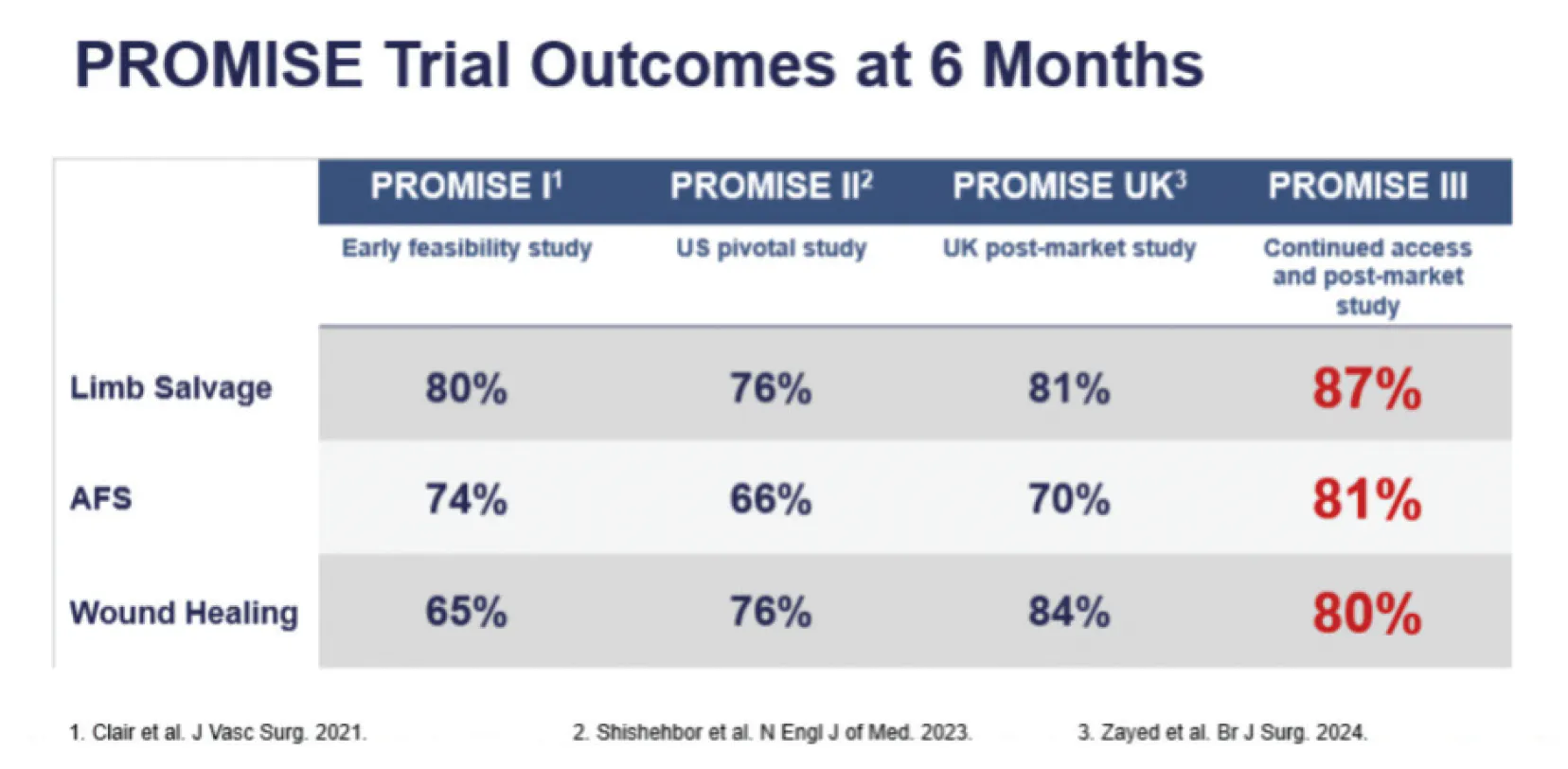
Figure 2. Building on prior PROMISE Studies, PROMISE III demonstrates robust 6-month outcomes with limb salvage (87%), amputation-free survival (81%), and wound healing (80%) reinforcing the strength of the growing evidence base.5
The early PROMISE Studies showed that the LimFlow TADV System delivers durable results, offering strong clinical evidence that moves TADV with LimFlow from a feasibility concept toward a standardized clinical therapy with definitive benefit.3,5
The Treatment Window: Avoiding the “Hail Mary”

CLTI is progressive and unforgiving. Historically, many patients referred for TADV have arrived after:
- Multiple failed revascularization attempts
- Progressive tissue necrosis
- Uncontrolled infection
- Systemic physiologic decline
In these scenarios, even a technically successful procedure may struggle against limited biologic reserve.6 Importantly, many of these patients are not simply late referrals but represent a distinct pathophysiologic subset characterized by small artery disease and medial arterial calcification. These conditions limit distal target vessel availability and impair microvascular perfusion, rendering traditional revascularization strategies ineffective even when technically successful. In this context, the concept of “no-option” is often driven less by timing alone and more by the underlying arterial biology.
The durability data from the PROMISE Studies challenge the historic positioning of TADV as a “last possible maneuver.” Instead, TADV with LimFlow should be considered at the point of true anatomic no-option CLTI, before uncontrolled infection and advanced tissue destruction compromise healing capacity.
A threatened limb without conventional options does not mean an unsalvageable limb (Figure 3). Earlier identiication and appropriate TADV with LimFlow treatment allows:
- Improved early patency rates
- Predictable circuit maturation
- Reduced infectious burden
- Better wound healing trajectories
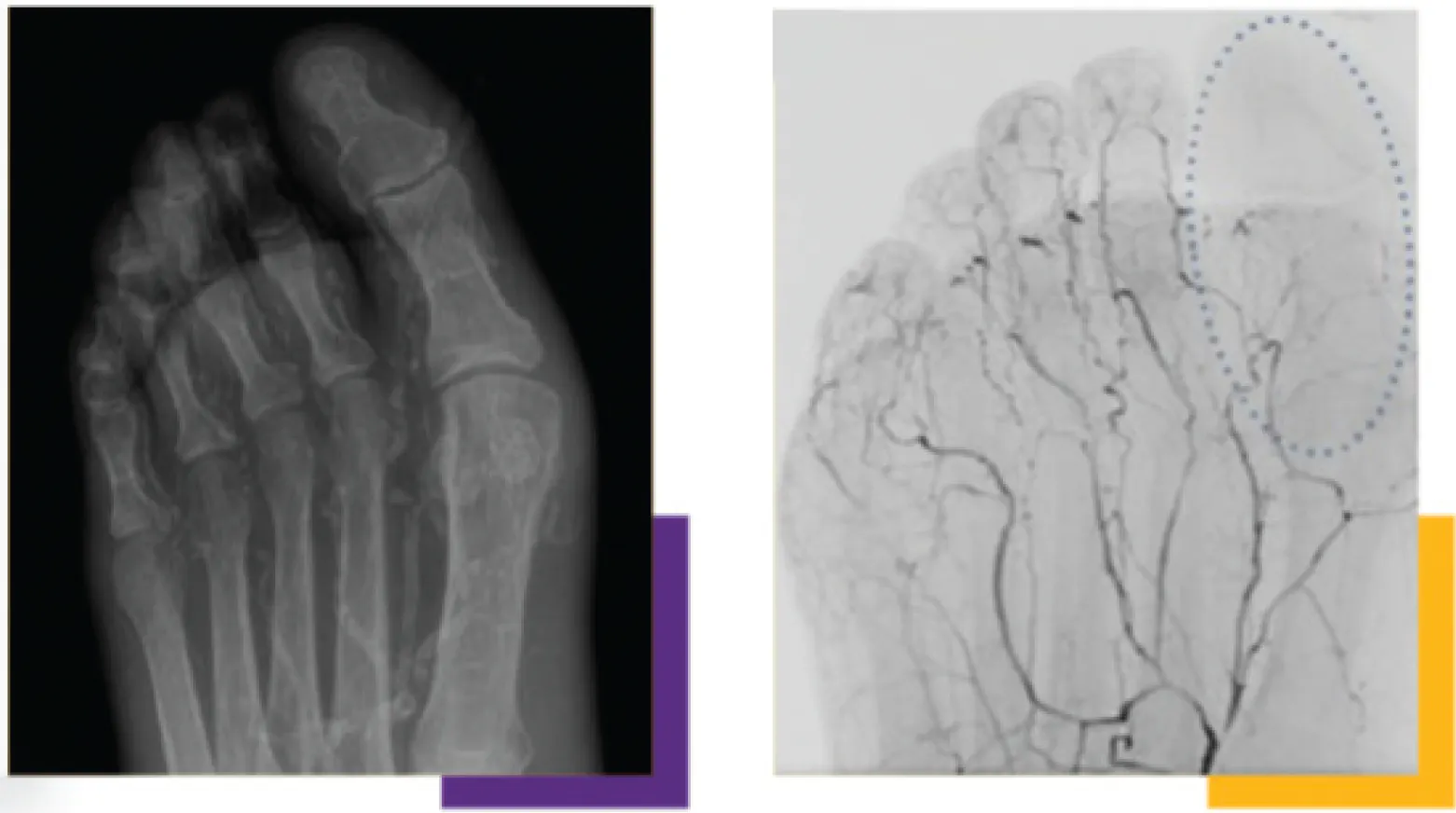
Figure 3. Imaging of advanced CLTI with X-ray (left) demonstrating medial arterial calcification, and angiography (right) showing severely impaired distal perfusion.
Successful CLTI intervention depends on identifying the right patient and intervening within the optimal biological window, where earlier consideration of LimFlow may help preserve meaningful limb salvage opportunities.2
Purpose-Built Versus Off-the-Shelf Deep Vein Arterialization: Why System Design Matters

Deep vein arterialization (DVA) has evolved since its initial inception over 100 years ago. Prior to the conceptualization of the Limflow System, open surgical experiences of foot vein arterialization were met with mixed success and, as a result, did not lead to widespread adoption. Over the last 10 years, “artisanal” or “off-the-shelf” strategies to perform DVA have relied on the use of readily available endovascular devices repurposed to achieve arterial flow delivery to the foot via the venous system. These strategies were developed in the absence of the commercially available LimFlow System in the United States and globally, alongside a growing recognition among physicians that conventional surgical and endovascular therapies often fail to prevent major amputation in no-option CLTI patients.
These approaches often require alternative crossing techniques, valvulotomy methods, and mismatched stent constructs. While technically feasible, the lack of a purpose-built product and the abundance of nonstandard techniques and approaches introduce procedural variability and unpredictable flow dynamics.7
DVA is not simply about connecting artery to vein. It is about creating a hemodynamically optimized conduit capable of remodeling and sustaining tissue perfusion over time.
The LimFlow System was engineered specifically for TADV (Figure 4) and addresses the critical procedural pillars:
- Precision arteriovenous crossing through target arteries
- Purpose-built valvulotomy designed to disrupt venous valves in a controlled manner
- Tapered crossing stent architecture engineered to optimize arterial-to-venous flow transition
- Dedicated extension stent grafts designed for venous circuit lining
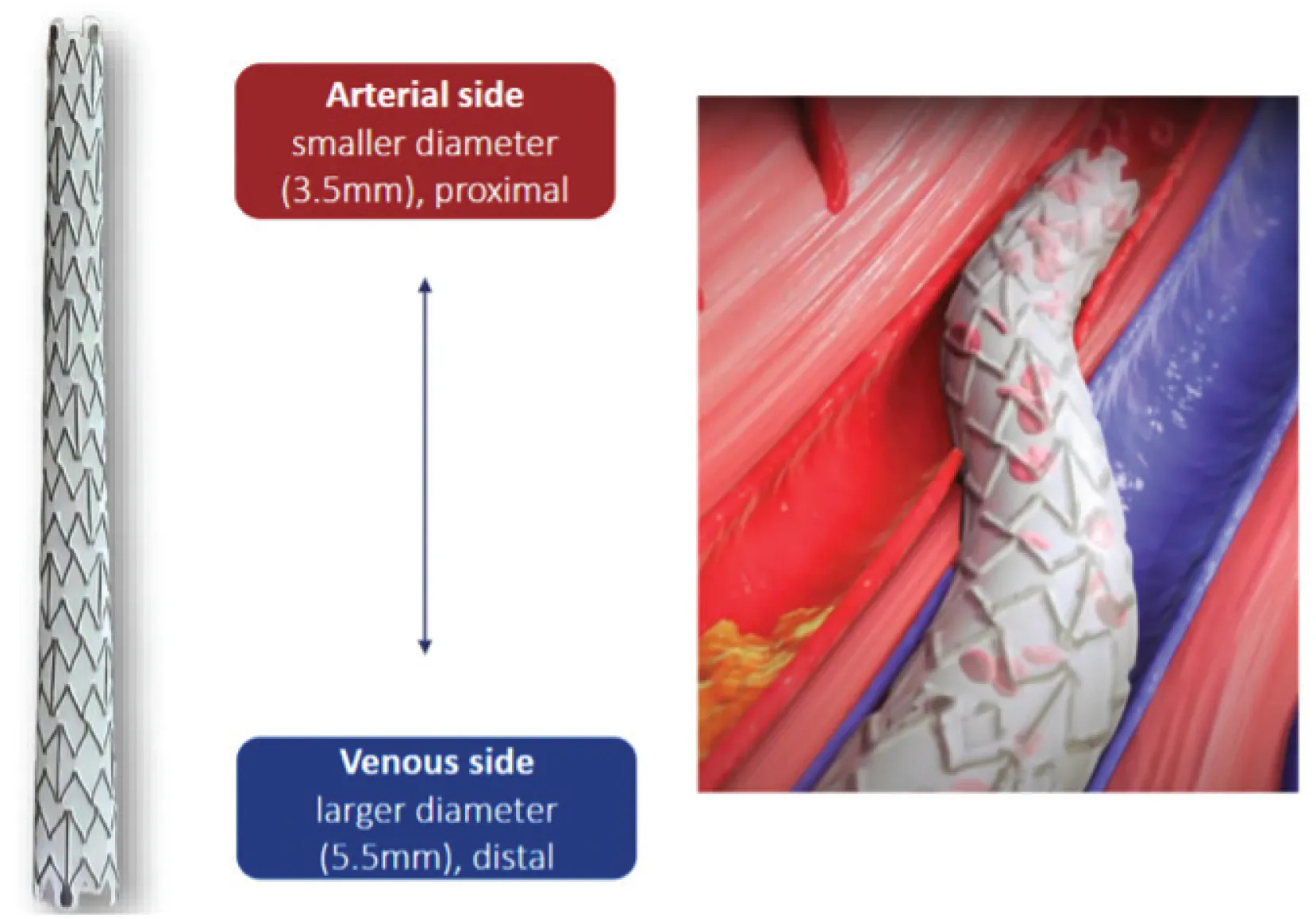
Figure 4. The LimFlow System is purpose-built for TADV, featuring a tapered crossing stent designed to facilitate a controlled transition from smaller-diameter arteries to larger-diameter veins.
The LimFlow System enables procedural standardization, helping to reduce variability across operators and patients. Variability reduces predictability—and ultimately, procedural predictability and homogeneity lead to consistent results.
The LimFlow TADV System is a purpose-built approach to percutaneous DVA. By providing a standardized procedural platform supported by expanding clinical evidence, LimFlow enables physicians to treat CLTI patients who were previously considered beyond conventional revascularization options.
From Salvage to Strategy
By Mehdi H. Shishehbor, DO, MPH, PhD
TADV with the purpose-built LimFlow System (Figure 5) has evolved from an innovative concept to a durable therapeutic strategy supported by a growing body of clinical evidence. Findings from the PROMISE I and PROMISE II Studies, including 2-year outcomes demonstrating sustained limb salvage, with emerging multicenter data from the PROMISE III Study and real-world experience from the United Kingdom, collectively reinforce the reproducibility, durability, and procedural precision enabled by the purpose-built LimFlow platform.2-4,8 But perhaps the most important evolution is philosophical.
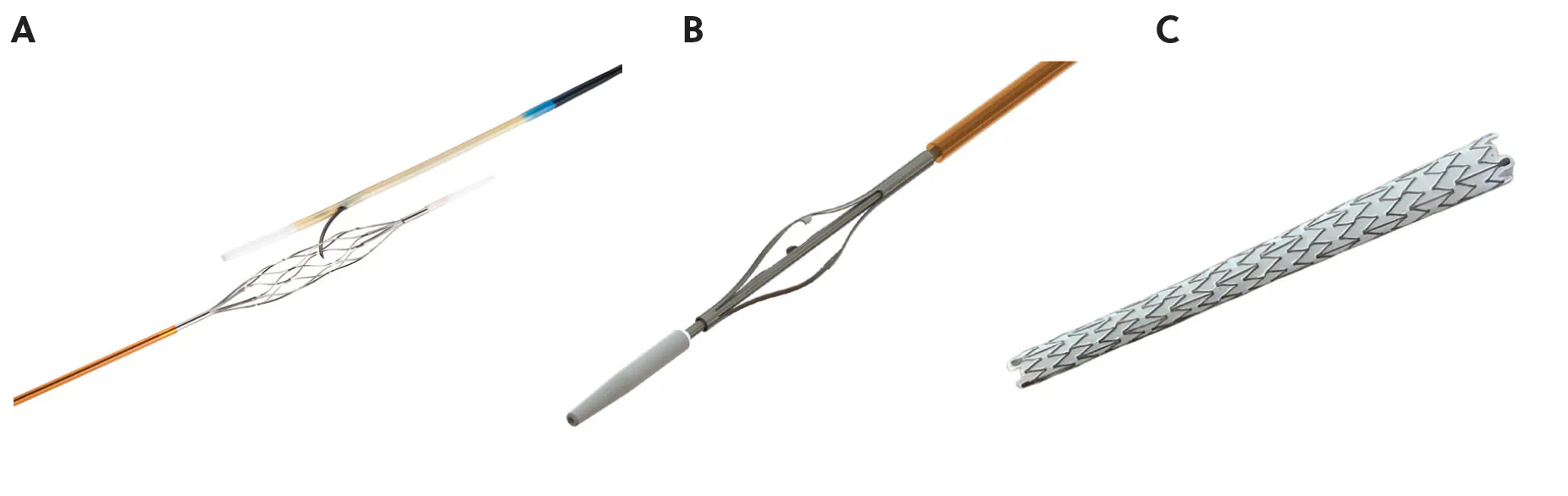
Figure 5. The LimFlow System, including the ARC catheter and V-Ceiver (A), is built to facilitate crossing from artery to vein, with a Vector valvulotome (B) for lysing of venous valves and a tapered crossing stent (C) to match diameters of the native anatomy.
Limb salvage for “no-option” CLTI patients is no longer a last resort—it’s becoming a deliberate, evidence-driven treatment strategy. With LimFlow, physicians and patients now have a pathway toward success guided by engineering precision, clinical data, and earlier patient identification.
Surgeon Perspectives: Two Clinical Experiences With LimFlow

CASE 1: EARLY RECOGNITION, PREDICTABLE RECOVERY
A patient presented with Rutherford class 5 CLTI and no suitable distal target. There was no significant infection noted, and tissue loss was limited to the forefoot. TADV with LimFlow was performed using a standardized approach with early confirmed patency.
Over subsequent months, the circuit matured predictably. Progressive granulation occurred, and wound closure was achieved. At follow-up, the patient remained ambulatory with sustained limb salvage.
“TAKEAWAY: This case underscores the power of early selection and controlled circuit creation.”

CASE 2: LESSONS IN TIMING
A patient presented with advanced tissue loss and active infection after multiple prior revascularization attempts. TADV with the LimFlow System achieved technical success. Biologic recovery was predictably prolonged, requiring intensive and sustained multidisciplinary management to achieve wound healing.
This case underscores that timing is as critical as technical execution. Patients referred late in the disease course, particularly after failed interventions and progression of infection and ischemia, face a significantly more challenging path to recovery, even when successful revascularization is achieved.
Equally important is the role of a well-integrated limb salvage team. In this case, close collaboration with podiatry and wound care specialists was essential to guide serial debridement, optimize infection control, and manage complex wound healing over time. Without this coordinated effort, the likelihood of achieving durable limb salvage would have been substantially lower.
Although the team achieved limb salvage, the case reinforced a central lesson: Delayed referral and fragmented care pathways limit what even the strongest technical capability can overcome.
“TAKEAWAY: Proper patient selection is not about exclusion but about early identification, timely intervention, and integration into a multidisciplinary limb salvage program.”
Insights From TADV With LimFlow
- Durable 2-year outcomes (PROMISE I and II): Sustained limb salvage rates at 2 years mirror 1-year results, demonstrating stability rather than attrition. At 24 months, 83% of patients were healed or healing, with a median pain score of 0—evidence that TADV delivers meaningful, lasting benefit.2-4
- Early patency drives long-term success: Circuit patency through the first 3 months strongly correlates with limb salvage. Procedural precision, optimized flow dynamics, and proper post-TADV patient care are critical to durable outcomes.2
- Reproducibility demonstrated: Six-month multicenter data across the PROMISE Studies reinforce technical success and scalability across operators, moving TADV beyond feasibility into clinical standardization.5
- Purpose-built design matters: Unlike improvised off-the-shelf approaches, the LimFlow System was engineered specifically for DVA by addressing arteriovenous crossing, valvulotomy, and stent architecture to optimize hemodynamics and reduce variability.6
- The imperative to treat earlier: Positioning TADV as a “Hail Mary” underestimates its potential. Data support intervention at the point of true anatomic “no option,” before uncontrolled infection and advanced tissue loss compromise biological recovery.2
Together, these findings suggest an evolution in CLTI management, moving from “last-resort limb salvage” toward a LimFlow-enabled strategy guided by engineering precision, clinical evidence, and disciplined timing of intervention.
1. Conte MS, Bradbury AW, Kolh P, et al; GVG Writing Group for the Joint Guidelines of the Society for Vascular Surgery (SVS), European Society for Vascular Surgery (ESVS), and World Federation of Vascular Societies (WFVS). Global vascular guidelines on the management of chronic limb-threatening ischemia. Eur J Vasc Endovasc Surg. 2019;58:S1-S109.e33. Published corrections appear in Eur J Vasc Endovasc Surg. 2020;59:492-493. and Eur J Vasc Endovasc Surg. 2020;60:158-159. doi: 10.1016/j.ejvs.2019.05.006
2. Shishehbor MH, Dua A, Powell RJ, et al. Two-year outcomes after transcatheter arterialization of the deep veins. N Engl J Med. 2025;393:1751-1753. doi: 10.1056/NEJMc2507935
3. Shishehbor MH, Zayed H, Dua A, et al. 1-Year outcomes of transcatheter arterialization of deep veins: PROMISE II and pooled PROMISE studies. JACC Cardiovasc Interv. 2025;18:1675-1685. doi: 10.1016/j.jcin.2025.05.004
4. Clair D. Two-year outcomes from the PROMISE II trial of transcatheter arterialization of the deep veins. Presented at: Vascular InterVentional Advances (VIVA); November 4, 2024; Las Vegas, Nevada.
5. Clair D. Transcatheter arterialization of the deep veins: initial 6-month outcomes from the PROMISE III trial. Presented at: Vascular InterVentional Advances (VIVA); November 4, 2025; Las Vegas, Nevada
6. Dua A, Powell RJ, Lee AC, et al. Contemporary outcomes in no-option chronic limb-threatening ischemia. Sci Rep. 2025;15:24446. doi: 10.1038/s41598-025-09784-4
7. Boya MN, Cieri IF, Rodriguez Alvarez AA, et al. Evidence for transcatheter arterialization of deep veins in poor-option chronic limb-threatening ischemia: a systematic review and meta-analysis. J Vasc Surg. 2026;83:482-492. doi: 10.1016/j.jvs.2025.08.055
8. Zayed H, Saratzis A, Moxey P, et al. Transcatheter arterialization of the deep veins: 1-year outcomes of PROMISE-UK study. Br J Surg. 2024;111:znae188. doi: 10.1093/bjs/znae188
*LimFlow® TADV System includes the LimFlow System or LimFlow Stent Grafts, and LimFlow ARC, LimFlow Vector, and LimFlow V-Ceiver. Please refer to the ISI for more information.
Important Safety Information:
LimFlow System and LimFlow Stent Grafts Intended Use/Indications for Use: The LimFlow System and LimFlow Stent Grafts are indicated for patients who have chronic limb-threatening ischemia with no suitable endovascular or surgical revascularization options and are at risk of major amputation. Contraindications: Patients with deep venous thrombus in target vein; Patients with uncorrected bleeding disorders or patients who cannot receive anticoagulation or antiplatelet aggregation therapy. Warnings and Precautions: Use in patients with concomitant hepatic insufficiency has not been evaluated; Use in patients with poor cardiac output, e.g., NYHA Class IV, has not been evaluated; Use in pregnant and breastfeeding women has not been evaluated; Implanting the device in the distal half of the calcaneus may result in stent fracture. Adverse Events: Acute renal impairment requiring dialysis; Cardiac arrest, Death, Embolization, Graft rupture, trans-graft leak, site leak; Hematoma; Insufficient blood flow to foot; Ischemia; Myocardial infarction; Occlusion; Pain; Peripheral edema; Procedural bleeding; Restenosis of stented segment; Sepsis / Infection; Stent damage, implant migration; Stent graft fracture; Stent graft misplacement, deformation, or migration; The need for surgical or endovascular interventions to rectify an access site problem; Thrombosis; Vessel dissection, perforation, injury; Vessel spasm. Review complete Instructions for Use, Indications for Use, Warnings, Precautions, Possible Adverse Effects and Contraindications prior to use of the product. LimFlow ARC Intended Use/Indications for Use: The LimFlow ARC is intended to facilitate placement and positioning of guidewires and catheters within the peripheral vasculature. The LimFlow ARC is not intended for use in the coronary or cerebral vasculature. LimFlow V-Ceiver Intended Use/Indications for Use: The LimFlow V-Ceiver is intended for use in the cardiovascular system to manipulate and retrieve guidewires specified in the IFU. LimFlow Vector Intended Use/Indications for Use: The LimFlow Vector is intended for the treatment of vascular disorders and more particularly for excising or disrupting venous valves.
Important Information: Prior to use, refer to the Instructions for Use for indications, contraindications, suggested procedure, warnings, adverse events, and precautions.
Review complete Instructions for Use, Indications for Use, Warnings, Precautions, Possible Adverse Effects and Contraindications prior to use of these products. For all non-Inari products, please refer to complete manufacturer Instructions for Use/Intended Purpose.
Caution: Federal (USA) law restricts this device to sale by or on the order of a physician.
Peripheral Vascular
This document is intended solely for the use of healthcare professionals. A healthcare professional must always rely on his or her own professional clinical judgment when deciding whether to use a particular product when treating a particular patient. Stryker does not dispense medical advice and recommend that surgeons be trained in the use of any particular product before using it in surgery.
The information presented is intended to demonstrate Stryker’s products. A healthcare professional must always refer to the package insert, product label and/or instructions for use, including the instructions for cleaning and sterilization (if applicable), before using any of Stryker’s products. Products may not be available in all markets because product availability is subject to the regulatory and/or medical practices in individual markets. Please contact your representative if you have questions about the availability of Stryker’s products in your area.
Stryker or its affiliated entities own, use or have applied for the following trademarks or service marks: LimFlow and Stryker. All other trademarks are trademarks of their respective owners or holders. The absence of a product, feature, service name or logo from this list does not constitute a waiver of Stryker’s trademark or other intellectual property rights concerning that name or logo.
PRO-2967-USA-EN-v1 | Copyright © 2026 Stryker
Inari Medical, Inc.
6001 Oak Canyon, Suite 100
Irvine, CA 92618-5200
stryker.com
All physicians featured are paid consultants of Stryker Peripheral Vascular and are sharing their views, opinions, and experience with Stryker Peripheral Vascular devices. Their opinions and experiences were formed independently of Stryker Peripheral Vascular and may not represent every experience or outcome with the devices. The information is not a promise or guarantee by Stryker Peripheral Vascular regarding a particular treatment, therapy, medication, device, diagnosis, action, recommendation, strategy, or outcome.
Advertisement
Advertisement