Advertisement
Advertisement
September 2026
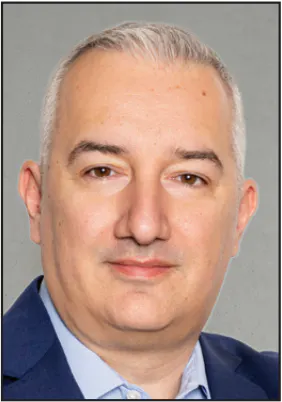
An Interview With Dimitrios K. Filippiadis, MD, PhD, MSc, EBIR
Prof. Filippiadis discusses image-guided pain management as the next frontier in IR, advances in spine intervention, IR education, the importance of standardized complication reporting, and more.
Within interventional radiology (IR) and interventional oncology (IO), you have carved out a vital niche in image-guided cancer pain management. What led you to make this your focus?
Chronic pain is a major and growing global health challenge that is often inadequately treated with systemic medications. I strongly believe that image-guided pain management is one of the most important growth areas in IR and offers an opportunity to show how minimally invasive therapies can transform patient care. IR, with its image-guided, minimally invasive techniques and therapies, has the unique potential to improve pain management outcomes, reduce reliance on systemic medications, and restore patient function.
How have you seen the role of IR in multidisciplinary oncology teams evolve over the course of your career?
IR has evolved from being primarily a procedural specialty to becoming a central therapeutic partner in cancer care. Traditionally, many IR procedures were considered only after surgery, chemotherapy, or radiation had been exhausted. Increasingly, IR specialists are involved at the time of initial treatment planning. Tumor boards now often discuss image-guided interventions alongside surgery, systemic therapy, and radiation therapy, particularly for liver, kidney, lung, spine, and bone tumors. Interventional radiologists are increasingly serving as clinicians who contribute to diagnosis, local tumor control, symptom management, and longitudinal care—not simply proceduralists performing isolated interventions. As minimally invasive technologies, image guidance, molecular diagnostics, and systemic therapies continue to advance, IR is well positioned to become an even more indispensable member of multidisciplinary oncology teams, helping to deliver more personalized, less invasive, and more coordinated cancer care.
Where in percutaneous ablation are we most in need of more data? What research questions are top of mind for you as the field continues to evolve?
If I were prioritizing the biggest evidence gaps, I would include ablation versus surgery in patients who are surgical candidates; margin assessment as well as imaging biomarkers beyond size; combining therapeutic approaches with immunotherapies; and implementing artificial intelligence throughout the workflow.
You’ve been instrumental in advancing cryoneurolysis as a nerve ablation technique for pain management. Where do you think cryoneurolysis fits within today’s treatment landscape? What clinical or patient factors determine when cryoneurolysis is the right choice over other pain interventions?
Cryoneurolysis occupies a useful niche between conservative pain management and more invasive or permanent procedures. It is typically most valuable for pain that is mediated and distributed by a specific peripheral sensory nerve, especially when prolonged pain relief (months to years) is desired without permanently damaging the nerve itself. In today’s treatment landscape, I would think of cryoneurolysis as one option among several, rather than a universal therapy. Its role depends on the pain condition, the patient’s goals, and the availability of alternative treatments with stronger evidence for that indication.
From your early work in quantitative discomanometry to more recent innovations in ablation techniques, you have witnessed the evolution of image-guided spine intervention. What do you see as the next major advancement in spinal intervention?
The next major advancement in spine interventions is likely to be the emergence of implantable products that serve not only as structural devices but also as localized carriers of therapeutic agents. By enabling the controlled, site-specific delivery of antibiotics, chemotherapeutics, radiopharmaceuticals, biologics, or regenerative therapies, these platforms will have the potential to improve treatment efficacy while minimizing systemic toxicity. As spine care increasingly shifts toward precision and minimally invasive interventions, multifunctional implants that combine mechanical support with targeted therapeutic delivery could address significant unmet needs in infection management, spinal oncology, and tissue regeneration, representing a new paradigm in spine treatment.
Furthermore, advanced imaging guidance and robotic-assisted technologies are poised to redefine the precision and reproducibility of spine interventions. By integrating real-time imaging, navigation, robotics, and, increasingly, artificial intelligence, these systems enable more accurate instrument placement, optimize minimally invasive workflows, and reduce variability between operators. As these technologies continue to evolve, they are expected to improve procedural safety, expand the complexity of cases that can be treated percutaneously, and support data-driven decision-making, ultimately enhancing both clinical outcomes and procedural efficiency.
Medical education is a top professional priority for you, and you currently serve as Chair of the Cardiovascular and Interventional Radiological Society of Europe (CIRSE) Online Education Committee. What have you learned from this role about how interventional physicians learn most effectively today? What doesn’t work?
Medical education extends beyond practical knowledge. Educated physicians develop the critical thinking and skills that help them make good decisions for the benefit of their patients. The Online Education Committee deals with the CIRSE Library, Academy, and webinars, along with other initiatives that support these three main pillars of the society’s virtual and online education programs.
Regarding education, interventional radiologists today learn most effectively through a combination of traditional teaching, hands-on experience, and technology-enhanced learning. The emphasis seems to have shifted from passive learning to competency-based, case-driven education. The challenge today is not that interventional radiologists lack educational opportunities; in reality, we have more resources than ever. The real challenge is in transforming information into competence. Traditional apprenticeship remains essential, but it needs to be complemented by simulation, competency-based assessment, multidisciplinary learning, and continuous feedback. The traditional “see one, do one, teach one” model remains valuable, but it is insufficient for increasingly complex procedures, technologies, and patient populations.
In 2026, you and colleagues published the modified CIRSE classification system for reporting complications, with the goal of improving standardized complication reporting and quality assessment in IR.1 Why is standardized complication reporting important for both physicians and the patients they treat? In terms of implementation, what would success in 5 years look like?
Standardized complication reporting is important for both physicians and patients because it provides consistent definitions, thus creating a common language for describing outcomes. Without this, the same complication may be classified differently across hospitals or even by different physicians within the same institution, making meaningful comparisons difficult and limiting opportunities for quality improvement. For physicians, standardized reporting is related to a wide variety of benefits: reliable benchmarking; improved quality of services, research, education, and training; and transparency and accountability. For patients, the benefits are equally important, including more accurately informed consent, improved safety and trust, and better treatment decisions.
Five years after implementation, the greatest measure of success would not simply be the widespread use of the modified CIRSE classification system but the fact that this system will have become the default international standard for reporting complications in IR. Clinicians would speak a common language when discussing complications, researchers could generate more comparable evidence, health care systems could benchmark performance accurately, and patients would benefit from safer, more transparent, and continuously improving care.
Your center in Greece was the first to achieve International Accreditation System for Interventional Oncology Services accreditation, as well as the first to integrate microwave and navigation-guided ablation into IR services. What has been key to creating a high-quality IO program that consistently embraces innovation?
Creating a high-quality IO program that consistently embraces innovation requires more than technical excellence. A high-quality IO program typically succeeds because of a combination of culture, process, leadership, and execution rather than any single practice. The strongest programs combine multidisciplinary collaboration, a patient-centered approach, continuous learning, and a willingness to adopt evidence-based advances. Programs that foster a culture of learning while rigorously evaluating new technologies and techniques are best positioned to deliver safe, effective, and forward-looking cancer care.
If you could solve one major challenge facing IR over the next decade, what would it be?
I would go for providing solutions to two specific challenges. The first would be making IR consistently available to every patient who could benefit from it, regardless of where or when. Technology in IR has advanced remarkably, but access has not kept pace. Many patients who would benefit from minimally invasive treatments never see an interventional radiologist because of several barriers.
The second would be completing the transformation of IR from a procedure-driven specialty into a truly patient-centered clinical specialty. Interventional radiologists have unparalleled technical expertise, but our greatest opportunity lies in becoming longitudinal clinicians who evaluate patients, guide treatment decisions, perform interventions, and remain involved in follow-up care. This model will strengthen multidisciplinary collaboration, improve continuity of care, and ensure that patients receive the right treatment, not simply a procedure.
What helps you reset when you’re away from the hospital, and how do these moments influence the way you think about challenges back at work?
Apart from listening to music, I love reading books, especially historical novels (Bernard Cornwell, Wilbur Smith, and Ken Follett are my favorite authors). My other main hobbies are playing basketball, swimming, and traveling. Time away from the hospital helps me reset mentally and emotionally. It gives me space to reflect on challenges with a clearer perspective, reduces stress, and allows me to return with more focus, patience, and resilience. I have found that taking care of my own well-being ultimately helps me make better decisions and provide better care for my patients.
1. Filippiadis D, Pereira PL, Hausegger KA, et al. CIRSE standards of practice for the classification of complications: the modified CIRSE classification system. Cardiovasc Intervent Radiol. 2026;49:2-6. doi: 10.1007/s00270-025-04200-w
Advertisement
Advertisement
Interested in reading more interviews?
To read more interviews with thought leaders in the vascular field, check out our Profiles & Perspectives hub.
Read More