Advertisement
Advertisement
February 4, 2021
1-Year Data Presented From MERLION Trial of iVascular’s Luminor DCB in BTK Treatment
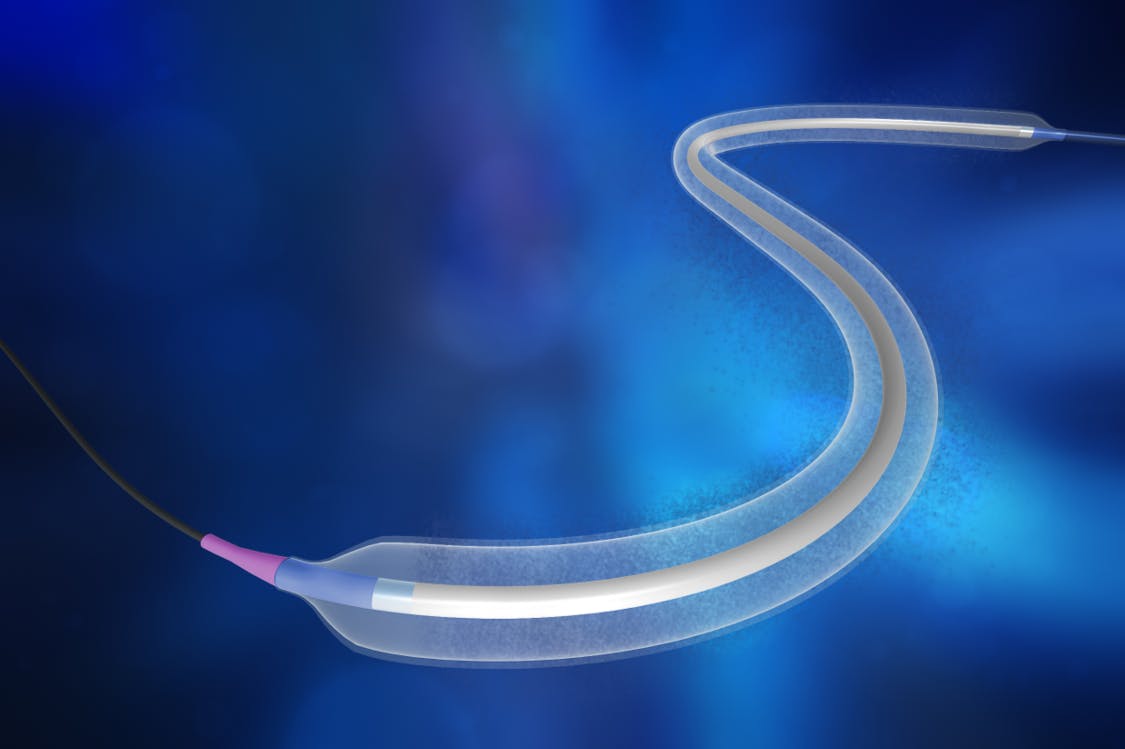 February 4, 2021—iVascular announced new evidence from the MERLION trial of the company’s Luminor drug-coated balloon (DCB) to treat complex below-the-knee (BTK) lesions. The data were presented at LINC 2021, the Leipzig Interventional Course held virtually on January 25-29.
Luminor is a paclitaxel-coated balloon with platforms for different guidewire compatibility: 0.014-, 0.018-, and 0.035-inch. The device is designed for dilatation of stenosis located in the iliac, femoral, iliofemoral, popliteal, infrapopliteal, and renal arteries, as well as for the treatment of obstructive lesions of arteriovenous fistulas, either original or artificial.
According to the company, the aim of the MERLION trial was to evaluate the use of the Luminor DCB and iVascular’s Angiolite BTK drug-eluting stent from iVascular to minimize neointimal hyperplasia and restenosis in complex BTK atherosclerotic lesions. Patients were recruited from a joint collaboration between Principal Investigator Tjun Yip Tang, MD, Senior Consultant from the Department of Vascular Surgery at Singapore General Hospital, and Chuo Ren Leong, MD, Senior Consultant Vascular Surgeon from Khoo Teck Puat Hospital in Singapore.
Investigators recruited 50 patients with chronic limb-threatening ischemia (CLTI) at the two sites. At 1-year follow-up, there was a freedom from target lesion revascularization of 82%, target lesion primary patency of 69%, amputation-free survival of 74%, and a complete wound healing rate of 66%. Additionally, there was excellent technical success, and the safety profile was demonstrated with a low bail-out tibial stenting rate, advised the company.
“Even in frail patients with complex conditions whom we had recruited for the study, the device demonstrated promising safety and efficacy outcomes after lower limb revascularization at 1 year,” commented Dr. Tang in iVascular’s announcement.
Dr. Leong added, “CLTI continues to pose a significant challenge to physicians and health care systems. In addition to best medical care, wound management, and multidisciplinary approaches, the use of drug-eluting technology in the surgeon’s treatment armamentarium continues to show promise as a valuable adjunct in the battle for limb salvage. Our study has demonstrated good results in particular with regard to amputation-free survival and complete wound healing rates in a cohort of patients with high rates of diabetes and end-stage renal failure.”
Advertisement
Advertisement
