Advertisement
Advertisement
January 13, 2025
AngioDynamics’ AlphaVac F1885 System’s APEX-AV Trial Results Published
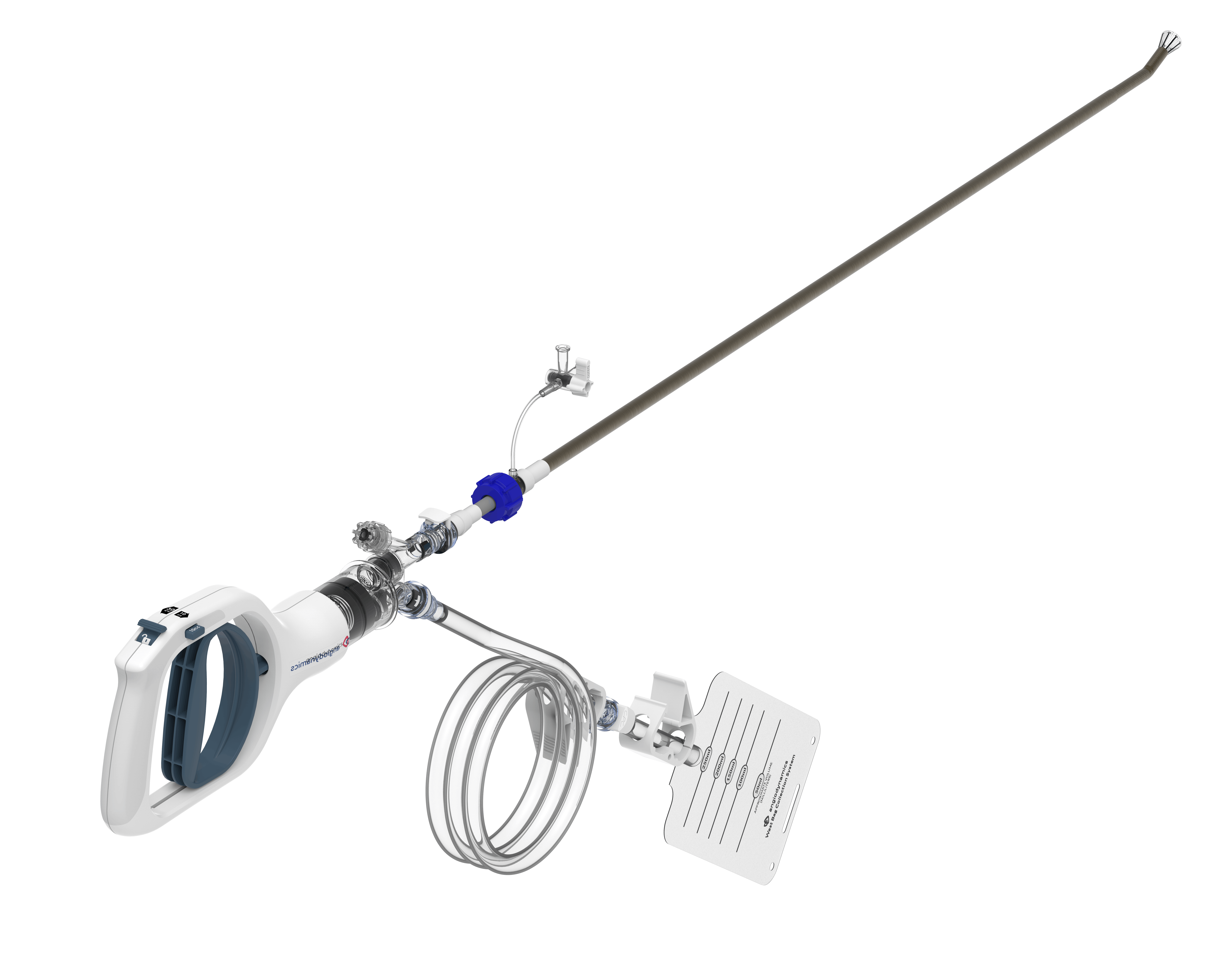 January 13, 2025—AngioDynamics, Inc. announced that the results from the APEX-AV trial, which evaluated acute pulmonary embolism (PE) extraction with the company’s AlphaVac F18⁸⁵ system, were published by Mona Ranade, MD, et al online in JSCAI, the Journal of the Society for Cardiovascular Angiography & Interventions.
Dr. Ranade and William Brent Keeling, MD, are Coprincipal Investigators of APEX-AV trial, which was initiated in partnership with the Pulmonary Embolism Response Team (PERT) Consortium. Dr. Keeling is Immediate Past President of the PERT Consortium.
The single-arm, investigational device exemption study enrolled 122 patients with confirmed acute, intermediate-risk PE at 25 hospital-based sites in the United States, noted AngioDynamics.
The trial results were initially presented at the SCAI 2024 Scientific Sessions held May 2-4 in Long Beach, California. In December 2023, AngioDynamics announced the completion of patient enrollment in APEX-AV.
As reported in the company’s press release, the JSCAI article concluded, “Percutaneous mechanical aspiration thrombectomy with the AlphaVac system provided a safe and effective treatment for acute intermediate-risk PE with a significant reduction in right ventricle to left ventricle (RV/LV) ratio and clot burden with a low rate of adverse events.”
According to AngioDynamics, the primary efficacy endpoint of the APEX-AV trial was the reduction in RV/LV ratio between baseline and 48 hours post-procedure. The primary safety endpoint was the rate of major adverse events, including major bleeding, serious device-related clinical deterioration, pulmonary vascular injury, and cardiac injury within the first 48 hours. Patients were followed for 30 days post–index procedure.
The company reported that the APEX-AV trial demonstrated a 35.5% reduction in clot burden via the Modified Miller index score, comparing favorably to other mechanical aspiration devices on the market. The device’s features, which include a funnel tip, optional wireless navigation, and blood loss mitigation, contributed to clinically significant improvements in both safety and efficacy, noted AngioDynamics.
“We are incredibly excited by the results of the APEX-AV trial, which demonstrate the safety and efficacy of the AlphaVac F18⁸⁵ system in treating patients with PE,” commented Dr. Keeling in the company’s press release. “These outcomes are critical for PE patients, where timely and efficient intervention can greatly improve long-term health outcomes and reduce the risk of complications.”
Dr. Ranade added, “The results from the APEX-AV trial demonstrate the significant impact of the AlphaVac F18⁸⁵ technology in treating PE. We observed a significant reduction in clot burden pre- and posttreatment, and saw a notable improvement in pulmonary artery pressures, underscoring the efficacy of this innovative approach. The procedure was completed with remarkable efficiency, with a short procedure time, making it a promising option for patients in need of rapid and effective intervention.”
Dr. Keeling is Associate Professor at the Emory School of Medicine in Atlanta, Georgia. Dr. Ranade is Assistant Professor, Interventional Radiology, at the David Geffen School of Medicine at UCLA in Los Angeles, California.
In April 2024, the company announced FDA clearance of the AlphaVac F18⁸⁵ System for the treatment of PE.
Advertisement
Advertisement
