Advertisement
Advertisement
May 2012
Chief Medical Editors' Page
Amputation Prevention: We've Only Just Begun…
By Jihad A. Mustapha, MD, FACC, FSCAI, and John R. Laird, MD
In the early days of percutaneous coronary intervention, balloon angioplasty alone was the primary therapeutic option in most cases. Over time, new devices emerged, offering more predictable results in complex anatomy and improved long-term durability. Today's era of peripheral vascular intervention, while boasting a much wider variety of therapeutic technologies, bears similarities to those early coronary experiences. This is particularly true regarding interventions for critical limb ischemia (CLI). Our outcomes are steadily improving, but they can still get much better. We must continue to evolve with regard to procedural techniques and optimal use of new technologies to achieve our goal: amputation prevention in the vast majority of cases. This will necessitate a better understanding of device options—knowing when to use and when to avoid currently available devices, as well as how to help industry improve the functionality of the next generation of devices.
In order to see amputation rates plummet, we must aspire to educate our colleagues at every point along the continuum of patient care. Many primary care practitioners and podiatrists have not yet been exposed to the potential limb-saving therapies we can now offer. In order to make an ironclad case for referral to intervention rather than amputation, we must continue to improve our outcomes and demonstrate excellent results with less morbidity and mortality for our CLI patients. We must also continue to work with our wound care colleagues to optimize the chances of limb salvage after a successful intervention.
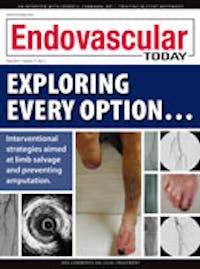
Access to dedicated equipment has a great impact on procedural outcomes in this field. To provide an overview of the new technology available for CLI therapy, we present the latest information from an esteemed group of physicians for this month's issue. Gary M. Ansel, MD, provides a guide to selecting tailor-made sheaths, catheters, and wires—devices that, when chosen carefully, improve the likelihood of a successful procedure. Chronic total occlusions of the infrapopliteal vasculature require special considerations. George Adams, MD; Steve J. Gardner, BA; Jon Gardner, MBA; and Dr. Mustapha address exotic access, techniques, and devices for crossing these occlusions. Usman Javed, MD, and Dr. Laird give an overview of the newest generation of specialty crossing devices and the unique learning curve involved with these products when used for chronic total occlusions. Lanfroi Graziani, MD, highlights the role of low-profile and long balloons in diabetic macroangiopathy and complex infrapopliteal interventions. Robert M. Bersin, MD, reviews several atherectomy options, noting that the body of evidence in favor of these devices for peripheral arterial disease treatment is growing.
Although endovascular therapy equipment has made it increasingly possible to avoid amputation, adjunctive imaging modalities are a crucial component of properly delivering these technologies. Larry J. Diaz-Sandoval, MD; Barbara Karenko, DO; and Dr. Mustapha look at ultrasound-guided access, IVUS, and OCT used in conjunction with CLI treatments.
Tracy N. Huynh, MD; Akhilesh K. Jain, MD; Jeffrey E. Indes, MD; and Carlos Mena- Hurtado, MD, demonstrate the utility of a hybrid option for complex, multilevel CLI. Raghotham Patlola, MD, and Craig Walker, MD, discuss the use of pedal pulse as an indicator of coronary disease. This simple and underutilized physical exam can provide insight regarding a patients' overall cardiovascular health. Jose I. Almeida, MD, and Cristal Boatright, MMS, PA-C, provide an enlightening review on the overlap of arterial and venous disease in patients with tissue loss.
Finally, for a unique perspective on the popular tools used in CLI practices, we asked a variety of physicians to share the top five devices they use in their CLI interventions.
In addition to our cover focus articles, we have a challenging case and interesting discussion presented by Jos C. van den Berg, MD, PhD, who describes the treatment of instent restenosis and options in the pipeline. In our featured interview, Joseph V. Lombardi, MD, talks about addressing lifestyle changes with PAD patients, device decisions, and the 2012 International Aortic Summit.
We hope you enjoy this look at how today's technologies are being used to save limbs, and we welcome you to share your feedback and personal experiences.
Advertisement
Advertisement