Advertisement
Advertisement
Global Spring 2014 Supplement
Sponsored by Medtronic, Inc.
Refining Strategies for the SFA
A panel of experts discusses the promise of drug-eluting balloons and other techniques for treating SFA and popliteal lesions.
With Krishna Rocha-Singh, MD, FACC, FAHA, FSCAI, FSVM; Peter A. Schneider, MD; Gunnar Tepe, MD; and Professor Thomas Zeller, MD
PARTICIPANTS
Krishna Rocha-Singh, MD, FACC, FAHA, FSCAI, FSVM, is Clinical Associate Professor of Medicine, Southern Illinois University School of Medicine in Springfield, Illinois. He has disclosed that he is a consultant for Covidien, Medtronic, and Bard.
Peter A. Schneider, MD, is a vascular surgeon at Kaiser Permanente Medical Center in Honolulu, Hawaii. He has disclosed that he is the Co-Principal Investigator for the IN.PACT SFA II Trial (but receives no com- pensation) and is Chief Medical Officer of Intact Vascular.
Gunnar Tepe, MD, is Professor of Radiology, Head of Diagnostic and Interventional Radiology at the Academic Hospital RoMed Clinic of Rosenheim in Rosenheim, Germany. He has disclosed that he receives study support from Medtronic and is a member of the Medtronic advisory board.
Professor Thomas Zeller, MD, is Director of the Department of Angiology at Universitaets-Herzzentrum, Freiburg-Bad Krozingen in Bad Krozingen, Germany. He has disclosed that he is a member of the Medtronic advisory board and receives speaking honoraria and institutional study grants from Medtronic.
Endovascular Today recently gathered several experts in endovascular therapies from Europe and the United States to discuss optimum use of drug-eluting balloons (DEBs) to treat lesions in the superficial femoral (SFA) and popliteal arteries. Their recommendations were based upon both the relevant clinical evidence and their own experience.
Note: In order to gain a more balanced and robust discussion, we requested that our physician panelists provide their recommendations based on all endovascular therapies for which they had clinical knowledge and experience, regardless of the regulatory status of those products in the countries in which their practices are based.
LESION LENGTH
Defining long lesions, how length influences treatment protocol, and the effectiveness of drug-eluting technologies and stents in long lesions.
Endovascular Today (EVT): When treating SFA or popliteal lesions, what considerations do you have with respect to lesion lengths?
Dr. Rocha-Singh: For the infrainguinal vascular bed, given the diverse heterogeneity of vascular angiographic demographics—lesion lengths, in-flow and runoff, lesion calcification, and chronic total occlusion (CTO) stenoses—there is no “one-size-fits-all” approach.
With regard to lesion lengths, the questions for me are, what exactly is a lesion length? Is it a stenosis or an occlusion, or a combination? What clinical scenario is the patient facing? Is the patient experiencing claudication or critical limb ischemia (CLI)? If it’s a patient with CLI, I use his or her clinical situation to drive a lot of my decision making because I understand that if I fail, the clinical consequences for that patient may be severe.
For instance, now that we have drug-eluting stents (DESs)—although we may debate the actual data that would support the use of DESs in SFA occlusions— there is a suggestion that they may be superior to bare-metal stents and are clearly superior to plain old balloon angioplasty (POBA) or a combination of atherectomy and balloon angioplasty. That is my general paradigm: combining patient demographics with the angiographic lesion characteristics and the clinical setting. This allows me to understand that there is no one device that fits all of these patients.
Having said that, I look at this as a Venn diagram, because cost is increasingly becoming an important point of my decision making in my practice.
Increasingly, our CV product-line administrators place an emphasis on the cost to treat similarly situated patients but not as much emphasis on patient outcomes. While I am credentialed and experienced in the use of endovascular devices to treat peripheral arterial disease, my administrator may still say, “Dr. Singh, you just treated a Rutherford X claudicant, and your price for treating that patient as an outpatient was Y dollars.” At some point in time they’re saying, “Dr. Singh, you spent more than another physician to treat a patient with a similar diagnosis.” To which I can ask, “Well, what were the clinical outcomes of the other physician?” But unfortunately, that’s not what they’re currently focused on. They are simply looking at bottom line cost.
EVT: Professor Zeller, do you have any particular rules that you follow regarding lesion lengths or other lesion characteristics?
Professor Zeller: First of all, my treatment protocol is not affected by the patient’s clinical state. If there is an indication for revascularization, it is not really worth discussing whether this is a claudicant or a CLI patient; I want to offer both patient cohorts the best possible treatment option. My protocol remains the same for claudicants, because they do not want to come back for a redo procedure, and for CLI patients, because they are aiming to keep their foot in their shoe.
Regarding lesion length, controlled studies and data are still sparse for long lesions, so it’s not easy to give a clear recommendation on how to treat long lesions. The evidence we do have for almost all devices is based on studies for lesion lengths up to 20 cm and usually only TASC A and B lesions. In the meantime, we know from those analyzing the data in the Zilver PTX registry that DESs do a good job in long lesions (e.g., TASC C and D lesions; > 15 cm) and we know that VIABAHN does a good job in long lesions based on the VIASTAR trial.
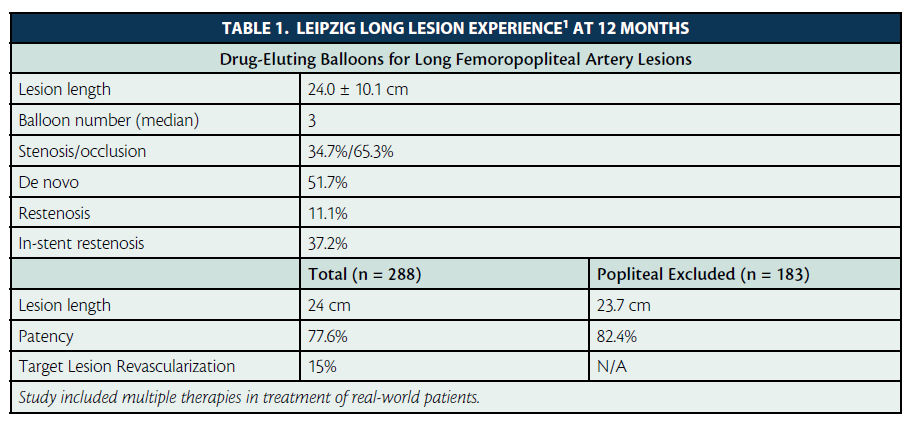
We also recently analyzed our outcome data regarding the treatment of long lesions with DEBs, and there was a slight trend toward better outcomes as compared to DESs with regard to patency.
The bottom line is that the best possible treatment based on lesion length, in my opinion, is to start with a DEB. The next step would depend on the acute outcome result of the DEB angioplasty; if that result is sufficient, meaning residual stenosis is < 50%, we are finished, and nothing else has to be done. If the post-DEB result is insufficient, then we need to put in a stent. If you need good scaffolding due to severe calcification of the lesion, for example, then it should be a compression- resistant stent such as the Supera stent (Abbott Vascular, Santa Clara, CA). If you have dissections, the use of mini stents could be discussed, such as the Tack-It (Intact Vascular, Wayne, PA), with which Dr. Schneider is very familiar.
In summary, our first-line strategy, regardless of lesion length, is to perform DEB angioplasty in almost 90% of the cases.
EVT: Dr. Schneider, can you briefly explain the Tack-It that Professor Zeller just mentioned?
Dr. Schneider: The Tack-It endovascular system is a multiloaded catheter with four separate implants or Tacks, which can be used in a customized fashion to optimize angioplasty by applying focal mechanical support to areas with postpercutaneous transluminal angioplasty dissection. The self-expanding Tack-It has low outward force and uses minimal metal to achieve spot treatment only where needed. We have completed enrollment of the TOBA (Tack Optimized Balloon Angioplasty) trial in Europe, and early results show that a minimalistic implant can be used to manage post-angioplasty dissections with excellent results.
Dr. Tepe: Our strategy, especially in long lesions, is to try to leave nothing behind, so we go in with a normal balloon. In total occlusions, we might have to predilate, so I will then add DEB technology. It is important to understand that the DEB technology is different from POBA because the drug coating can make it more difficult to push through tight lesions, so a predilatation of the lesion might be necessary. In addition to crossing the lesion, be keenly aware that the drug is only applied in the area where the balloon is inflated. You need to be careful that there is not a mismatch between the DEB and the predilatation, and between the DEB and the lesion; after predilatation, the lesion itself might be difficult to identify. Compared to the previous experience of most interventionists, where you just balloon the whole lesion and then stent if necessary, with a DEB, I do a last image hold to see where each DEB was applied because you cannot see this after the treatment.
I think that, especially in more difficult lesions, drugeluting therapies are the way to go, either with a DEB or DES. Unlike Professor Zeller, to be cost effective in my practice, even though there may be good data that DEBs work better than POBA alone, if there is a very short, nonrestenotic lesion, I go with POBA first; 60% to 70% of patients with short lesions that do not have restenosis can be left alone. If a patient comes in with a restenosis or long lesion, I go in with more sophisticated devices, such as a DEB or DES.
Dr. Schneider: We, of course, have less experience in our clinical practices in the United States compared to our European colleagues, but my sense is that the longer the lesion, the more you need drug-eluting therapies because we know that the longer lesions have less satisfactory patency rates. My sense is also that the longer the lesion, the more likely you are to need mechanical support. This is a bit of a conundrum because when it comes to mechanical support, we’re fairly limited. What we have available to manage unacceptable angioplasty results are heavy metal structures with the well-described baggage of restenosis and fracture. If you don’t want to use long stents and instead do spot stenting, it is feasible but becomes logistically ridiculous and cost prohibitive to conduct the case that way. There are no easy rules to follow here. Sometimes, patients with long lesions can be treated with just POBA, but the percentage of lesions that do well with POBA alone goes down as the lesions lengthen. In addition, we imagine that long lesions (> 20 cm) are failing due to the lesion length. What if some of the failures in that setting are due to the long stent itself, independent of the lesion? If you could eliminate the use of long stents with DEBs, that would be fantastic and would allow the medication to do its job unimpeded.
We may find that even shorter lesions, such as TASC A or TASC B, can be economically treated with drug-eluting therapies if we are able to eliminate or significantly reduce the failure rate (currently 20% to 30% at the 1-year time frame) and save on the cost of recurrent treatments.
LESION LOCATION AND CALCIFICATION
Optimizing results for problem areas in the SFA and procedural limitations in certain segments.
EVT: Dr. Rocha-Singh, based on your earlier response about treating the patient from a clinical standpoint, does lesion location enter into your calculation?
Dr. Rocha-Singh: Yes, it does. There are three areas in the femoropopliteal segment that particularly concern me. One is the ostium of the profunda femoral artery (PFA)-SFA bifurcation. The heavy calcium that typically occurs at the PFA-SFA bifurcation can be problematic with regard to acute technical success and long-term patency. Unfortunately, the use of DEBs at this lesion location in investigational US trials is an exclusion criterion. As such, we will have to await an assessment of their effectiveness at this location only after they are approved for clinical use elsewhere in the SFA.
The second problem area is Hunter’s canal; this location is subjected to considerable compressive forces and tends to have a higher incidence of medial calcification, which is particularly problematic. The third area is the distal segment of the femoropopliteal artery; because of the regulatory trial design in the United States (treatment of distal femoropopliteal artery, across and below the knee, was an exclusion criterion), we know little about the long-term effectiveness of class III implants in this location.
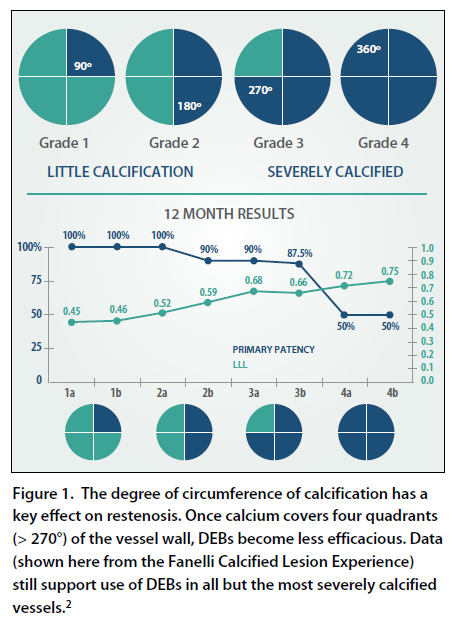
Professor Zeller: With regard to lesion location, I think there is almost no limitation for the use of DEBs. That’s a nice feature with a balloon-based technology; you can use this kind of device in every position in the femoropopliteal artery.
My only limitation is the femoral bifurcation, the origin of the SFA and deep femoral arteries, because you have some plaque prolapse at these levels during angioplasty. I prefer to start with atherectomy and then, if necessary, we can combine with a DEB approach. We try to avoid stenting at that location because it’s very hard to precisely position the stent at the origin of the SFA to avoid some plaque shift to the deep femoral artery.
The femoral bifurcation, including disease in the common femoral artery, is an optimal space for a combined atherectomy and DEB angioplasty approach. In Germany, this approach is completely reimbursed. We have a fixed budget for atherectomy and are reimbursed for up to four DEBs, so our hospital administration has not placed any restrictions on the liberal use of DEBs as an adjunct to other technologies we need to use. Atherectomy as an adjunct or prerequisite to DEB appears to be quite valuable in calcified lesions, but that’s the question we’re trying to answer with ongoing trials such as DEFINITIVE AR (Covidien, Mansfield, MA), which is a randomized study evaluating the effect of directional atherectomy plus DEB compared to DEB alone.
Dr. Tepe: I agree with Professor Zeller, but would add that we try very hard to avoid leaving anything behind in the popliteal artery or adductor canal and have found that it is very important to optimize the angioplasty result. We’ve learned a lot in our studies. One of the first I did was with Professor Zeller, and we achieved a very low stenting rate by engaging in optimal angioplasty for 1 minute and up to 5 minutes if the original POBA was not successful. It’s astonishing how often the result can be improved by doing this optimum angioplasty, so I think we have to learn more about our angioplasty techniques and which lesions should still be stented.
To support Professor Zeller, I also think we have to learn about the limitations of DEBs. We don’t have to settle for 80% of the lesions being free of restenosis; we need to look into the 20% that are not and find out why. One of the obvious limitations is calcium, which results in a limited uptake of drug and therefore lesion preparation with atherectomy or cutting balloon may prove to be helpful. Professor Zeller also referred to our trial, DEFINITIVE AR, which is looking into this.
Dr. Schneider: We definitely have a lot to learn about how DEBs will function in a calcified environment. Which kinds of calcified lesions will be immune to the effects of the drug, and what do we have to do to prepare a calcified lesion to be responsive to a DEB? In our current practice, if we cannot get a full balloon expansion, or if there is a lesion that’s recalcitrant to aggressive angioplasty, then we reinforce it with metal. I don’t know if the heavily calcified lesions are going to be right for a DES versus a DEB, or if there is a way that we could potentially mechanically prepare the calcified lesion so that the DEB would be functional. The adductor canal is a problem location in that it’s almost always calcified, which brings us back to the question of how a DEB will function in a calcified environment.
The segment just distal to the adductor canal is highly flexible, so there are at least theoretical benefits for avoiding metal implants. I haven’t seen anything specific on that location from the amazing amount of data we have now. I’d be interested if either Professor Zeller or Dr. Tepe had noticed whether there is any place in the arterial tree where the drug effects are less active or where drug would not add a benefit.
Professor Zeller: I am not aware of any vessel location where we have a different uptake of the drug. I believe the variable is primarily the vessel wall/plaque composition, meaning how severely the vessel is diseased in terms of the degree of calcification and the total amount of plaque load.
However, I do not know if the potentially inferior performance of DEBs in calcified lesions is only a function of the degree of calcium. I believe that the release of the drug into the vessel wall is almost the same, regardless of whether the lesion is more or less calcified; however, the acute failure in obtaining significant lumen gain in those calcified lesions may be more important because we have immediate recoil due to the rigidity of this calcified plaque material. That is one particularly important aspect of these calcified lesions: either you have to improve the vessel compliance by preparing the vessel with a cutting balloon or removing some plaque material, or you need to use a compression-resistant scaffold to maintain the acute lumen gain.
Another question is, what is the effect of the calcium regarding positive remodeling? We have learned from early DEB trials that the angiographic results showed, in some individuals, an even bigger lumen 6 months after drug-eluting angioplasty compared to the acute result. During the vessel wall-healing process, there seems to be some drug effect in terms of an increased vessel diameter as a result of positive vessel remodeling. We know that severely calcified arteries do not positively remodel after DEB angioplasty.
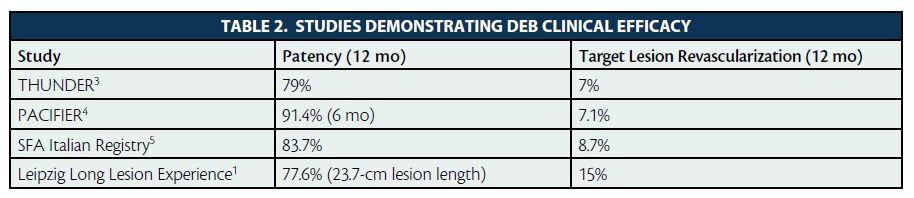
Dr. Tepe: I would add that in the future, we also must learn more about dosing for DEBs. We cannot determine how much of the drug makes it into the vessel wall. What role should dosing have on the pathology of the underlying disease? It might be that a diabetic or an in-stent restenotic (ISR) patient needs more drug compared to other patients, and currently we do not know that answer. I’ve recently treated two patients with Takayasu disease, but I was unable to achieve sustained patency with DEBs in those patients. There are limitations.
EVT: Professor Zeller, you said you found it doesn’t really matter, the plaque calcium burden?
Professor Zeller: It could be because, theoretically, drug release during balloon inflation into the vessel wall should not be affected by the degree of calcium. The wash-off could be affected by severe and, in particular, intimal calcification. However, I’m not aware of any kind of preclinical study on this because it’s hard to model calcification in an animal. I believe we will never get the answer to this question about difference in drug uptake between calcified and noncalcified lesions.
Dr. Tepe: I believe the main reason for the inferior performance of the DEB in those severe, concentrically calcified lesions is probably not the biological effect of the drug. It’s more likely the mechanical effect of the calcification preventing a significant initial lumen gain and preserving this lumen gain due to the recoil of the calcium, which is making the vessel wall almost incompliant to the angioplasty procedure.
Dr. Schneider: I think we need to quantify what we mean by calcification. We could do volumetric calcification with a CT scan, but perhaps the actual volume of calcium doesn’t matter? Maybe it’s the length or the degree of circumference of the calcified artery that matters? Maybe it’s the thickness of the calcific rind? Even relying on the meager number of studies that have tried to look at it, the calcification system is incredibly qualitative and subjective.
Calcium is relatively inert material, so the idea that we’re going to get any effect on calcification with this medication seems counterintuitive to me. Severe, diffuse calcium could prevent uptake of the drug. Circumferential, longitudinal calcium forms a shell casing right over the surface of the artery.
It may be that calcified arteries require specific lesion preparation to be amenable to DEB. Part of the angioplasty method is breaking the calcium and creating crevices where the medication can be absorbed. However, if you don’t actually get an expansion of the balloon and you are not really cracking the calcium, perhaps the medication may never be absorbed. I’m assuming DEBs will have the same problem as POBA’s ineffectiveness against calcium—the inability to fully expand the balloon.
Almost every lesion has some element of calcium, and the only thing besides dissection that we’re less able to quantify properly is calcification. I’m a lot more concerned about the exophytic, or clump-type of calcium, which we see in the SFA with some regularity (5% to 10% of the time). Balloon angioplasty is uniquely unsuccessful in my opinion with these lesions; to me, atherectomy makes a lot more sense in this case.
I think we have to prepare the artery differently in a calcified environment. Unless we get that initial lumen gain that Professor Zeller is talking about, we might not have significantly improved results with DEBs in those lesions. Yet these same patients are not typically the ones you want in a prospective, randomized study of POBA versus DEBs to see the overall drug effect. Most of the patients with very heavy calcification have probably been screened out of most of the studies.

PREDILATATION
The debated necessity of dilatation before DEB use, both in trials and real-world clinical experience.
EVT: Professor Zeller, what are your thoughts regarding predilatation of a heavily stenotic artery?
Professor Zeller: It depends on the severity of the degree of the stenosis and the degree of calcification. The strategy in our institution is to predilate every CTO and every lesion with a stenosis of more than 90%. In severely calcified lesions, we predilate lesions with an even lower degree of stenosis. This also depends on which kind of DEB you are using, particularly in the femoropopliteal artery because we have two different devices available: the 0.035-inch guidewire-compatible system, the IN.PACT Admiral (Medtronic, Inc., Minneapolis, MN), and the 0.018-inch guidewire-compatible, low-profile IN.PACT Pacific balloon (Medtronic, Inc.). Using the low-profile balloon makes it much easier to primarily engage the lesion with the DEB without experiencing too much friction between the DEB surface and the lesion, with a relatively low likelihood of losing a significant amount of drug at spots with severe friction.
The key question is whether there is any benefit of predilatation. I personally believe that predilatation does not result in different technical outcomes in terms of patency. I already asked for a new generation of DEBs with less friction for the direct DEB angioplasty in order to reduce the costs, because predilatation requires an additional balloon.
Dr. Tepe: I am not aware of any data showing that predilatation is mandatory. Of course, a lot of study protocols require physicians to predilate high-grade stenoses or total occlusions, but in several trials, such as the THUNDER and PACIFIER trials, predilatation was either 0% or low (10% or 15%), and the results were very good.
We should reconsider whether to make predilatation mandatory. From a technical aspect, a DEB has a different surface, which is not as easy to push compared to normal angioplasty balloons, so sometimes you do have to predilate, especially below the knee. Most of the time, however, if you can get a really good stiff wire across the lesion, you can easily advance the DEB and dilate with no problem.
The problem with predilatation is that it can be very easy to predilate a segment of the artery that you do not subsequently cover with a DEB, and then you have a mismatch between predilatation and DEB therapy. After predilatation, we don’t always know exactly where the lesion ended, and we may inadvertently predilate more distally or proximally than the DEB. Ongoing studies might instruct us on whether predilatation is an issue. It might not be beneficial because of this mismatch.
Professor Zeller: That’s one of the reasons why, if we predilate in our institution, we focus the attention of predilatation to that segment of the lesion that is the most severely diseased. We are not predilating the entire length with a regular balloon. If you have a total lesion length of 10 cm and there is only a spot stenosis of 2 cm in length with 90% stenosis degree, then we treat only those 2 cm with predilatation, followed by a second dilatation with a DEB covering the entire lesion length. This avoids the geographical mismatch after predilatation with an uncoated balloon. It’s a very important aspect of this combined use of predilatation and DEB angioplasty.
EVT: Dr. Rocha-Singh, since your experience has been in studies in the United States, I assume that you do not have any experience outside of the protocols requiring predilatation?
Dr. Rocha-Singh: No, actually, I take a couple of different points of view with regard to predilatation. First, predilatation is mandatory in the regulatory trials, and that was a specific intent for the writers of the protocols for several reasons. From a regulatory point of view, there was a concern that without predilatation there could be a higher rate of device failure with an increased requirement of provisional stenting. If you look at the rates of provisional stenting in the LEVANT 2 (Bard Peripheral Vascular, Inc., Tempe, AZ) and SFA studies with Medtronic’s IN.PACT balloons, the provisional stent rates are in the low single digits. This was, in part, due to the requirement that the lesion was predilated with a balloon < 1 mm of the reference luminal diameter. If you predilated and noted vessel recoil > 70% or a severe flow-limiting dissection, that patient was deemed a screened failure and never enrolled in the trial.
Even after you deployed the DEB, if there was evidence of recoil and/or a dissection, there was a requirement that a translesional gradient be assessed due to the very subjective nature of how you define device failure. If criteria for device failure were met, the investigator was free to perform provisional stenting, and that patient was censored, although follow-up was continued.
As to whether vessel predilatation is necessary in the “real world,” we don’t know. I’m not so sure that by effectively increasing the vessel wall surface area, whereby drug may penetrate by predilatation, that we could potentially drive more drug into the vessel media. There is a company that actually allowed participants in their first-in-man trial to not predilate the vessel. I wonder if there’s a concern that there would be a higher provisional stent rate in the cohort that did not undergo vessel predilatation? However, I suspect that in the United States, the DEB’s instructions for use will recommend vessel dilation, as this was performed in the regulatory trial.
If it comes to pass that there’s a higher provisional stent rate with direct DEBs, then this may be a technique you want to avoid. Perhaps Dr. Tepe can help me. For you, is avoiding predilatation just a cost issue, or is that a time issue? Or do you think there’s a clinical issue involved?
Dr. Tepe: One reason to predilate is that it might be possible that, due to a high-grade stenosis, some drug is lost very proximal to the target lesion. If you just pass a high-grade stenosis, some drug is just delivered there with no balloon inflation.
The other reason to predilate is to better push the DEB to the lesion. The provisional stent rate is, in my opinion, not dependent on predilatation but rather much more on how I do the angioplasty with a DEB or conventional balloon.
EVT: In the THUNDER trial, was predilatation optional?
Dr. Tepe: Yes, it was optional. It was an investigator-initiated study, and predilatation was optional and very rarely done, even in total occlusions.
Dr. Schneider: I started out thinking that predilatation was an unnecessary step and was honestly a little annoyed that we were being forced to do it. But now that the process is unfolding, I think that predilatation will assist us to better separate the effect of the medication from the mechanical issues. There is a real chance that, without predilatation, there will be a high loss of medication during the passage of the balloon across the lesion. In order to make the dosage of medication as standard as possible, I think it makes sense to predilate all the lesions with a balloon that’s 1 mm smaller.
In US randomized trials, predilatation was also used to help identify lesions that are morphologically more challenging and likely to dissect. As you know, in the US-based trial, when a really bad dissection occurred on the basis of the predilatation, typically that patient was not enrolled. Some say then it is not a real-world study. My answer to that would be that the purpose of the study was to identify the effect of the medication. I think having that predilatation did help, and it will help us to isolate the effect of the medication.
CHRONIC TOTAL OCCLUSIONS
Navigating occlusive disease.
EVT: Do you treat CTOs differently than highly stenotic lesions as long as you’re able to cross them?
Dr. Tepe: The first aim in a CTO is to cross the lesion. There are two options: subintimal or intraluminal. If I’m going subintimal, the task is to get reentry. In the THUNDER trial and several other trials, there are many patients who have been treated with a subintimal approach, and my understanding is that DEBs do very well there. By contrast, if you have a total occlusion in a calcified lesion and you are staying intraluminal, it might be much more difficult to have good longer-term patency with just a DEB.
To have better long-term patency with drug-eluting technology in the future, it may be better to go subintimally because you have better patency.
Dr. Rocha-Singh: There has always been this concern with regard to intentional subintimal passage, and I’m a strong believer in minimizing procedure time, device resources, and radiation exposure in trying to cross CTOs “intraluminally,” as opposed to intentionally, immediately going after a subintimal approach. For a long CTO, the two important factors affecting success are lesion length and calcium.
RESTENOSIS AND DEVICE FAILURES
Revascularization and restenosis rates with DEBs, dosing, and procedural failures.
Dr. Rocha-Singh: I’d like to ask Dr. Tepe, are you satisfied with the results of DEBs right now with regard to restenosis rates and total lesion revascularization?
Dr. Tepe: I am much happier compared to what was previously available, but as I said in the beginning, there is still a certain amount of restenosis, and we have to examine any limitations of those DEBs and better identify the patients or lesions in which it will be less successful. Once we identify the patients, we need to improve the device or use different drugs or dosing to improve their condition.
Dr. Rocha-Singh: As physicians, we are never satisfied with the results we get, but we are still not able to answer the question, “What is the failure mode of DEBs?” We discussed the issue of vessel wall calcium, but to address Dr. Schneider’s point, we don’t even have a validated calcium score that we can use in the periphery. We’re starting to work on developing a validated calcium score that is tied to acute procedural and 30-day outcomes, but that will take a great deal of time.
I think that Dr. Tepe and Professor Zeller are going to educate a lot of us about these dichotomies between intimal calcium—which you can treat with atherectomy— and medial calcification, which we might not be able to treat.
Dr. Tepe: I think more effort will need to be spent on the dose issue. In our first study, the THUNDER trial, we looked into the data and saw that the crossover procedures did not do as well as the antegrade ones. What might be the reason for this? One possibility is that in the first version of the device, some of the drug was stuck in the sheath because it was less sophisticated than the current devices.
Dr. Rocha-Singh: How do you treat DEB failures?
Dr. Tepe: I have only had rare failures, but I treated several DEB failures of ISR with a double dose of pacli-taxel by using two balloons at the same location.
Dr. Rocha-Singh: Let’s say that instead of ISR, you have a native vessel with a 7-cm lesion with moderate calcification, but some time after treating that lesion with a DEB, a focal stenosis returned. Would you just use POBA or another DEB?
Dr. Tepe: There are essentially two different approaches. One approach is to prepare the vessel with atherectomy and then increase the dose, by using more DEBs inflated in the same location. The other option is to decide that I cannot help this patient with DEB technology and try using a covered stent graft to fence the lesion. Of course, if neither of those options works, bypass surgery is also an option.
DISSECTIONS AND STENTING
Defining flow-limiting dissections, provisional stenting, and the difference in approach to dissections with POBA versus DEBs.
EVT: One of the grounds for bailout stenting has been flow-limiting dissection. Do we have a definition that’s been serviceable? Is there an objective test to determine when a dissection is “flow limiting”?
Dr. Schneider: We have a partial working definition because of the coronary experience, but we do not have a good handle on it in the periphery, in my opinion. We are attempting to apply the coronary grading system (which is based on short lesions in a 2- to 3.5-mm artery) to the peripheral arteries. Therefore, our current grading system is only a start; we skipped directly from noting that the lesion is dissected to putting in stents, without first assessing the severity or the clinical significance of the dissection. So now we are in an era where we’re trying to discern the difference and relative value of mechanical support (from a stent or a Tack) and the medication that is applied via DEBs for the goal of long-term diminishment of neointimal growth.
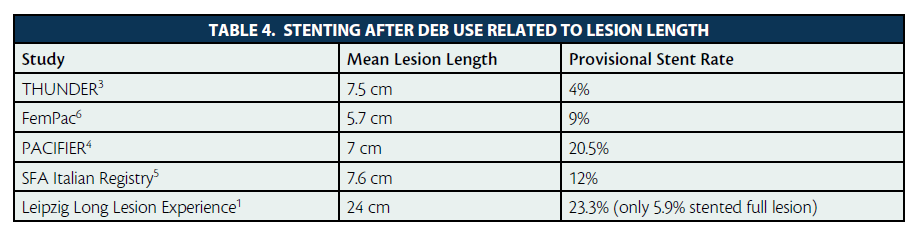
Dr. Rocha-Singh: There is a standard scale for flow dissection, but many doctors don’t know the difference between a C and a D or an F based on whether there is a combination of dissection, or if it is spiral, or if there is subintimal hematoma. A big component of that analysis is the extent of the runoff.
I have learned a lot from my European colleagues watching live DEB cases at LINC and seeing clinicians leaving these horrendous angiographic results, but then they would show the angiogram 6 months later, and the DEB segment was patent. That has been a big concern as DEB technology comes to the United States because our doctors are accustomed to seeking a stent-like result in all procedures and may insist on the same from DEB procedures. That becomes problematic because it usually means that you have to put in a 4-F catheter and do simultaneous pressure gradients, so it’s an added step to remove subjectivity and basically defines a device failure before provisional stenting.
Dr. Tepe: We analyzed the first data from THUNDER, where we left those dissections alone and opted not to stent, and we found that with low-grade dissections—A, B, and C—it doesn’t really matter if you have a DEB or non-DEB. If a dissection is more severe, and you don’t treat with a DEB, the likelihood of having a restenosis is 100%. By contrast, with DEB technology, we have far less chance of restenosis; it appears to be melting away those dissections.
However, if you do a balloon angioplasty, and you are looking carefully at the angio of almost every patient, you will see dissection because we create a dissection when we do balloon angioplasty. The key factor is assessing how severe the dissection is. As the dissection becomes more severe, with POBA, it will result in restenosis; with DEB technology, the outcome is usually quite good, and stents are needed much less.
EVT: In what scenario would you use provisional stenting?
Dr. Tepe: There are two scenarios when I would stent a lesion after DEB. The first is if there is a dissection that is really flow limiting. The other would be if there were calcification that also pops into the vessel wall and limits the flow. Of course, we don’t have the data to know if this is going to work long term, but that is my current protocol.
Dr. Rocha-Singh: Dr. Tepe, do you think, theoretically, once you use a DEB and a stent, the drug is retained in the vessel over a greater period of time?
Dr. Tepe: The animal data seem to show that the drug retention is higher in the vessel wall with stenting.
EVT: Dr. Rocha-Singh, what has been your postprocedure protocol?
Dr. Rocha-Singh: With the regulatory trials, there is a lot of angst about stenting after DEB because that is deemed a device failure, and obviously, no one wants to see that.
Dr. Tepe: I do not think in the current studies we consider it a device failure if you stent; it’s a failure of the procedure. Device failure would be if you were unable to cross the lesion or if it just bursts; bailout stenting should not be deemed a device failure, but rather a procedure failure.
Dr. Rocha-Singh: I agree with that analysis. That’s an important point because I think when you deliver the drug in the vessel wall, but you have a flow-limiting dissection, the drug didn’t fail. From a regulatory point of view, this is called a device failure, but I would tell the patient, “I think you’re going to do just fine.”
EVT: Dr. Schneider, how does your approach to dissections differ between POBA and DEBs?
Dr. Schneider: With regard to dissection after angioplasty, I think part of our challenge is trying to judge the dissection using arteriography, which doesn’t fully give us the extent of the dissection. Sometimes it just looks hazy, and sometimes, you can see a clear-cut tissue plane when you are looking at it on pause. Having said that, until every lab routinely uses intravascular ultrasound or some other cross-sectional imaging, we should try to set standards based on angiography.
When you look at a dissection, whether it appears to be flow limiting or not, you need to assess the extent of the damage. There are a few ways to approach treatment. If you repeat the angioplasty, you may be able to lay down some of the dissection flap, although we don’t have data showing that it works long term. When we reinflate the balloon and see what appears to be a slight improvement in the dissection, we don’t know if we are actually helping the patient. The moment I take the patient off the table, the dissection flap may unfurl again, because the balloon is no longer there. There is nothing that I know of that would suggest that the medication on a DEB can somehow decrease the mechanical effects of angioplasty. In other words, dissection is going to be a problem after DEB, just like it is a problem after POBA.
We have a lot of data to support the use of stents for post-POBA bailout, but we hardly have any data with stents after DEBs. In this particular area, I’m very biased personally. I believe that when we stent long lesions and we get poor long-term results, everybody focuses on the length of the lesion, but I think the results are due to the length of the stents. We put in this longitudinal structure that bends every time the patient takes a step. It’s a setup for both biological and mechanical failure.
In the non-DEB world, it’s rare to treat long lesions without stenting. Part of the indication for using a stent is an occlusion, a long lesion, or a flow-limiting dissection. Because long lesions are more likely to be stented, it is very hard to discern whether the main cause of restenosis is the lesion length or the stent length.
I would assert that if spot stenting were a feasible procedure from an economic and logistical standpoint, the results would be better than we achieve with long stents. In the pre-DEB era, spot stenting in the coronaries was advantageous to long stenting. But in the periphery, we don’t have the data. All the studies have a focused treatment protocol in which we approach a single SFA lesion and stent from healthy artery, across the lesion, to healthy artery on the other side.
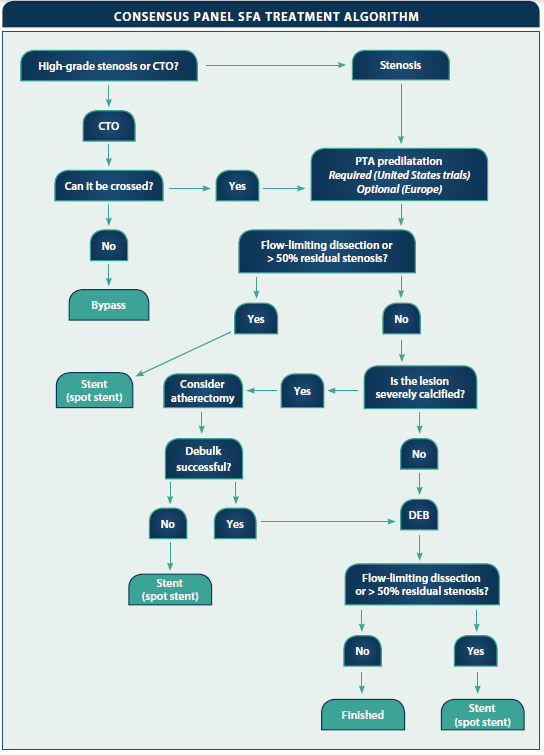
EVT: In a DEB situation, what would be your preferred treatment with a dissection?
Dr. Schneider: The whole focus of the DEB technology is to increase the long-term patency by diminishing the biological response of the artery to the treatment with medication. If you add a stent in that setting, you are adding a stimulant that will likely create an undesirable long-term biological response from the artery. If any mechanical support is going to be added, it should be minimized to the extent possible. I have been involved in helping to develop the Tack-It system because I really believe in that concept.
I think one key to making DEBs successful is to refrain from adding any more mechanical implants than we absolutely have to. To do this, we need to make the concept of focal mechanical support viable, because the current stenting platform is just too clunky. We need to use something that has a minimal amount of metal, lower outward force, and is capable of delivering multiple devices from a single catheter.
In the pre-DEB era, when we didn’t work too hard to understand the impact of dissections, I believe we probably stented more aggressively than we needed to. Having said that, if we go to the other end of the spectrum and look at these disfigured arteries immediately post-DEB or post-POBA, most practitioners would not be content to stop there and leave behind a poor angiographic result with the possibility that there could be a problem later.
A number of dissections do need to be treated. Certainly, we need to treat flow-limiting dissections, but I contend that we also need to treat any clear dissection plane that is encroaching upon the lumen. If you can treat that type of dissection with focal mechanical support, it could potentially improve both the acute and chronic outcome, by preventing the dissection flap from creating a diminished lumen or propagating down the artery.
In the era before stents were available, the development of balloon angioplasty was significantly disadvantaged by the fact that practitioners were keenly aware that our only bailout for terrible post-angioplasty dissection was an emergency femoral-popliteal bypass. In most institutions, angioplasty use was limited to fairly focal lesions, because there was no acceptable bailout. Even under that limited subset of use, there are references from the prestent era that around 5% of patients would end up having to go for an urgent femoral-popliteal bypass. Today, we don’t have that problem because we have stents to bail us out. As a result, we tend to minimize the danger of dissections.
EVT: When you do decide to stent after DEB therapy, how do you decide which stent to use?
Dr. Rocha-Singh: Investigators are put on a very short leash with these trials, so I would not be able to speak fully to that issue. However, from what I know from my experience in talking to a lot of European key opinion leaders and seeing a lot of films coming through core labs, I get the sense that spot stenting, as opposed to stenting the whole lesion, makes sense to me. If there is an inflow dissection sealing and an area of recoil and severe calcification that would cause a stenosis, I would spot stent that with a 2- to 4-cm nitinol stent. Intact Vascular’s Tack-It concept makes sense to me.
Dr. Tepe: My choice is to spot stent, which I believe is very important. I do not know if there is a single stent that really works better than the other stents when used in conjunction with DEBs. The one consideration is that the stent must have the capacity to deal with the limitation of the DEB, which is either the dissection or calcification. Generally, a stent with more force might be more successful compared to a weak one.
Dr. Rocha-Singh: If you have a dissection, do you have a strategy on where you stent? Do you stent at an area where there is luminal narrowing or do you say, “I don’t want this to propagate, and therefore I am going to stent at the distal end of the dissection?”
Dr. Tepe: If I have a flow-limiting dissection, I usually stent the whole dissection, which normally is just a few centimeters.
Dr. Rocha-Singh: I’m still “old school” and am one of those doctors who will balloon and stent, or only put in stents as part of clinical trials or postmarket surveillance trials. I do think that ISR is a major problem. Data came out of TCT and VIVA last year with 36-month binary restenosis rates in bare-metal stents in lesion lengths of that concern.
My reticence about stenting is that you exchange one disease process (ISR) for something that was easier to treat, which is de novo atherosclerosis. We don’t know how to best treat ISR. There is no current US regulatory pathway. Atherectomy with the SilverHawk device (Covidien, Mansfield, MA) has a black box contraindication for ISR. Some atherectomy companies say that they want to try to tackle this problem. As you know, Spectranetics Corporation (Colorado Springs, CO) is seeking to get FDA indication for treating ISR.
I was a coprincipal investigator on a 20-cm stent trial in claudicants treating long lesions with a single long stent. These data looked relatively good at 1 year, but at 36 months, the freedom from target lesion revascularization in lesions > 8 cm was approximately 61%. While this is an acceptable long-term outcome, I believe we can do better. The FDA now requires companies to report long-term follow-up clinical outcomes data and stent fracture rates at 1 and 3 years, so we will be able to assess long-term durability of nitinol SFA stents. If the results of DEBs are better or at least comparable, I think we may reconsider their routine use. The cost of DEBs may be higher in the near term; however, when reintervention rates are considered over a longer term, they may prove to be more cost effective. That is why I am so glad that DEBs are coming along.
- 1. Schmidt A. Real world experience with DEB in long lesions. Presented at: LINC; January 24, 2013; Leipzig, Germany.
- Fanelli F. Is there a role for DEB in calcified arteries? Presented at: LINC; January 25, 2013; Leipzig, Germany.
- Tepe G, Zeller T, Albrecht T, et al. Local delivery of paclitaxel to inhibit restenosis during angioplasty of the leg. N Engl J Med. 2008;358:689-699.
- Werk Mm Albrecht T, Meyer DR, et al. Paclitaxel-coated balloons reduce restenosis after femoro-popliteal angioplasty: evidence from the randomized PACIFIER trial. Circ Cardiovasc Interv. 2012;5:831-840.
- Micara A, Cioppa A, Vadala G, et al. 2-year results of paclitaxel-eluting balloons for fempop artery disease. JACC Cardiovasc Interv. 2013;6:282-289.
- Werk M, Langner S, Reinkensmeier B, et al. Inhibition of restenosis in femoropopliteal arteries: paclitaxelcoated versus uncoated balloon: femoral paclitaxel randomized pilot trial. Circulation. 2008;118:1358-1365.
Advertisement
Advertisement