Advertisement
Advertisement
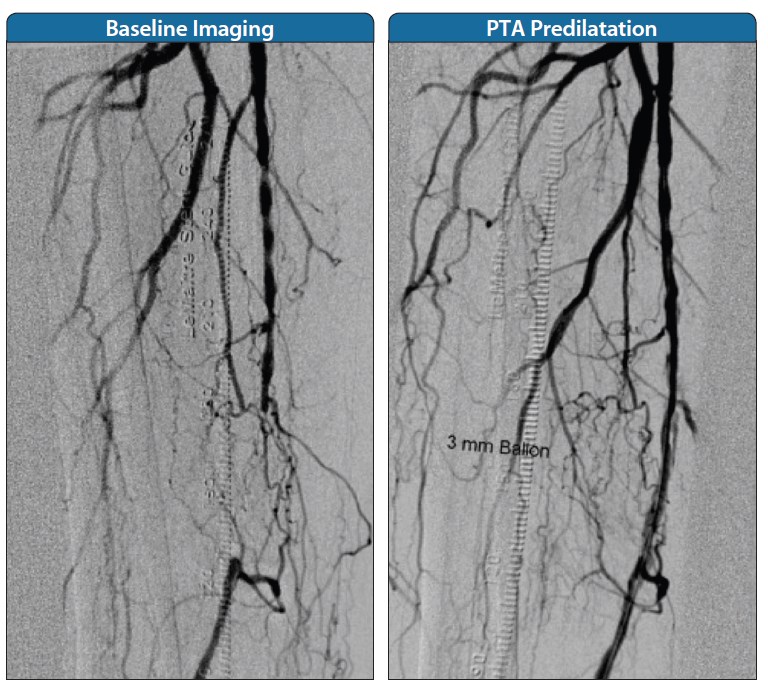
The patient was a 62-year-old man who was a current smoker. He had a baseline ankle-brachial index of 0.73 and a Rutherford category of 3. His preprocedure reference vessel diameter was 4.86 mm.
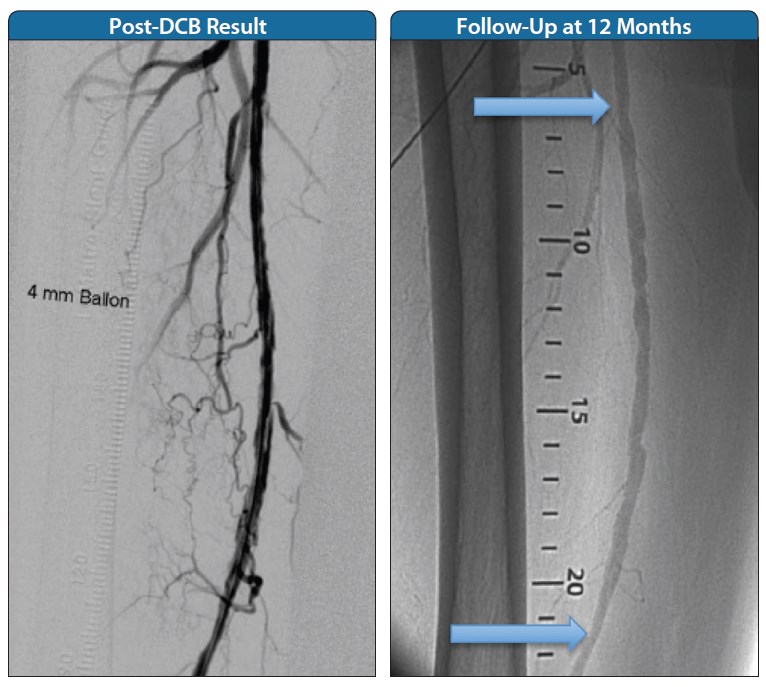
The total lesion length was 13.9 cm, which was located in the mid-superficial femoral artery and included a totally occluded segment. We employed 4-mm X 120-mm and 4-mm X 60-mm IN.PACT™ Admiral™ drug-coated balloons (Medtronic plc) to treat the target lesion.
The patient had a favorable procedural outcome, with a peak systolic velocity ratio ≤ 2.4. Postprocedure stenosis was reduced to 22%. The patient also had a postprocedure dissection grade of A (per core lab).
At 6 months, the patient’s ankle-brachial index had improved to 0.93, and at 12 months, continued to improve to 1.05. Primary patency and primary sustained clinical improvement (defined as freedom from target limb amputation, target vessel revascularization, and increase in Rutherford class) were demonstrated at 12 months. At 6, 12, 24, and 36 months, the Rutherford category was a consistent 0. There have been no revascularizations reported to date.
Gunnar Tepe, MD, is Professor of Radiology, Head of Diagnostic and Interventional Radiology, Academic Hospital RoMed Clinic of Rosenheim in Rosenheim, Germany. He has disclosed that he receives research support from and is on the Advisory Board for Medtronic plc. Prof. Tepe may be reached at gunnar.tepe@ro-med.de.
Advertisement
Advertisement