Advertisement
Advertisement


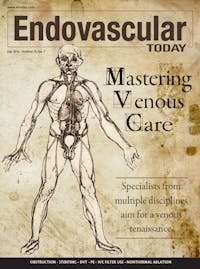
Following in the footsteps of the arterial stenting field, venous stenting represents one of the next frontiers of venous intervention. Many of us involved in venous care began our careers treating patients with arterial disease. Although many principles carry over, we have universally been humbled by venous disease, which is more complicated to understand in terms of physiology and response to treatment. However, our expanded understanding of the dynamic mechanical forces at play is shaping developments in decision making, as well as technology that can adapt to this environment and provide long-term relief from venous obstruction.
We present a series in which five key issues of venous obstruction and stenting are discussed by a panel of specialists who offer thoughts on several issues, including technical tips, advice on patient selection, and an overview of essential device improvements to give us a sense of where we stand on this front. We also invited one of the world’s foremost stenting experts to share his top 10 lessons learned, providing key insights into what we have learned thus far in this arena and future directions for treatment and technology.
It is also imperative to touch on the current status of deep vein thrombosis (DVT) treatment, which has lately seen areas of growth and improvement. One such article focuses on the importance of imaging modalities to provide information on the best candidates for minimally invasive intervention. Furthermore, we asked a few of our colleagues for their advice on treating DVT in the most expeditious and cost-effective manner possible. We also speak with a clinical trial investigator who shares his experience and the lessons learned working on the C-TRACT and ATTRACT trials looking at optimal DVT therapy across multiple populations.
Treatment of pulmonary embolism varies from region to region and even within hospitals. Pulmonary embolism response teams (PERTs) aim to streamline care across multiple specialties and route patients to the most appropriate therapy for their unique presentation. In this issue, we’ve asked several groups who have implemented programs for their insights as to the successful steps in developing and maintaining functional multidisciplinary teams.
An area of much debate is the current practice of IVC filter placement and retrieval. Our coverage here provides details on the necessary facets of a successful filter retrieval program, how to determine what appropriate IVC filter use looks like, and how we can encourage our colleagues to follow reasonable guidelines.
Finally, nontumescent ablation technologies provide potential options for treating superficial venous disease that may offer benefits for practitioners and patients alike. The data illustrate good outcomes and ease of operator use with these techniques; however, it seems likely that adoption may be slow until reimbursement becomes more widely available. We’ve asked a foremost expert to discuss successful introduction of these therapies into a venous practice.
As you can see, there is no shortage of interesting discussion across the multiple fields of venous therapy. With contributions from investigators within several different primary disciplines, the care of venous disease has made great strides in the last decade. Even with dozens of global experts sharing their lessons learned, we still feel as though we have barely scratched the surface. We hope the experiences discussed in these pages foster the ongoing conversations in your practices aimed at the continued advancement of patient care.
Neil M. Khilnani, MD
Gerard O’Sullivan, MD
Advertisement
Advertisement